_1764041963888.webp)
How Does Spray-Dried Banana Juice Powder Perform in Formulations?
Sep 22, 2026
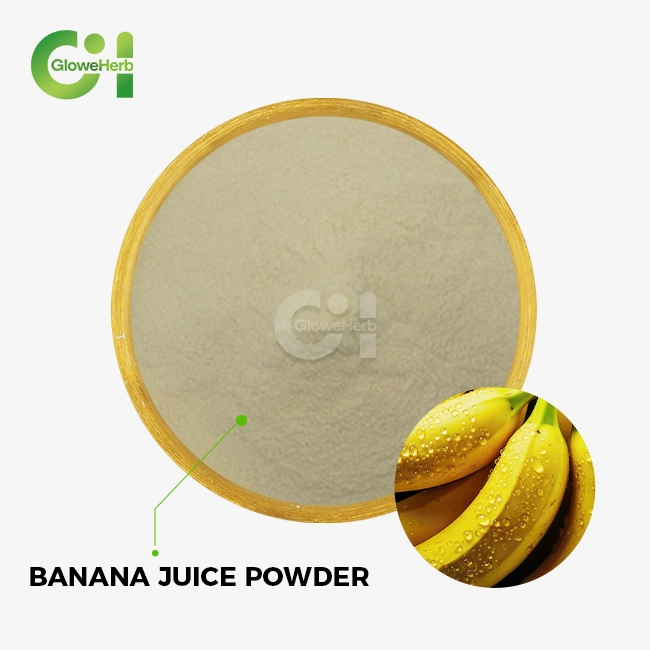
The spray-dried banana juice powder performs effectively in a wide variety of product compositions. It is produced by enzymatic hydrolysis and low-temperature spray drying. It contains 95% banana pulp solids to provide consistent taste, fast water solubility, and a stable nutritional profile. Whether it’s a sports recovery drink, a bakery item, or a nutritional supplement, banana juice powder easily blends into wet and dry matrices. Its fine, light yellow to light brown powdered shape and typical ripe banana scent make it a suitable, clean-label component for businesses seeking consistent, natural fruit-based inputs at scale.
Understanding Spray-Dried Banana Juice Powder and Its Key Properties
Spray drying is a demanding industrial procedure to transform fresh banana juice into a shelf-stable, free-flowing powder while keeping the natural nutritional profile of the fruit. This approach is quite different from dehydration of the entire fruit, which typically leads to problems with variable particle size and moisture retention.
How the Production Process Works
BioSpark's banana fruit powder is derived from a plant extraction technology. Bananas are picked when ripe, enzymatically hydrolyzed to break down cell walls, and then spray-dried at low temperatures. This method preserves natural sugars, potassium, vitamin B6, and dietary fiber. The moisture level is ≤3.5%, which directly contributes to shelf stability and blending consistency.
Nutritional Character of the Powder
HPLC tests show the powder is made up of 95% banana pulp solids, a rich supply of natural carbs and electrolytes. Potassium level is usually at least 1,500 mg per 100g, making this banana-derived substance a powerful functional player in sports nutrition and electrolyte formulae. The HPLC verification technique provides batch-to-batch repeatability, which is of utmost importance to quality-conscious producers.
Common Industrial Applications
The powder’s water solubility and steady taste profile make it suited for a range of product categories. This banana pulp extract is widely used in the formulation of smoothies, protein shakes, meal replacement powders, baked products, yogurt, and nutritional supplements for natural sweetness and better product appeal without the use of chemical ingredients.

Performance Factors Affecting Formulations with Banana Juice Powder
Procurement managers and product developers need to understand how an ingredient will react under actual processing circumstances before they are willing to commit to it at scale. Banana juice powder is quite useful, but there are a few crucial criteria that affect how well it fits into certain formulas.
Solubility and Rehydration Behavior
The spray-dried banana powder is easily soluble in cold and warm water, which eases the manufacturing processes. In beverage applications, it hydrates to a smooth, uniform liquid without clumping. That is to say, it incorporates evenly into powdered blends such as protein mixes or meal replacements for constant mouthfeel and a clean, non-gritty texture that the end consumer appreciates.
Flavor Stability During Processing
Another more realistic feature of this banana extract powder is that it has the ability to maintain its taste amid heat and mechanical stress. Unlike fresh banana juice, which oxidizes and becomes brown rapidly, the spray-dried version keeps its typical mild sweetness through conventional mixing, extrusion, and baking temperatures. This stability means you don’t need to include a lot of flavor masking agents, so your ingredient list stays small and label-friendly.
Storage and Shelf Life Considerations
Good packaging will keep the powder intact over time. BioSpark sells this chemical in 25-kilogram barrels with aluminum-plastic composite inner bags to protect against moisture, light, and oxidation. When stored under proper circumstances, the powder remains in good quality for up to 24 months. This shelf life is ideal for bulk buyers who must account for extended supply cycles, enabling effective inventory management without compromising quality.
Comparative Analysis: Spray-Dried Banana Juice Powder vs Alternatives
The banana-based ingredient you choose will rely on your formulation objectives, budget, and compliance constraints. Now, let's see how spray-dried banana juice powder stacks up against the usual market substitutes.
Spray-Dried vs. Whole-Fruit Banana Powder
Whole fruit banana powder, like that from Anthony's Goods or Terrasoul Superfoods, is prepared by dehydrating and pulverizing whole bananas, flesh and all. Usually a more fibrous texture and a higher starch content. Conversely, a banana juice powder that is spray-dried has a cleaner, more concentrated taste that dissolves quicker and has a finer particle size – all of which are benefits in beverage and supplement applications where textural homogeneity is non-negotiable.
Conventional vs. Organic Banana Powder
Brands seeking USDA Organic certification may be better served by using organic versions, such as those from NOW Foods, which have a premium price. Standard spray-dried banana powder from BioSpark is ISO9001, Kosher, Halal, FDA, and GMP compliant to meet the compliance needs of most worldwide markets. For formulators not seeking an organic claim, the traditional alternative provides reliable quality at a more accessible price range, without sacrificing safety or purity criteria.
Solubility and Nutrient Profile Comparison
Compared with dehydrated banana slices and air-dried powders, the spray-dried product always has quicker dissolving rates and more uniform particle dispersion. Processing also produces a concentration step, which means you get more nutrient density per gram. For nutritional supplement firms seeking to standardize their potassium or vitamin B6 claims, the validated 95% banana pulp solids specification offers a stable formulation anchor that dry slice alternatives just cannot match.
Optimizing Spray-Dried Banana Juice Powder Use in Product Development
Inclusion rates, blending order, and quality validation processes must be considered while attempting to get optimal outcomes from banana-produced powder. Our team at BioSpark has fine-tuned this over the years working with customers in North America and other worldwide markets, in OEM and ODM capacities.
Here are the main application guidelines to keep in mind throughout your development process:
- Beverages and protein shakes: Use 5–15% (by weight) for a banana taste that is discernible but not overbearing to other ingredients. After dry combining basic ingredients, add powder to minimize clumping while mixing.
- Baked products (muffins, breads, cakes): 10–20% of added sugar replaced with banana fruit powder provides natural sweetness and moisture-binding characteristics. This method may help you lower the refined sugar burden in your formulation and add a clean-label fruit claim.
- Supplement capsules and tablets. When included at 5–10%, the powder is a functional element as well as a natural excipient that helps to bind the tablet without affecting the principal active profile of the supplement.
These criteria translate directly to the frequent formulation difficulty of combining taste punch with nutritional integrity in clean-label goods. Quality validation would include microbial load testing, moisture measurement, and sensory assessment across many manufacturing batches to establish consistency before scale-up.
Supplier Collaboration as a Quality Lever
Working with your supplier closely throughout the development process will provide you with a faster iteration cycle. BioSpark delivers technical data sheets, HPLC test results, and sample batches from minimum order quantities of 1 kg, enabling formulators to test and validate performance before committing to full production runs.
Purchasing and Procurement Guide for Banana Juice Powder
Comparing the pricing for banana juice powder providers is not only about the price per kg. For B2B customers buying at scale, supplier certifications, logistics competence, and documentation quality all matter.
Key Supplier Evaluation Criteria
Identify vendors with recognized certifications for your target market. BioSpark’s banana powder is ISO 9001, Kosher, Halal, FDA, and GMP certified for food safety and religious dietary compliance, a combination that meets distributor criteria in the US, Middle East, and European markets at the same time.
Pricing, MOQ, and Logistics Options
BioSpark has a minimum order size of 1 kilogram, which is convenient for startups testing novel formulas, and full production orders are delivered in 25 kg drums. Payment: T/T, Western Union, PayPal, MoneyGram. Shipping: DHL, FedEx, TNT, UPS, EMS, China Post, Hong Kong Post, Singapore Post, Air Mail, Sea Mail. Bank transfer (T/T) is accepted for payment. Sufficient amount of stock is kept for immediate shipping.
Building a Long-Term Supply Partnership
Consistent supply is just as important as initial quality. BioSpark has a consistent inventory of banana pulp powder all year round and offers transparent communication at all stages from sampling to delivery. If you have a brand that is going to be repeatedly buying the same product, you may shorten lead times and get early notice of specification changes or additional product alternatives by dealing directly with the manufacturer.
Conclusion
Spray-dried banana juice powder is a technically sound and commercially adaptable ingredient that works well across drinks, baked foods and nutritional supplements. With a 95% banana pulp solids content validated by HPLC, fast solubility, and a consistent taste profile, it is a reliable solution for product makers needing consistency at scale. “If you have the right supplier relationship, you can source this banana-derived ingredient from a supply risk perspective as a strategic advantage.”

FAQ
1. What is the minimum order quantity for banana juice powder from BioSpark?
BioSpark accepts orders starting from 1 kg, which is suitable for formulation testing. Full commercial orders are packaged in 25 kg drums.
2. How is the potassium content verified in this banana pulp powder?
All batches are tested using High-Performance Liquid Chromatography (HPLC), and potassium content typically reaches ≥1,500 mg per 100g.
3. Is BioSpark's banana powder suitable for Halal or Kosher-certified products?
Yes. The product holds both Halal and Kosher certifications, alongside ISO9001, FDA registration, and GMP compliance.
4. What shipping methods are available for bulk banana fruit powder orders?
BioSpark ships via express courier, air freight, and sea freight, with delivery terms including FOB, CIF, EXW, DAP, and DDP.
5. Can BioSpark provide OEM or ODM services for products containing banana juice powder?
Yes. BioSpark offers full OEM and ODM support, from formulation development and packaging design to final delivery, for both small batches and large-scale production runs.
Partner with BioSpark for Premium Banana Juice Powder Supply
BioSpark (Xi'an) Biotechnology Co., Ltd stands as a trusted banana juice powder manufacturer with verified certifications, flexible order sizes, and global shipping capabilities. Whether you are a supplement brand, distributor, or product developer, our team is ready to support your sourcing and formulation goals with technical expertise and consistent product quality. Contact us today at leao@biosparkcn.com to request a sample and start your sourcing conversation.
References
1. Aurore, G., Parfait, B., & Fahrasmane, L. (2009). Bananas, raw materials for making processed food products. Trends in Food Science & Technology, 20(2), 78–91.
2. Roos, Y. H. (1995). Phase Transitions in Foods. Academic Press.
3. Nindo, C. I., & Tang, J. (2007). Refractance window dehydration technology: A novel contact drying method. Drying Technology, 25(1), 37–48.
4. Wills, R. B. H., Poi, W. T., & Greenfield, H. (1984). Nutrient composition of ripe and unripe bananas. Journal of Food Science, 49(2), 507–510.
5. Mulet, A., Berna, A., & Rosselló, C. (1989). Drying of carrots. I. Drying models. Drying Technology, 7(3), 537–557.
6. Food and Agriculture Organization of the United Nations. (2022). Banana Market Review: Preliminary Results 2021. FAO.

Send Inquiry
Related Industry Knowledge
- How Does Spray-Dried Banana Juice Powder Perform in Formulations?
- What Factors Affect Barley Sprout Powder Price?
- What Are the Best Applications of Ginseng Fruit Powder?
- Can Gardenia fruit powder Be Used in Beverage Applications?
- Why Are Manufacturers Choosing Ginseng Fruit Powder Today?
- What Are the Health Benefits of Konjac Flour Extract Fiber?
- What Are the Key Benefits of Pomegranate Seed Extract Powder?
- Tangerine Peel Extract for Immune Support Products
- Can Konjac Flour Extract Boost Digestive & Gut Health?
- What Are the Key Benefits of Tanshinone Danshen Extract?
