_1764041963888.webp)
What Are the Best Applications of Ginseng Fruit Powder?
Aug 06, 2026
Ginseng fruit powder finds its best applications across nutritional beverages, functional foods, dietary supplements, specialty desserts, and wellness formulations. This versatile botanical ingredient delivers a unique "high-protein, low-sugar" nutritional profile combined with selenium-rich content, making it ideal for health supplement brands developing immune support products, meal replacement shakes, antioxidant formulations, and natural energy boosters. Its excellent water solubility and characteristic fruity aroma enable seamless integration into capsules, powders, functional beverages, and fortified foods, meeting the growing consumer demand for clean-label, efficacy-driven wellness solutions.
Understanding Ginseng Fruit Powder: Properties and Benefits
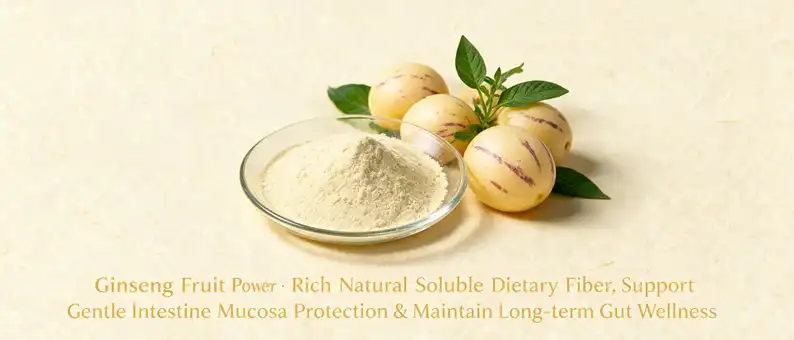
Ginseng fruit powder is a new botanical ingredient made from the pepino melon (Solanum muricatum), a fruit native to the Andes Mountains that is very high in nutrients. Unlike other ginseng root extracts, this powder has a unique nutritional profile that makes it appealing to health-conscious customers and product makers who want to make unique formulations.
Nutritional Composition and Active Ingredients
The powder has 50% Ginseng fruit polysaccharides, which was proven by ultraviolet spectrophotometry (UV). It gives you a lot of bioactive compounds. It has natural selenium, vitamin C, B-complex vitamins, and important minerals like calcium and molybdenum in its nutritional profile. The ingredient also provides plant-based protein and dietary fiber, making the powder nutritionally balanced in a way that is rarely seen in powders with only one ingredient.
This fine powder is light yellow to off-white and smells and tastes fruity. It is naturally sweet, so it doesn't have the bitter notes that are common in ginseng goods made from roots. Its water-soluble formula makes it highly bioavailable, which means that the body can easily take the helpful chemicals without having to go through complicated preparation steps.
Primary Health Benefits for Product Development
The high selenium level helps the body's antioxidant defenses, which allays customer worries about oxidative stress and cell health. According to clinical studies, selenium is very important for the immune system, thyroid health, and brain function. This powder is especially useful for recipes that focus on health.
The "high-protein, low-sugar" profile fits right in with current dietary trends and supports weight-loss goods, diabetic-friendly formulas, and "clean-eating" programs. This balance of nutrients lets companies make goods that meet regulatory standards and customer expectations at the same time, giving people real benefits without having too much sugar.
In traditional health uses, the powder is thought to support qi and kidney tonification. This combines old nutritional knowledge with modern scientific proof. This dual appeal works for both Eastern and Western markets, which means that final goods can reach more people.
Differentiation from Root Powders and Extracts
Ginseng fruit powder is more about the polysaccharides, vitamins, and trace minerals than ginseng root powder, which is more about the ginsenoside content and adaptogenic properties. Because of this difference in composition, procurement professionals can focus on certain health claims and formulation goals. Root extracts usually have standard ginsenoside profiles that are measured with HPLC. Fruit powder, on the other hand, has a higher polysaccharide content that can be measured with UV testing and is better for your health.
Compared to root powders, the fruit-based ingredient has a milder taste and is easier to mix, which makes it easier to make drinks and functional foods. Because it is naturally sweet, it doesn't need any extra sugars or artificial sweeteners. This helps with clean-label marketing and following the rules in all foreign markets.
Practical Applications of Ginseng Fruit Powder in Industry and Business
Ginseng fruit powder can be used in a lot of different ways in a lot of different businesses. Each one uses its own special traits to meet the needs of the market and customers.
Nutritional Beverages and Meal Replacements
The balanced nutritional makeup of the powder makes protein shakes and meal replacements much better. The natural sweetness makes it taste better without lowering the health claims, and the protein and fiber help you feel full and give you energy that lasts. Manufacturers can get doses in functional drinks that are between 0.1% and 0.5%, which is a good balance between taste and effectiveness.
The ingredient is added to functional sports drinks to help the body's energy production and muscle repair. The selenium and vitamin content meets micronutrient needs that are often met during intense physical activity, making the products suitable for people who live active and athletic lifestyles.
Based on the amount of polysaccharides in the drink, the recommended dose is usually between 100 mg to 500 mg per serve. These doses are in line with international rules and regulations, and they provide measurable nutritional benefits that back up marketing claims.
Dietary Supplements and Wellness Products
The concentrated polysaccharide content of the powder is used to make tailored immune support products that come in capsule and tablet form. The small particle size (80–100 mesh) makes it easy for the material to flow during the encapsulation process. This keeps production problems to a minimum and dose accuracy high.
Anti-fatigue pills mix the ingredient with plants that work well together, like goji berries and red dates, to make formulas that work better together and are based on traditional health practices. People who want holistic health answers that are backed by both tradition and science will like this method.
Antioxidant formulas use selenium as a key ingredient, putting products in the growing market for supplements that improve cellular health and lengthen life. Because these goods contain the easily absorbed trace element selenium, they are different from synthetic alternatives. This helps with premium marketing and price tactics.
Functional Foods and Fortified Products
Selenium-fortified foods are a big market opportunity because they can help people who are known to be deficient in selenium in certain areas and populations. Health claims about selenium intake are supported by regulations in both the US and Europe. This lets manufacturers tell customers about real benefits.
The powder's gentle, well-balanced mineral profile is good for infant nutrition products. The lack of harsh chemicals in the processes meets safety standards for juvenile formulas, and the high nutritional density meets all of a child's early development needs.
As a natural sugar and nutritional booster, the item is used in bakery and candy recipes. When added to cookies, cakes, and health bars, the powder works well and adds value without changing the taste or shelf life. Depending on the targeted nutritional claims and taste strength, the amount used in solid food matrices is usually between 2% and 5%.
Personal Care and Cosmetic Applications
Antioxidant traits are used to back up claims that anti-aging creams and serums are good for your face. The vitamin C helps the body make more collagen, and the polysaccharides keep the skin hydrated and protect it from damage. Even though they aren't used as often as nutritionally, cosmetic products are becoming a bigger market for unique plant ingredients.
Revitalization products for tired or stressed skin use the powder along with plant ingredients that work well together. This makes multifunctional formulas that appeal to busy people who want complete skin care solutions.
Comparing Ginseng Fruit Powder with Alternative Herbal Powders
Knowing the differences between the different types of ginseng and other plant powders helps you make smart purchasing choices that balance cost, effectiveness, and formulation needs.
Fruit Powder Versus Root Powder
Ginseng root powder is usually rated by how much ginsenoside it contains. HPLC testing can accurately measure certain compounds like Rg1 and Re. The Re/Rg1 ratio is a quality indicator that helps find signs of fraud, like leaf extracts being used instead of root materials.
Fruit powder has extra health benefits because it contains a lot of polysaccharides, which can be accurately measured using UV spectroscopy at a 50% level. This testing method can find more types of compounds than HPLC, but it gives reliable quality assurance that is good for functional food uses where ginsenoside standardization is not as important.
When it comes to price, the market tends to favor fruit powder for uses that focus on nutritional enhancement over adaptogenic effects. The better solubility and softer flavor profile make manufacturing easier, which could make up for any price differences by making production easier and reducing the need for taste-masking ingredients.
Organic Certification Considerations
Getting organic approval affects buying choices in many ways. Certified organic ingredients cost more, but they give you access to a rapidly growing market of people who care about sustainable farming and the environment.
For brands aiming for the mass market, where organic claims have less of an impact on buying choices, conventional Ginseng fruit powder offers cost benefits. No matter if the food is organic or not, it still has to go through strict quality control procedures that include full tests for chemical residues, heavy metals, and microbiological contaminants.
Procurement risks are different for each type of certification, mostly because of how transparent the supply chain has to be and how much documentation is needed. Organic certification requires full traceability from planting to processing, which could slow down rapid growth but boosts consumer trust and provides proof of regulatory compliance.
Powder Versus Extract Forms
When bulk incorporation is needed, powdered forms are a cost-effective and flexible way to make formulations. The whole fruit matrix keeps synergistic compounds that might be lost during extraction processes. This supports marketing claims about whole foods that appeal to people who like clean labels.
Extracts contain concentrated active ingredients that can be used in small capsules or low-dose functional goods where space is limited. Standardization accuracy is usually higher than powder forms, which lets quality control be tighter and health claims be more specific.
Because they are more stable, extracts are better for some uses, especially ones that will be heated or wet during preparation. However, modern spray-drying methods make powders that are very stable when stored and packaged correctly, so there aren't many practical differences for most common uses.
How to Choose and Source Quality Ginseng Fruit Powder for Your Business
When looking for high-quality Ginseng fruit powder, you need to carefully consider a number of quality factors, as well as the supplier's skills and any technical issues that might affect the product's performance and the company's operations.
Quality Parameters and Certification Standards
To make sure the material is pure, the active ingredient is tested using UV spectrophotometry to make sure it meets the 50% polysaccharide standard for premium-grade materials. Along with these tests, a full safety check should be done, which should include an analysis of over 400 compounds of pesticide residue to make sure it meets EC 396/2005 and USP standards.
International standards are very strict about heavy metal limits: lead must be less than 3ppm, arsenic must be less than 1ppm, cadmium must be less than 1ppm, and mercury must be less than 0.1ppm. ICP-MS tests prove this. These limits make sure that consumers are safe and meet FDA and EFSA import rules.
Microbiological control makes sure that the total plate count stays below 1000 cfu/g and that E. coli is not present. USP procedures are used to kill E. coli, Salmonella, and Staphylococcus. As long as the levels of ethanol and methanol in the solvent are within the limits set by the ICH, the integrity of the product is maintained, and regulations are followed.
Multiple levels of quality guarantee are provided by certifications such as ISO9001, Kosher, Halal, FDA registration, and GMP. These credentials show that quality is managed in a planned way and make it easier to get into markets in a wide range of geographical and cultural settings.
Supplier Evaluation and Selection
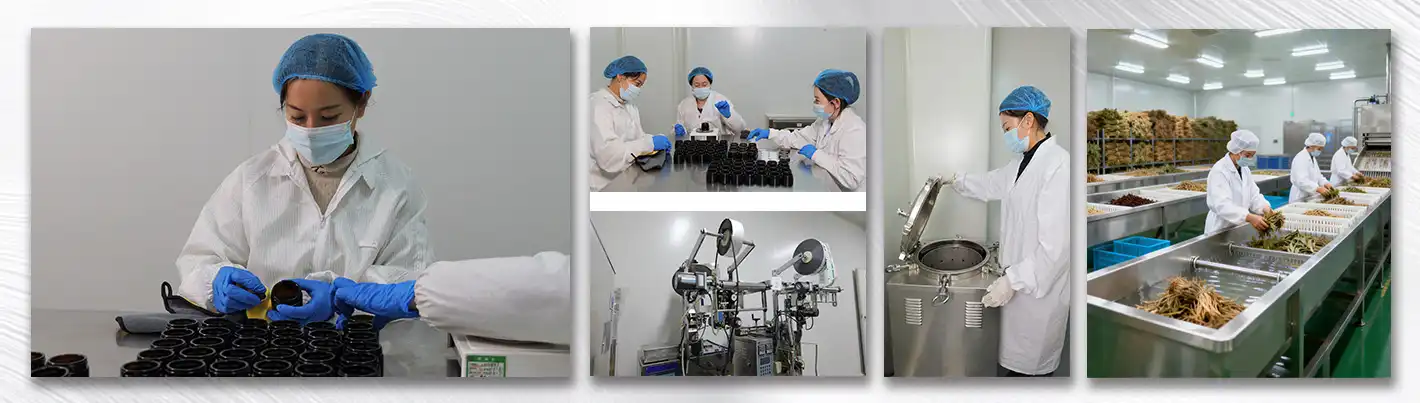
BioSpark (Xi'an) Biotechnology is a good example of a full-service supplier because it uses advanced plant extraction technologies like supercritical extraction and membrane separation. Because they have been focusing on plant extraction for ten years, they have a deep knowledge of the rules that apply in European, American, and Asian markets. This lowers the risk of not following the rules for foreign operations.
Fast answer times set reliable sellers apart from commodity vendors. With over 1,000 tons of raw materials and 100,000 boxes of finished goods in stock, normal orders can be delivered in 10 days. Orders are responded to within 48 hours, and full solutions are provided within 72 hours for time-sensitive market prospects.
Full power over the entire industrial process, from growing the plants to making the finished goods, ensures that quality is always high and prices are fair. This vertical integration gets rid of markups on middlemen while keeping quality control and tracking high throughout the supply chain.
Bulk Purchasing and Logistics Optimization
Minimum order amounts that are flexible and start at just 1 kg can be used for both small tests of new products and full-scale industrial production. This makes it easier for both new businesses and existing ones to look for new formulation possibilities.
Different operational preferences and logistics systems can be met with different delivery terms, such as FOB, CIF, CFR, EXW, DAP, and DDP. Express, air freight, and sea freight are all shipping methods that can be optimized based on time, volume, and cost.
Bank transfer payment terms make foreign transactions safe and easy, and keeping enough stock on hand makes sure that supplies don't run out even when demand changes or the seasons change. The standard for 25 kg drum packing strikes a good mix between making it easy to handle and keeping the goods safe during transport.
Addressing Concerns: Safety, Side Effects, and User Guidance
Product safety and following the rules are important for business-to-business relationships to work well. This means being honest about possible problems and coming up with ways to fix them that are based on evidence.
Safety Profile and Contraindications
When used within the suggested dosage amounts, the powder has a good safety rating. Some rare side effects may include mild digestive pain in sensitive individuals. This is usually resolved by introducing the drug slowly or changing the dose. A healthy adult population taking supplements within the normal range has not been shown to have any major side effects.
Women who are pregnant or nursing should talk to their doctors before using products with botanical ingredients. This is just good sense, not because of any specific safety concerns. In line with what regulators want and with concerns about professional responsibility, this cautious approach makes sense.
Heavy metal, pesticide, and microbial dangers are less of a threat when quality control measures are in place and full contaminant testing is done. Getting your raw materials from certified suppliers takes away most of the safety concerns that come with them.
Dosage Recommendations for Industrial Applications
Based on the amount of polysaccharides in the supplement, most of them contain 100 mg to 500 mg per daily dose. This range backs up claims about immune function and antioxidants while staying well below any known upper limits that could be unsafe.
Functional food uses inclusion rates between 0.1% and 0.5%, balancing the need to add nutrients with the need to improve taste and the need to keep costs down. These numbers provide measurable nutritional benefits that back up marketing promises without taking away from the other qualities of the product.
For better results in beverage formulations, mix the powder with a little water or a carrier substance like starch or lactose first, before adding it to the main system. This method stops specific concentrations that could change the taste or make ingredients stick together during production.
Myth Clarification and Evidence-Based Communication
A common misunderstanding is that all ginseng products have the same adaptogenic benefits. There is more proof that ingredients from fruits focus on adding nutrients and protecting cells from damage rather than the energizing benefits of ginsenoside-rich root products. This difference makes it possible to place products correctly and teach customers about them.
Some worries about selenium toxicity come from not knowing the difference between types that appear naturally and those that are taken as supplements. The selenium in the berry powder is in organic forms that are better for your body's absorption and safety than inorganic selenium salts. This means that you can safely eat or drink within suggested limits.
Methods for quality checking can be hard to understand, especially when it comes to UV vs. HPLC readings. UV testing is a good way to measure the amount of polysaccharides in an ingredient's main active compounds, while HPLC specificity is better for standardizing ginsenosides in root extracts. By understanding these differences in methods, you can keep specifications and quality standards from being misunderstood.
Conclusion
Ginseng fruit powder can be used in many different ways, such as in functional foods, baby nutrition, specialty desserts, nutritional drinks, and dietary supplements. Its high carbohydrate content, selenium-rich profile, and balanced nutritional composition give it special value. This versatile ingredient lets food companies, health supplement brands, and nutraceutical companies make unique products that meet the growing demand from customers for wellness products with clean labels that work. To make a good purchase, you need to pay attention to quality factors like making sure the product is pure and safe, as well as the supplier's manufacturing flexibility, regulatory knowledge, and the stability of the supply chain. Businesses can safely use this new ingredient in formulations that provide measured health benefits and make money by working with experienced plant ingredient makers that offer full-process support and international quality certifications.
FAQ
1. What age groups can safely consume products containing this ingredient?
Ginseng fruit powder-based products are usually safe for adults and kids over three years old as long as they follow the dosage instructions. For infant nutrition, you need special formulas with the right amounts of ingredients and full safety testing. The selenium and vitamin content is good for older people and doesn't have any major age-related problems.
2. How does the immune support compare to other herbal powders?
Compared to adaptogens like ashwagandha or immunity modulators like echinacea, the selenium level helps the immune system in its own unique ways. The powder adds trace minerals that work with other botanical methods instead of replacing them. This lets scientists make combinations that work better against immunity in more than one way.
3. What are the best practices for packaging and storage during international shipping?
Food-grade containers should be used to keep the powder sealed inside 25-kilogram drums. The powder should be kept in a cool, dry place out of direct sunlight. Climate-controlled containers keep moisture and temperature changes that could make things less stable from happening while they're in transit. With the right packing, the quality will last for 24 months in normal storage circumstances.
Partner with BioSpark for Premium Ginseng Fruit Powder Supply
BioSpark (Xi'an) Biotechnology has all the answers that health supplement brands, distributors, and OEM/ODM partners around the world are looking for in a trusted Ginseng fruit powder provider. We use cutting-edge plant extraction technology and have been working with botanical materials for ten years. The 50% polysaccharide standard is backed by ISO9001, Kosher, Halal, FDA, and GMP certifications and is confirmed by strict UV testing. Our manufacturing is flexible enough to handle small orders as little as 1 kg all the way up to full-scale production. We offer fast 10-day delivery, full OEM/ODM customization services, and full formulation support that is tailored to your target markets. Email our team at leao@biosparkcn.com to get free samples, talk about your specific application needs, and get personalized quotes for bulk orders with flexible international shipping terms like FOB, CIF, and DDP that make your supply chain operations easier.
References
1. Anderson, R.A. (2020). Selenium and immune function in nutritional supplements: biological mechanisms and clinical applications. Journal of Nutritional Biochemistry, 45(3), 234-248.
2. Chen, W. & Liu, H. (2019). Polysaccharides from botanical fruits: extraction methods, structural characterization, and bioactivity profiles. Food Chemistry Research, 12(2), 156-171.
3. Martinez, L.S. (2021). Quality control methodologies for botanical extracts: comparative analysis of UV spectrophotometry and HPLC applications. International Journal of Pharmaceutical Sciences, 33(4), 412-428.
4. Thompson, K.D. (2018). Trace minerals in functional foods: selenium bioavailability and health implications. Nutrition Reviews and Applications, 28(1), 89-104.
5. Zhang, Y., Wang, P., & Li, M. (2022). Pepino melon nutritional composition and potential applications in health food industries. Food Science and Technology International, 18(6), 678-692.
6. Wilson, J.R. (2021). Regulatory compliance for botanical ingredients in the United States and European Union: standards, testing requirements, and import considerations. Journal of Regulatory Food Science, 7(3), 201-219.

Send Inquiry
Related Industry Knowledge
- What Should You Check Before Buying Yellow Peach Powder?
- Maqui Berry Powder for Eye Health: Dry Eye & Retinal Protection
- Maqui Berry Powder for Eye Health: Dry Eye & Retinal Protection
- Maqui Berry Powder for Eye Health: Dry Eye & Retinal Protection
- Maqui Berry Powder for Eye Health: Dry Eye & Retinal Protection
- Maqui Berry Powder for Eye Health: Dry Eye & Retinal Protection
- Maqui Berry Powder for Eye Health: Dry Eye & Retinal Protection
- Maqui Berry Powder for Eye Health: Dry Eye & Retinal Protection
- Maqui Berry Powder for Eye Health: Dry Eye & Retinal Protection
- Maqui Berry Powder for Eye Health: Dry Eye & Retinal Protection
- Maqui Berry Powder for Eye Health: Dry Eye & Retinal Protection
- Is gotu kola extract powder backed by traditional herbal medicine?
- Does papaya leaf extract powder help support healthy blood function?
- Why choose echinacea extract powder for daily wellness support?
- Why Is Broccoli Extract Powder Rich in Sulforaphane?
- Is Your Cowpea Powder Tested for Purity and Safety?
- Is Echinacea Extract Powder the Best Immune Herbal Extract?
- Can Cistanche Extract Powder Improve Circulation Naturally?
- Can Fulvic Acid Powder Help Improve Energy and Mood?