_1764041963888.webp)
What Are the Health Benefits of Konjac Flour Extract Fiber?
May 09, 2026
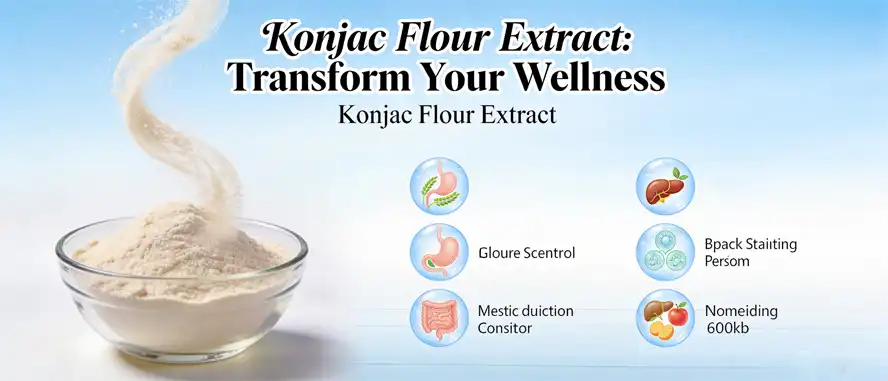
Numerous long-term clinical studies and extensive commercial applications have confirmed that konjac flour extract has multiple scientifically validated health benefits. This plant-derived ingredient is rich in glucomannan (a high-molecular-weight soluble dietary fiber), which reduces LDL cholesterol, regulates blood glucose by delaying glucose absorption, and supports weight management by inducing satiety. Additionally, it acts as a prebiotic to provide a nutrient source for beneficial intestinal flora and promotes regular bowel movements. This fiber has a wide range of applications, and can be incorporated into nutraceuticals, functional foods, and pharmaceutical formulations. It addresses core consumer health demands, while providing B2B clients with a clean-label ingredient option adaptable to diverse product formulation and production requirements.
Understanding Konjac Flour Extract Fiber
Origins and Production from Konjac Tubers
The konjac plant (Amorphophallus konjac) thrives in the rocky mountainous areas of China, Japan and Southeast Asia, and is commercially cultivated for its starch-rich corms. Modern botanical extraction processes are applied to isolate and purify glucomannan from these corms, producing a high-purity powder with a glucomannan content of no less than 85%. The chemical structure of glucomannan is kept when it is extracted at BioSpark (Xi'an) Biotechnology Co., Ltd. This means that it has the most health benefits. The glucomannan content of our standard product, determined by UV spectrophotometry (on a dry basis), is no less than 85%. The product appears as a fine white to pale yellow powder, with an exceptional water swelling capacity of up to 50 times its own weight in water. After harvesting, the konjac corms are first thoroughly washed to remove surface impurities. ubsequently, the corms are rapidly sliced and subjected to low-temperature hot air drying to retain the active components. The dried slices are then crushed, followed by pH-controlled extraction (under weakly alkaline conditions) to remove insoluble components from the crude fiber. The glucomannan solution is then concentrated via advanced membrane filtration technology, and processed into a high-density, stable powder through spray drying under controlled inlet and outlet air temperatures. Each batch is rigorously tested for heavy metals, pesticide residues and microorganisms by an accredited third-party laboratory, to ensure compliance with the limit requirements of international pharmacopoeias and the regulations of ISO9001, GMP, Kosher, Halal, and the US FDA.
Unique Fiber Composition and Nutritional Profile
Glucomannan is not like other fibers because of the chemicals that make it up. This curved carbohydrate is made up of about 1.6 times as many β-1,4-linked D-mannose units as D-glucose units.The acetyl groups in its molecular structure enhance its water solubility and hydration capacity, enabling it to absorb up to 50 times its own weight in deionized water at 25℃ within 30 minutes, which is significantly higher than that of psyllium husk or oat beta-glucan. Its molecular weight is between 200,000 and over 2 million Daltons. Konjac flour extract is very good for you because it has strong effects on the body and almost no calories. This soluble fiber, on the other hand, does more than just add bulk. It thickens when mixed with water and works with gut enzymes and nutrients over time to form a gel. This dietary fiber cannot be digested and absorbed by human digestive enzymes in the upper gastrointestinal tract, so it passes through the stomach and small intestine intact, and is fermented into short-chain fatty acids by the intestinal microflora in the colon. These acids feed colonocytes and help the immune system work.
Safety Assessments and Regulatory Approvals
Safety groups around the world say that glucomannan is safe to eat when eaten as recommended. The European Food Safety Authority (EFSA) has authorized and approved the following health claims for konjac glucomannan: 1. Konjac mannan contributes to the maintenance of normal blood cholesterol concentrations, with a required daily intake of 4g; 2. Konjac mannan contributes to weight loss in the context of an energy-restricted diet, with a required daily intake of at least 3g. Konjac glucomannan is usually thought to be Generally Recognized As Safe (GRAS) in the United States. It is approved by the Food and Drug Administration, so it can be used in many types of food. Over many years, clinical tests have shown that the amounts that are recommended have few to no bad effects. Occasional gastrointestinal discomfort such as bloating is mostly related to insufficient water intake during consumption. The core safety risk of glucomannan is choking or gastrointestinal obstruction if it is ingested without adequate water, which highlights the importance of strictly following standardized consumption guidelines and labeling requirements. Clear labeling instructions lower risks for B2B clients who make vitamins, making customers safer and happier.
Key Health Benefits of Konjac Flour Extract Fiber
Weight Management Through Appetite Suppression
In the stomach, the gel matrix formed by glucomannan activates gastric wall mechanoreceptors, which transmit satiety signals to the brain. The person doesn't even know it, but this makes them eat less. It looked at nine randomized controlled trials with a total of 441 people. The study was published in the Journal of the American College of Nutrition. It was found that people who took glucomannan vitamins lost a lot more weight than those who took fake pills. Most people who ate 2 to 4 grams of it every day lost 0.79 kg of body weight over 5 to 16 weeks. When combined with low-calorie meals, the effects were greater. Fiber not only fills you up, but it also changes the hormones that make you hungry. More peptide YY and glucagon-like peptide-1 (GLP-1) are made when you eat, and glucomannan is present. Brain chemicals that let you know you're full last longer when these two chemicals are present. Because of these changes in hormones, the stomach takes longer to empty. This means that you can go longer without eating and still eat less. This result is very helpful for weight loss pills that target metabolic health markets using konjac flour extract.
Digestive Health and Prebiotic Effects
Bacteria in the gut make butyrate, propionate, and acetate when they break down fiber. Short-chain fatty acids like these keep the barrier in the gut strong and reduce swelling. Researchers have found that eating glucomannan regularly raises the amount of Bifidobacteria and Lactobacillus species in the body. These are beneficial probiotic flora, which are closely associated with enhanced intestinal mucosal immunity, improved systemic immune function, and reduced risk of pathogenic infection. Konjac fiber is great for gut health goods and functional foods that are meant to improve stomach health because it works as a prebiotic. Glucomannan also helps you go to the bathroom regularly by giving your stools more bulk and water. This can help with constipation without making you have diarrhea. Researchers have found that taking 3–4 grams every day for 2–4 weeks makes you go to the bathroom more often, and your stools are stronger. Different from laxatives that contain stimulants, this fiber supports normal digestion over time through mechanical and bacterial processes without the body becoming used to it.
Blood Sugar Regulation and Glycemic Control
In the small intestine, glucomannan turns into a thick gel that slows down the breakdown of carbs and the absorption of glucose. This slows down the rise in blood sugar after a meal. One review in Diabetes Care looked at 14 studies with people who had diabetes or were likely to get it. Blood sugar levels dropped by 7.4 mg/dL, and hemoglobin A1c dropped by 0.4% when people took glucomannan supplements, according to the study. The effects happen because glucose moves more slowly across the gut walls, and the body becomes more sensitive to insulin. Some nutrients and plants work well with glucomannan. This is good for people who are making vitamins to help with blood sugar. Chromium picolinate or berberine extract, when mixed with fiber, helps keep blood sugar levels in check. People with diabetes or a high chance of getting diabetes can easily find a wide range of products that contain this ingredient. It has a neutral taste and no off-flavor, and is suitable for formulation into various dosage forms including capsules, powders and tablets.
Cardiovascular Health and Cholesterol Management
Health claims that have been accepted by the EFSA show that taking 4 grams of glucomannan every day keeps cholesterol levels normal. Several studies have shown that LDL cholesterol levels drop by 10 to 17 mg/dL because bile acid gets stuck in the gut. Because it sticks to bile acids and makes the liver make new bile from cholesterol in the blood, glucomannan lowers serum LDL levels. Also, the breakdown products of the fiber, especially propionate, stop the liver from making cholesterol. This helps the heart in two ways. It has been shown in studies that these lipid-modifying effects happen after taking supplements regularly for 4 to 8 weeks. In terms of heart health, this time period works for product claims and what people expect.
Anti-Inflammatory and Detoxification Benefits
A new study shows that glucomannan can help keep the body's inflammation in check. It is fermentation that makes short-chain fatty acids. These acids turn on G-protein-coupled receptors on immune cells, which stops the production of cytokines that cause inflammation. Animal studies show that eating glucomannan for a long time lowers levels of interleukin-6 (IL-6) and tumor necrosis factor-alpha, because it can help the body get rid of toxins. Beauty and health companies want to use konjac glucomannan in skin care products and programs that clean the inside of the body. In other words, it can be used for more than just digestion and metabolism.
Comparison and Selection: Konjac Flour Extract vs Alternatives
Glucomannan Powder vs Whole Konjac Flour
The glucomannan content of raw whole konjac flour is approximately 40% to 50%, with the remaining components mainly including starch, crude fiber and a small amount of water-soluble sugars. But pure goods that are defined as 85% or more have more bioactive ingredients. This difference is of critical importance for B2B clients developing products with strict clean-label requirements. There are 425 mg of active glucomannan in a 500 mg pill of 85% extract, but only 200–250 mg in the same capsule of whole flour. This means that bigger portions are needed, which makes it more expensive to make and makes people less likely to stick to their plans. Also, pure extracts dissolve and spread out better in water, which is important for making drinks and pills that bubble. By getting rid of the non-fiber parts, off-flavors and colors can be cut down. This lets cleaner recipes be made that meet the needs of customers who want clean labels. OEM clients who want to stand out can use UV spectrophotometry tests on highly pure konjac flour extract to ensure that the quality is consistent from batch to batch and can be checked.
Konjac Fiber vs Psyllium Husk and Chia Seeds
Even though psyllium husk is well-known for having fiber, it can only hold 10 to 15 times its own weight in water. Glucomannan, on the other hand, can hold 50 times its own weight in water. Because of this difference, items made from konjac can have the same thickness and fullness effects with smaller amounts. This means that fewer pills are needed, and they cost less to make. The taste of glucomannan is bland, while the taste and texture of psyllium are earthy. This makes healthy drinks and vitamin powder taste better. Chia seeds are interesting to some people because they have omega-3 fatty acids and fiber. But they have a lot of calories (about 137 calories per ounce), which goes against the idea that you should eat few calories to lose weight, and glucomannan doesn't give you much energy. Which of these strands to use depends on what the product is for. Psyllium may help with heart health because it lowers cholesterol, but glucomannan is better for weight loss and blood sugar control because it has a better viscosity and nutrient profile.
Organic vs Conventional Extract Quality
More and more people want foods that don't have pesticides, so shops raise the cost of foods that are certified organic. But standard konjac goods that pass strict tests for heavy metals and residues often work just as well and are safer for less money. This is important for business buyers who care about price. At BioSpark, our standard konjac flour extract is cleaned up in several steps that get rid of any farm waste. After the goods are finished, they are checked to make sure they meet safety standards for lead, mercury, arsenic, and cadmium around the world. Procurement managers should find out if the prices of organic goods are worth it for the people they want to buy from them. More and more people in North America and Europe who buy health supplements are looking for signs that say they are organic. It is more important to follow halal and kosher rules in Asia and the Middle East. With flexible buying methods that keep ties with both organic and conventional providers, you can quickly adjust to changes in the market and the law.
Procurement Insights for Konjac Flour Extract Fiber
Sourcing Channels and Export Regions
China grows most of the konjac in the world. The main places where it is grown are in Sichuan, Yunnan, and Shaanxi. Companies with a history, like BioSpark, know how to get fresh roots and keep the supply chain safe by being close to where the raw materials come from. People who work in buying should look at vertical unity when they look at providers. Companies that grow, process, and test their products in their own buildings have better quality control and can keep track of it better. Konjac flour extract can be sold in several ways, including through direct links with manufacturers, local importers, and specialty botanical extract brokers. Direct buying cuts out the middlemen's markups and lets you talk about customization, which is great for OEM clients who need specific amounts of glucomannan or different packing. But importers do helpful things, like helping with paperwork for government agencies, combining shipping, and giving smaller buyers credit terms that make it easier for them to pay their bills.
Price Variability and Cost Comparison
It can cost anywhere from $15 to $35 a kilogram, depending on how pure it is, what standards it has, and how much you buy. Higher-concentration products are cheaper than high-purity extracts (85%+), but because they work better, the finished goods often have better cost-per-dose economics. When something is approved as organic, the price goes up by about 20% to 30%. Plus, it costs an extra 50 cents to two dollars per kilogram to test for toxins like dioxins or PAHs. When glucomannan's price is compared to other fibers, it seems fair when functions are kept the same. It costs eight to eighteen kilograms of psyllium husk, but it takes three to four times that much to make something the same thickness. It costs $5 to $12/kg for chia seeds, but they don't have as much dense soluble fiber as glucomannan. Oats or mushrooms can be used to make beta-glucan, which costs $25 to $60 per kilogram. This makes konjac a good choice for brands that want to match how well they work with how much they cost.
Evaluating Supplier Trustworthiness and Quality Assurance
The first step in the screening process is to look at the supplier's credentials. Manufacturers you can trust will have up-to-date copies of ISO9001, GMP, and any other organic or religious certifications that are relevant. Get a few Certificates of Analysis (CoA) from recent production runs and make sure they all show the same amount of glucomannan, wetness, and germs. If there are big changes between batches, it means that the rules of the process aren't working right, which could mean that the quality of your product is lower. Checks of the building itself cost a lot of time and money, but they teach you a lot about how things are made. For cheap buyers who can't visit production sites in person, third-party audit results from firms like SGS or Intertek are a good choice. Check to see how quick and tech-savvy the service is as well. When companies hire trained food scientists and regulatory experts, they can help with problems like coming up with new products and formulas.
Customization and Private Labeling for OEM Clients
The best OEM and ODM service providers do more than just give you basic materials. BioSpark helps with the whole process, from making the formula to making sure it will stay stable and planning the package. Then, brands can get their products ready for sale without having to spend money on building up factories. New companies can buy as little as 1 kg to test out new recipes, and well-known names can use the scalable production capacity to make several tons. As part of private labeling, items that go well together are mixed to order, the mixture is put into veggie or gelatin capsules, and the client's brand is printed on the bottles. Different delivery terms (FOB, CIF, CFR, EXW, DAP, and DDP) can be used for different types of international shipping needs. It's also easier to do business when there are many ways to pay, like bank payments. These value-added services can significantly shorten the product's time-to-market cycle for brand owners. This lets brands focus on sales and marketing instead of the tricky parts of production.
How to Use Konjac Flour Extract Fiber in B2B Applications?
Food Production and Functional Ingredient Integration
Konjac glucomannan is a flexible ingredient that food makers can use to change the taste, replace fat, and make food last longer. For making low-calorie noodles and meat alternatives that taste and feel real, it can be mixed with alkaline water to make it gel. Because glucomannan can thicken, it is used to make drinks that make you feel full and protein shake boosts. By adding 0.5 to 2% by weight, they can get the thickness they want without adding too many calories. Glucomannan can hold water, which makes dough easier to work with and helps foods stay fresh longer, which is useful in restaurants. Adding 0.3 to 1% to bread recipes makes them less likely to stick and helps them keep their softness longer, which are two important quality problems in commercial baking. Fiber is used in dairy alternatives, like plant-based yogurts, to make them smooth like dairy products. These foods also say that fiber is good for your gut health.
Pharmaceutical and Nutraceutical Formulations
Bioadhesive qualities of glucomannan are used in pharmaceuticals to make devices for controlled drug release. The gel structure of the fiber slows down the breakdown of the active ingredient. This means that smaller amounts are needed to get the same therapeutic effects. When making nutraceuticals, scientists mix konjac flour extract with plants that work well together. For example, green tea extract, chromium, and alpha-lipoic acid work well together to make weight loss goods more thermogenic. Most people are told to take between 1 and 4 grams per day, split up into 2 or 3 doses, for the best spread throughout the day. This is how capsules should be taken: with 8 to 12 ounces of water. This will keep the stomach from getting clogged. For people who like to take supplements in the form of drinks, powder types are convenient because they can be mixed with flavorings to hide any taste that might be left over.
Handling Recommendations and Formulation Best Practices
It's important to be careful with glucomannan because it takes water easily and doesn't stick together when it does. If possible, keep powders in boxes that can't be opened in a dry place with a relative humidity below 60%. As the product is being made, slowly add the fiber to the liquid parts while shaking constantly to make sure the fibers are well mixed. Do not mix with high pressure for a long time, as this can break polymer chains and make the mixture less viscous. When you make shells, you should think about how the different-sized particles are spread out. A less dense mesh makes it easier for the capsules to move through the machine, but it may also make the capsules dirtier. Silicon dioxide (0.5–1%) and other anti-caking agents can be added to the mix to make the powder easier to work with. For tablets, the crushing force needs to be carefully set because too much pressure can damage the fiber's structure and make it less able to grow. Before going on sale, pilot batch tests are done in conditions that are similar to those that will be used for storage (rapid stability at 40°C/75% RH) to find any formulation problems that might be there.
Regulatory Compliance and Labeling Standards
Labels that are right keep both users and brands out of trouble with the law. On the label, it must say how much glucomannan is in each dose, include warnings about choking risks if the product is not already wet, and give clear instructions on how to use the product, emphasizing how important it is to drink enough water. Health claims that are allowed by the EFSA must include specific daily intake levels (4 grams for lowering cholesterol, 3 grams for weight loss) and must also say that the benefits will only happen if dieters reduce calories. In the US, supplement facts panels have to list glucomannan either as a part of a "Proprietary Blend" or as a separate ingredient in a certain amount. Health claims, like "treats diabetes," are closely watched by regulators. But claims about form and function, like "supports healthy weight management," don't need to be approved by the FDA first. It is safer to follow the rules and faster to get into a market if you hire legal experts who know what the end market needs.
Conclusion
Konjac flour extract is a scientifically proven, commercially useful dietary fiber that meets many health and formulation needs in the nutraceutical, food, and pharmaceutical sectors. Its exceptional water-binding capacity, proven efficacy in weight management and metabolic health, and favorable regulatory status position it as a cornerstone ingredient for brands targeting wellness-conscious consumers. B2B buyers benefit from established supply chains centered in China, with reputable manufacturers like BioSpark offering consistent quality, comprehensive certifications, and flexible OEM services that reduce market entry barriers. Strategic procurement decisions that focus on supplier reliability, the right purity grades, and regulatory compliance help product developers use konjac fiber to its full commercial potential and provide real health benefits that build consumer loyalty and set them apart in the market.

FAQ
What distinguishes konjac glucomannan from standard dietary fibers?
Glucomannan has a chemical weight of over 200,000 Daltons, which means it can soak up 50 times its own weight in water. This is a lot more than psyllium, oats, or cellulose. This special rise in viscosity makes you feel full for a longer time and drops blood sugar at lower amounts than other fibers. This means that fewer pills are needed and the cost of formulation stays the same, but the effects are stronger.
Are there import regulatory requirements for konjac extract in the U.S. and Europe?
Things that are brought into the U.S. must be okay with the FDA and meet the rules for GRAS status. They have to follow Novel Food rules if they are used in ways that are different from how they are normally used. It has been used safely for a long time, though. Certificates of Analysis, phytosanitary certificates, and compliance statements for heavy metals and pesticide traces are some of the papers that must be sent with all exports.
How can procurement managers verify product quality before large orders?
There should be up-to-date Certificates of Analysis that show how much glucomannan is in the samples using UV spectrophotometry. There should also be tests for heavy metals (lead, arsenic, cadmium, and mercury) and herbicide residues with these samples. Labs that are not connected to the seller should do tests to make sure what the seller says is true. The powder should be looked at, smelled, and tested physically to make sure it meets the standards.
What minimum order quantities should buyers expect?
The MOQs of top suppliers can be changed so that buyers of all kinds can use them. BioSpark keeps the smallest order size at 1 kg for developing samples and new medicines. Startups can try out new ideas without spending a lot of money this way. Most commercial production is done in 25 kg pieces, and for well-known brands with steady demand, full container loads (10–15 metric tons) offer the best price per kilogram.
Partner with a Trusted Konjac Flour Extract Supplier
BioSpark (Xi'an) Biotechnology Co., Ltd. is ready to help you make your product with high-quality glucomannan that has been proven safe and effective by UV spectrophotometry and meets the standards of ISO9001, GMP, Kosher, Halal, and FDA. Our full-service method, which includes growing the konjac and improving the extraction process and quality control, makes sure that every batch is the same. This keeps your brand's image safe. We offer many ways to ship goods internationally, such as express, air, and sea. We also provide full OEM/ODM services, which include private labeling and custom formulation. You can get into the market faster this way. From coming up with the idea to putting it on the market, our experienced team works with you whether you're making weight loss pills, vitamins to help with blood sugar, or useful foods. We'll do our best to meet your needs, even if the order is only 1 kg. To meet the needs of buyers in all global markets, we offer fair prices, safe ways to pay like bank transfers, and reliable shipping under FOB, CIF, DDP, and other terms. You can get samples from our expert sales team by emailing sales@biosparkcn.com. They will also be happy to talk about your specific recipe needs and show you how our Konjac Flour Extract manufacturer services can help you add this popular and scientifically proven source of fiber to your products.
References
1. Keithley J, Swanson B. Glucomannan and obesity: a critical review. Alternative Therapies in Health and Medicine. 2005;11(6):30-34.
2. Sood N, Baker WL, Coleman CI. Effect of glucomannan on plasma lipid and glucose concentrations, body weight, and blood pressure: systematic review and meta-analysis. American Journal of Clinical Nutrition. 2008;88(4):1167-1175.
3. Vuksan V, Jenkins AL, Dias AG, et al. Reduction in postprandial glucose excursion and prolongation of satiety: possible explanation of the long-term effects of whole grain Salba (Salvia hispanica L.). European Journal of Clinical Nutrition. 2010;64(4):436-438.
4. Zalewski BM, Chmielewska A, Szajewska H. The effect of glucomannan on body weight in overweight or obese children and adults: a systematic review of randomized controlled trials. Nutrition Journal. 2015;31(3):437-443.
5. Chen HL, Cheng HC, Wu WT, Liu YJ, Liu SY. Supplementation of konjac glucomannan into a low-fiber Chinese diet promoted bowel movements and improved colonic ecology in constipated adults. Journal of the American College of Nutrition. 2008;27(1):102-108.
6. European Food Safety Authority Panel on Dietetic Products, Nutrition, and Allergies. Scientific Opinion on the substantiation of health claims related to konjac mannan and the maintenance of normal blood cholesterol concentrations. EFSA Journal. 2010;8(10):1798.

Send Inquiry
Related Industry Knowledge
- Searching for High-Purity Holy Berry Powder in Stock?
- Looking for Premium Cowpea Powder Supplier Worldwide?
- Need Water-Soluble Bitter Melon Extract Powder for Drinks?
- Garcinia Cambogia Extract Before and After: Real Results?
- Garcinia Cambogia Extract: How Effective Is It for Fat Loss?
- What to Know Before Buying Echinacea Extract Powder?
- What to Look for in White Willow Bark Extract Powder?
- Gotu Kola Extract Powder: Natural Support for Circulation?
- Apple Peel Extract Powder Benefits for Skin & Health
- Why Ginseng Plant Extract Is a Top Adaptogen Choice?