_1764041963888.webp)
Why Use Yam Juice Powder in Instant Beverage Mixes?
Aug 17, 2026
The modern beverage industry constantly searches for ingredients that combine nutritional value, superior functionality, and consumer appeal. Yam juice powder has emerged as a premium solution for instant beverage formulations due to its exceptional water solubility. The amount of polysaccharides in Dioscorea opposita is normal, and it has a great nutritional makeup. To make regular yam powder, dried potatoes are ground up. This ingredient, on the other hand, goes through a gentle water extraction process, followed by precision filtration and low-temperature vacuum concentration to keep nutrients that are sensitive to heat. The UV spectrophotometry test shows that 50% of the yam polysaccharides are active. This means that manufacturers have a reliable functional ingredient that mixes easily in water and gives real health benefits that people want more and more. Because of this, it works great for shakes that you eat instead of food, health drinks, and functional drinks that are meant to help your bones and immune system.
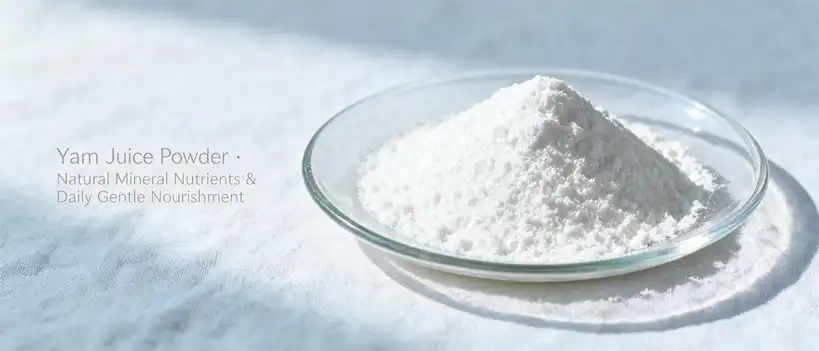
Understanding Yam Juice Powder and Its Nutritional Advantages
What Sets This Ingredient Apart From Conventional Yam Products
Yam juice powder and standard yam powder are mostly different in how they are made and what they can do. The old way of making yam powder is to dry out whole yams and grind them up. So the high fiber content that makes drinks gritty and slows down digestion stays the same. Yam juice powder, on the other hand, gets its nutrient-rich liquid part from the tough cellulose fibers by cold-pressing the fruit. This is done before it is frozen or spray-dried. A fine powder that is off-white to light brown and 80 mesh is made this way. It mixes better with liquids than other powders, which helps make drinks quickly. Bioactive ingredients like allantoin, diosgenin, and mucilage polysaccharides are concentrated in amounts that make sure recipes stay stable from one batch to the next.
Core Bioactive Components and Their Functional Benefits
A 50% dose of UV light is used in the tests to see how good the product is. Because of these complex carbs, the good bugs in your gut stay healthy. In other words, they are good for your stomach. Someone is interested in diosgenin, a steroidal saponin that can be found naturally in some kinds of yams. It might help keep hormones in check and the body healthy. Because allantoin helps the body heal, it can be used in more than just drinks and skin care. This group of chemicals helps fight reactive stress since they are antioxidants. This is good for health-conscious people because it supports what they've heard about how the immune system works. Because it's healthy, B2B clients who make functional drinks don't need to add chemicals to make them stronger. They can make their drinks with clean-label recipes instead.
Scientific Validation and Safety Considerations
The main thing that works is yam carbohydrates. Under UV testing, they are set at a 50% concentration that makes sure the quality of the product. These complex carbohydrates help keep the good bacteria in your gut healthy, which makes them useful for improving stomach health. Researchers are interested in diosgenin, a steroidal saponin that can be found naturally in some types of yams, because it may help keep hormones in balance and the metabolism healthy. Allantoin is useful in more than just drinks and skin care items because it helps the body heal. The antioxidant qualities of these chemicals help fight oxidative stress. This supports statements about immune function that people who care about their health like. Because it's high in vitamins, B2B clients who make functional drinks can use clean-label recipes that are good for you instead of just adding chemicals to make them stronger.
Why Choose Yam Juice Powder for Instant Beverage Formulations
Superior Solubility and Processing Advantages
Yam juice powder that has been properly processed dissolves in water, which solves a major problem in the development of instant drinks: getting the powder to spread out quickly and completely without clumping or sedimentation. The separation and drying steps change the polysaccharide's structure to make it better at absorbing water quickly. This means it can be broken down quickly in water at room temperature. One big difference is that whole yam powder usually needs to be stirred for a long time or cooked up very hot before it can be mixed well. The fine particle size distribution at 80 mesh ensures that the texture doesn't feel rough in the mouth, which can make it harder for some people to accept. When things are normal, processing stability is still very good for making drinks. It doesn't lose much of its medicinal value when it's processed or dried with a spray. Formulations are easier to make, and manufacturers can make instant mixes that stay stable on the shelf and have the same reconstitution properties every time.
Enhanced Flavor Profile and Texture Contributions
The steps of separating and drying the polysaccharide change its structure to help it soak up water more quickly. In other words, it breaks down quickly in water that is not cold. With whole yam powder, you need to stir it for a long time or cook it until it's very hot before you can mix it well. Eighty mesh of fine particles makes sure that the texture doesn't feel rough in the mouth, which can be hard for some people to get used to. Processing stability is still great for making drinks when everything is fine. The medicine in it doesn't go away much when it's treated or sprayed dry. More formulas can be made, and instant mixes can be made that stay stable on the shelf and always have the same reconstitution properties.
Alignment With Consumer Wellness Trends
The list of ingredients in yam juice powder lets drinks take advantage of a number of market trends that are coming together. More and more people want plant-based foods that have been used in traditional ways and are true to their culture. Because yam is so important in Asian health cultures, it can be used to tell stories that people who are interested in plants will find interesting. People on tight diets can use it without having to change the recipe because it is naturally vegan and allergen-free. Using chemical agents or man-made additives to get the oil out of whole yams is a simple process story that helps with clean-label labeling. A lot of people are making functional foods that are good for your gut health, and the prebiotic carbohydrate level fits in with that. The defensive health themes that became popular after the global health scare are backed up by antioxidants. Manufacturers who want to reach high-end customers can use yam juice powder to set their products apart from generic protein powders and man-made supplement mixes.
Production Standards and Quality Benchmarking for Procurement
Understanding Manufacturing Processes and Quality Grading
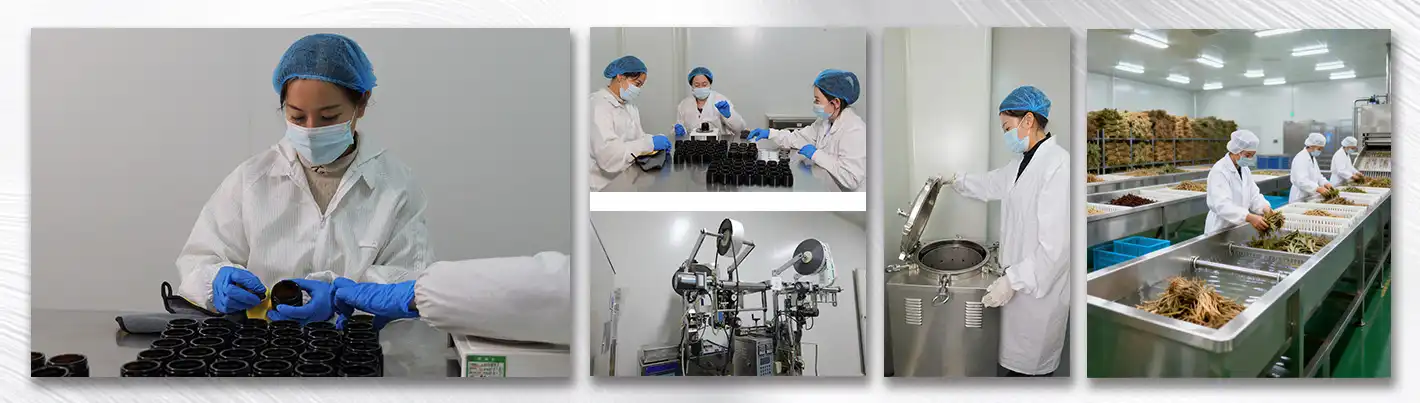
Selecting premium cultivars of Dioscorea opposita, which are known for their high carbohydrate content and low taste, is the first step in making premium Yam juice powder. Agricultural practices affect the quality of the final product. For example, controlled cultivation environments produce cleaner raw materials that need less cleaning. Leading makers use soft aqueous processes instead of harsh chemical solvents for extraction, which keeps the natural bioactive configurations. Multiple stages of precise filtering get rid of insoluble fibers and possible contaminants, while concentrating the polysaccharide parts. Low-temperature vacuum concentration stops heat-sensitive chemicals from breaking down, which protects the nutrients that spray drying at high temperatures could damage. The last step of drying determines the reconstitution properties. Lyophilization usually produces better solubility properties than regular spray drying, but it costs more to make.
Critical Certifications and Compliance Requirements
When purchasing managers look at Yam juice powder providers, they need to make sure that the suppliers have full certification files that show they make high-quality products and follow all the rules. Getting ISO9001 certification sets up basic quality management systems that make sure that production standards are always met. GMP certification covers good manufacturing practices that are necessary for food-grade ingredients. It includes rules for keeping the facility clean, training employees, and keeping contamination from spreading. If a product is registered with the FDA for the U.S. market, it shows that the company is ready for federal oversight and inspection. Kosher and Halal approvals make it easier for products aimed at religious Jewish and Muslim customers to reach more markets. When organic certification is available, it brings higher prices and appeals to natural product channels, but it needs to be checked that farming practices are followed all the way through the supply chain. NSF-GMP certification adds to the third-party validation that dietary supplement companies that sell in the United States value.
Evaluating Supplier Capabilities and Consistency
In addition to certifications, sellers must show that they have strong professional skills and a reliable supply chain in order for long-term partnerships to work. Production capacity is very important for brands that want to grow. Companies that have specialized yam powder production lines that can make more than 1,000 tons of powder every year can handle growth without having to worry about supply problems. How quickly an order is filled depends on how well it is managed, and the best sellers keep enough stock to support normal lead times of 10 days for commodity grades. The Certificate of Analysis that goes with each package should confirm the polysaccharide content using validated UV spectrophotometry. This is usually done with analytical certificates from third-party labs that have been approved by the FDA. Controlling moisture during transport and storage stops caking that makes the product less useful. For best preservation, nitrogen-flushed aluminum foil lining is needed inside fiber drums. Suppliers with a variable MOQ starting at 1 kg can help with product development needs and also help with scaling up to 25 kg drums for mass production.
Integrating Yam Juice Powder Into Instant Beverage Development
Practical Formulation Guidelines and Dosage Recommendations
Understanding the ideal content ranges and mixing orders is necessary for the effective addition of Yam juice powder to quick beverage mixtures. Yam juice powder typically makes up 3-8% of the total weight in functional wellness drinks that focus on digestive health, giving each serving about 1.5–4 grams of polysaccharides. 5- 10 percent inclusion rates are good for meal replacements because they add viscosity, nutrient density, and make you feel fuller. The ingredient works very well with plant proteins like pea, rice, and hemp proteins, which are often used in veggie products. In order to make sure that the powder is evenly distributed, it should be added during the dry mixing stages, along with other powdered ingredients. Because polysaccharides are hygroscopic, which means they easily take water from the air, moisture barrier packaging is very important when making instant mixes that can be kept on the shelf.
Overcoming Common Formulation Challenges
When working with polysaccharide-rich ingredients, product developers may face certain problems that need strategic solutions. Small differences in color between batches, running from off-white to light brown, are normal in agriculture and can be controlled by setting realistic goals or making small changes to the recipe using natural colorants. The smell of yam is usually mild, but it might need to be covered up in delicate flavor profiles. Vanilla, chocolate, or fruit essences at 0.5 to 2% work well for this. Some minerals, like calcium and iron, can change how well something dissolves or cause a small amount of precipitation. This problem can be fixed by adding minerals in the right order or using chelated mineral forms. Shelf-life stability testing should go on for an extra 24 months under sped-up conditions to make sure the integrity of the polysaccharides and stop the viscosity from changing over time. Formulations with probiotics need to be carefully tested to make sure that the carbohydrate parts help bacteria survive by having the right prebiotic activity.
Regulatory Compliance and Labeling Considerations
Manufacturers of drinks that want to sell in North America have to follow the rules set by the FDA and CFIA for ingredient claims and labeling regulations. Yam juice powder is regulated differently than isolated botanical extracts because it is classified as a food ingredient rather than a dietary supplement additive in beverage applications. Nutrient content claims about fiber or carbohydrate content must meet the minimum amounts set out in 21 CFR 101.54. Structure-function claims about digestive support must not make disease claims and must use honest, non-misleading language backed up by science. Labeling for allergens is still easy because yams don't meet FALCPA's definition of a major allergen. Simple ingredient lists, like "Yam juice powder" or "Dioscorea opposita Powder," help with clean label positioning because they are clear and easy for customers to understand. If all other conditions are met, the final beverage can be labeled as organic thanks to USDA Organic approval of the Yam juice powder.
Strategic Sourcing and Market Intelligence
Evaluating Global Suppliers and Quality-Price Relationships
Yam juice powder is mostly made by Chinese companies that take advantage of the country's farming benefits and well-established extraction technology. There are big differences in the quality of the products that different suppliers offer, ranging from cheap, commodity-grade materials used in low-cost applications to high-end, pharmaceutical-grade materials that cost 40–60% more. Besides just the per-kilogram price, procurement managers should compare products based on a number of other factors as well. The uniformity of the polysaccharide assay is very important. Suppliers who promise a minimum content of 50% and normal ranges of 50–55% provide formulation stability, while those who show a 45–60% difference cause production problems that need to be fixed all the time. Heavy metal testing frequency and detection limits show how committed a seller is to quality. For example, top suppliers test every production batch instead of just taking samples every three months. Specifications for moisture content below 5% stop microbes from growing and prevent caking during storage, which extends the shelf life to the standard 24 months.
Optimizing Logistics and Storage Management
Efficient procurement includes more than just choosing a supplier. It also includes planning for logistics and keeping track of inventory. Yam juice powder shipped in 25 kg fiber drums with nitrogen-flushed aluminum foil lining keeps quality intact during long transit, working with 25–35-day sea freight times from China to the U.S. routes. For international transactions, FOB and CIF terms are still the most common. However, well-known suppliers offer flexible delivery options, such as EXW, for large clients who handle their own freight forwarding. The conditions of storage have a big effect on how stable a product is. Keeping the temperature between 15°C and 25°C and the relative humidity below 60% stops the product from absorbing moisture and caking. To keep ingredients as fresh as possible, warehouse rules should use production date coding instead of receipt times to determine who goes in and who goes out first. The process of breaking down large drums into smaller units for use on the production floor should be done in a controlled setting with as little exposure to air as possible, since air contact makes the hygroscopic powder absorb water faster.
Conclusion
Yam juice powder is a valuable ingredient for companies that make instant drinks and want to set their products apart by using real functional nutrition and clean labeling. Because it dissolves easily, has a consistent amount of polysaccharides, and fits with health trends, it can be used to make new products that meet changing customer needs. To do good procurement, you need to look at sellers' certifications, analytical uniformity, output capacity, and transportation reliability, among other quality factors. Because the ingredient can be used in meal replacements, functional wellness drinks, and senior nutrition, it can be used in a variety of ways to meet the needs of different market segments. Yam juice powder is used by manufacturers to position their products at the intersection of tradition and innovation as consumer interest in plant-based, gut-health-supporting ingredients continues to rise. Partnering with qualified providers who offer full technical support, a flexible minimum order quantity, and legal knowledge is the best way to make sure that product development goes smoothly from the idea stage to market scale.
FAQ
Is yam juice powder safe for diverse consumer groups?
When taken in the suggested amounts, Yam juice powder has very good safety ratings for most population groups. This item is good for vegans, vegetarians, and people who are allergic to big allergens because it doesn't contain any animal products. Following standard safety rules, women who are pregnant or nursing should talk to their doctors before drinking functional drinks with strong plant ingredients. People who have been labeled with digestive problems should be introduced to it slowly to see if they can handle it, but the prebiotic qualities usually help gut health rather than hurt it. Manufacturers need to make sure that their suppliers test for heavy metals and show that the amounts of lead and arsenic are below the standards set by California Prop 65 and the FDA.
How does this ingredient affect beverage taste and texture?
Yam juice powder that has been properly processed adds a light sweetness and earthiness that go well with most flavors without overpowering them. The natural mucilage gives the drink a nice thickness and creamy mouthfeel, which is especially useful in meal replacement and protein drinks. It's not necessary to be aggressive to mask a flavor; vanilla or chocolate notes at normal concentrations can easily balance out any yam flavor that's still there. The small particles make the texture smooth, without the gritty feel that whole yam powder might add.
What certifications should procurement teams verify?
Some of the most important certifications are ISO9001 for quality control systems, GMP for good production practices, and FDA registration to get into the U.S. market. Kosher and Halal certifications help you reach more customers, and organic approval lets you set your products apart as more expensive. NSF-GMP adds to the approval process, which is especially important for food supplement uses. With every shipment batch, there should be analytical certificates that show the polysaccharide content is at least 50% through UV spectrophotometry.
Partner With BioSpark for Premium Yam Juice Powder Supply
With pharmaceutical-grade Yam juice powder produced to the highest quality standards, BioSpark (Xi'an) Biotechnology Co., Ltd. is ready to assist you with your instant beverage innovation. The best Dioscorea opposita tubers are processed at our state-of-the-art plant extraction facility using gentle water-based methods that keep the tubers' bioactive integrity while achieving superior water solubility, which is necessary for immediate use. We meet the strict needs of beverage producers around the world by having a wide range of certificates, such as ISO9001, FDA registration, GMP, Kosher, Halal, and EU Organic. With standard 10-day lead times and an inventory capacity of more than 1,000 tons, we can meet your needs quickly. Our flexible MOQ starting at just 1 kg can also be used for product development. Our 30-person research and development team is here to help you with any problem, from making samples to mass production. They can make standard 50% polysaccharide formulations or ratios that are just right for certain uses. Get in touch with our team at leao@biosparkcn.com to talk about your formulation needs and get samples from a reliable Yam juice powder supplier that wants you to succeed.
References
1. Chen, H.L., et al. "Polysaccharides from Dioscorea opposita Thunb.: Extraction, Characterization and Immunomodulatory Activities." International Journal of Biological Macromolecules, vol. 133, 2019, pp. 1231-1240.
2. Liu, Y., Zhang, B., and Ibrahim, S.A. "Bioactive Components and Health-Promoting Properties of Yam (Dioscorea spp.)." Food Reviews International, vol. 36, no. 8, 2020, pp. 805-825.
3. Wang, Z.J., et al. "Structural Characterization and Prebiotic Activity of Polysaccharides from Chinese Yam." Food Hydrocolloids, vol. 89, 2019, pp. 688-697.
4. Zhang, L., et al. "Processing Effects on Nutritional and Functional Properties of Yam Powder." Journal of Food Science and Technology, vol. 57, no. 4, 2020, pp. 1456-1465.
5. Sharma, P. and Singh, R. "Formulation Development of Functional Beverages Incorporating Traditional Plant Ingredients." Beverage Science and Technology Review, vol. 28, no. 2, 2021, pp. 112-128.
6. Thompson, K. "Clean Label Ingredients in Instant Beverage Applications: Market Trends and Technical Considerations." Food Technology Magazine, vol. 75, no. 6, 2021, pp. 34-41.

Send Inquiry
Related Industry Knowledge
- How Can Barley Sprout Powder Enhance Nutrition Products?
- Coconut Milk Extract Powder: The Ultimate Plant-Based Dairy Swap
- Coconut Milk Extract Powder: The Ultimate Plant-Based Dairy Swap
- Coconut Milk Extract Powder: The Ultimate Plant-Based Dairy Swap
- Coconut Milk Extract Powder: The Ultimate Plant-Based Dairy Swap
- Coconut Milk Extract Powder: The Ultimate Plant-Based Dairy Swap
- Coconut Milk Extract Powder: The Ultimate Plant-Based Dairy Swap
- Coconut Milk Extract Powder: The Ultimate Plant-Based Dairy Swap
- Coconut Milk Extract Powder: The Ultimate Plant-Based Dairy Swap
- Coconut Milk Extract Powder: The Ultimate Plant-Based Dairy Swap
- What Are the Applications of Cape Gooseberry Powder?
- How to Choose High-Quality Papaya Leaf Extract Powder?
- Coconut Milk Extract Powder: Key Nutritional Benefits
- Angelica Sinensis Extract Powder for Beginners: What to Know?
- Saffron Extract Powder 10:1: Science-Backed Benefits Explained
- Should You Try Garcinia Cambogia Extract for Fat Control?
- How Hydrolyzed Rice Extract Enhances Hair Texture?
- Baicalin Extract for Skin: Anti-Aging & Protective Boost