_1764041963888.webp)
Coconut Milk Extract Powder: The Ultimate Plant-Based Dairy Swap
Jul 18, 2026
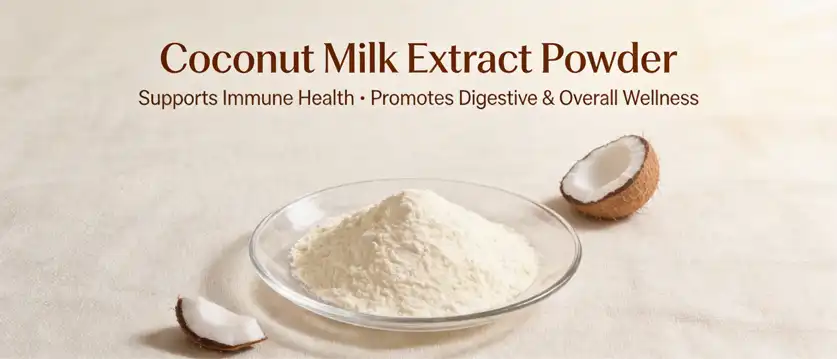
People are quickly coming to like coconut milk extract powder as a flexible plant-based dairy alternative, especially in the food manufacturing and global business-to-business purchasing industries. The white endosperm of fully grown coconuts is where this spray-dried emulsion with lots of lipids comes from. Manufacturers can use it instead of liquid coconut milk because it is stable and uniform. It is better for large-scale commercial food production because the powdered form lasts longer, is easier to work with, and has more consistent quality than the liquid form. This blog post explains what this new powder is made of, how to use it, and how it can benefit your health. It also goes over some important things you should think about when looking for and picking a seller that will help your plans for buying things and making new products work better.
Understanding Coconut Milk Extract Powder: Composition, Benefits, and Usage
What is Coconut Milk Extract Powder and How is it Made?
One type of coconut milk that has been dried out and concentrated is coconut milk extract powder. How it works and how much fat it has are different from coconut cream powder. To make it, fresh coconut meat is pressed to make an emulsion over time. This is then put into capsules made of maltodextrin or acacia gum to protect the oil phase while it dries. Manufacturers use spray drying or drum drying to keep important nutrients like lauric acid and medium-chain fats while greatly reducing the activity of water. Hydrolytic rancidity is when liquid coconut milk goes bad in 24 hours because of lipase activity. This change fixes some big problems in the industry.
Nutritional Composition and Health Benefits
About 60–70% of the natural coconut oil is still in the powder. This gives it a lot of medium-chain fatty acids, mostly lauric acid. Because it contains gentle antibiotics, this one-of-a-kind mix boosts the immune system and helps the body take in energy quickly. The item also has carbs, veggie proteins, and minerals like magnesium and potassium that are good for you. It is good for your heart because it doesn't have any fat or sugar in it, and people with different food needs can use it. This kind of fat is good for your heart, according to scientists. Plant-based foods are better for you than animal milk because these fats are broken down differently than long-chain fatty acids.
Common Food Manufacturing Applications
There are many times when the powder works great when making food. People who make drinks use it to make plant-based drinks like coconut milk drinks and milk tea. Because it is so good at reconstituting, the drinks are smooth and even. People who bake use it to give bread, cakes, and cookies a rich coconut smell and feel. Making desserts like how well it works in ice cream and other frozen treats, and making fast drinks like how quickly it dissolves. You can also use the powder to give soups, stews, candies, and snacks a natural taste. It goes well with the clean label and healthy food trends.
Storage and Shelf Life Best Practices
Products in global supply chains stay pure by being stored in the right way. Metal foil bags filled with nitrogen should be used to store the powder in drums. Light, air, and water won't be able to get to it. If everything goes as planned, the product will stay fixed for 18 to 24 months, while liquid options will only last hours. Because they last longer, they take up more than 80% less space than liquid cans. So, shipping water is no longer expensive, and there is no longer a chance that cans will rust or leak while being sent from one business to another. Because the water activity is low, enzymes can't break down the substance, so the quality stays the same during the distribution cycle.
Comparing Coconut Milk Extract Powder with Alternative Dairy Substitutes
Coconut Milk vs Cream Powder: Understanding the Differences
This coconut-based powder is not always the same and does not work as well as the other one. There is a fair amount of fat in coconut milk extract powder, which makes it good for drinks and other lighter uses that need a balanced coconut flavour. However, coconut cream powder has more fat than cream cheese. Its fuller texture and stronger flavours make it perfect for sweets and high-end recipes. There are big differences in how they taste. The extract powder tastes like light coconut and goes well with a lot of different ingredients. The cream powder, on the other hand, has a strong, unique taste. The goals of the formula tell us what kind of powder works best for each task. For example, cream powder is great for dry-mix jobs that need to feel rich in the mouth, while extract powder is great for jobs that need to melt quickly.
Organic Variants and Certification Considerations
As more health-conscious customers look for certified products, different types of organic coconut powder are used to make the product cleaner and meet their needs. These are made from coconuts that were grown without using chemical herbicides or fertilisers. They have been certified organic by groups like the EU or the USDA. A better reputation can be gained by manufacturers who claim their products are allergen-free, organic, or have not been made with GMOs. As part of the certification process, there needs to be a lot of paperwork and tracking from the farm to the finished product. This is helpful for brands that want to reach people who care about their health. Organic brands often cost more, but they help them stand out and gain customers' trust.
Performance Against Other Plant-Based Alternatives
There are many good things about coconut milk extract powder, such as how cheap it is, how long it lasts, and how it can be used in business. It gives things a creamier and fuller taste because it has more fat than almond or oat powder. Some soy-based foods may have more protein, but coconut powder is great for people who are allergic to soy and need medium-chain fatty acids. It keeps better on shelves than most liquid plant-based alternatives, which cuts down on waste and makes shipping easier. As for costs, each useful unit of the powder costs less to store and move because it is more concentrated. This is helpful for business buyers who need to keep track of large amounts of stock.
How to Select the Best Coconut Milk Extract Powder for Your Business
Quality Factors and Evaluation Criteria
There are a lot of things you need to look at to find the best powder. How well it works is directly linked to how much fat is in it. Products that keep between 60 and 70% of their coconut oil are better for low-calorie recipes because they keep more of the flavour and texture. There must be no contaminants. Reliable suppliers check carefully for heavy metals, microbial contamination, and pesticide residues. Flavours that stay the same from batch to batch ensure reliability. It is very important for makers whose tastes are well known to do this. To follow allergy rules, your information needs to be clear. For instance, some regulatory systems see coconut as a tree nut, but it doesn't really pose a cross-reactivity risk. This is the reason why allergy labels are so important for supply lines around the world.
Certification Credentials and Allergen Controls
Teams that are in charge of getting things should choose sellers with well-known certifications. Non-GMO certification ensures that the genes are not changed, and cleanliness assurance systems like HACCP and GMP show that the company cares about food safety. Organic certification makes sure that no man-made chemicals were used in the production process. Having a halal or kosher licence makes it easier to sell your goods in more places. Being recognised by ISO 22000 means that you take food safety very seriously. Controlling allergens is very important for the powder because it is used in so many different ways. To avoid cross-contamination, suppliers should either keep their production lines separate or follow strict cleaning rules. They should also provide detailed allergen statements and testing records. With these credentials, the company is less likely to get into legal trouble and is seen as more trustworthy in foreign markets.
Market Overview and Supplier Reliability
On the world market for coconut powder, there are a number of well-known brands that are trusted for quality. There are well-known brands that always make good products, are honest about where their materials come from, and offer quick customer service. Check to see how well the seller has worked with clients in the same field as you. Also, look at their third-party reports and certifications and ask for samples to make sure they meet your needs. Supplier dependability isn't just about how good the product is; it's also about how strong the supply chain is. When things go wrong, manufacturers can still keep delivery dates if they have good backup plans and a lot of different places to get their supplies. When two companies do business together, how the other company is seen around the world is very important. For instance, quality systems and standards are often stricter and more complicated at companies that supply food to large food companies.
Pricing Structures and MOQ Considerations
To make cost-effective purchases, you need to know how prices work and what the minimum order quantity is. This powder made from coconut milk is priced based on how healthy it is, how much fat it has, and how much you order. You can save money when you buy a lot. Prices tend to go down when you buy 100 kg, 500 kg, or 1000 kg or more. For testing, some sellers have MOQs as low as 1 kg, but for production sales, the minimum is usually 25 kg. Things to think about when it comes to transportation are the prices of goods, import taxes, and storage. Compare FOB prices from places like China, the Philippines, or Thailand to CIF or DDP terms to find out how much it costs to land all together. Payment terms affect cash flow planning. Terms can range from full payment up front to 30 to 60 days of credit for long-term relationships.
Maximising Value: Application Scenarios and Supplier Partnerships
Typical Use Cases in Food Manufacturing and OEM
People who make food can use the powder for a lot of different things. Due to its neutral pH and high solubility, the powder is used by drink companies to make plant-based milk replacements, protein shakes, and coffee creamers. Bakeries use it to make vegan desserts, cakes without dairy, and cookies that taste like coconut. It is spread out evenly because the particles are small (100–120 mesh). Due to its "clean label" draw, the powder is used to make dairy-free sweets and treats that are based on coconut. Health food companies make healthy products and meal replacements with their high vitamin density and MCT content. Most of all, OEM partners like how flexible the powder is for making their own recipes.
Custom Formulation and Private-Label Offerings
More than just giving ingredients is part of value-added seller services. Quality control and coconut milk extract powder help are also part of them. Food scientists work in the application labs of the biggest suppliers. These scientists help people come up with new recipes, test them to see how stable they are, and make the food taste and smell better. Brands and sellers can put out goods without having to build their own factories when they use private-label options. Instead, providers handle all of it, from coming up with the formula to designing the packages and filing the paperwork. As part of technical help, you can learn how to keep goods safe in hot weather, water them, and make them last longer on the shelf. Checking for quality makes sure that each batch gets a unique analysis certificate, samples are kept so that they can be tracked, and stability is always being checked.
Supply Chain Resilience and Innovation Trends
It takes strong risk management and good relationships with suppliers to keep the supply chain strong. Coconut comes from many places around the world for suppliers who are ahead of the curve. This makes them less likely to be hurt by bad weather or government issues. So they can respond to changes in demand, they spent money on backup stocks and flexible production capacity. Through enzymatic processing, you can make versions with more protein. You can also make spray-dried organic virgin coconut milk powder that sells for a lot of money. And you can make special mixes that work best for things like barista-style drinks or frozen desserts. More and more, people want products that are clear, useful, and last a long time. Companies that care about the environment, get their products in a good way, and keep making new products will do well in these trends.
Conclusion
It is now better to use coconut milk extract powder instead of dairy when making food or buying it for other businesses. Because it is concentrated, it doesn't have the same problems with shelf life, transportation, or stability of makeup that liquid forms do. The powder's high nutritional value—it has a lot of essential minerals and medium-chain fatty acids—goes along with consumer trends toward wellness, and the fact that it has a clean label meets the need for natural ingredients. For good buying, you should pay close attention to high standards, licenses, and the skills of the supplier. This versatile ingredient can be used safely in new products by manufacturers and wholesalers who work with reliable suppliers who offer technical support, flexible production capacity, and strict quality systems.
FAQ
How Long Does Coconut Milk Extract Powder Remain Stable in Bulk Storage?
Under proper storage conditions—cool, dry environment with nitrogen-filled packaging—the powder maintains optimal quality for 18-24 months. This extended stability results from reduced water activity that inhibits enzymatic degradation and microbial growth. Bulk storage requires climate-controlled warehouses maintaining temperatures below 25°C and relative humidity under 65%. Regular quality monitoring through periodic sampling ensures the product retains its characteristic aroma, flavour, and functional properties throughout the storage period.
Does Coconut Milk Extract Powder Pose Different Allergy Risks Than Fresh Coconut Milk?
The powder and fresh coconut milk share identical allergen profiles since both derive from coconut endosperm. Coconut is classified as a tree nut under FDA regulations, though allergic reactions are relatively uncommon compared to other tree nuts. The powdered form eliminates spoilage-related contaminants but doesn't alter the inherent protein structures that trigger allergic responses. Manufacturers must implement appropriate allergen labelling and controls to prevent cross-contamination with other allergenic ingredients during processing and packaging operations.
What Shipping Practices Best Preserve Product Quality During International Transit?
Optimal shipping practices include containerised transport with desiccant packets to control moisture exposure, avoiding extreme temperature fluctuations through climate-controlled or insulated containers, and utilising nitrogen-flushed packaging to prevent oxidation. Proper handling procedures prevent physical damage to packaging that could compromise product integrity. Documentation should include storage and handling instructions, and transit times should be minimised to reduce exposure risks. Suppliers experienced in international distribution understand these requirements and implement appropriate safeguards throughout the logistics chain.

Partner with BioSpark for Premium Coconut Milk Extract Powder
BioSpark stands ready to support your product development with premium-quality plant-based ingredients. As an experienced coconut milk extract powder manufacturer, we provide comprehensive OEM and ODM services tailored to health supplement brands, nutraceutical companies, and food manufacturers. Our advanced spray-drying technology produces powder with 98% active ingredient content and exceptional water solubility, backed by rigorous quality control meeting international standards. We offer flexible production capacity from small development batches to large-scale orders, ensuring reliable supply for your growing business. Contact our team at leao@biosparkcn.com to request samples, discuss custom formulations, or explore bulk pricing for coconut milk extract powder for sale. Let us help you bring innovative plant-based products to market with confidence.
References
1. Marina AM, Che Man YB, Amin I. "Virgin coconut oil: emerging functional food oil." Trends in Food Science & Technology, 2009.
2. Dayrit FM. "The Properties of Lauric Acid and Their Significance in Coconut Oil." Journal of the American Oil Chemists' Society, 2015.
3. Raghavendra SN, Raghavarao KSMS. "Effect of different treatments for the destabilisation of coconut milk emulsion." Journal of Food Engineering, 2010.
4. Tangsuphoom N, Coupland JN. "Effect of thermal treatments on the properties of coconut milk emulsions prepared with surface-active stabilisers." Food Hydrocolloids, 2009.
5. Seow CC, Gwee CN. "Coconut milk: chemistry and technology." International Journal of Food Science & Technology, 1997.
6. Somaratne G, Ranaweera K, Nadeeshani H. "Therapeutic Attributes of Coconut Milk: A Traditional Food Ingredient of Sri Lanka." Evidence-Based Complementary and Alternative Medicine, 2021.

Send Inquiry
Related Industry Knowledge
- Can Liposomal Vitamin K2 Improve Nutrient Absorption?
- What Specifications Matter When Buying Wolfberry Peptide?
- What Makes Premium Cherry Fruit Powder Ideal for Bulk Supply?
- How to Find Reliable Broad Bean Powder Manufacturers?
- Is Broad Bean Powder a Good Protein Ingredient Choice?
- Snow Lotus Powder Wholesale Supplier with ISO Certification
- Egg yolk fruit powder for Functional Foods: Key Advantages
- Could White Kidney Bean Extract Powder Enhance Fat Burn Products?
- What are the benefits of freeze-dried longan powder?
- How Do Indian Herbal Extracts Support Natural Detoxification?