_1764041963888.webp)
Coconut Milk Extract Powder: Key Nutritional Benefits
Apr 28, 2026
When making goods with health in mind, choosing the right ingredients is very important. For manufacturers of plant-based supplements, functional beverages and wellness products, coconut milk extract powder has become a transformative raw material. This spray-dried emulsion keeps the health benefits of fresh coconut while fixing long-standing problems with shelf life, transportation, and accuracy in formulation. This ingredient meets the needs of both manufacturers and consumers who want clean-label, dairy-free options that taste great and offer real health benefits. It does this by providing medium-chain fatty acids, important minerals, and great reconstitution qualities.
Understanding Coconut Milk Extract Powder
What Exactly Is This Ingredient?
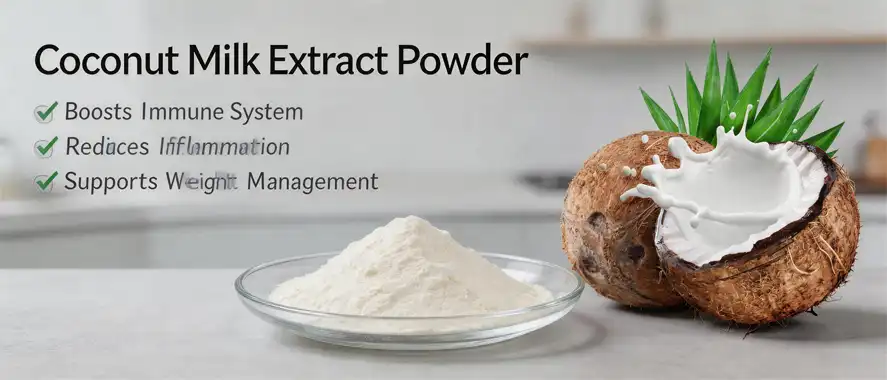
Coconut milk extract powder is a premium spray-dried ingredient processed from the white endosperm of mature coconuts. This product is not just dried coconut; it goes through a controlled extraction process where fresh coconut meat is pressed to make a rich slurry. The mixture is then enclosed in carrier materials like maltodextrin or acacia gum, and it is dried using spray-dry technology. The end result is a smooth powder that stays true to the coconut flavor while getting rid of the water activity that breaks it down quickly. There is no lactose or cholesterol in our powder, and it has 60–70% natural coconut oil solids, medium-chain fatty acids, veggie proteins, and important minerals like magnesium and potassium.
Manufacturing Process and Quality Standards
Fresh coconut oil is filtered and condensed to remove contaminants that can't be dissolved before producing anything. Vacuum evaporation concentrates the extract to 10–40% solid content, greatly improving atomization efficiency for spray drying. Drying aids modify the texture and prevent powder from clinging to walls. It also facilitates particle dissolution and flow. During the core drying stage, high-pressure pumps deliver liquid feed to atomizers, breaking it into micro-droplets of tens of microns. This maximizes specific surface area. When contacting filtered hot air at 150–220°C, droplet surface moisture evaporates instantly to form porous spherical particles. Heat transfer is precisely controlled until moisture content falls below 3%, fully protecting heat-sensitive nutrients. Gas-solid separation is completed by cyclone separators to isolate dry powder from humid air. Rapid cooling using fluidized bed systems prevents clumping, and moving screens remove particles too large to provide a uniform particle size distribution throughout 100–120 mesh. Wetness, particle size, microbiological safety, and chemical composition are tested before placing items in nitrogen-filled metal foil bags. This standardized production process solves core industrial pain points. It prevents hydrolytic rancidity that causes liquid coconut milk to deteriorate within 24 hours, cuts bulk volume by over 80% for cost-effective logistics, and avoids liquid phase separation.
Available Forms and Quality Grades
When B2B buying teams look at grades, they see different ones that are made for different uses. Standard grades have between 30 and 45 percent fat, which is good for low-cost uses like quick drink mixes. Premium grades have 50–65% fat, which gives specialty coffee creamers and fancy desserts a fuller flavor. Organic approved versions meet both USDA NOP and EU organic standards. They cost more, but they meet customers' desire for certified clean-label goods. Our requirements say that it must have 98% active ingredients, look off-white to light yellow, smell like coconut milk, and dissolve very easily in water. A 10% aqueous solution presents a neutral pH of 6.0–7.0, ensuring wide processing stability. Its bulk density of 0.30–0.50 g/mL is fully compatible with automated dosing systems.
Comparing Coconut Milk Extract Powder with Similar Products
Coconut Milk Powder vs. Extract Powder
People often get coconut milk powder and Coconut milk extract powder mixed up, even though they are very different. As an inexpensive way to add bulk, standard coconut milk powder usually has a lower fat content (15–25%) and a higher maltodextrin content. This mixture works fine for most cooking tasks, but it doesn't have the rich creaming power that quality beverage recipes need. This extract powder highly concentrates the lipid phase to reach 50–65% fat content, delivering thick texture and fresh coconut flavor. Our professional extraction and MCT encapsulation technology effectively inhibits lipid oxidation, providing better stability than conventional single drying processes. It is the ideal option for keto coffee blends and vegan latte formulas requiring dairy-like smoothness, with outstanding thermal stability above 80°C.
Organic Certification and Sourcing Considerations
Choosing between organic and standard varieties is an important part of buying things. Organic coconut powder supports full farm-to-factory traceability, with raw coconuts cultivated without synthetic fertilizers and pesticides. Certification groups like USDA, EU Organic, and ECOCERT do checks every year to make sure that all parts of the supply chain are following the rules. Organic choices cost 20–40% more than regular ones, but they can be bought at health food stores, by high-end names, and by people who care about the environment. International testing methods make sure that conventional grades meet strict quality standards, but they don't have any official organic documentation. Both grades meet unified safety limits for heavy metals, microbial contaminants and herbicide residues. Reliability in sourcing rests on suppliers being open about how they run their plantations, how they keep track of products, and how willing they are to provide all the paperwork needed by North American and European markets.

Key Nutritional Benefits and Functional Uses
Nutritional Profile and Health Advantages
Spray-dried Coconut milk extract powder's nutritious composition provides healthy product creators with quantifiable advantages. Twenty to thirty percent of lipids are medium-chain fatty acids, with forty-five to fifty percent lauric acid (C12). MCTs may be absorbed through the gut wall and burned in the liver without bile salts or pancreatic enzymes, unlike long-chain fatty acids. This metabolic pathway provides rapid energy without insulin spikes, making formulations ideal for ketogenic diets and usage that needs long-lasting energy. Lauric acid can be converted into monolaurin, which exhibits inhibitory effects on lipid-coated viruses, bacteria and fungi in laboratory tests. As a cholesterol-free ingredient, it supports cardiovascular wellness, while vitamin E antioxidants help inhibit lipid peroxidation. Electrolytes and muscles need magnesium (60–80 mg per 100g powder) and potassium (180–220 mg per 100g powder). Vegan recipes may achieve their amino acid demands with 4–6 grams of plant-based proteins per 100 grams. Together, these healthy substances make the product helpful in many scenarios while appearing beautiful on the label. Free from artificial additives and synthetic fortifiers, it enables brands to highlight selling points such as “naturally occurring MCTs”, “plant-derived minerals” and “dairy-free nutrition”.
Food and Beverage Applications
Food manufacturers favor this natural ingredient for its strong performance in solving complex production challenges, and Coconut milk extract powder plays a key role in delivering these benefits. In rapid drinks, the powder maintains stable properties under high-temperature water conditions and delivers a creamy texture similar to dairy creamers. Our 98% active ingredient level ensures robust taste at a cost-effective 5–15% in final products. Dry-mix grids uniformly distribute 100–120 mesh particles so they don't separate or stratify during storage or transport. Experts may utilize MCT to enhance fat macros while lowering net carbohydrates in keto-friendly coffee creamers. This appeals to the burgeoning ketogenic diet community. Industrial bakeries may employ liquid coconut milk's moisture control characteristics. The powder adds fat solids at 8–12% to cookie or cake premixes without introducing unbound water that might induce gluten or bacteria growth and spoilage. It maintains the soft crumb structure and extends room temperature shelf life. The ingredient adds richness to dairy-free frozen treats and prevents ice crystals by interacting with water molecules. Mixing it with complementary items lets taste scientists adjust the sweetness and coconut flavor. They may create bespoke sensory profiles with light tropical overtones to robust coconut flavor.
Nutraceutical and Supplement Integration
Coconut extract powder may offer fat-soluble vitamins and helpful compounds, and nutraceutical businesses are discovering its potential. Vitamins A, D, E, and K are absorbed better due to their inherent lipid composition. These vitamins need dietary fat for bioavailability. The ingredient provides calories via healthy fats and makes meal replacement drinks creamier, making them taste better and more appealing. With a low glycemic index, it is suitable for low-sugar and weight-management formulas to help maintain steady blood sugar levels. Encapsulation keeps sensitive bioactives functional longer than liquid versions by preventing oxidation and degradation. Plant-based sports protein drink manufacturers enjoy how coconut extract powder masks pea and rice protein's earthy and gritty flavors. The combination is simpler to combine and creamier with 10–20% non-dairy or animal products. Medium-chain fatty acids provide constant energy during exercise, making your product stand out in a competitive market. Certified organic versions may help brands compete in natural products marketplaces where buyers choose whole-food components over synthetic ones.
Skincare and Cosmetic Applications
Coconut extract powder is beneficial in skin care products as well as food. By replenishing fatty acids, lauric acid helps moisturize and reinforce the skin barrier. Cosmetic scientists may remix powder to form emulsions for hair conditioners, body lotions, and face creams. Coconut-derived active compounds offer mild anti-inflammatory properties to soothe sensitive skin and reduce skin redness. More consumers are examining ingredient lists to locate plant-based emollients, and natural beauty businesses favor clear labels. Contract producers that deal with different cosmetic brands may better monitor stock using the powder form. Liquid coconut milk must be kept cool and utilized rapidly, while stable powder may be stored at room temperature and reconstituted to specifications. This increases flexibility, reduces waste, simplifies quality control, and allows smaller manufacturing runs without ingredient spoilage. Formulators may adjust the amount to get the desired viscosity and occlusion from one component. This allows them to manufacture light face serums and rich body butters.
Procurement Considerations for Coconut Milk Extract Powder
Supplier Evaluation and Certification Requirements
You need to go beyond the budget for a reputable service when sourcing Coconut milk extract powder. Reliable manufacturers have several international quality certificates. ISO 9001 and ISO 22000/FSSC 22000 certifications verify quality control and food safety throughout manufacturing. GMP certification ensures pharmaceutical-grade supplement manufacture, while HACCP certification identifies pathogen control measures. Annual third-party audits must indicate that the product can be traced from the coconut crop to the final powder for USDA, EU, or equivalent organic certifications. Stores with Kosher and Halal licenses make shopping simpler for religious food consumers. Assessing manufacturing capacity prevents supply interruptions during expansion. Startups should deal with suppliers who can handle modest orders (50–100 kg) to test market approval, whereas established brands require monthly shipments of several tons. You may visit manufacturing sites in person or online to inspect equipment, cleanliness, and personnel training. Request batch testing with consistent standards across manufacturing runs. Process control will replace one-time quality events. Lot-specific traceability systems should identify where raw materials originated from and when they were processed to promptly resolve quality concerns.
Pricing Benchmarks and Purchase Terms
Coconut milk extract powder costs vary greatly based on requirements, approval, and order amount. Standard grades with 30–45% fat cost $8–$12 per kilogram for sales exceeding 500 kg, whereas exceptional grades with 50–65% fat cost $12–$18. Organic types cost 25–40% more and vary from $15 to $25 per kilogram, depending on the certifying organization and supply chain documents. Speciality usage requiring specialized particle sizes, carrier materials, or formulations might cost $20–35 per kilogram. When purchasing 18–20 metric tons in containers, you may save 15–20% over pallets. Combining purchases appeals to firms that buy a lot. Standard business-to-business payment arrangements include 30–50% fees for initial sales and net-30 or net-60 for established clients. Letters of credit shield both parties from payment concerns and offer security for large overseas transactions. Ask about sample policies before ordering. Reliable dealers charge a little cost for 100–500g samples and delivery. Request sample batch-specific COAs. This lets the lab verify findings before ordering more. Discuss minimum order quantities, lead times (3–5 weeks for regular grades, 6–8 weeks for organic), and reordering to fit inventory management cycles.
Regulatory Compliance and Documentation
When importing products into the US, firms must ensure that suppliers of coconut milk extract powder supply the required documents to fulfill FDA requirements. The Food Safety Modernization Act (FSMA) mandates importers to employ international Supplier Verification Programs (FSVP) to verify international suppliers' safety standards. Make sure that the supplier's Hazard Analysis and Risk-Based Preventive Controls documentation meets Current Good Manufacturing Practice (21 CFR Part 117). Make sure the vendor understands about dietary supplement GMPs (21 CFR Part 111), which include confirming the supplement's name, purity, and strength. Ask for assistance with prior notice compliance, since the FDA requires electronic notification of food imports entering U.S. ports. EU importers must follow several requirements. EC Regulation 1924/2006 mandates revised food ratings for particular extraction processes and health claims. Get allergy declarations to establish tree nut classification and labeling. Request heavy metal testing results that satisfy Codex Alimentarius and market requirements. Results should include lead, cadmium, mercury, and arsenic. Microbiological standards should identify the number of plates, yeasts, molds, and pathogens like Salmonella and E. coli, excluded. Following the EPA or EU maximum residue standards for pesticide residue testing prevents border rejections and protects the brand's image from poisoning.
Conclusion
Spray-dried Coconut milk extract powder meets important goals for companies making plant-based, health-promoting foods. The ingredient solves long-lasting formulation problems by having excellent shelf life, transportation efficiency, and uniform quality that liquid alternatives can't match. This powder allows for new products to be made while still meeting customers' desire for well-known, naturally-derived ingredients. It does this by having concentrated medium-chain fatty acids, a clean-label position, and many uses in food, drinks, supplements, and cosmetics. To buy right, you need to carefully evaluate suppliers, follow strict testing procedures, and make sure you have all the paperwork you need to protect both product quality and brand image. When companies invest in good partnerships, they get competitive benefits like reliable supply lines and better ingredient performance, which directly affects customer happiness and sets them apart in the market.
FAQ
1. How does extract powder differ from regular coconut milk powder?
The difference is based on the amount of fat and how well it was processed. Extract powder usually has 50–65% fat because it is made using intense extraction methods that keep medium-chain triglycerides. Standard coconut milk powder, on the other hand, has 15–25% fat and more maltodextrin as an inexpensive filler. During the extraction process, encapsulation technologies keep the lipid stages from oxidizing, which gives the product better shelf stability and a more true taste. Standard powders are dried using easier ways that work for most food needs, but not for high-end drinks or nutritional uses, because they don't have the emulsion stability needed.
2. Is this ingredient truly suitable for ketogenic diet products?
Of course. The 60–70% natural coconut oil content provides concentrated healthy fats while keeping the carbohydrate levels very low (about 5–8g per 100g powder, most of which comes from the carrier materials and not the coconut itself). Medium-chain fatty acids go through preferential oxidation routes that make ketone bodies. This directly supports metabolic states that are ketogenic. Keto coffee creamers, fat bombs, and meal replacements can be made with confidence by product makers because they meet the strict nutrition ratios that ketogenic customers need. The lack of dairy and cholesterol is in line with clean keto principles, which stress getting fat from whole foods.
3. What quality indicators should we verify before purchase?
Ask for reports of analysis that show the amount of fat, wetness, particle size distribution, and microbes that are present. Check fatty acid profiles using gas chromatography to see if the amounts of lauric acid are consistent with real coconut (40–50% of total fat). This will help you tell the difference between real goods and fake ones. Tests for heavy metals should show values that are within FDA and EU standards. Check the qualities of reconstitution by trying them in real life under your own formulation settings. Check the qualifications that your suppliers have, such as ISO 22000, organic credentials, and Kosher/Halal certifications, if they apply to your market placement. The most important thing is to get documentation with specific production dates instead of general specs. This will make sure that all real manufacturing batches are the same.

Partner with BioSpark for Premium Coconut Extract Solutions
Our company, BioSpark (Xi'an) Biotechnology Co., Ltd, makes high-quality spray-dried Coconut milk extract powder that meets the exact needs of businesses that make health supplements, nutraceuticals, and functional foods. Spray-drying technology is used in our state-of-the-art production plant to keep heat-sensitive nutrients intact while getting 98% active ingredient purity. We offer full OEM and ODM services, from coming up with the first recipe to packing it up and sending it all over the world. Strict quality control procedures make sure that every batch meets international standards and has all the paperwork needed to prove it. We can handle orders ranging from as little as 1 kilogram to as much as several tons. This means that we can customize small batches for market testing or make a lot of products for established lines. As a reliable seller of coconut milk extract powder, we offer reasonable prices, on-time delivery, and helpful technical support that makes buying easier for customers in North America and Europe. Email us at sales@biosparkcn.com to get samples, talk about your needs, and find out how our coconut extract powder can help your health products stand out in a market that is already very competitive.
References
1. Marina, A. M., Che Man, Y. B., and Amin, I. (2009). "Virgin coconut oil: emerging functional food oil." Trends in Food Science & Technology, 20(10), 481-487.
2. Dayrit, F. M. (2015). "The properties of lauric acid and their significance in coconut oil." Journal of the American Oil Chemists' Society, 92(1), 1-15.
3. St-Onge, M. P., and Jones, P. J. (2002). "Physiological effects of medium-chain triglycerides: potential agents in the prevention of obesity." The Journal of Nutrition, 132(3), 329-332.
4. DebMandal, M., and Mandal, S. (2011). "Coconut (Cocos nucifera L.: Arecaceae): in health promotion and disease prevention." Asian Pacific Journal of Tropical Medicine, 4(3), 241-247.
5. Ghani, N. A. A., Channip, A. A., Hwa, P. C. H., Ja'afar, F., Yasin, H. M., and Usman, A. (2018). "Physicochemical properties, antioxidant capacities, and metal contents of virgin coconut oil produced by wet and dry processes." Food Science & Nutrition, 6(5), 1298-1306.
6. Intahphuak, S., Khonsung, P., and Panthong, A. (2010). "Anti-inflammatory, analgesic, and antipyretic activities of virgin coconut oil." Pharmaceutical Biology, 48(2), 151-157.

Send Inquiry
Related Industry Knowledge
- Is loquat powder safe for daily consumption?
- How Is Kacip Fatimah Extract Made and Standardized?
- How Effective Is Saffron Extract Powder 10:1 for Stress Relief?
- Natural Artichoke Extract for Bloating Relief: Does It Work?
- Is Radix Rehmanniae Extract Good for Metabolic Health?
- Ginseng Plant Extract for Skin Anti-Aging Formulas
- Is Yacon Root Extract Effective for Appetite & Weight Loss?
- Oyster Shell Extract Powder: Zinc, Taurine & Vital Trace Minerals
- Is Miltiorrhiza Root Extract Powder Effective for Metabolism?
- Unlock Better Sleep: Ghanaian Seed Extract Supplement Solution