Why Choose Liposomal Vitamin K2 for Daily Wellness?
Oct 18, 2026
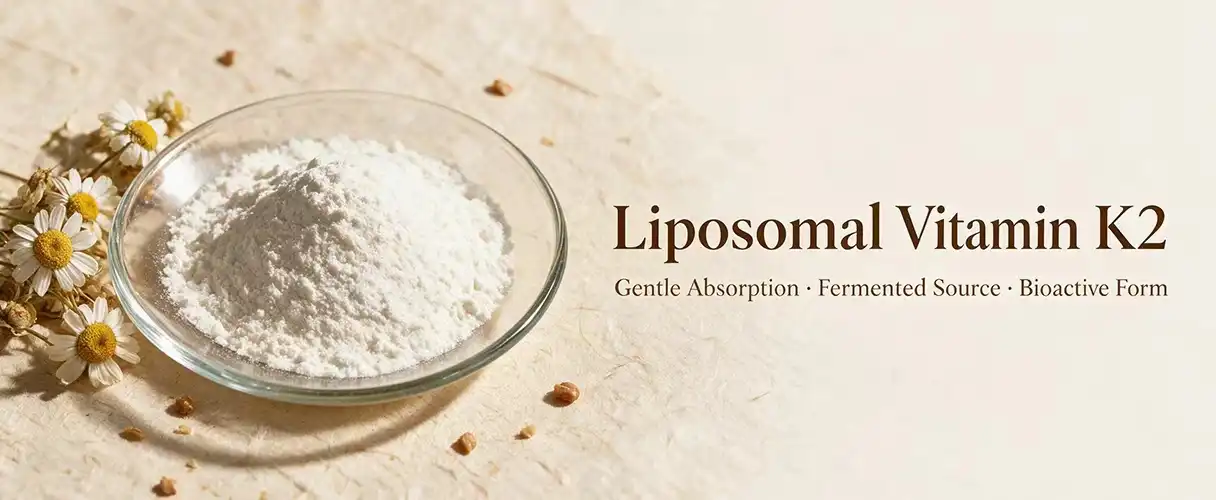
If you're sourcing premium ingredients for bone and cardiovascular health products, liposomal vitamin K2 deserves serious attention. Unlike standard vitamin K2 supplements, liposomal vitamin K2 encapsulates the active nutrient—typically MK-7 (menaquinone-7)—inside phospholipid vesicles that closely resemble cell membranes. This structure protects the compound from gastric degradation and allows direct lymphatic absorption, bypassing the unpredictable bile-dependent pathway. The result is measurably higher bioavailability, greater formulation stability, and stronger clinical relevance for bone density and arterial health—exactly what today's health supplement brands and nutraceutical companies need to stay competitive.
Understanding Liposomal Vitamin K2 and Its Key Benefits
How the Liposomal Delivery System Works
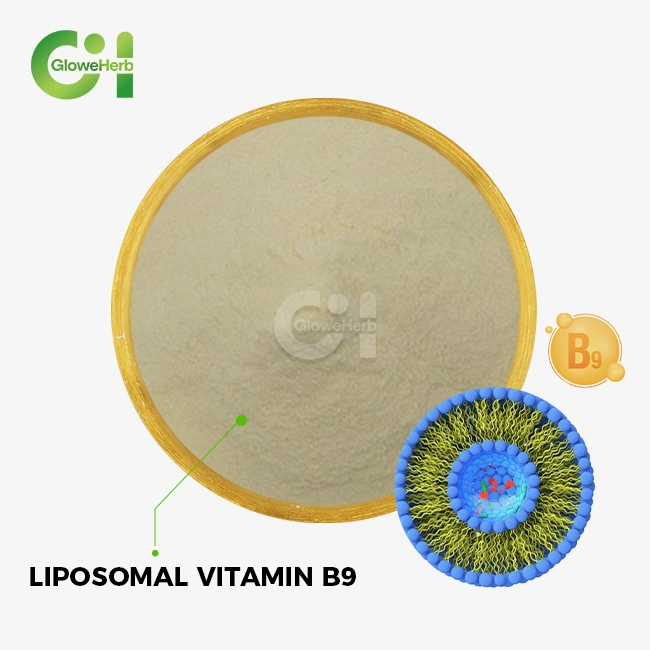
Liposomal vitamin K2 is made of phospholipid bilayers, which are usually made from non-GMO sunflower lecithin. The nanospheres in liposomal vitamin K2 are typically 100–200 nm in diameter. Around MK-7, this stuff protects it from stomach acid and oxygen, which break it down. In the gut, the liposomes can stick to cells because the phospholipid shell is like a biological barrier. This lets the food go straight to the lymphatic system. This method can skip the first step of processing in the liver, which isn't possible with most softgels made from oil. This makes the highest level of concentration (Cmax) reach faster and the uptake rate more even across a wide range of customer groups.
Bone and Cardiovascular Health Support
A study published in 2015 in the journal Thrombosis and Hemostasis found that taking MK-7 supplements made the carboxylation of osteocalcin a lot better. It is called osteocalcin, and it helps bone cells keep calcium. Matrix Gla Protein (MGP) in the walls of arteries is turned on by making sure there is enough serum K2. This makes it work even better with liposome transport. This keeps the arteries from getting stiff. Ca2+ stays out of the blood vessels and goes to the bones instead. This sets the record straight on the "Calcium Paradox," a tricky problem that becomes very important when making things that mix Vitamins D3 and K2.
Stability Advantages for Manufacturers
Normal K2 recipes can go wrong when chemicals are added. Mineral salts or fillers that don't work well with MK-7 can break it down during the manufacturing process. Vitamin K2 stands between the active ingredient in the phospholipid membrane and the rest of the liposome. In tests that were done at 40°C and 75% relative humidity, this covering stopped leaks and kept MK-7 safe for the whole time that the product was on the shelf. When OEMs make health formulas with lots of different ingredients, this helps them.
Comparing Liposomal Vitamin K2 with Other Forms
Liposomal K2 vs. Standard MK-7 and MK-4
MK-7 and MK-4 are not the same, though. Both types of vitamin K2 are bioactive, but they are found in different body parts and last for different amounts of time. Because MK-7 has a longer half-life than MK-4 (about 72 hours), it is best to take it every day. It is even better for absorption to take liposomal vitamin K2 with the MK-7 All-Trans isomer. This is because the phospholipid carrier provides the chemical at higher Cmax levels than either non-liposomal form. In other words, there is a gap in performance that is important for companies that want to make products that stop cholesterol or raise bone mineral density.
Liposomal K2 Combined with Vitamin D3
One of the best-known kinds of pills on the market right now is liposomal D3+K2. When vitamin D3 (Cholecalciferol) and MK-7 are mixed in a liposomal shell, they work well together. This mix keeps K2 from breaking down when D3 is present. It also makes sure that both fat-soluble vitamins get into the bloodstream without having to be broken down with fat. No matter if the person is fasting sometimes or on a low-fat diet, these pills will work just as well as vitamins eaten with food.
Liposomal K2 vs. Injectable Vitamin K2
I.V. K2 is used in hospitals, but it can't be used in health products on the market. It has been shown that liposomal vitamin K2 pills are a non-invasive option with absorption rates that are about the same as IV treatment. Because liposomal K2 is so good, it's a great choice for B2B buyers who are making drugs for people. It does not need to be handled in a certain way, kept cold, or watched over by a doctor.
Optimal Usage Guidelines for Liposomal Vitamin K2
Recommended Dosing for Adults
Taking 90–200 mcg of liposomal MK-7 every day is usually good for you. More powerful amounts have been talked about in research on bone health. What most people do is take 100 mcg of K2 MK-7 and 5,000 IU of vitamin D3. This is the OEM dosage. Based on the European Food Safety Authority (EFSA), this is the right amount of medicine to use. It was also the right amount used in open clinical trials. When someone buys something for a business, they should make sure that the company tests the encapsulation efficiency above 90% to make sure the label is telling the truth.
Timing and Consumer Compliance
If you don't eat anything, you can take liposomal vitamin K2 at any time of the day, with or without food. This helps people follow through with their goals, especially those who want to lose weight or fast every once in a while. People over 50 tend to make less bile salt, so OEM recipes that are made for them can use this input that doesn't depend on food. It should stand out in the ads that are used to sell the things.
Safety Profile and Regulatory Considerations
Liposomal vitamin K2 has been shown to be safe in the amounts that are recommended. Because K2 changes how blood clots, people who take warfarin or other blood thinners shouldn't do it. To sell to people in the U.S., a business must follow cGMP rules, make sure the label information is correct, and keep careful records of where the raw materials came from. Providers are even more likely to follow the rules if they offer certificates of analysis that have been checked by HPLC and show the difference between the active All-Trans MK-7 and the inactive Cis-isomers.
Procurement Insights: How to Source Quality Liposomal Vitamin K2
Key Technical Specifications to Verify
It is not always true that goods that say "liposomal" meet the basic needs. When a manager wants to buy a lot of liposomal vitamin K2, they should ask the seller for these papers:
- Dynamic Light Scattering (DLS) report confirming particle size between 100–200 nm and a Polydispersity Index (PDI) below 0.3. A PDI above 0.4 typically indicates an unstable emulsion rather than a structured liposomal formulation.
- Zeta Potential measurement above ±30 mV, which confirms colloidal stability during storage.
- HPLC certificate verifying All-Trans MK-7 content and the absence of inactive Cis-isomers.
- TOTOX value report confirming lipid oxidation is within acceptable limits.
- Heavy metal screening (ICP-MS for Pb, Hg, Cd, As) confirming compliance with U.S. and international safety standards.
You can tell the difference between real liposomal vitamin K2 and cheaper copies that aren't made the same way by following these rules.
Evaluating Manufacturer Certifications
The company that makes liposomal vitamin K2 should have cGMP certification and be ready to share third-party testing results, tracking records for each batch, and details about how safe the product is when heated up quickly. There is no need for proof, but a picture of the liposomal bilayer structure taken with Transmission Electron Microscopy (TEM) can be used. Part 111 of the 21 CFR sets the rules for what brands must do in order to sell in the United States. Brands that go above and beyond that have less of a chance of getting sued.
Flexible Production and Supply Chain Reliability
Your business can grow without having to switch sources if you buy from a company that can make a lot of different things and also makes small amounts to order. You can keep the raw material supply chain stable, change the form of the dose (capsules, softgels, packets), and offer white-label and OEM/ODM services. This will help keep production from being held up. Brands that plan store openings need to make sure that deliveries happen on time and that customers know how long they will have to wait.
Why Liposomal Vitamin K2 Is the Preferred Choice for B2B Buyers
Liposomal vitamin K2 is a high-end product that is unlike any other. It has been shown to absorb well, stay stable in formulation, and help with bone and heart health. These are all health benefits that give brands a meaningful product story that customers who care about their health can relate to. Grand View Research predicts that the global market for bone-healthy drugs will be worth more than $4.5 billion by 2030. Heart health is one of the most important health issues that people in the U.S. say they care about. That's why businesses that make products with liposomal vitamin K2 are in line with these areas of growth.
Conclusion
Both when it is being made and when it is on the store shelf, liposomal vitamin K2 does indeed improve how things function. MK-7 is kept whole by a phospholipid coating that lets it be absorbed even when food isn't present. This helps people get the bone and arterial health they want. Liposomal vitamin K2 that has been used a lot should be chosen by people who make, sell, or buy OEM nutraceuticals. How credible your brand is and how many customers you can keep will depend on how good your main ingredients are. This is due to more competition in the market for health and fitness goods.
FAQ
Is liposomal vitamin K2 safe for daily adult use?
Yes. Liposomal vitamin K2 is well-tolerated at standard doses (90–200 mcg MK-7 daily). The primary contraindication is concurrent use with vitamin K antagonist anticoagulants such as warfarin. Always recommend that consumers consult a healthcare provider before starting supplementation.
How is liposomal vitamin K2 different from a standard K2 supplement?
Standard K2 supplements rely on dietary fat and bile salts for absorption, which varies significantly between individuals. Liposomal vitamin K2 provides its own phospholipid carrier, allowing direct lymphatic uptake with a higher and more consistent Cmax—regardless of meal timing or digestive capacity.
What should I check before choosing a liposomal vitamin K2 supplier?
Request DLS reports (PDI < 0.3), Zeta Potential data (>±30 mV), HPLC certificates confirming All-Trans MK-7, TOTOX values, and heavy metal screening results. Confirm cGMP certification and ask for accelerated stability testing data to verify shelf-life claims.
Can liposomal vitamin K2 be combined with Vitamin D3 in one capsule?
Yes. Co-encapsulation of D3 and K2 MK-7 within a liposomal bilayer is one of the most effective formats available. The liposomal shell prevents D3 from degrading K2, and both nutrients are absorbed through the same lymphatic pathway without requiring food.
Partner with BioSpark for Premium Liposomal Vitamin K2 Supply
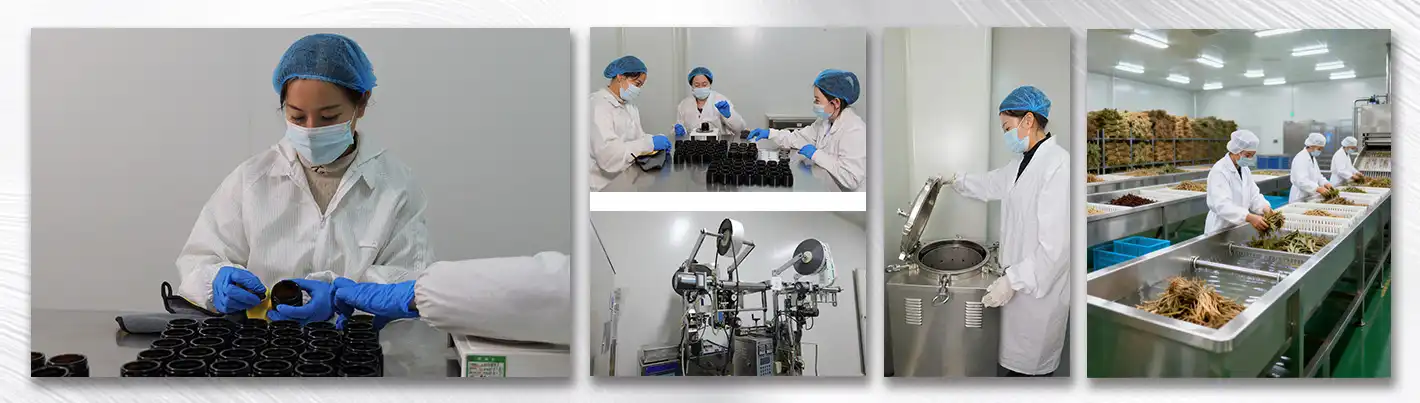
BioSpark (Xi'an) Biotechnology Co., Ltd is the name of the company that makes liposomal vitamin K2. From coming up with new recipes to packing the finished item, they do everything that has to do with OEM/ODM. In line with cGMPs, our team can make as many or as few items as you need. We can then test them fully as a group and send them safely all over the world. We can give you a quote, send you a sample, or just talk about what you need for your formulation right away. You can email us at leao@biosparkcn.com or visit our website at www.biosparkcn.com.
References
1. Schurgers, L.J., & Vermeer, C. — Thrombosis and Haemostasis, 2000.
2. Knapen, M.H.J., et al. — Osteoporosis International, 2013.
3. Geleijnse, J.M., et al. — Journal of Nutrition, 2004.
4. Beulens, J.W., et al. — Atherosclerosis, 2009.
5. Grand View Research — Bone Health Supplements Market Size Report, 2023.
6. European Food Safety Authority (EFSA) — EFSA Journal, 2017.

Send Inquiry

Related Industry Knowledge
- Walnut Peptide Benefits: Is It the Next Wellness Breakthrough?
- Is Liposomal Urolithin Better Absorbed Than Standard Forms?
- Where Is Damiana peptide Commonly Used?
- Top Green Plum Powder Benefits for Food and Beverage Manufacturers
- Is Longan powder the Right Ingredient for Your Next Product?
- How does rosehip extract powder support skin rejuvenation and repair?
- How to Find Reliable Ginseng Fruit Powder Suppliers?
- Need Stable Liquorice Extract Powder for Food Applications?
- Can Tribulus Terrestris Extract Powder Improve Muscle Growth?
- Is Echinacea Extract Powder the Best Immune Herbal Extract?