Walnut Peptide Benefits: Is It the Next Wellness Breakthrough?
Oct 14, 2026
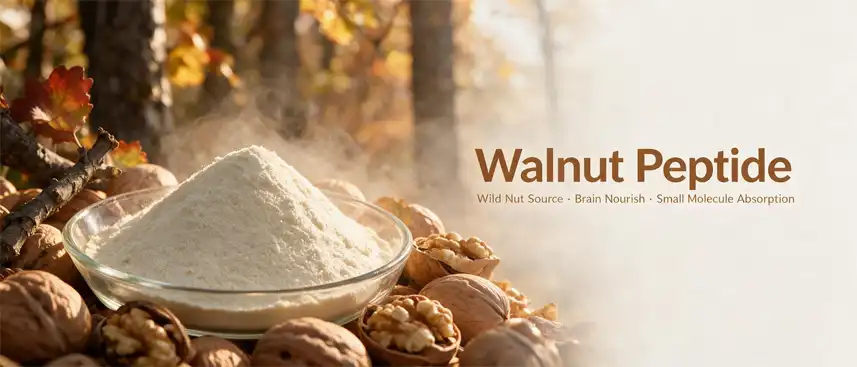
If you’ve been monitoring the supplement business recently, you’ve undoubtedly seen walnut peptide appearing in more product formulations. And frankly, I believe the attention is warranted. Walnut peptide is a kind of bioactive substance produced by enzymatic hydrolysis of walnut protein, and it is broken down into tiny molecular fragments, which are much more easily absorbed by the body than whole meal protein. Research suggests that these peptides have antioxidant, neuroprotective, and anti-inflammatory effects that make them very valuable in many health categories. It represents a substantial ingredient potential for brands and formulators.
What Is Walnut Peptide and Why Does It Matter?
The Science Behind Extraction
Walnut peptide is made by enzymatic hydrolysis of defatted walnut flour (press cake after oil extraction) using special endo- and exo-peptidases. Large walnut proteins are broken down to short-chain peptides, usually with molecular weights less than 1000 Da. That is why the powder has less than 1% fat. It won't go bad and will stay on the shelf. The oil is removed at the raw material stage and thus makes the finished ingredient clean and functional.
Nutritional Profile and Bioavailability
Studies demonstrate that walnut peptide is absorbed more fully than whole walnuts—more than 95 percent of the time. This is because there is no longer an intestinal barrier. The profile includes several amino acids, such as glutamic acid, branched-chain amino acids, and arginine. These acids are beneficial for repairing the brain and cells. The excellent walnut peptide remains completely dissolved when the pH is between 3 and 4 (acidic). Will not harden when blended with sports drinks, functional waters, or powder mixes.
Why B2B Buyers Are Paying Attention
The functional ingredients industry is seeing a rise in popularity of bioactives from plants that have been evaluated and proven to work. Walnut peptide is just right for that. It has been demonstrated to boost brain function, guard against free radicals, and aid blood flow. All of these are key considerations for persons in the U.S. supplement market now. This implies that one ingredient may assist with more than one product concept for OEMs and brand owners.
Key Benefits of Walnut Peptide for Wellness and Performance
Cognitive Function and Brain Health
In animals, walnut peptide has been shown to enhance memory problems induced by inflammation by restoring oxidative stress and inflammatory processes in brain tissue. This is because the peptide may prevent the breakdown of lipids and control the indications of neuroinflammation, thereby protecting the brain. These are scientifically solid claims marketers should build claims on: memory, attentiveness, or healthy aging.
Skin and Anti-Aging Support
Collagen formation increases with walnut peptide, which helps keep skin supple and slow down the simple indications of aging. In this manner, it may be utilized instead of marine collagen or peptides from bone soup. A lot of individuals who create beauty-from-within supplements or cosmeceuticals find walnut peptide useful since it can aid with both oxidative skin damage and the production of structural proteins.
Muscle Recovery and Immune Defense
Walnut peptide contains branched-chain amino acids which aid in building muscle after exercise. This helps you to feel less weary and to recover to normal more quickly. It is also known to have antioxidant capacity, which has been tested in published studies via DPPH radical scavenging assays. This protects cells from harm by oxidative stress, aiding the defense system. For all these reasons, walnut peptide is a fantastic option for lines of goods focusing on general health, sports nutrition, and hectic life.
Walnut Peptide vs. Other Popular Protein and Peptide Supplements
People who purchase products are frequently wondering how marine collagen, whey, soy extract, or peanut peptides compare to walnut peptides. Your objective will depend on who you are writing your recipe for. Here are the key characteristics that make us different to help you make a decision:
- Walnut peptide vs whey protein: Whey is rich in leucine, which is good for developing muscle; however, it comes from dairy and is not suitable for vegans. Whey does not have the demonstrated cognitive and antioxidant advantages that walnut peptide does. Walnut peptide is 100% plant-based and soluble at low pH.
- Walnut peptide versus soy peptide: Soy peptides are extensively utilized but have faced persistent consumer criticism over allergenicity and phytoestrogen levels. Walnut peptide has none of these issues, but still offers a similar spectrum of amino acids.
- Marine collagen vs walnut peptide: Marine collagen is a powerhouse for skin support, but is also dependent on fish-derived supply chains with traceability inconsistency. “Walnut peptide provides similar collagen-stimulating activity from a plant source with a more stable and auditable supply chain.”
The peptide ingredient you choose has to be batch-to-batch consistent and third-party authorized. If you make stuff for individuals who care about quality, these things are so much more significant than the price per kilogram.
How to Source and Procure High-Quality Walnut Peptide for Your Business
Certification and Quality Standards
Any walnut peptide source you trust should be able to show proof of tests for heavy metals, microbiological limits, chemical residues, and moisture content. People from other countries, especially the U.S. or EU, should ask for Certificates of Analysis for each batch and make sure that the production took place in conditions that are ISO or GMP-certified. These checks keep your brand safe and make sure the food is safe for your customers before it gets to them.
MOQ, Sampling, and Cost Structure
Customers can ask for samples from most well-known companies that make walnut peptides before they agree to buy in bulk. MOQs are different for each supplier, but as your product line grows, you can choose to work with an OEM partner that can do both small-batch customization and large-scale production. You should look at more than just the price of the raw materials to figure out how much something costs. Also, think about how much it costs to test, how long it takes, and whether the supplier helps with the whole process, from getting the raw materials to delivering the finished product.
Choosing the Right OEM Partner
When it comes to building good buying relationships, being honest is more important than just price. It is best to buy walnut peptide from a company that is open about where the ingredients come from, how they are processed, and how they keep track of quality. A partner you can trust will also help your R&D team get ready, which will speed up the process of turning raw materials into finished goods.
How to Use Walnut Peptide Products in Your Portfolio
Dosage and Safety Considerations
Effects on brain and antioxidant levels have been seen both in people and animals. Adults should take 0.5 to 1.5 g per day to gain these advantages. Walnut peptide is generally well accepted. However, formulators should examine the allergy labeling requirements in the target markets, since walnut is a tree nut and needs to follow the standards for allergen disclosure in the US and EU.
Powder vs. Capsule Format
The most flexible powder is walnut peptide powder, and it has a wide range of applications. Very simple to combine into a variety of goods (RTM drink bases, healthy food grids, skin care items). Capsules make the process of employing them cleaner and more exact, but restrict the flexibility of the formula. An excellent technique for a new brand in walnut peptide is to check out several goods before settling on one distribution method: powder.
Application Across Product Categories
Walnut peptide is useful in functional foods such as protein bars or nutritional beverages, skin care lines that promote collagen, and sports nutrition products that help in recovery. The correct enzymes and filters will be used so that the flavor of the completed items will not be changed, as it is bland.
Conclusion
Walnut peptide is supported by excellent science and naturally matches the product categories that are most important to U.S. consumers today: skin care for fighting aging, immunological support, and brain health. It is plant-derived, has very high solubility, and is multi-functional, giving marketers a strong ingredient narrative to build on. Whether you are a huge nutrition firm or a startup in search of the next great thing, walnut peptide is something you should check out. Demand is growing for plant bioactives that really function and can be trusted. Here's an ingredient available for that demand.

FAQ
1. How is walnut peptide different from walnut protein powder?
Walnut protein powder is a macromolecule that requires full digestion before absorption. Walnut peptide is pre-hydrolyzed into short-chain fragments, delivering absorption rates above 95% and direct functional activity in the body. The peptide form also shows specific benefits for brain health that intact protein cannot replicate.
2. Does walnut peptide have a bitter taste?
High-quality walnut peptide uses a combination of targeted enzyme selection and filtration steps to remove hydrophobic bitter peptides during processing. The result is a mild, neutral-tasting powder suitable for unflavored supplement blends and functional food applications.
3. Is walnut peptide stable in acidic beverages?
Yes. Unlike intact proteins that precipitate at their isoelectric point, walnut peptide remains clear and fully soluble at pH 3–4, making it compatible with sports drinks and acidic functional waters.
4. What is the recommended daily intake?
Research suggests an effective range of 0.5 g to 1.5 g per day for adults targeting cognitive support and antioxidant benefits. Specific formulation dosages may vary based on product format and target health claim.
5. Does walnut peptide carry rancidity risk?
No. The raw material is defatted walnut meal with fat content below 1%, which removes the oil fraction responsible for oxidative degradation. The finished walnut peptide powder is shelf-stable when stored under standard conditions.
Partner With BioSpark for Your Walnut Peptide Supply
BioSpark (Xi'an) Biotechnology Co., Ltd. sells health brands, wholesalers, and original equipment makers in North America and Europe high-quality walnut peptide ingredients that have been checked and are ready to use. We've been making walnut peptides for a long time and can do any size order, from small samples to full-on production. Get a product detail sheet by emailing leao@biosparkcn.com. Then, let's talk about your next recipe.
References
1. Ros, E. (2010). Health benefits of nut consumption. Nutrients, MDPI.
2. Zhao, Y., et al. (2020). Walnut protein hydrolysates attenuate memory impairment via antioxidant and anti-inflammatory mechanisms. Food & Function, Royal Society of Chemistry.
3. Ngo, D. H., & Kim, S. K. (2013). Bioactive peptides from plant proteins: production and application. Advances in Food and Nutrition Research, Elsevier.
4. Chai, T. T., et al. (2019). Bioactive peptides from plant sources: antihypertensive and antioxidant activities. International Journal of Molecular Sciences, MDPI.
5. Stuknytė, M., et al. (2015). Peptides derived from food proteins: production, identification, and functional relevance. Journal of Agricultural and Food Chemistry, ACS Publications.
6. Gorissen, S. H. M., et al. (2018). Protein content and amino acid composition of commercially available plant-based protein isolates. Amino Acids, Springer.

Send Inquiry

Related Industry Knowledge
- How to Use Kudzu Root Peptide in a Modern Skincare Routine
- How to Choose the Best Purple Alfalfa Juice Powder Supplier
- How Does Pure Corn Extract Powder Support Daily Nutrition?
- Tribulus Terrestris Extract Powder: Real Results or Hype?
- Coconut Milk Extract Powder: Key Nutritional Benefits
- What Are the Key Benefits of Gotu Kola Extract Powder?
- Can Marigold Extract Powder Support Vision Health?
- Radix Rehmanniae Extract: A Functional Ingredient Guide
- Rhizoma Chuanxiong Extract Benefits for Blood Circulation
- Can Baicalin Extract Enhance Overall Cellular Health?