_1764041963888.webp)
How does rosehip extract powder support skin rejuvenation and repair?
Jul 14, 2026
Rosehip extract powder helps skin repair and renewal because it has a high quantity of natural vitamin C, polyphenols, and bioactive galactolipids. These all work together to reduce inflammation, boost collagen production, and neutralise oxidative stress. The standardised vitamin C level in good extracts—often hitting 30% through advanced HPLC verification—gives dermal fibroblasts the cofactor they need to hydroxylate procollagen, and flavonoids and carotenoids keep these new proteins from breaking down. This natural phytochemical matrix has long-lasting bioactive effects that manufactured options can't match. This makes it a more valuable ingredient for companies that make cosmetics and nutraceuticals for skin health.
Understanding Rosehip Extract Powder and Its Role in Skin Health
What Distinguishes Extract Powder from Other Rosehip Derivatives
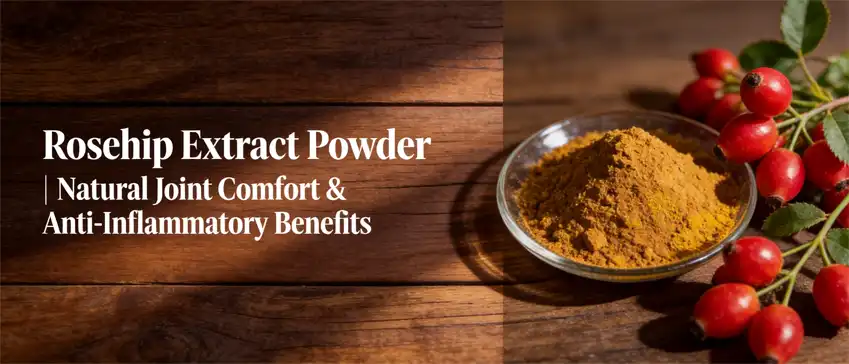
The concentrated extract is a carefully selected ingredient that is very different from both cold-pressed oil and plain ground fruit powder. Rosehip oil is mostly made up of fatty acids and vitamins that dissolve in fat. The water-soluble extract, on the other hand, uses improved low-temperature extraction methods to get the polyphenolic compounds, ascorbic acid, and special galactolipids. This method keeps bioactives that are sensitive to heat, which would break down during normal drying. The fine brownish-yellow powder that is made usually has particles that are 80 to 120 mesh. This makes rosehip extract powder easier to mix into water-based mixtures than whole fruit powders that contain fibres that don't dissolve.
Nutritional Profile and Bioactive Components
The healing power comes from a phytochemical matrix that is very thick. Quality standards usually ensure that the natural vitamin C content will be between 15 and 30 per cent, which can be proven through HPLC analysis and is much higher than what you'd find in fresh fruit. The flavonoid fraction, which includes quercetin, kaempferol, and rutin, makes up 8–20% of the overall makeup. ORAC and DPPH tests show that it has strong antioxidant activity. Polyphenolic substances, which make up 15–30% of the extract, help protect blood vessels and remove free radicals, which is important for getting nutrients to skin cells. Carotenoids, especially lycopene and beta-carotene, at concentrations of 3 to 10 per cent, naturally protect cells from damage caused by UV light. The extract may be most unique because it has specific galactolipids like GOPO that have been shown to reduce inflammation in clinical tests. When water-soluble antioxidants, vitamin cofactors, and bioactive lipids work together, they create useful benefits that synthetic chemicals alone can't match.
Industry Applications Across Product Categories
This plant product can be used in a lot of different types of formulations. In nutricosmetics, daily amounts of 200 to 500 mg help the body make collagen and protect itself from free radicals, which makes it appealing to people who want to look better from the inside out. Topical cosmetics use the extract in anti-aging serums, whitening treatments, and repair products for skin damaged by the sun. The natural vitamin C and carotenoids protect fibroblasts and reduce redness by working together. It is used by people who make functional drinks as both a natural amber-red colourant and a clean-label vitamin C source, because people want chemicals that are easy to recognise. The powder dissolves easily in water—usually more than 85% in hot water—so it can be easily added to a wide range of mixtures, from pressed tablets to fizzy drinks. This wide range of uses makes it very appealing to brands that want to make cohesive product lines that address skin health in a variety of delivery forms.
The Science Behind Rosehip Extract Powder for Skin Rejuvenation and Repair
Biochemical Mechanisms Supporting Collagen Production
At the cellular level, ascorbic acid in rosehip extract powder is an important partner for prolyl and lysyl hydroxylase enzymes that keep the triple helix shape of collagen stable. Procollagen molecules can't make the post-translational changes they need to secrete and assemble into effective collagen fibrils if they don't get enough vitamin C. Rosehip products naturally contain vitamin C, which is an important cofactor. It works with bioflavonoids to make the plant more stable and help cells take it in. Researchers have found that the flavonoid quercetin increases TGF-beta signalling pathways that boost the production of collagen genes in fibroblasts. This has effects that go beyond the presence of cofactors. At the same time, the polyphenolic substances stop matrix metalloproteinases from working, which stops the breakdown of collagen. This protects existing structural proteins and helps make new ones. This two-part process takes care of both parts of the collagen balance equation that decides how hard and flexible skin is.
Antioxidant Defence and Photoprotection
Ultraviolet light creates reactive oxygen species that hurt cell walls, proteins, and DNA. This speeds up the ageing process that we can see. The strong mix of antioxidants protects against this photodamage on multiple levels. Vitamin C directly fights free radicals and regenerates vitamin E that has been damaged by oxygen. This is called an antioxidant chain effect. Carotenoids take in certain bands of visible light and get rid of singlet oxygen, which protects against UV light in addition to other ways. Clinical studies have shown that taking vitamin C-rich plant products as a supplement raises the minimal erythema dose, which is the amount of UV light that is needed to make skin red. This means that the body can handle more sun exposure. The polyphenolic part turns on the Nrf2 transcription factor, which increases the activity of natural antioxidant enzymes like glutathione peroxidase and superoxide dismutase. This makes a long-lasting protective effect that goes beyond the antioxidant action of the molecules themselves.
Anti-Inflammatory Effects and Wound Healing
Chronic low-grade inflammation makes skin age faster and makes it harder for it to heal. The galactolipid GOPO stops peripheral blood leukocytes from moving, which stops inflammatory cells from getting into tissues. This mechanism has been proven to work in clinical studies that looked at joint health, and a new study shows that it may also help with skin inflammation. The extract changes the production of prostaglandins, which tips the balance away from molecules that cause inflammation. In tests on wound healing, topical application sped up the process of re-epithelialization and slowed down the growth of scar tissue. This was most likely because it mixed anti-inflammatory effects with support for collagen synthesis. According to a peer-reviewed study published in dermatology journals, using standardised rosehip extract powder regularly has been shown to improve conditions like scars from surgery, stretch marks, and hyperpigmentation caused by sun damage. When making goods with backed-up claims of effectiveness, these clinical results give B2B buyers the proof they need.
Dosage Considerations and Safety Profile
For oral supplementation with skin benefits, daily amounts of 200 mg to 500 mg of standardised extract have been supported by clinical studies. This gives you between 60 and 150 mg of natural vitamin C along with a wide range of phytochemicals that work together. In topical products, the concentration of the extract is usually between 0.5 and 3%, which strikes a balance between effectiveness and safety. Toxicological tests have shown that the extract is very safe, with no major side effects being recorded. The natural form of vitamin C is better tolerated by the digestive system than manufactured ascorbic acid. This means that high-dose supplements may not cause as much stomach upset. This good safety rating makes regulatory submissions easier and supports marketing stories about clean labels that health-conscious customers like.
Comparing Rosehip Extract Powder to Other Skin Health Supplements
Extract Powder Versus Rosehip Oil
Both products come from the same plant, but they are very different in how they are made and what they are used for. Cold-pressed oil is mostly made up of important fatty acids, mostly omega-3 and omega-6 lipids, and fat-soluble vitamins A and E. This makes it great for moisturising the skin and repairing barriers, but it limits the supply of water-soluble antioxidants to the body as a whole. The water-soluble extract focuses the antioxidants, galactolipids, and vitamin C that can't be extracted by pressing the oil. When brands make complete skin health plans, they often use both ingredients together because they work well together: the oil forms a shield and keeps the skin hydrated, while the rosehip extract powder protects against free radicals and supports collagen. When properly dissolved, the powder form has benefits for production, such as longer shelf life, easier standardisation, and greater formulation compatibility across both hydrophilic and lipophilic systems.
Comparison with Synthetic Vitamin C Powder
Pure ascorbic acid powder is very strong and doesn't cost much, but it has a lot of problems that natural products don't have. When synthetic vitamin C is exposed to light, heat, or water, it breaks down quickly and often does not make it to users. The product that has been separated is also less bioavailable than types that are found naturally in phytochemical matrices. Bioflavonoids greatly improve the intake and retention of vitamin C in tissues. They do this by affecting the transporters in the intestines and the way cells take in nutrients. In addition to vitamin C, the natural product contains other bioactive substances that improve skin health on their own. From a marketing point of view, the plant source allows for clean labelling and fits with what customers want: ingredients that come from whole foods that they can recognise. Because of these things, real rosehip extracts usually deserve to be more expensive than fake ones.
Advantages Over Collagen Supplementation
Marine and bovine collagen products have a lot of market share in skin health areas, but they have some problems that can be fixed with herbal options. Because collagen has a big molecular weight, it can't go deep into the skin when applied topically, and when taken by mouth, it has to go through a lot of enzymatic breakdown before it can be absorbed as amino acids. A new study is asking if collagen peptides that are added are used to build skin tissue specifically or for general protein synthesis. The rosehip extract method helps the body make its own collagen by giving it cofactors and signalling molecules that make the body's own synthesis machinery work better. This process might be able to have more focused effects on the structure of the skin. The plant-based source appeals to vegetarians and vegans who don't want to eat products that come from animals, which increases the number of people who can be served. Brands can also use both methods together, using the ingredient to improve the effectiveness of collagen supplements by increasing their production and decreasing their breakdown.
How to Source High-Quality Rosehip Extract Powder for Your Business
The quality of the ingredients affects how well the formulation works, how well it follows the rules, and eventually the image of the brand. To get reliable, useful raw materials, procurement experts have to look at a supplier's abilities in a number of different areas.
Critical Certifications and Quality Standards
GMP certification ensures sanitary production and documentation for pharmaceutical-grade ingredients. ISO 9001 demonstrates quality management beyond production—supplier selection, training, and continuous improvement. Organic certification meets pesticide-free demand, but verification bodies vary; buyers should verify specific certifiers. Kosher and Halal approvals expand market reach. FDA registration signals regulatory readiness. Beyond certificates, evaluate testing protocols: heavy metals (arsenic, lead, mercury, cadmium), pesticide residues against regulatory limits, and microbiological testing for pathogens and total viable counts. These quality controls ensure ingredient safety and compliance across diverse global markets.
Supplier Evaluation and Relationship Management
Beyond basic certifications, evaluate suppliers' technical capabilities—in-house analytical labs (HPLC, GC-MS, spectroscopy), formulation support, and regulatory expertise. In-house testing demonstrates quality commitment beyond outsourced checks. Technical teams should assist with stability studies, compatibility testing, and formulation optimisation. Regulatory documentation—allergen statements, origin certificates, pharmacopeial-aligned specifications—streamlines compliance. Assess production scalability: can suppliers accommodate small pilot runs and later scale to commercial volumes? Transparent sourcing information—plant species, growing regions, harvest timelines—enables full supply chain due diligence. These technical capacities differentiate reliable partners from basic ingredient vendors.
Procurement Strategy and Value-Added Services
For new brands, MOQs significantly impact cash flow. Low minimums (e.g., 1 kg) enable formulation testing and market validation. Seek pricing that rewards volume commitments while allowing demand flexibility. Private labelling eliminates packaging equipment costs; OEM/ODM agreements accelerate time-to-revenue with proven formulas. Reliable documentation and temperature-controlled logistics are critical for international trade. Establish quality agreements specifying specifications, testing protocols, and non-conformance procedures. Long-term partnerships built on transparency and mutual success secure priority allocation during raw material shortages and foster collaborative innovation. This strategic approach gives brands competitive advantages in ingredient access and new application development.
Integrating Rosehip Extract Powder into Skin Care Product Lines
Formulation Strategies and Ingredient Synergies
Successful product development with rosehip extract powder optimises bioavailability, stability, and sensory attributes. Water-soluble properties enable easy incorporation into beverages, capsules, and water-based cosmetics. Functional drinks require pH 3.5–5.5 and UV-protective packaging to maintain vitamin C stability. Food applications (0.5–3%) add natural colour and health benefits with minimal taste impact when sweeteners are balanced. Supplement formulations typically use 200–500 mg daily in vegetarian capsules, often combined with biotin, hyaluronic acid, or grape seed extract. Topical formulations benefit from pairing with niacinamide, peptides, or ceramides. Encapsulation technologies like liposomal delivery enhance skin penetration and protect sensitive compounds from degradation in finished products.
Marketing Positioning and Claims Substantiation
Robust scientific evidence for skin benefits enables compelling marketing narratives. Brands can highlight standardised vitamin C content to differentiate from adulterated products. Wild-harvested origin stories from pristine European regions resonate with authenticity-seeking consumers. Clinical data on wrinkles, scars, and discolouration support efficacy claims, though language must align with cosmetic versus drug regulations in each market. Organic, non-GMO, vegan, and allergen-free certifications broaden consumer appeal. Transparency in extraction methods, testing, and traceability builds trust with informed buyers. For formulators and procurement professionals, emphasising technical specifications, batch-to-batch consistency, and regulatory documentation streamlines internal approval and strengthens B2B positioning.
Future Trends and Innovation Opportunities
The botanical ingredients industry evolves with technological advances and shifting consumer preferences. Supercritical fluid extraction and membrane filtration enable precise bioactive separation, producing high-potency specialty ingredients. Sustainability now influences buying decisions—brands seek suppliers with organic farming, waste reduction, and lower carbon footprints. Emerging skin microbiome research suggests botanical impacts beyond biochemistry. Personalisation drives demand for custom formulations targeting specific skin concerns or genetic profiles, requiring small-batch manufacturing. Pet wellness presents new opportunities for functional foods addressing coat health and oxidative stress. Brands positioning themselves at the intersection of scientific innovation, sustainability, and market diversification gain a competitive advantage in rapidly growing health categories.
Conclusion
The concentrated plant product from Rosa canina is a flexible ingredient that has been proven to improve many aspects of skin health through bioactive substances that work together. Its natural vitamin C, antioxidants, and anti-inflammatory galactolipids help make collagen, fight oxidative stress, and lower inflammation in ways that have been shown to work in clinical studies. This rosehip extract powder gives clean-label positioning, regulatory compliance benefits, and formulation freedom across a variety of delivery forms to B2B buyers who are making cosmeceutical, nutricosmetic, or functional food items. For buying to go well, suppliers must be carefully evaluated, with a focus on certifications, testing methods, and technical support skills that ensure consistent quality and compliance with regulations. By adding this tested botanical ingredient to carefully crafted goods that are backed by scientific research, companies can meet the growing demand from customers for natural, effective solutions that help fix and rejuvenate skin in a measured way.
FAQ
What is the optimal daily dosage for skin health benefits?
Clinical research supporting skin benefits typically employs oral doses between 200-500mg of standardised rosehip extract powder daily. This range delivers approximately 60-150mg of natural vitamin C alongside the full spectrum of synergistic polyphenols and galactolipids. Topical formulations generally incorporate a 0.5-3% concentration. Exact dosing should consider total vitamin C intake from all dietary sources and product positioning within broader supplement regimens.
How does organic certification affect efficacy?
Organic certification primarily addresses cultivation practices, prohibiting synthetic pesticides and fertilisers rather than directly influencing bioactive content. However, some evidence suggests that plants subjected to moderate environmental stress in organic systems may produce higher phytochemical concentrations as defensive compounds. The primary value lies in meeting consumer demand for pesticide-free ingredients and supporting sustainable agriculture practices. Both organic and conventional extracts can achieve equivalent standardisation for vitamin C and polyphenols when properly processed and tested.
Can this ingredient cause adverse reactions?
The extract demonstrates excellent safety profiles across toxicological studies with no significant adverse effects at recommended dosages. The natural vitamin C form shows superior gastrointestinal tolerance compared to synthetic ascorbic acid. Individuals with known allergies to Rosaceae family plants should exercise caution. As with any botanical ingredient, quality assurance testing for contaminants, including heavy metals, pesticides, and microorganisms, remains essential to ensure safety.
Partner with BioSpark for Premium Rosehip Extract Powder
BioSpark (Xi'an) Biotechnology Co., Ltd specializes in supplying premium-grade botanical extracts that meet the rigorous demands of international health supplement brands and nutraceutical companies. Our rosehip extract powder sourced from wild Rosa canina in pristine Northern European and Bulgarian regions delivers standardized 30% natural vitamin C verified through HPLC analysis, alongside the full spectrum of bioactive flavonoids, polyphenols, and carotenoids essential for skin health formulations. We maintain comprehensive certifications, including ISO9001, GMP, Kosher, and Halal, ensuring compliance with international quality standards. Whether you require small 1kg development batches or large-scale commercial production, our flexible OEM and ODM services support your complete product development journey from formulation consultation through final packaging. Contact our technical team at leao@biosparkcn.com to discuss your specific requirements, request certificates of analysis, or arrange sample shipments. As an experienced rosehip extract powder supplier, we provide the quality assurance, regulatory documentation, and technical support necessary to bring innovative skin care products successfully to market.
References
1. Winther K, Campbell-Tofte J, Vinther Hansen AS. Bioactive ingredients of rose hips (Rosa canina L) with special reference to antioxidative and anti-inflammatory properties: in vitro studies. Botanics: Targets and Therapy. 2016;6:11-23.
2. Phetcharat L, Wongsuphasawat K, Winther K. The effectiveness of a standardised rose hip powder, containing seeds and shells of Rosa canina, on cell longevity, skin wrinkles, moisture, and elasticity. Clinical Interventions in Ageing. 2015;10:1849-1856.
3. Rein E, Kharazmi A, Winther K. A herbal remedy, Hyben Vital (stand. powder of a subspecies of Rosa canina fruits), reduces pain and improves general wellbeing in patients with osteoarthritis. Phytomedicine. 2004;11(5):383-391.
4. Schwager J, Richard N, Mussler B, Raederstorff D. Tomato aqueous extract modulates the inflammatory profile of immune cells and endothelial cells. Molecules. 2016;21(2):168.
5. Cho S, Lee S, Lee MJ, Lee DH, Won CH, Kim SM, Chung JH. Dietary Aloe Vera Supplementation Improves Facial Wrinkles and Elasticity and Increases the Type I Procollagen Gene Expression in Human Skin. Annals of Dermatology. 2009;21(1):6-11.
6. Pullar JM, Carr AC, Vissers MCM. The Roles of Vitamin C in Skin Health. Nutrients. 2017;9(8):866.

Send Inquiry
Related Industry Knowledge
- Does gotu kola extract powder support healthy blood circulation?
- Pure Corn Extract Powder Benefits: Is It a Natural Nutrient Source?
- Spirulina Extract Tablets Dosage Guide: How Much Should You Take?
- Does longan powder have antioxidant properties?
- Want Reliable Holy Berry Powder Manufacturer for Bulk Orders?
- Could American Ginseng Extract Powder Add Value to Your Brand?
- Is Natural Blueberry Extract Powder Rich in Anthocyanins?
- What are the benefits of freeze-dried longan powder?
- Why Is Red Bean Extract Used in Traditional Medicine?
- Broccoli Extract Powder for Hormone Balance & Metabolism