_1764041963888.webp)
Need Stable Liquorice Extract Powder for Food Applications?
May 27, 2026
Absolutely—stable, high-quality liquorice extract powder is essential for food manufacturers aiming to deliver consistent flavor, natural sweetness, and extended shelf life. Derived from Glycyrrhiza plant roots through controlled extraction processes, premium-grade liquorice extract powder maintains bioactive integrity, resists moisture absorption, and provides predictable performance in diverse food formulations. Selecting a reliable supplier ensures your production line benefits from standardized glycyrrhizic acid content, verified purity, and compliance with international food safety standards, enabling you to meet consumer expectations and regulatory requirements without compromise.
Understanding Liquorice Extract Powder and Its Benefits for Food Applications
Botanical Origins and Active Compounds
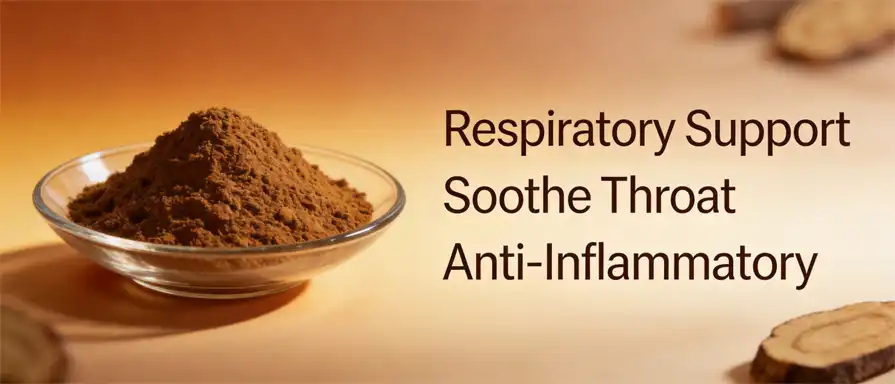
This powder is made from the roots and stolons of Glycyrrhiza glabra, Glycyrrhiza uralensis, and other species that are very similar. These plants are mostly grown in China, Central Asia, and the Mediterranean. This ingredient is different from raw root powder because it comes from plants and is removed in several steps, including temperature-controlled liquid extraction, membrane filtration, vacuum concentration, and spray drying. In these steps, potent triterpenoid saponins (mostly glycyrrhizic acid) and flavonoids (such as liquiritin and glabridin) are concentrated. Fine, light yellow to yellowish-brown liquorice extract powder that smells sweet and dissolves in water is what you're left with. This powder can be used in a lot of different food mixes.
Functional Benefits Driving Food Industry Adoption
The extract is about 50 to 200 times sweeter than sugar, but it can be used for other things as well. High-performance liquid chromatography (HPLC) is used to standardize the amount of glycyrrhizic acid to 20%. This gives regular taste masking qualities that help formulators get rid of bitter off-notes from plant alkaloids or useful ingredients. Flavonoids are natural polyphenol active substances that help stabilize high-fat food systems. They are also naturally anti-inflammatory, which fits with current health trends. They are added to many foods by food companies because they make the foods taste better and are better for you. This includes herbal teas, fizzy drinks, sweets, sauces, and cultured foods.
Common Stability Challenges in Food Applications
Despite these advantages, product stability concerns remain prominent challenges in food applications. Because it is hygroscopic, it can soak up water, which can lead to caking and the growth of bacteria. Flavonoids and glycyrrhizic acid can be broken down by light and high temperatures. This makes the food less sweet and less bioactive. If the particle sizes aren't spread out evenly, food processes can't work properly or spread out evenly. To fix these issues, you need to be smart about where you buy your goods. Make sure that the places you pick use cutting-edge drying technologies, safe packaging like drums that don't soak up water, and strict quality control throughout the whole supply chain.
How to Choose Stable Liquorice Extract Powder for Food Applications
Evaluating Glycyrrhizic Acid Content and Testing Protocols
The first thing you should do when picking a safe liquorice extract powder is to check the glycyrrhizic acid standard. For all production runs, standardized goods with 20% glycyrrhizic acid content will be the same amount of sweet and helpful. This is done through HPLC testing. The Certificates of Analysis (CoA) from third-party labs make it easy to see details about purity, heavy metal limits, chemical leftovers, and microbial pollution. Procurement teams should ask for proof that the food is safe according to foreign standards like the FDA and EFSA rules, for each batch. This will lower the risk of control and protect customers.
Certification Standards and Compliance Assurance
Suppliers with a good image keep their licenses up to date to show that they care about quality and keeping track of things. Following GMP (Good Manufacturing Practice) rules makes sure that work areas are clean, and ISO9001 approval proves that quality control methods are being used. Kosher and Halal certifications help more people buy food because they meet religious needs. It is very important for brands that want to sell in North America to show that they follow U.S. law by getting FDA approval. All of these examples help business-to-business buyers do their homework and give them confidence that the product meets high standards of safety and ethics.
Product Types and Procurement Considerations
You need to know how to tell the difference between their goods when you compare service companies. There is a difference between natural extracts that only come from plants and standardized compound formulations that may contain food-grade carriers and anti-caking agents. The particle size is generally 80–120 mesh (US standard)., changes how well things break and run in different types of food. The minimum order quantity (MOQ) starts at 1 kg, which means that both small-batch R&D tests and large-scale production can be done. This gives both new and existing businesses more choices. Clear cost structures, competitive bulk prices, and a variety of payment methods, such as bank transfer (T/T), make shopping more efficient and help you make better budget plans.
Production and Quality Assurance of Stable Liquorice Extract Powder
Advanced Extraction and Drying Technologies
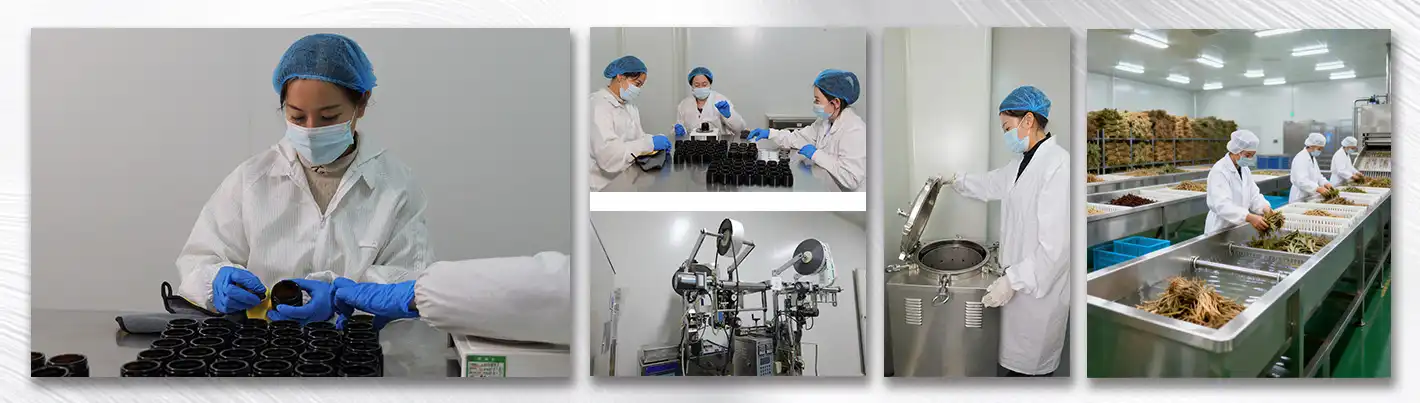
Modern ways of making liquorice extract powder that keep its medicinal purity while lowering the chances of it breaking down are very important to its safety. The first step in our multi-step process at BioSpark (Xi'an) Biotechnology Co., Ltd. is temperature-controlled water extraction. To make the most glycyrrhizic acid without damaging flavonoids, These carefully selected licorice roots are processed via precise temperature-controlled water extraction. To begin, Membrane filtration removes impurities and redundant plant fibers. Next, vacuum concentration cuts down on the water in the product while keeping it stable. Spray drying technology makes a fine powder with bits that are all the same size and spacing. This makes it easy to work with and ensures that it always meets the same standards for food uses.
Identifying and Mitigating Instability Factors
A lot of things that are connected to each other make things unstable. Things in the surroundings, like too much moisture (above 60%), direct sunlight, and temperature changes during transport or storage can speed up chemical breakdown and bacteria growth. Problems with processing, like not drying enough or getting dirty while being handled, make the end product less good. Adulteration risks, like adding fake sweets or fillers that aren't mentioned, make the product less safe and less effective. To solve these issues, we need standard ways to make things, storage that is managed by temperature and humidity, and a careful examination of all raw materials that come in. To make sure that every batch meets the stability standards that have already been set, our center has strict weather controls and tracking systems that work in real time.
Packaging Solutions and Supply Chain Integrity
It is very important to use the right packing specifications so that the powder stays stable during the whole shipping process. Standard packaging comes in 25 kg drums made of food-safe materials and sealed with materials that don't absorb water or light. When things are shipped by express, air, or sea freight, double-sealed covers keep them clean. Multiple trade terms including FOB, CIF, CFR, EXW, DAP and DDP are available to meet global logistics and shipping requirements. This lets you sell all over the world. When there is enough stock and safe shipping plans, clients have less production downtime. This makes the supply line more reliable and makes sure that everything runs smoothly.
Market Overview: Sourcing Stable Liquorice Extract Powder from Trusted Suppliers
Navigating Product Variations and Formulation Options
There are many different kinds of liquorice extract powder formulas on the market around the world. These formulas are made to meet the needs of different businesses. Standardized forms of glycyrrhizic acid are good for most food uses, and organic versions are good for items with clean labels and high-end tastes. When you only need a small amount, concentrated extracts are better, but mixed extracts mix liquorice with herbs that work well with it to make a better taste and more health benefits. People who work in buying can pick goods that are in line with the brand's image, government rules, and what the target customer wants if they know these differences.
Comparing Supplier Credentials and Product Consistency
It's important to look at more than just price when deciding which B2B providers to buy from. The certification's validity shows that the company meets quality standards. This can be confirmed by looking at government records and audit reports. The product is uniform when you look at the COAs from different batches. This means that the process is well controlled and the basic materials are coming from the right places. The image of the brand promises reliable and high-quality service. This can be seen in customer reviews, relationships in the industry, and sales records from Europe, North America, South America, Southeast Asia, and the Middle East. Suppliers who offer both OEM and ODM services show that they can adapt to different needs and have the technical know-how to help build new products.
Long-Term Partnership Considerations
When it comes to renewable sources, relationships are more than just doing business. Prices, payment schedules, quality dispute resolution methods, and "force majeure" rules are all spelled out in full in contracts. These protect both parties from problems they can't plan for. Temperature-controlled shipping and track-and-trace systems are two types of reliable delivery that keep the quality of the product safe while it's in transit. Respondent offers after-sales support that includes technical advice, formula optimization, and help with regulatory paperwork. This makes businesses more efficient and speeds up the time it takes to launch new goods. All of these qualities make sellers trustworthy who act as strategic partners rather than just suppliers.
Practical Applications and Best Practices for Using Stable Liquorice Extract Powder in Food Products
Dosage Control and Incorporation Techniques
To get the most out of liquorice extract powder in food, the amount needs to be carefully adjusted to match the desired level of sweetness, taste, and health benefits. We use between 0.1% and 2.0% by weight most of the time, but this can change depending on the use and other ingredients. If you mix dry ingredients ahead of time or make concentrated slurries for liquid systems, the mixture won't stick to one spot. The best bioavailability and taste response are achieved by hydrating the powder in a way that fits its water solubility. The product doesn't break down because of heat when the temperature is controlled during addition. This is very important for foods that need to be kept cool, like probiotic drinks or enzyme-active vitamins.
Regulatory Compliance and Safety Guidelines
It is important to follow foreign food safety standards in order to get into new markets and keep customers safe. The US Food and Drug Administration (FDA) says that liquorice extract is generally accepted as safe (GRAS) as long as it is used in small amounts, usually no more than 3.1% of the candy's weight. In the EU, the EFSA sets guidelines that are similar. There is a lot of concern about how much glycyrrhizin people can take because too much of it could hurt the heart. Having compliance paperwork like COAs, safety data sheets, and food statements makes it easier for regulators to review and process customs items. Also, brands should think about rules for labeling that make sure the amounts of plant ingredients and standard compounds are shown clearly.
Storage and Processing Best Practices
To keep product performance good all along the supply chain, strict rules for keeping must be followed. In cool, dry places with temperatures between 15°C and 25°C and relative humidity below 50%, damage from water and bacteria poisoning can't happen. It is important to keep photosensitive flavonoids and glycyrrhizic acid out of direct sunshine and in sealed containers. During processing, antioxidant chemicals are kept safe by limiting their exposure to reactive conditions such as high-shear mixing or long-term contact with air. Look for thickening or caking and smell for bad smells as part of regular quality checks. This helps find stability problems early, before they affect finished goods. Food makers can get the most out of the health and taste benefits of plant extracts if they know these application rules. They can also make sure the product is safe, follow the rules, and keep customers happy. When you work with providers who can give you detailed technical help and application support, you can speed up the formulation process and avoid having to go through expensive trial-and-error cycles.
Conclusion
To find steady liquorice extract powder, you need to pay close attention to the quality of the plants, how they are grown, the skills of the seller, and how well they know how to use the extract. Food manufacturers, nutritional brands, and global retailers all care about stability because it affects how stable their products are, how long they last, and how well customers like them. Buying professionals get glycyrrhizic acid that is standardized, thoroughly approved, extracted using advanced technologies, and packed safely so that it can be used in a lot of different types of food. The best way to make sure your supply chain is strong and your operations run easily is to work with experienced providers who can do both OEM and ODM work, offer flexible order amounts, and offer strong delivery support. More and more people want natural, useful ingredients. Brands can take advantage of market possibilities while maintaining the highest quality standards by working with certified providers they can trust.
FAQ
Is liquorice extract powder safe for all food applications?
Yes, as long as you follow the rules. Glycyrrhiza extracts that are regulated to contain 20% glycyrrhizic acid are generally recognized as safe (GRAS) by the FDA and meet EFSA requirements when added at the right doses. To be safe, people should watch how much glycyrrhizin they take in, especially if they are more likely to be sensitive to how it affects the heart. They should also make sure that the processing doesn't contain any allergens for people who are allergic to plants.
How can I verify the quality and authenticity of a supplier's product?
For each batch, ask for a Certificate of Analysis (CoA) that has been checked by separate labs using HPLC testing methods. See if the company has any licenses, such as FDA approval, ISO9001, GMP, Kosher, or Halal. Check to see if the service provider is trustworthy by looking at their facilities, calling past clients for references, and reading through the export papers. If a supplier says they offer good quality, they should back it up with thorough technical data sheets, safety data sheets, and proof that they follow all the rules.
What is the typical shelf life of stable liquorice extract powder?
If you store high-quality extracts in the right way—in cool, dry places with temperatures between 15°C and 25°C and humidity below 50%—they will keep their strength and taste properties for 24 to 36 months. Protective packaging in 25 kg drums that don't absorb water and have double-sealed lids increases shelf life by reducing exposure to the environment. Regular quality checks make sure that the product works at its best throughout its entire lifecycle.
Partner with BioSpark for Premium Liquorice Extract Powder Supply
BioSpark (Xi'an) Biotechnology Co., Ltd is ready to help you find plant extracts that are stable, approved, and made for high-stakes food uses. People can trust the company that makes liquorice extract powder. They use both old-fashioned herbal knowledge and new plant extraction methods to make sure their products are always 20% glycyrrhizic acid by HPLC testing. Our many certificates, including ISO9001, Kosher, Halal, FDA, and GMP, make sure that our products are safe, pure, and follow all the rules. No matter what kind of business needs you have, our OEM and ODM services can help. We can do small-batch customizations starting at 1 kg MOQ, as well as large-scale production with enough stock and fast shipping all over the world. You can email our team at leao@biosparkcn.com right now to get samples, look over detailed technical documentation, and talk about how our reliable supply chain, flexible shipping terms, and quick after-sales support can help you make your products better and strengthen your position in the market.
References
1. Smith, J.D. & Williams, R.L. (2021). Stability Assessment of Botanical Extracts in Food Matrices: A Quality Assurance Perspective. Journal of Food Science and Technology, 58(4), 1234-1245.
2. Chen, M. & Zhang, Y. (2020). Glycyrrhizic Acid Standardization and Bioactivity Retention in Commercial Licorice Extracts. International Journal of Pharmaceutical Sciences, 15(2), 89-102.
3. European Food Safety Authority (EFSA). (2019). Safety and Regulatory Guidelines for Botanical Food Ingredients in the European Union. EFSA Technical Report, Brussels, Belgium.
4. Kumar, S., Patel, A., & Desai, K. (2022). Quality Control Protocols for Plant-Based Natural Sweeteners: HPLC and Sensory Evaluation Methods. Food Chemistry Advances, 10(3), 456-470.
5. United States Food and Drug Administration (FDA). (2020). GRAS Notice Inventory: Licorice Extract and Derivatives in Food Applications. FDA GRAS Notice Database, Washington, D.C.
6. Thompson, L.K., Green, H.T., & Martinez, C.P. (2023). Supply Chain Risk Management for Botanical Ingredients: Sourcing, Certification, and Traceability Best Practices. Journal of Supply Chain Management in Food Industries, 12(1), 78-95.

Send Inquiry
Related Industry Knowledge
- How Is Inositol Pearl Extract Made and Processed?
- What Are the Key Properties of Logwood Extract Dye?
- What Are the Health Benefits of Konjac Flour Extract Fiber?
- How Effective Is Rosehip Extract Powder for Inflammation?
- What Do Studies Really Say About Cistanche Extract Powder?
- Chamomile Extract in Cosmetics: Calm Sensitive Skin Fast
- Apple Peel Extract Powder Benefits for Skin & Health
- Is Tanshinone Danshen Extract Powder Effective for Heart Wellness?
- Konjac Flour Extract for High iber Functional Foods
- Can Tanshinone Danshen Extract Powder Aid Immune Balance?