_1764041963888.webp)
Top Green Plum Powder Benefits for Food and Beverage Manufacturers
Aug 27, 2026
Green plum powder has emerged as a game-changing ingredient for food and beverage manufacturers seeking natural, functional solutions that resonate with today's health-conscious consumers. This light yellowish-green powder is made by extracting young Prunus mome fruit at very low temperatures. Over 60% of it is organic acid, mostly citric acid. It also has malic acid, succinic acid, flavonoids, oleanolic acid, and chlorogenic acid, which are all useful bioactive compounds. When people who buy things are trying to make sense of the complicated world of natural acidulants and functional ingredients, knowing about the benefits of this traditional Asian fruit powder can help them make products that work better and last longer, as well as put clean labels on them.
Understanding Green Plum Powder: Composition and Nutritional Benefits
Green plum powder is an elegant plant product that combines ancient food knowledge with cutting-edge nutritional science. This 80-mesh fine powder is made by extracting plants in a way that keeps heat-sensitive chemicals safe. It still has the sour smell and complex taste that are typical of real Prunus mume fruit.
Rich Organic Acid Profile
The dense organic acid content of high-quality Green plum powder is what makes it stand out. When the citric acid level is more than 60%, producers have access to a natural acidulant that can compete with synthetic ones and offer extra useful benefits. The powder also has succinic acid, which helps the tricarboxylic acid cycle—a key metabolic pathway for making energy—as well as malic acid, which gives sports drinks and recovery drinks their refreshing tartness.
Bioactive Compounds for Functional Applications
In addition to being an acidulant, Green plum powder contains a variety of bioactive chemicals that help brands market their products better. Chlorogenic acid is an antioxidant that helps protect formulations from oxidative damage and has health benefits that make it appealing to people who care about their well-being. Flavonoids and triterpenes, especially oleanolic acid, have been studied in clinical trials for their ability to protect the liver. This makes this ingredient very useful for making liver health supplements.
Alkalizing Effect Despite Acidic Taste
Despite having a very sour taste, one of the most interesting things about Green plum powder is how alkaline it makes the body after consumption. Because of this, it's a great ingredient for functional drinks that aim to balance pH levels and improve metabolic health. This lets manufacturers make products that are both enjoyable to taste and good for your body.
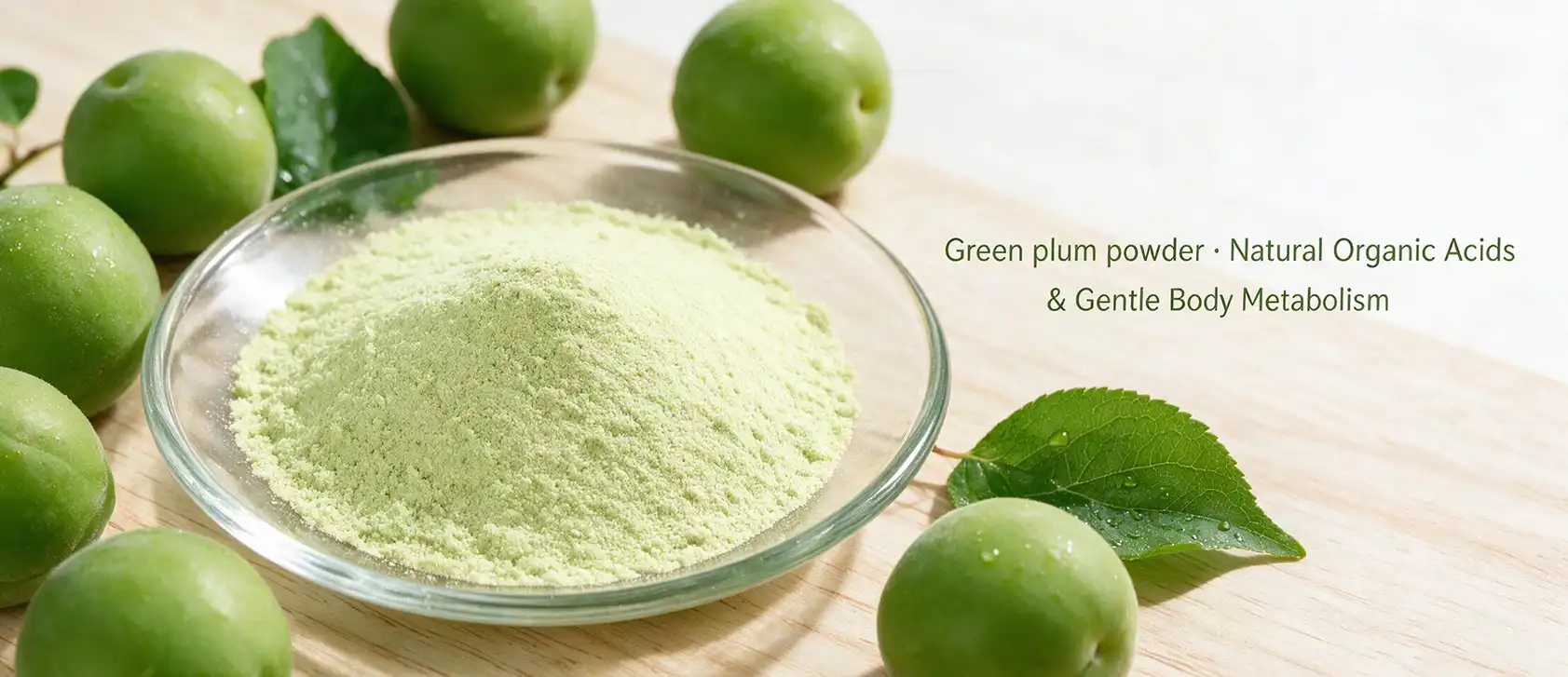
Top 7 Benefits of Green Plum Powder for Food and Beverage Manufacturers
Beyond its nutritional value, there are many strategic benefits to using Green plum powder in manufacturing processes. This ingredient solves a lot of problems that food and drink developers are having right now, from making formulations more flexible to finding the right place in the market.
Natural Preservation and Extended Shelf Life
Synthetic antioxidants are getting more and more attention from both customers and government agencies. Due to its high organic acid content and natural antimicrobial qualities, Green plum powder gives makers a clean-label way to increase the shelf life of their products. An environment with a pH between 3.0 and 3.8 stops microbes from growing, and antioxidants stop lipids from oxidizing and colors from fading. When HPP non-thermal sterilization technology is used in production, these safe qualities stay in the powder for the full 24 months that it is stored.
Distinctive Flavor Profile for Product Differentiation
In snack and drink markets that are already very full, new flavors are what keep people interested and loyal to a brand. Green plum powder has a sourness that is complex and multidimensional, which is very different from synthetic acidulants that only have one note. When you mix citric acid, malic acid, and volatile chemicals that come from fruit, you get a delicious sourness with light fruity notes that don't overpower other flavors. This makes it especially useful for functional beverage recipes, where hiding nutritional ingredients while keeping the taste good is still hard to do.
Perfect Alignment with Clean-Label Trends
The need for natural, easily recognizable products has completely changed how the food and drink industry buys things. Green plum powder satisfies this need by providing an all-natural alternative to numerous manufactured ingredients. People who want to know more about the product like that it comes from plants and isn't processed much. It also has standards like ISO9001, Kosher, Halal, FDA, and GMP compliance, which are needed to sell it in foreign markets.
Versatile Application Across Product Categories
This green plum powder mixes well with water but not so well with ethanol, so it can be used in many recipes. People who make functional drinks can easily add it to ready-to-drink drinks, fast powder mixes, and sports nutrition pills because it breaks quickly. In marinades, soups, dips, and salad sauces, chefs say it works just as well as vinegar or lemon juice. Because it contains organic acid, it naturally adds acid to cakes and treats, which is something that the food business likes. You can also use it to soften meat. It is used by companies that make healthy snacks to make sugar-free candies and chewy pills that taste like real fruit but don't have any extra sugar.
Support for Functional Health Claims
Because Green plum powder has bioactive substances, companies can make goods that are marketed as healthy. The oleanolic acid level helps liver health formulas that aim to detoxify and protect the liver, which is a growing area in the wellness supplement market. The organic acid profile is good for digestive health because it increases saliva and gastric juice production, which helps with hunger and nutrient absorption. For sports nutrition brands, the citric acid helps break down lactic acid buildup, which may help muscles heal and feel less tired.
Sustainable Sourcing with Traceability
As companies make bigger promises to be more environmentally friendly, the ways they get their ingredients are being looked at more closely. Green plum powder from reputable sellers comes from clear supply lines that can prove they come from China's well-known Prunus mume growing areas. The way used to remove the acid from plants has less of an effect on the environment than making synthetic acidulants, and processing at low temperatures (40–45°C) uses less energy. When manufacturers want to be more environmentally friendly, they work with approved suppliers because they provide the tracking information that is needed for ESG reporting and consumer transparency projects.
Cost-Effective Bulk Supply for Scale Operations
For manufacturers with small profit margins, operational efficiency is still very important. Green plum powder providers who give bulk packing in 25 kg drums with aluminum composite bags, desiccant protection, and nitrogen flushing make sure that the product stays stable while it is being stored and shipped. Different logistical needs can be met by shipping terms like FOB, CIF, CFR, EXW, DAP, and DDP, and having enough stock on hand allows for quick completion. The total cost of ownership is lower than with less stable natural alternatives because the price is competitive for the high organic acid content (over 60% citric acid equivalent) and the shelf life is longer.
How to Choose the Right Green Plum Powder Supplier for Your Business
Choosing a supplier is a big strategic choice that affects the standard of the product, how well it meets regulations, and how reliable the business will be in the long run. Several important factors should be carefully looked at during the buying process.
Quality Certifications and Regulatory Compliance
Full certification portfolios for Green plum powder show that suppliers are dedicated to quality systems and meeting market entry standards. Kosher and Halal certifications let you reach certain groups of customers, while ISO9001 recognition shows that you have a quality management system that works. Registration with the FDA and following GMP guidelines ensure that manufacturing standards are in line with those used for pharmaceutical-grade products. When looking at different suppliers, make sure you ask for certificates of analysis for the most recent production batches. These should include Thin-Layer Chromatography testing method verification to make sure the organic acid content and purity standards are met.
Production Process and Technical Capabilities
The method used for extraction has a direct effect on the quality and functionality of the end product. Suppliers who use low-temperature extraction technology (40–45°C) keep bioactive compounds that break down in heat that would normally be lost during processing. High-pressure pressure (HPP) non-thermal cleaning is a new method that gets rid of microbes without the damage that comes with standard pasteurization. The four main processing principles—keeping the acid, protecting the color, boosting the flavor, and getting rid of the astringency—show advanced technical skills that ensure uniform quality from batch to batch.
Customization and OEM/ODM Capabilities
Companies that are making their own formulations need suppliers that can meet their specific needs. It is very useful to be able to change the quantity of organic acids, the standardization of pH, and the creation of co-formulations with ingredients that work well together, like silymarin or curcumin, for liver health purposes. Suppliers that offer OEM and ODM services with low minimum order numbers (as little as 1 kg for samples) make it possible to test the market and develop new products without spending a lot of money on big production runs. Protecting secret recipes with an NDA adds another layer of security to new product ideas.
Supply Chain Reliability and Logistics Support
Consistent supply access stops production problems and makes inventory management easier. Suppliers who keep large amounts of inventory (1,000 tons or more) show that they can handle both high-volume production processes and changes in seasonal demand. Lead time commitments of 10 days for standard specifications and 30 days for custom formulations make it possible to plan production accurately. Express, air freight, and sea freight are just some of the sending methods that can be used. Delivery terms are also open, so you can use cost-optimization strategies for regular restocking.
Practical Applications and Usage Tips for Food and Beverage Manufacturers
To effectively add Green plum powder to production processes, you need to know the best ways to use it and what formulation issues to think about for each type of application.
Functional Beverage Formulations
Green plum powder works really well for beverage makers in recovery drinks, post-workout supplements, and refreshing functional drinks that target energy and vitality. Depending on the level of sourness you want and your practical claims, the normal usage rates are between 0.5% and 3%. The powder is easy to mix with both hot and cold water, so it can be used to make both ready-to-drink drinks and instant powders. Consider combining Green plum powder with electrolytes and carbohydrates when making sports nutrition products to create synergistic recovery benefits while hiding mineral off-notes through the fruit's acidity.
Health Supplement Development
Green plum powder is useful for making liver support capsules and antioxidant tablets because it contains oleanolic acid. When the powder is encapsulated, it is usually used at a dose of 200 to 500 mg per serving. For better results, it is often mixed with silymarin or other herbs that protect the liver. When added to pre-meal supplements or digestive enzyme complexes, its appetite-stimulating properties help digestive health products. Manufacturers should make sure that the source of their Green plum powder records the amounts of oleanolic acid to back up promises on the label and regulatory filings.
Natural Food Seasoning Applications
Green plum powder is great in salad dressings, marinades, and fancy sauces because it can be used instead of vinegar or lemon juice to add acidity. When used at rates of 1% to 2%, these acids have about the same acidity as standard acidulants while adding a unique flavor richness. Because the powder can bring out other tastes and lower the amount of sodium needed, it can help reduce the amount of salt in processed foods. When used on meat, the organic acids naturally make the meat more tender while also adding a subtle flavor boost.
Innovative Snack and Confectionery Products
Companies that make healthy snacks use Green plum powder to make sugar-free candies, chewable tablets, and new sweets that taste like real fruit. Natural sweeteners like stevia or monk fruit work well with the strong sourness to make balanced flavors without adding sugar. Green plum powder is usually between 0.5 and 1.5% of hard candies. For stronger taste effects, higher amounts may be used in softer candies like gummies. The powder stays stable at temperatures used in candy making, so the results are always the same and don't change much.
Quality Control and Storage Recommendations
Keeping the quality of the ingredients high while they are being stored and handled protects their functional properties and stops product defects. Green plum powder should be kept in its original metal composite bags that are tightly sealed to keep out light and moisture. Controlling the relative humidity below 60% keeps the fluid from sticking and keeps it moving freely. Using it within 24 months of opening guaranties the right amount of organic acid and the right smell. Test the arriving quality by measuring the pH, analyzing the moisture content, and judging the quality based on your senses to make sure the supplier's standards are met before using the product in production.
Market Trends and Future Outlook for Green Plum Powder in the Food & Beverage Sector
The way businesses work and what people want keeps changing in ways that favor natural, useful products like Green plum powder. Knowing about these trends helps companies set up their products so they will continue to do well in the market.
Growing Demand for Natural Acidulants
As the world moves toward "clean label" products, natural acidulants that replace synthetic citric acid and other man-made alternatives have a lot of room to grow. The popularity of Green plum powder is growing, and it has more uses than just adjusting pH levels. Market study shows that natural acidulants command higher prices and make products seem better, especially in the premium and specialty product categories where knowing what's in the product is what makes people decide to buy it.
Expansion of Liver Health Supplement Category
Along with worries about outdoor toxins, drinking too much alcohol, and metabolic syndrome, people are becoming more aware of their liver health. Supplement companies that are making detox and liver-protecting mixes are looking for botanical ingredients that have been supported by clinical research more and more. Green plum powder's oleanolic acid presence makes it an excellent addition to formulas for liver health, especially when mixed with well-known ingredients like milk thistle or turmeric.
Opportunities in Private Label and OEM Manufacturing
Contract manufacturers and private label developers are getting more and more requests from brands that want unique products but don't have their own R&D departments. Customers can get a competitive edge from suppliers who offer full OEM and ODM services, such as formula creation, unique packaging, and regulation support. Due to its adaptability across a variety of product formats—from pills and tablets to gummies and powders—private label makers can create a wide range of products based on a single main ingredient.
Innovation in Traditional Food Modernization
Green plum powder helps make traditional foods like plum wine, plum juice, and plum sauce more consistent and better in quality. Modern consumers want traditional flavors that are true to the original, with consistent quality and easy-to-use formats. Green plum powder can help manufacturers make traditional goods that last longer on store shelves while still having the same original taste. This can help the products reach more people, not just in specialty channels but also in regular stores.
Conclusion
Food and drink companies that are trying to meet the needs of health-conscious consumers, clean label advocates, and functional innovation should look to Green plum powder as a key ingredient. It is useful for many different types of products because it has a dense organic acid makeup, a wide range of bioactive chemicals, and can be used in functional drinks and liver health supplements. Having natural preservation qualities, a unique flavor, and being in line with sustainability goals all work together to meet multiple buying goals at the same time. As the market continues to focus on natural ingredients that have been shown to be good for you, companies that use high-quality Green plum powder in their formulations will be able to meet rising consumer demand while still standing out from the competition.
FAQ
What are the primary health benefits that green plum powder provides in food and beverage applications?
Because of its high amount of organic acids and bioactive substances, Green plum powder has many health advantages. The high content of citric acid helps the body use energy by speeding up the tricarboxylic acid cycle. This makes muscles less tired after exercise. Oleanolic acid protects the liver by helping liver cells stay healthy and the cleansing process work better. The mix of organic acids makes digestive juices flow faster, which increases hunger and nutrient absorption. Flavonoids and chlorogenic acid are antioxidants that protect cells from oxidative stress. Even tho the powder tastes sour, it has an alkalizing effect after digestion that helps keep the body's pH level in check.
How does green plum powder compare with other fruit powders or acidulants for manufacturing purposes?
Green plum powder stands out because it has a very high organic acid content—over 60% of it is found to be citric acid—much higher than most fruit powders. Synthetic acidulants only give a single level of sourness, but this powder's various organic acids create layered taste profiles that give it a complicated flavor. The standard pH range of 3.0 to 3.8 makes formulation behavior more predictable than with fruit powders, which can change. The fine 80-mesh standard makes sure that the material dissolves better and spreads evenly in formulas. Green plum powder has health and taste benefits that simple acidulants can't match. This is because it contains bioactive substances that help with function setting.
What should manufacturers consider when purchasing green plum powder in bulk quantities?
When looking at bulk purchases, manufacturers should put supplier certifications like ISO9001, GMP, Kosher, Halal, and FDA registration at the top of the list to make sure quality standards are met and they can get to the market. Check the amount of organic acid in the sample using Thin-Layer Chromatography to get a Certificate of Analysis. Check the quality of the packaging. To keep moisture from absorbing and oxidizing, look for aluminum composite bags with desiccant and nitrogen flushing in 25 kg drums. To keep production from stopping, confirm lead times and inventory availability. Before placing a large order, ask for samples to check the color consistency (light yellowish-green to green), the characteristic smell, and the solubility. For future product development needs, look for providers that offer flexible shipping terms and the ability to make changes.
Partner with BioSpark for Premium Green Plum Powder Supply
With cutting-edge extraction technology and thorough quality control systems, BioSpark (Xi'an) Biotechnology Co., Ltd. is your go-to source for Green plum powder. Our low-temperature handling at 40–45°C protects bioactives that are damaged by heat, and HPP non-thermal cleaning keeps microbes safe without changing the way the product works. We can help you get into markets around the world because we have ISO9001, Kosher, Halal, FDA, and GMP certifications. Our method is flexible enough to handle both large orders and small-batch samples, with a minimum order number of just 1 kg. This lets us test everything thoroughly before starting to make more. Our research and development team is here to help you with any questions you have during the whole development process, whether you need standard specifications with a 10-day lead time or unique recipes with specific organic acid profiles. Email our procurement experts at leao@biosparkcn.com to talk about your particular needs, get full product specifications, or set up shipping of samples. BioSpark offers a difference thru dependable supply, consistent quality, and service that focuses on partnerships.
References
1. Chen, Y., & Wang, H. (2021). "Bioactive Compounds and Health Benefits of Prunus mume Fruit: A Comprehensive Review." Journal of Functional Foods, 85, 104632.
2. Liu, X., Zhang, M., & Wang, L. (2020). "Organic Acids in Fruit Processing: Functional Properties and Applications in Food Industry." Food Chemistry, 312, 126068.
3. Tanaka, K., Nishizono, S., & Makino, N. (2019). "Hepatoprotective Effects of Oleanolic Acid and Related Triterpenoids: Mechanisms and Clinical Applications." Phytotherapy Research, 33(11), 2742-2753.
4. Rodríguez-García, C., Sánchez-Quesada, C., & Gaforio, J.J. (2022). "Natural Acidulants in Food Preservation: Clean Label Alternatives to Synthetic Additives." Critical Reviews in Food Science and Nutrition, 62(15), 4121-4138.
5. Park, S.J., Kim, Y.H., & Lee, J.H. (2023). "Application of Green Plum Extract in Functional Beverages: Flavor Profile, Stability, and Consumer Acceptance." International Journal of Food Science and Technology, 58(4), 1895-1904.
6. Williams, A.R., Thompson, M.J., & Davis, K.L. (2020). "Emerging Trends in Natural Ingredients for Sports Nutrition and Recovery: Role of Organic Acid-Rich Botanical Extracts." Nutrients, 12(9), 2847.

Send Inquiry
Related Industry Knowledge
- Why Choose Organic Hawthorn Fruit Powder for Clean-Label Products?
- Loquat Powder Quality Standards Every B2B Buyer Should Know
- Is Loquat powder the Right Choice for Your Next Product Line?
- Does Liquorice Extract Powder Work as a Natural Tobacco Flavoring?
- What Is the Difference Between Spirulina Extract Tablets and Chlorella?
- Can Kidney Bean Flour Improve High-Protein Food Formulas?
- Searching for High-Purity Holy Berry Powder in Stock?
- Best Tongkat Ali Extract Powder vs Capsules: Which Better?
- Konjac Flour Extract vs. Regular Konjac Powder Explained
- Baicalin Extract for Skin: Anti-Aging & Protective Boost