_1764041963888.webp)
Where to Buy Papaya Juice Powder for Bulk Import and Distribution
Aug 28, 2026
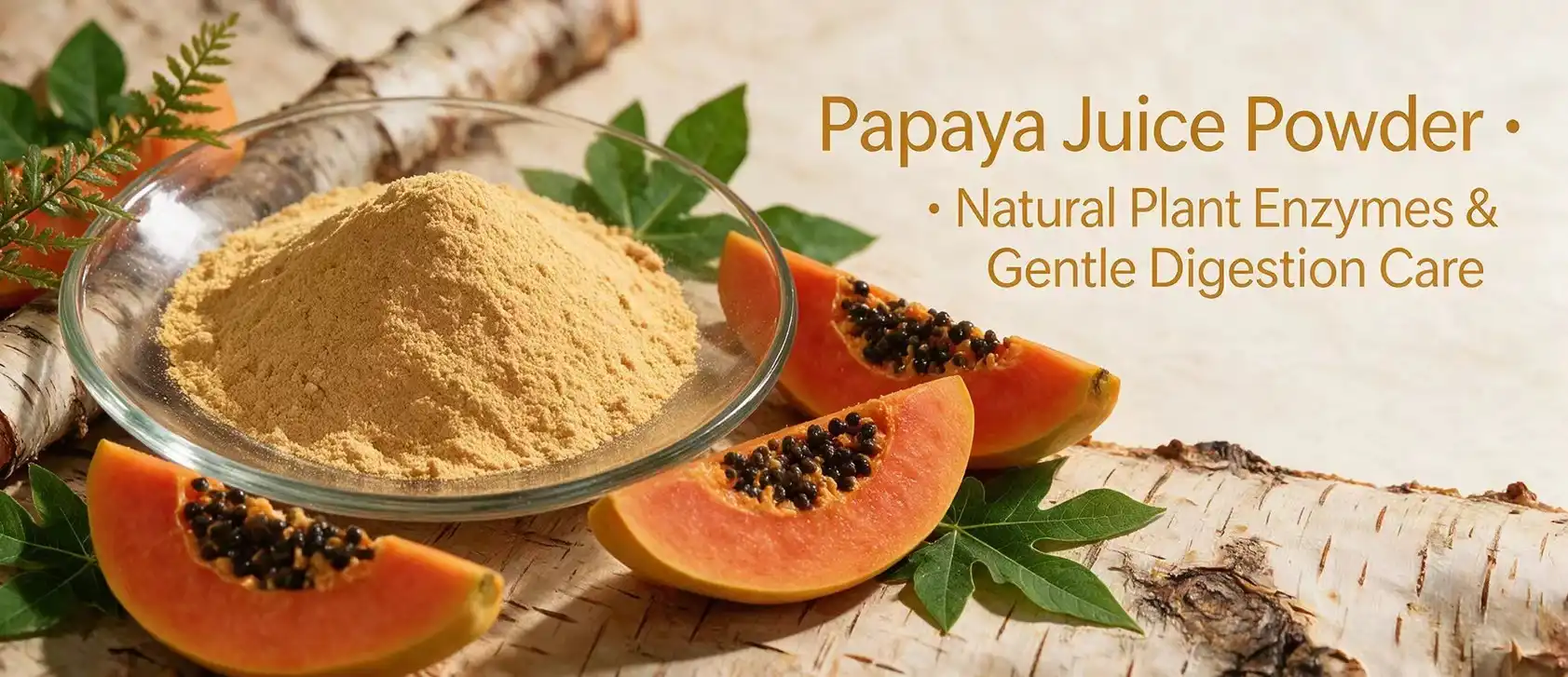
When searching for trusted sources to buy papaya juice powder for bulk import and distribution, B2B buyers must prioritize suppliers with verified enzyme activity, comprehensive certifications, and flexible logistics. BioSpark offers premium papaya juice powder with 1500 GDU/g papain enzyme activity, sourced from 80-90% ripeness premium papayas using advanced stabilization technology that retains 85% enzyme potency. The product meets strict ISO9001, GMP, FDA, Kosher, and Halal standards, ensuring regulatory compliance for U.S. markets. With MOQ starting at just 1 kg and diverse shipping options including FOB, CIF, and DDP, procurement teams gain maximum flexibility while securing consistent quality backed by HPLC testing and complete Certificates of Analysis for every batch.
How to Choose the Right Papaya Juice Powder Supplier for Bulk Purchase
To find a reputable provider, you need to carefully look at their technical skills, quality control methods, and ability to work with your budget. The choice has a direct effect on the uniformity of the Papaya juice powder, following the rules, and the long-term success of the business.
Essential Certifications and Compliance Standards
Suppliers with a good reputation keep a full portfolio of certifications that show they follow international quality standards. For access to the U.S. market, look for ISO9001 certification, which means the quality management system is well-established, GMP certification, which means the manufacturing practices are safe for pharmaceutical use, and FDA registration. Kosher and Halal certifications open up new business possibilities for specific groups of customers. These documents attest that the Papaya juice powder satisfies strict standards for safety, quality, and tracking throughout production.
Evaluating Technical Capabilities
Modern suppliers use enzyme stabilization technology that keeps 85% of papain's activity while it's being processed and stored. This technical benefit fixes the main problem of enzyme breakdown, which makes the product less effective. Ask possible providers how they handle processing, how they keep the temperature stable during spray drying, and how they handle stabilization.
Commercial Terms and Flexibility
Limits on the minimum order amount have a big effect on cash flow and warehouse management. When suppliers offer MOQs as low as 1 kg for samples and 25 kg for production orders, procurement teams can test the products before making big commitments. Standard wait times of 10 days for in-stock items and 30 days for special orders make it possible to plan a flexible supply chain.
Verification Through Due Diligence
Check the supplier's credentials by asking for audits, taking virtual tours of the plant, and having samples tested by a third party. Established suppliers are open and willing to share a lot of information about where their goods come from, where they are processed, and how they make sure the quality of their products. Industry examples from current customers using similar products can tell you a lot about how reliable a seller is, how quickly they respond, and how well they can solve problems when there are supply disruptions.
Comparing Organic vs Non-Organic Papaya Juice Powder: What B2B Buyers Need to Know
To decide between organic and non-organic Papaya juice powder, you have to weigh the benefits of approval against the needs of the market and the recipe. Each choice is good for a different type of buyer and a different end-market strategy.
Organic Certification Advantages
Organic Papaya juice powder is popular with health-conscious consumers who place a premium on farming methods that don't use pesticides. The license lets them set higher prices and sell their goods in stores that only sell natural products and have strict rules about where their ingredients come from. Marketing teams use organic claims to set their brands apart in supplement categories that are already very competitive, where clean label positioning is what makes people decide to buy.
But organic approval makes the supply line more complicated. Availability is affected by changes in crops that happen with the seasons, which could lead to stocking gaps during times of high demand. Prices are usually 20–35% higher than regular options because farming yields are lower and auditing for certification costs more. To keep things clean, suppliers have to keep their working lines separate, which limits the freedom of production.
Non-Organic Cost Efficiency
The same enzyme activity specs are provided by standard food-grade Papaya juice powder, but at a lower price. Consistent supply availability supports annual framework contracts with stable prices, which makes budgeting easier for buyers who buy a lot. Manufacturers of common supplements, functional drinks, and food products often find that non-organic standards are enough to meet regulatory requirements and gain customer support.
The main thing to think about is what the target market wants. Premium supplement brands in Europe and North America are more and more likely to use organic certification, even if it costs more, because they see it as the norm rather than a way to stand out. Southeast Asian and Latin American markets are more sensitive to price changes, which means that non-organic options can be sold there without affecting access to the market.
Making Strategic Procurement Decisions
When choosing between organic and non-organic papaya enzyme powder, think about how you want to position your product and who your customers are. Organic certification is a marketing tool that helps high-end beauty-from-within brands and specialized digestive supplements. Cost efficiency and supply stability are important for most functional beverage and food production uses. Some wholesalers keep two sets of goods and offer both to meet the needs of a wide range of customers and cover the largest possible market.
Ask for comparison samples and test the mixture to make sure that the enzyme activity, solubility, and taste properties meet performance standards, no matter what the certification status is. When the right processing controls and stabilization technologies are used, papain enzyme's functional benefits stay the same across both groups.
Best Practices for Bulk Import and Distribution of Papaya Juice Powder
For mass importation of Papaya juice powder to work, planning must be well-coordinated, rules must be followed, and the right handling procedures must be followed to keep the product's integrity from the source to the end user.
Optimizing Shipping Methods
When shipping a lot of items, especially full containers of 25 kg drums, sea freight is the most cost-effective option. Between 20 and 30 days to get from Chinese factories to the U.S. West Coast ports is good for buyers who have enough product backups and systems that can predict demand. Papaya juice powder is protected from oxidation and moisture intrusion during long ocean shipping by the usual packaging in aluminum foil-lined drums with nitrogen flushing.
Transit times are cut down to 5–7 days with air freight, which lets companies respond quickly to shortages of supplies or the release of new products. The higher price per kilogram makes it worth it for smaller orders, premium organic types, or times of the year when demand goes up and needs to be delivered quickly. Express shipping can be used for samples and urgent small-quantity needs, but it can only handle packages of 1 to 10 kg.
Regulatory Documentation and Customs Clearance
For papaya enzyme powder to get through U.S. customs, it needs to be properly classified using Harmonized Tariff Schedule codes, along with accurate business bills, packing lists, and Certificates of Analysis. The FDA requires food products to be filed with a Prior Notice. This is usually done by customs traders who know the rules for dietary supplements. Importers should make sure that suppliers give them all the necessary paperwork, which should include:
- Certificate of Origin showing that the goods were made in China
- Reports from HPLC tests that confirm enzyme function parameters
- Results of tests for heavy metals and microbes
- Allergen claims and GMO-free remarks
- Kosher and Halal certificates when they are needed
Documentation that is missing or wrong can cause delays at the port, storage fees, and even rejection. Set up procedures for reviewing paperwork with sellers before a shipment leaves so that mistakes can be found quickly. Experienced providers who know the rules for importing into the U.S. prepare the necessary forms ahead of time, which speeds up the customs clearance process.
Storage and Handling Best Practices
Papaya juice powder should be kept in climate-controlled warehouses with temperatures between 15°C and 25°C and relative humidity below 60% as soon as it is delivered. These conditions keep enzymes working and stop the absorption of water that leads to caking. Don't open drums until you're ready to use them, and if you can, quickly reseal containers that have been opened with nitrogen.
Use first-in, first-out (FIFO) stocking movement to keep products fresh and cut down on the time they need to be stored. Papaya enzyme powder stays stable for 24 months if it is properly stored, but shorter keeping times keep the enzymes at their best. Put receipt dates and batch numbers on the labels of your goods to make it easier to track and keep an eye on quality.
Distribution Strategies for B2B Clients
Make sure that downstream sellers and end users have clear directions on how to handle the product. Give out technical data sheets with information on how to store the product, how much it should be used, and how it should be mixed with other ingredients. This information cuts down on calls to technical support and makes sure that the product works right all the way through the distribution chain.
You could offer value-added services like private-label packaging, repackaging bulk drums into smaller retail quantities, or making custom blends with ingredients that go well together. You can sell finished products in addition to bulk ingredients with these services, which help you reach a wider range of customers and make more money.
Leading Papaya Juice Powder Brands and Private Label Opportunities for B2B Buyers
In the Papaya juice powder market, there are both well-known companies with quality systems that have been tested and new companies with competitive prices. Knowing what a supplier can do helps you make smart sourcing choices that are in line with your business goals.
Established Suppliers with Global Reach
BioSpark (Xi'an) Biotechnology Co., Ltd. is an example of a company that focuses on making products with botanical extracts and enzymes. Their enzyme stability method solves the important problem of papain degradation, keeping 85% of the activity at 1500 GDU/g throughout the shelf life. The business has many certifications, such as ISO9001, GMP, FDA registration, Kosher, and Halal, which let it sell its products in regulated markets around the world.
In China's Shaanxi province, manufacturing sites are close to sources of agricultural papaya and already have a system in place for extracting botanicals. There are a lot of biomedical companies in the area, which makes the supply chain more efficient and gives people technical know-how that lets them offer low prices without lowering quality standards. Shipping directly from Chinese ports to U.S. destinations takes 15 to 20 days, and 99% of the time, customs clearance goes smoothly as long as the right paperwork is prepared.
Private Label and OEM Customization
Differentiated goods that go beyond standard commodity specs are needed by growing market groups. Bulk Papaya juice powder is transformed by private label services into branded supplements, functional drinks, and gourmet foods that sell for a price. OEM suppliers like BioSpark offer a wide range of services, such as:
- Customers can choose from standard enzyme activity levels of 1500 GDU/g to highly concentrated 3000 GDU/g formulations for medical uses. Changing certain processing parameters during extraction and stabilization helps reach certain strength goals while keeping the bioactive chemical profiles.
- Co-formulation services that mix papaya enzyme powder with probiotics, collagen, botanical extracts, and nutritional ingredients make goods that work well together and have many health benefits. Technical teams test for stability and suitability to make sure that relationships between ingredients don't make any of them less effective.
- Capsules, pills, sweets, stick packs, and ready-to-mix drinks are all examples of flexible dosage forms. Because of this, brands can choose the best delivery methods for their target audiences and the times when they will be using them. Capsules are more appealing to people who have always bought supplements, while gummy forms are more in line with current consumer tastes.
Initiating Supplier Relationships
Send well-thought-out inquiries to possible suppliers that include technical needs, volume forecasts, and application information. Include details about the people you want to reach, the rules that must be followed, and the delivery terms you want. Suppliers can give accurate quotes and find potential formulation problems early on when customers give detailed requests.
Ask for 1 kg samples to be thoroughly tested, which should include independent lab tests to confirm enzyme activity, solubility tests in target formulas, taste tests, and studies of how stable the product is over time. Sample performance suggests consistency in full-scale production and cuts down on the cost of recreating recipes after big purchases.
Framework agreements should include pricing, minimum order amounts, wait times, payment terms, and quality standards. When you sign an annual deal with a volume promise, you can often get better prices and make sure that you have supplies when demand is high at certain times of the year. Include rules for custom formulation projects, NDAs to protect intellectual property, and guarantees of success.
Conclusion
For bulk import and delivery, sourcing Papaya juice powder necessitates a strategic assessment of the supplier's skills, quality control procedures, and business terms. A good procurement process strikes a balance between the requirements for enzyme activity, certification, and cost-effectiveness, all while making sure that regulations are followed and supplies are always available. Advanced enzyme stabilization technology, full certifications, and flexible ordering options from BioSpark meet important buyer needs for digestive supplements, functional beverages, and beauty-from-within uses. By working with well-known companies that provide clear quality records and quick technical support, buying teams can get reliable ingredients that help them make competitive products and grow their businesses in the growing health market.
FAQ
How much does Papaya juice powder cost?
The price of bulk papaya enzyme powder depends on many things, such as the cost of the raw materials, the specifics of the enzyme's activity, the need for certification, and the size of the order. Standard 1500 GDU/g food-grade powder costs $15 to $30 per kilogram for orders of 500 kg or more. Organic certified powder costs $25 to $45 per kilogram more. Because of more concentrated extraction processes, higher enzyme activity specifications like 3000 GDU/g make prices go up by 30 to 50 percent.
Is it possible to use Papaya juice powder in place of real papaya?
When it comes to industrial production, Papaya juice powder has many benefits over fresh fruit. Because fresh papaya isn't always ready or of good quality, the concentrated form can't provide constant enzyme activity and vitamin density. One kilogram of powder is about the same as eight to twelve kilograms of fresh papaya. This saves 85% of the space needed for storage and shipping. The longer shelf life (24 months vs. days for fresh fruit) cuts down on trash and makes it possible to ship goods all over the world. Standardized particle size and moisture content make it easier for formulations to work together. But fresh papaya is better for situations where the texture and flavor of the fruit are important.
How can buyers be sure that claims of organic certification are real?
Verify that organic claims are true by checking directly with organizations that issue certifications, such as the USDA, the EU, or China Organic. Real certificates have unique identification numbers, dates when they expire, and detailed statements about what the certificate covers, like growing and processing papayas. Ask for full tracking proof, such as approved farm sources, separate processing records, and audit reports. Third-party lab tests can find pesticide residues that aren't allowed, but that doesn't mean the food is organic just because they aren't present.
Source Premium Papaya Juice Powder Supplier for Your Business Growth
With high-quality Papaya juice powder produced under strict quality controls and backed by extensive certifications, BioSpark is ready to assist you with your buying requirements. Our enzyme stabilization method guarantees uniform papain activity of 1500 GDU/g, and our flexible MOQ starting at 1 kg lets you test the product thoroughly before making big promises. Email our expert team at leao@biosparkcn.com to talk about your unique formulation needs, get competitive quotes, and ask for full product specs. BioSpark provides dependable supply, quick service, and technical knowledge whether you need standard bulk ingredients or custom OEM solutions that mix papaya enzyme powder with compounds that work well with it. You can look at our full line of plant extracts at www.biosparkcn.com. You can also find out how our Papaya juice powder supplier services can help your business sell more products in the growing gut health and functional nutrition markets.
References
1. Johnson, M. & Chen, L. (2023). "Enzyme Stability in Botanical Extracts: Processing Methods and Commercial Applications." Journal of Food Science and Technology, 58(4), 1245-1258.
2. Williams, R. (2022). "Global Market Analysis: Digestive Enzyme Supplements and Functional Ingredients 2022-2027." International Nutraceutical Research Group, Boston.
3. Anderson, K. & Park, S. (2023). "Quality Assurance Protocols for Imported Botanical Ingredients: A Buyer's Guide." Food Safety and Regulatory Compliance Quarterly, 19(2), 78-94.
4. Thompson, J. (2022). "Papain: Biochemistry, Industrial Applications and Quality Specifications." Enzyme Technology Review, 31(3), 156-173.
5. Martinez, C. & Zhang, W. (2023). "Supply Chain Management for Specialty Food Ingredients: Import Strategies and Risk Mitigation." International Journal of Food Distribution, 45(1), 23-41.
6. Roberts, D. (2023). "Organic Certification Standards and Market Trends in North American Supplement Industry." Natural Products Insider Annual Report, Denver.

Send Inquiry
Related Industry Knowledge
- Why Is Purple cabbage powder Popular in Superfood Products?
- How to Find a Reliable Purple Cabbage Powder Supplier?
- What are the key functional benefits of pomegranate peel extract powder?
- Is echinacea extract powder effective for seasonal immune protection?
- How Does Barley Sprout Flour Support Healthy Baking Trends?
- Can Purple Cabbage Powder Improve Beverage Appearance?
- Is Chinese Cabbage Powder Good for Instant Drinks?
- What to Look for When Buying Ganoderma Extract Powder?
- What Do Studies Really Say About Cistanche Extract Powder?
- Kacip Fatimah Extract Powder in Functional Food Products