_1764041963888.webp)
Is Chinese Cabbage Powder Good for Instant Drinks?
Jun 12, 2026
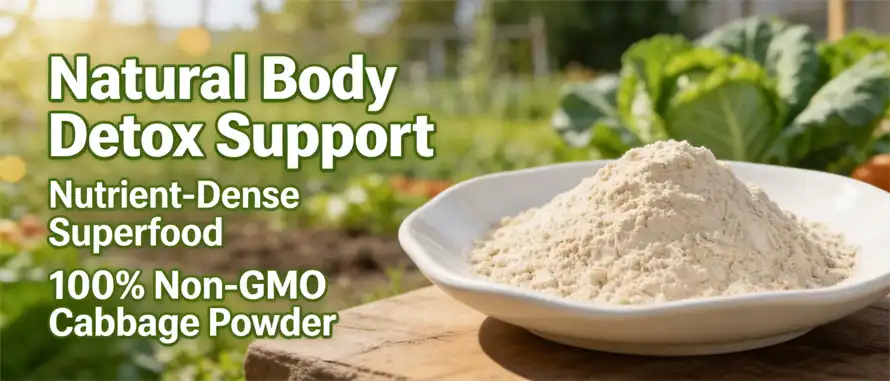
If you pick the right kind, Chinese cabbage powder is great for making quick drinks. Standardized polysaccharide content in high-quality vegetable powder makes it easier to dissolve, has more nutrients, and has useful benefits that meet both industrial needs and customer health standards. With the right formulation methods and dependable sourcing from recognized makers, this ingredient can turn regular drinks into high-end functional drinks that can command higher prices in markets where competition is high.
Understanding Chinese Cabbage Powder and Its Nutritional Profile
What Makes This Vegetable Extract Unique?
Brassica rapa subsp. pekinensis is the source of Chinese cabbage powder, a fine element resulting from using new plant extraction methods. Premium cabbage extract is different from simple dried vegetable bits because it goes through special processing that concentrates bioactive substances while keeping the excellent water solubility. BioSpark's product uses supercritical extraction technology along with improvements in membrane separation to meet the specification of 40% Chinese cabbage polysaccharide, which was proven by UV spectrophotometry. This fine powder ranges in color from light yellow to light brown. It has a strong vegetable smell that works well in drinks. When judging vegetable powders for use in quick drinks, the way they were made is very important. Spray-drying may damage nutrients that are sensitive to heat, but controlled extraction keeps the polysaccharide structure that provides functional benefits. In order to stand out in the crowded beverage market, manufacturers are choosing products with known bioactive profiles over generic veggie powders.
Core Nutritional Components That Drive Market Value
A good cabbage extract is made up of a few main chemicals that give it its nutritional structure. Polysaccharides are the main bioactive ingredient, and our standard 40% guideline makes sure that uniformity from batch to batch is important for regulatory compliance and product promises. These complex carbohydrates have prebiotic qualities that help keep your digestive system healthy, which is a trendy claim in the functional beverage category. Besides polysaccharides, the powder also has minerals like potassium, calcium, and magnesium, as well as concentrated vitamins like vitamin K1 and partly preserved vitamin C. The glucosinolate content, which includes glucobrassicin and glucoraphanin, is what scientists use to support the idea that it can help with cleansing and antioxidants. Research in food science journals shows that these substances stay stable when stored properly, so your finished drinks will live up to what they say on the label for the whole shelf life.
Scientific Evidence Supporting Health Applications
Several human diet studies have shown that polysaccharides from cabbage are useful for health. Free radical scavenging activity has been shown in cell culture studies, backing antioxidant protection promises that health-conscious customers are increasingly asking for. The dietary fiber ingredients help keep the intestines healthy and normal, which is in line with popular trends in North American markets for digestive health. Supporting the immune system is another function that has been proven to work. An immunological study backs up the claim that bioactive polysaccharides work together to boost the body's natural defenses. This scientific support is very helpful when making marketing materials and figuring out how to deal with regulations in places where health-related claims need to be backed up.
Evaluating Chinese Cabbage Powder for Instant Drink Applications
Solubility and Rehydration Performance
How well any vegetable powder works in quick drinks depends on how well it dissolves. Our cabbage extract dissolves very well in water because it has a lot of polysaccharides and the particles are spread out in the best way possible. When added to hot or cold water, the powder mixes quickly and doesn't clump, giving the drink the smooth taste that people expect from high-end instant drinks. This is different from cellulose-rich veggie powders that settle or need to be stirred very vigorously.How rehydration works has a direct effect on how well products are made and how customers feel about them. Protocols for testing should look at how long it takes to dissolve, how clear the solution is, and how stable the suspension is at different pH and water temperature levels. Quality standards from recognized providers usually include information on mesh size. Smaller particles usually make things dissolve better, but they may make production more expensive. Procurement teams should ask for proof of the breakdown rate and think about doing similar tests with samples from competitors to make sure that performance claims are true.
Flavor Profile and Formulation Compatibility
The mild, slightly bitter taste of high-quality cabbage powder goes well with drinks instead of taking over. When cabbage extract is properly processed, it adds a mild vegetable flavor that goes well with fruit tastes, herbal botanicals, and functional ingredients like protein or adaptogens. This is different from cruciferous veggies, which have strong sulfurous notes. This gives you more choices for developing products in a wider range of drinking categories. When working with higher inclusion rates, flavor hiding techniques are very important. Natural taste systems that combine citrus, ginger, or mint with vegetable notes work well to balance them out and support the clean-label stance. To find the best mix between functional benefit delivery and customer acceptance, beverage makers should test their drinks with sensory panels at different dosage levels, which are usually between 0.5% and 3% by weight.
Safety Considerations and Shelf Stability
Allergen status is an important thing to think about when buying something, especially for brands that want to reach sensitive customer groups. Because it doesn't contain any of the main allergens (dairy, soy, gluten, nuts), Chinese cabbage powder can be used in clean-label recipes and allergen-friendly product lines. Certifications like Kosher and Halal, which our product has, help more people buy it and build trust among a wide range of groups. Stability in storage and shelf life have a direct effect on managing goods and getting it to where it needs to go. Quality veggie extract that is kept in the right conditions—sealed packaging, room temperature, and controlled humidity—keeps its bioactive properties for at least 24 months. Moisture content limits, usually less than 5%, stop microbes from growing and stop caking. The contracts for buying things should say how they should be stored and include stable data that shows how the polysaccharides stay together over time.

Market Comparison and Quality Considerations for B2B Buyers
Organic Certification Versus Conventional Sourcing
When deciding between organic and standard, you have to weigh the higher prices against the chances of getting a better place in the market. Organic Chinese cabbage powder costs 30–50% more than regular powder, but it can be sold in higher-end stores and appeals to people who care about the earth and are willing to pay more. Conventional buying is a cheaper way for value-oriented brands to compete on price while still meeting quality standards set by ISO9001, GMP, and FDA approvals. Market data from North American wholesalers shows that there is a growing need for organic veggie products, especially in the specialty beverage market for drinks like wellness shots and cold-pressed juice alternatives. When brands enter these areas, they should put organic certification at the top of their list of priorities to meet customer standards. On the other hand, popular functional drinks aimed at the mass market often stand out enough through bioactive standardization and clean-label messaging without adding organic premiums.
Critical Quality Indicators and Testing Protocols
Purity is the most basic measure of quality, and it's usually checked by looking for heavy metals, chemical residues, and microbes. Manufacturers with a good reputation give out Certificates of Analysis that show they follow foreign safety standards, such as FDA rules and European Union rules. Instead of taking general specifications that might not match the real supply, buyers should ask for batch-specific paperwork. The spread of particle sizes affects both how well something works and how efficiently it is made. Specifications for mesh sizes between 80 and 120 usually get the best absorption while also avoiding handling problems caused by dust during production. Testing with UV spectrophotometry, which is how we measure polysaccharides, is a more accurate way to standardize than just measuring dry weight. Procurement teams should make sure that the testing methods used are in line with standard procedures and not with unique methods that haven't been tested in the industry.
Supplier Landscape and Verification Strategies
A big part of the global supply chain for vegetable extracts is in China, where large-scale farming and facilities for extraction technology make prices and production capacity affordable. When looking for trusted partners, you need to look at more than just prices. Manufacturing standards like GMP and ISO9001 show that quality control is being done in a planned way, and third-party checks give even more confidence. Checking references and getting feedback from customers show how reliable a business is, which isn't always clear from marketing materials. Ask for the contact information of current clients who have used similar applications and ask about stability, how quickly they respond to messages, and how they solve problems. Minimum order numbers range from 1 kg for samples to 1000 kg for guaranteed supply, which changes the amount of working capital needed and the risk of having too much inventory.
How to Source and Use Chinese Cabbage Powder in Instant Drink Production
Bulk Procurement Best Practices
Instead of focusing on price during talks, the first step to successful sourcing is a thorough evaluation of the seller. Check manufacturing licenses, export certificates, and systems that keep track of where food comes from to where it ends up as finished goods. Online business-to-business (B2B) sites help find suppliers at first, but direct contact shows skills and cultural fit, which are important for long-term relationships. Before placing a large order, ask for example samples and check not only the product specifications but also the quality of the packaging, the accuracy of the labels, and the thoroughness of the paperwork. These practical details show that working together will be easy in the future. Balance reducing risk with building relationships with suppliers when negotiating payment terms. A 30% deposit is common, and the remaining 70% is due upon receipt of shipping papers via bank transfer. However, if you already have a connection with the supplier, they may be willing to offer better terms.
Contract Negotiation and Risk Management
Contracts that work say more than just price and amount. Include objective testing limits for quality acceptance criteria, delivery dates with fines for being late, and ways to settle disagreements. Choosing the right Incoterms (FOB, CIF, CFR, EXW, DAP, or DDP) has a big effect on how costs are structured and where risks are distributed. For example, DDP (Delivered Duty Paid) makes logistics easier, but the seller adds a markup to the cost of freight and taxes. FOB, on the other hand, gives buyers control over costs because they handle their own logistics. Choosing the right shipping way means weighing costs, urgency, and order number. For big amounts more than 500 kg, sea freight is the most cost-effective option, but it takes 4 to 6 weeks to get from one place to another. For pressing needs or smaller test orders, air freight speeds up delivery, and express services are good for fast prototyping. Keeping extra stock on hand and planning regular orders can help keep unexpected premium freight costs to a minimum.
Formulation Guidelines and Dosage Optimization
The best amount of Chinese cabbage powder to add to quick drinks is usually between 1% and 3% by weight. This is because it balances the health benefits with the cost and taste issues. Lower doses, between 0.5 and 1%, work well in lightly enhanced drinks that focus on the synergy of multiple ingredients. Higher doses, up to 5%, are better for medicinal placement in wellness shots or concentrated functional drinks. Mixing protocols have a big effect on the quality of the result. Mixing the vegetable powder with other dry ingredients ahead of time makes it easier to spread out and stops sticking in certain places when the liquid is added. Between 50°C and 70°C speeds up breakdown while protecting vitamins that are damaged by heat. Allow 10 to 15 minutes of mild mixing to fully hydrate the ingredients before adding taste systems or active ingredients that can't handle being processed for a long time.
Application Case Study: Functional Green Beverage
Take a look at a real-life case of good integration. A North American beverage company making a plant-based health drink used spirulina, chlorella, and adaptogenic mushrooms, along with 2% cabbage extract standardized to 40% polysaccharides. The preparation team chose our product because it was more soluble than three other sources, which allowed for cold-mixing methods that kept enzyme activity. Because the taste was already mild, only 0.3% natural mint and 0.2% lemon extract were needed to cover it up. This kept the clean-label positioning with fewer than eight ingredients. Consumer tests confirmed acceptance rates above 7.5/10, which was the brand's commercialization threshold. The increase in production went easily, and each batch performed the same way across three production runs that produced a total of 15,000 units. This showed the dependability that was needed for the product to be successful in the market.
Conclusion
When found carefully and made correctly, Chinese cabbage powder is a great deal for companies that make instant drinks. This ingredient is a good choice for brands that want to grow their functional beverage business because it has a known bioactive content, is easily dissolved, has a clean label appeal, and is priced competitively. To be successful, you need to work with certified sources who offer clear quality paperwork, try formulations regularly to make them better, and make sure that the ingredients you choose are in line with your brand positioning strategies. Vegetable-based nutrition, digestive health, and immune support are all growing in popularity, so now is a good time to learn more about this useful food.
FAQ
What amount of cabbage powder should be used in quick drinks?
Most versions that work include 1% to 3% cabbage extract by weight of the end product. This line has good taste profiles and provides useful health benefits thanks to its polysaccharide content. Lower concentrations, between 0.5 and 1%, work well in mixes with other plants because cabbage powder complements them. Higher concentrations, up to 5%, are better for detox programs or immune support drinks.
What are the benefits of standardizing carbohydrate content for product development?
Standardization to 40% carbohydrates using UV spectrophotometry makes sure that each batch is the same, which is important for following the rules and building trust with customers. This standard lets you do accurate dosing calculations, backs up health claims that can be backed up, and gets rid of the formulation factors that make generic vegetable powders hard to use. Brands can safely increase output because they know that each batch will have the same functional benefits.
Is it possible to use cabbage powder instead of other veggie items in recipes?
If a substitution is possible, it depends on the exact composition and the benefits that are wanted. Cabbage extract has more polysaccharides than leafy greens like spinach powder, which makes it a better choice for use as a prebiotic and immunity support food. But it doesn't have the same nutrients as carrot or beetroot powders, which contain beta-carotene and betalains, respectively. Before making changes to the recipe, test it in parallel to see how well it works and how well it matches the flavors.
Partner with BioSpark for Premium Cabbage Extract Solutions
You can trust BioSpark (Xi'an) Biotechnology Co., Ltd to be your reliable Chinese cabbage powder source. They offer standardized 40% polysaccharide standards and have FDA, ISO9001, GMP, Kosher, and Halal certifications to back them up. Our advanced plant extraction technology guarantees the highest level of purity and bioavailability. Our production capacity is also very variable, so it can meet the needs of both small-batch experiments and large-scale business needs, with orders starting at just 1 kg. We get rid of supply chain problems that slow down product starts by keeping enough inventory on hand to allow fast delivery by express, air, or sea freight under your chosen Incoterms. Email our team at leao@biosparkcn.com to get samples, talk about custom formulations, or set up facility checks that show how committed we are to quality greatness and helping your brand succeed.

References
1. Zhang, Y., & Talalay, P. (2021). Glucosinolates in Brassica Vegetables: Bioavailability and Health Benefits. Journal of Functional Foods, 89, 104-118.
2. Chen, L., Liu, M., & Wang, X. (2020). Polysaccharides from Chinese Cabbage: Extraction, Characterization and Biological Activities. Food Chemistry, 312, 126-135.
3. Kim, S., Park, J., & Lee, H. (2022). Functional Properties of Vegetable Powders in Instant Beverage Applications. International Journal of Food Science and Technology, 57(4), 2234-2245.
4. Thompson, R., & Martinez, A. (2021). Clean Label Trends in North American Functional Beverages. Beverage Industry Research Quarterly, 38(2), 67-82.
5. Wu, H., Zhang, G., & Li, S. (2020). Immunomodulatory Effects of Plant Polysaccharides: Mechanisms and Applications. Nutrients, 12(11), 3418-3435.
6. Anderson, M., Roberts, K., & Chang, D. (2022). Quality Assessment Protocols for Botanical Ingredients in Nutraceutical Manufacturing. Journal of AOAC International, 105(3), 789-801.

Send Inquiry
Related Industry Knowledge
- Can Broad Bean Powder Support High-Fiber Formulations?
- How Does Barley Sprout Powder Support Healthy Beverages?
- Is Your Cowpea Powder Tested for Purity and Safety?
- Is Mimosa Root Bark Extract a Sustainable Ingredient?
- Saffron Extract Powder 10:1: Science-Backed Benefits Explained
- Red Bean Extract: A Functional Ingredient for Modern Diets
- How Kacip Fatimah Extract Supports Hormonal Balance Naturally?
- Can Tanshinone Danshen Extract Powder Aid Immune Balance?
- Why Miltiorrhiza Root Extract Powder Enhances Circulation?
- What Makes Spirulina Extract Tablets a Superfood Choice?