_1764041963888.webp)
Purple Cabbage Powder for Bakery and Dessert Innovation
Jun 24, 2026
By providing producers with a natural, nutrient-dense ingredient that blends bright coloring with useful health benefits, Purple cabbage powder is revolutionizing the baking and dessert industries. Advanced plant-based methods were used to get this anthocyanin-rich powder, which is then concentrated at a 10:1 ratio. It gives food makers a clean-label option that meets consumers' needs for easily identifiable ingredients and helps their products stand out in competitive markets. As health-conscious consumers look more closely at ingredient lists, adding this plant extract can turn plain baked goods into visually beautiful, nutritionally superior products that deserve to be positioned as premium.
Understanding Purple Cabbage Powder and Its Benefits for Bakery and Desserts
What Makes This Ingredient Unique
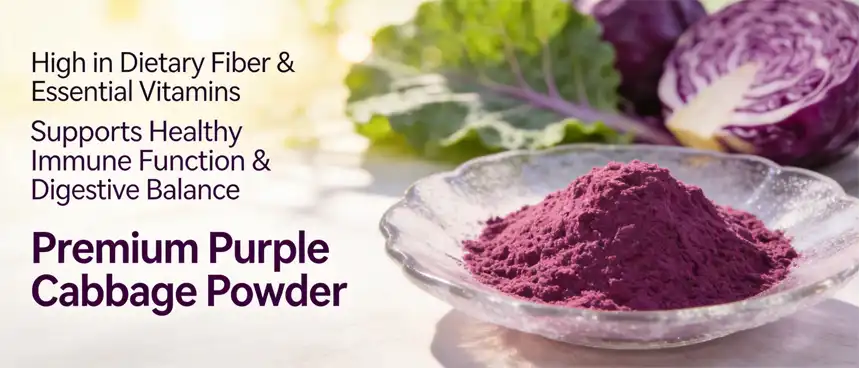
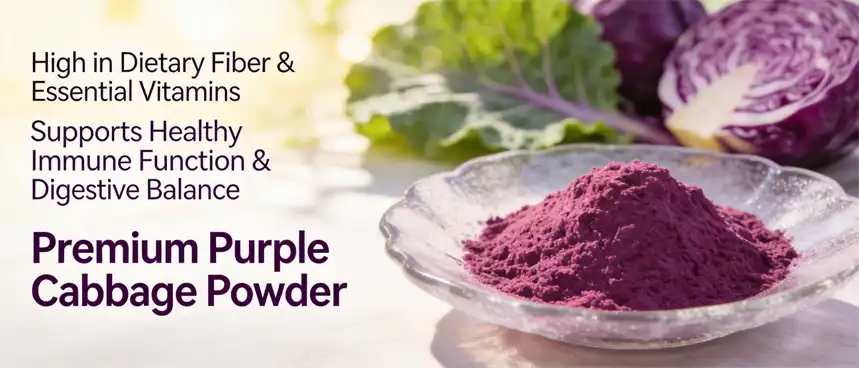
This natural ingredient comes from Purple cabbage leaves that have been dried out and ground very finely. They were treated using special plant extraction methods that keep the color-giving and health-promoting natural chemicals. The dark purple to purplish-black fine powder that is made has a strong smell of fresh vegetables and dissolves easily in water, so it can be used in a variety of baking recipes. Anthocyanins, the main ingredient, give it its unique purple color and antioxidant qualities that make it appealing to people who care about their health.
Nutritional Profile and Functional Advantages
Aside from looking good, this food is also very good for you. It contains vitamins A, C, and K, as well as minerals like potassium, calcium, and iron. Dietary fiber backs up claims that it is good for your digestive system, and Thin-Layer Chromatography testing shows that the concentrated anthocyanin content ensures that all output runs are equally effective. When marketing to health-conscious people looking for functional foods that give real health benefits without adding fake ingredients, manufacturers can use these nutritional benefits as unique selling points.
Application Methods for Optimal Results
To use this powder in bakery recipes, you need to know the right dosage amounts to keep the texture and taste profiles you want. The 10:1 concentration standard means that product designers can get a big color effect with very few ingredients, usually between 0.5% and 2% of the total weight of the recipe, based on how intense the color needs to be. The powder works well with frosting bases, cookie doughs, cake recipes, and dessert ingredients. Its ability to dissolve in water makes it easy to spread evenly in mixes, and its ability to dissolve slightly in ethanol makes it useful in alcohol-containing products like some glazes or treats with liqueur added to them.
Purple Cabbage Powder vs. Alternative Natural Powders: Making the Right Choice
Comparative Analysis of Natural Colorants
When procurement professionals look at different natural powder choices, they have to think about a lot of performance factors that affect the quality of the end product and how efficiently the production process works. This ingredient is more pH-stable than beetroot powder, so it keeps its color over a wider range of acidities that are common in baked goods. Unlike spirulina or matcha powders, which add their own tastes, the vegetable-based profile works well with dessert flavors instead of taking over them. Even though kale powder is very healthy, it doesn't have the bright purple-to-blue color range that makes Purple cabbage powder stand out on store racks.
Shelf-Life and Storage Considerations
The concentrated extraction process extends the useful shelf life compared to fresh veggie options. Storing properly in sealed 25 kg drums keeps the strength for longer periods of time. Specifications for packaging keep moisture and light out of goods, which can lower their anthocyanin level. This advantage of stability cuts down on waste in production areas and makes sure that colors stay the same across multiple production runs, which is very important for brands that have strict quality standards across multiple manufacturing sites.
Organic versus Conventional Options
When choosing between organic and conventional sources, you have to weigh the costs and the place you want to take in the market. Organic approval comes with a higher price tag, but it fits with the trend toward clean labels and may be okay for some market groups to pay more. Our facility is fully certified to meet a wide range of standards, such as ISO9001, Kosher, Halal, FDA, and GMP. This lets clients choose specs that meet the needs of their target market while still following foreign regulations.
Procurement Insights: How to Source the Best Purple Cabbage Powder for Your Business
Strategic Sourcing Considerations
Finding providers with consistent quality control, clear supply lines, and open minimum order amounts is the first step in doing good buying. Our facility lets company users place orders as little as 1 kg, so it can handle both small-scale tests and full-scale production. When you buy 25 kg drums in bulk, you save money, and standard packaging makes sure that they work with automatic dispensing systems that are popular in business bakeries.
Certification Standards and Supplier Evaluation
Quality assurance teams should make sure that suppliers keep up with widely known certifications that show they care about safety and process control. Thin-Layer Chromatography testing gives objective proof of the concentration of the active ingredient, which takes the guessing out of recipe creation. Having all the necessary paperwork, like certificates of analysis, safety statements, and letters of regulatory compliance, makes it easier for new Purple cabbage powder items to get approved for use in production settings.
Logistics and Delivery Flexibility
For the global supply chain to work reliably, suppliers must offer a range of shipping options, such as FOB, CIF, CFR, EXW, DAP, and DDP. This gives buying teams the freedom to find the best freight rates based on the number of orders and where they are going. There are choices for express freight, air freight, and sea freight for both pressing restocking needs and cost-effective bulk shipments. Production interruptions are kept to a minimum by having enough stock on hand and fast shipping options. For foreign orders, bank transfer payment methods ensure safe transaction processing.
Innovating with Purple Cabbage Powder: Case Studies and Product Development Strategies
Real-World Applications in Bakery Products
Leading baking brands have successfully added this ingredient to their specialty bread lines, making purple-swirled loaves that look great and are great for social media marketing. Dessert makers say that people really like naturally purple macarons, cheesecakes, and stacked cakes that don't use any artificial dyes and meet clean-label standards. One European pastry brand boosted sales by 34% after changing the recipe for their famous frosting to include anthocyanin-based coloring. They did this to take advantage of the health benefits of using Purple cabbage powder ingredients that come from plants.
Addressing Formulation Challenges
R&D teams were worried at first about how the chemicals would affect the flavors of foods, but they now know that managing the doses correctly keeps the sweet tastes that were meant to be there. The typical vegetable smell goes away while baking, so there are no off-notes in the finished goods. Problems with keeping colors in high-pH settings can be fixed by making changes to the recipe, like adding acidic ingredients like citrus or berries that keep anthocyanin pigments stable. Iterative testing during product creation makes sure that the visual effect is just right while keeping the desired taste and smell properties.
Future Trends and Innovation Opportunities
As demands for clean labels and Instagram-worthy looks come together, there are always chances for products to stand out. By mixing this powder with other healthy ingredients like matcha, turmeric, or activated charcoal, you can make layered sweets that are not only pretty to look at but also packed with health benefits. With OEM and ODM capabilities, brands can create unique formulas that use multiple plant extracts in their signature goods. This gives them a strong market position that rivals can't easily copy.
Ensuring Safety and Compliance: Side Effects, Dosage, and Regulatory Guidelines
Safety Profile and Allergen Considerations
The Brassicaceae family, which Purple cabbage powder is in, is not usually very allergenic compared to other food allergens. But people who are known to be sensitive to green veggies should be careful. The recommended amounts for use in baking are still well below the levels linked to any negative effects, so this item is safe for most people to eat. During the manufacturing and packing processes, quality control methods should make sure that major allergens don't get mixed in.
Dosage Recommendations for Commercial Applications
To get the color strength they want while keeping the texture and moisture retention of baked goods at their best, product makers should aim for inclusion rates between 0.5% and 2.5% of the total recipe weight. For deep purple shades in frostings or glazes, where the powder can be mixed straight into fat-based or liquid mediums, higher amounts may be best. Before going to commercial production numbers, baseline values are set through pilot batch testing.
Regulatory Compliance Across Key Markets
This ingredient is generally thought to be safe (GRAS) in the United States when used as a natural colorant according to set rules. Legal rules in the European Union allow it to be used as a natural food coloring, but the Nutrition Facts panel needs to show how much veggie substance it contains. For organic approvals to be valid, the supply chain must include confirmed paperwork from the farm to the processing center. Our wide range of certifications, which includes FDA, GMP, Kosher, and Halal approvals, makes it easier for brands to submit regulatory information when they want to sell their products in more than one foreign market at the same time.
Conclusion
Strategically adding this plant extract high in anthocyanins is a great chance for bakeries and treat makers who want to make their products stand out while also meeting customer demands for natural, useful ingredients. This nutrient is very valuable in many ways that affect both how well it is made and how it is positioned in the market. It has a strong nutritional profile, stays true to color better, and meets strict approval standards. As clean-label trends continue to change what consumers expect, it becomes more important to work with dependable providers who offer flexible order amounts, clear quality documentation, and quick technical support. The proof shows that careful formulation work with this flexible Purple cabbage powder can turn regular baked goods into high-end products that stand out in crowded stores and keep customers coming back.
FAQ
What is the typical shelf life of this powder when stored properly?
When kept in the right way, this concentrated extract will keep its anthocyanin strength and coloring power for 24 months after it was made as long as it is kept in sealed packaging that is kept out of direct light and moisture. The standards for the 25 kg drum guard against moisture, and the best temperatures for long-term safety are between 15°C and 25°C. When you rotate your goods the right way, it works the same way in every batch of output.
Can this ingredient withstand high-temperature baking processes?
Anthocyanins are very stable at temperatures between 160°C and 190°C, which is a normal range for bakeries. Some color strength may fade after being exposed to high heat for a long time, but most of the pigment compounds stay the same during normal baking processes. For products that need strong purple colors, small dose increases found during recipe development testing can be used to make up for it.
How does this powder compare to synthetic food colorings in cost analysis?
Even though the cost per unit is usually higher than synthetic alternatives, the higher ingredient costs are often justified by the higher market price power that comes with being a clean label. A lot of people are now ready to pay more for natural colorants. In fact, market research shows that 67% of people in North America actively look for goods that don't use fake colors. The added nutritional value is also useful for reasons other than just colors.
Partner with BioSpark for Your Purple Cabbage Powder Supply Needs
BioSpark is ready to help you reach your goals for new product development by providing you with high-quality plant extracts that are backed by strict quality control and full legal compliance. Our Purple cabbage powder source can do more than just provide ingredients. We can also do full OEM and ODM services that turn your ideas into products that are ready for the market. Before it is shipped, each 25 kg drum goes through a lot of tests to make sure it has the 10:1 concentration ratio and anthocyanin strength that your recipes need. Whether you need small batches for pilot testing or containerized packages for full-scale production, our flexible delivery terms and large stock levels take the guesswork out of the supply chain. Get in touch with our technical team at leao@biosparkcn.com to talk about your specific needs, ask for samples, or look into custom recipe development that takes advantage of our knowledge in plant extraction methods and functional ingredient uses.
References
1. Wallace, T.C., Bailey, R.L., Blumberg, J.B., Burton-Freeman, B., Chen, C.O., Crowe-White, K.M., Drewnowski, A., Hooshmand, S., Johnson, E., Lewis, R., Murray, R., Shapses, S.A., Wang, D.D. (2020). Fruits, vegetables, and health: A comprehensive narrative review of the science. Critical Reviews in Food Science and Nutrition, 60(13), 2174-2211.
2. Khoo, H.E., Azlan, A., Tang, S.T., Lim, S.M. (2017). Anthocyanidins and anthocyanins: Colored pigments as food, pharmaceutical ingredients, and the potential health benefits. Food & Nutrition Research, 61(1), 1361779.
3. Pojer, E., Mattivi, F., Johnson, D., Stockley, C.S. (2013). The case for anthocyanin consumption to promote human health: A review. Comprehensive Reviews in Food Science and Food Safety, 12(5), 483-508.
4. Cortez, R., Luna-Vital, D.A., Margulis, D., González de Mejía, E. (2017). Natural pigments: Stabilization methods of anthocyanins for food applications. Comprehensive Reviews in Food Science and Food Safety, 16(1), 180-198.
5. Rodriguez-Amaya, D.B. (2016). Natural food pigments and colorants. Current Opinion in Food Science, 7, 20-26.
6. Giusti, M.M., Wrolstad, R.E. (2003). Acylated anthocyanins from edible sources and their applications in food systems. Biochemical Engineering Journal, 14(3), 217-225.

Send Inquiry
Related Industry Knowledge
- Natural Purple Cabbage Powder for Functional Nutrition
- Need Stable Liquorice Extract Powder for Food Applications?
- Pomegranate Seed Extract Powder for Antioxidant Support
- Why Red Bean Extract Is Trending in Health Products?
- Chamomile Extract in Beauty Products: Key Advantages
- Tribulus Terrestris Extract Powder: Natural Saponin Power
- Why Indian Herbal Extracts Lead in Adaptogenic Blends?
- Can Tanshinone Danshen Extract Powder Aid Immune Balance?
- Why Baicalin Extract Is a Premium Functional Ingredient?
- Fulvic Acid Powder Market Trends Driving Global Demand