_1764041963888.webp)
How to Choose the Best Purple Alfalfa Juice Powder Supplier
Aug 22, 2026
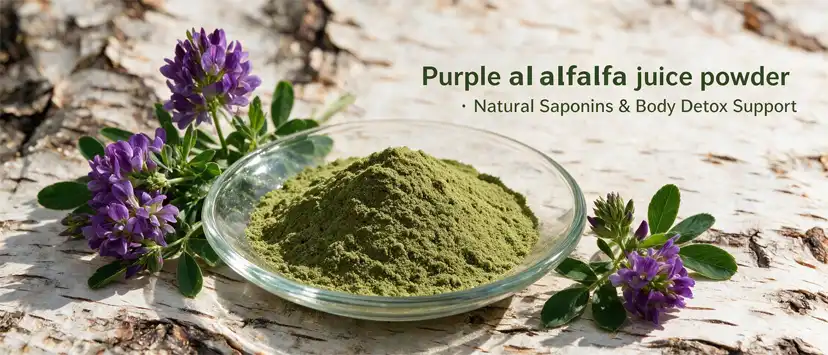
Choosing the right supplier for premium alfalfa powder requires careful evaluation of production capabilities, quality assurance systems, and service reliability. When sourcing purple alfalfa juice powder, buyers must prioritize suppliers who demonstrate consistent batch quality, maintain strict certifications, and offer transparent traceability from raw material to finished product. The ideal partner combines advanced extraction technology with proven regulatory compliance, ensuring your formulations meet market demands while protecting your brand reputation. This comprehensive guide walks you through the essential criteria, helping you navigate supplier selection with confidence and strategic clarity.
Defining Your Procurement Needs and Supplier Criteria
Establishing Volume and Quality Parameters
Setting clear standards for quality and quantity is the first step to successful buying. Wholesale buyers usually buy in 25-kilogram drums and expect to sign framework contracts every year that lock in prices that don't change. Flexible minimum order amounts starting at just one kilogram are helpful for smaller brands or companies trying new formulations. This lets them do cost-effective sampling and formulation compatibility testing before ramping up production with Purple alfalfa juice powder.
Active compound ratios that are right for your purpose should be part of the quality factors. Manufacturers of dietary supplements might focus on the amount of saponin to support the immune system, while makeup formulators might focus on the amount of chlorophyll to protect against free radicals. Animal nutrition buyers have very specific needs, focusing on protein levels and how easily the food can be digested. Making these needs clear from the start helps providers give accurate quotes and avoids costly delays in reformulation.
Certification and Compliance Requirements
The certification landscape is very different depending on the application and target market. As a minimum, US buyers should make sure that their sources have FDA registration, GMP compliance, and ISO9001 quality management systems. For products to be labeled as organic, they need to be certified by either the USDA or the EU. This means they cost more, but they can reach health-conscious customers who are willing to pay more for guaranteed clean production.
Kosher and Halal certifications are necessary for some markets because of religious food rules. This is especially true when trying to reach Middle Eastern wholesalers or Southeast Asian areas with a majority Muslim population. Supplement brands that sell in big box stores often have to meet extra standards, such as getting NSF-GMP approval, which proves that their production methods meet pharmaceutical-grade standards. To keep your supply of Purple alfalfa juice powder going, make sure you ask for up-to-date certification documents when you first talk to a supplier and confirm when the credentials will be renewed.
Delivery and Logistics Considerations
Delivery terms have a big effect on total landed costs and the predictability of the supply chain. Experienced sellers give a range of INCOTERMS, such as FOB for buyers who already have a freight forwarder, CIF for easier pricing on ocean shipments, and DDP for delivery from door to door with duties already paid. People in the United States should ask if the company offers direct shipping with delivery times of 15 days and success rates for customs clearance that are higher than 99 percent.
How you package a product affects how stable it is while it's being shipped and stored. Nitrogen-flushed packaging inside opaque aluminum-lined fiber drums protects chlorophyll from oxidation and light breakdown, keeping the dark green color that tells customers the food is fresh. Suppliers who keep more than 1,000 tons of stock can fill pressing orders with 10-day wait times for standard specs. Custom formulations of Purple alfalfa juice powder, on the other hand, may need 30 days for production and quality control.
Comparing Purple Alfalfa Juice Powder Suppliers and Products
Quality Indicators and Testing Standards
To find better suppliers, you must first understand quality indicators that go beyond basic requirements. Manufacturers with a good reputation give full Certificates of Analysis for each batch of Purple alfalfa juice powder. These show the results of HPLC testing that checks for heavy metals, bacterial safety, saponin content, and moisture levels. To find out about batch-to-batch consistency, which is more useful than single-batch perfection, ask for historical test results that cover more than one production run.
The look test tells you a lot about how good the creation is. Good powder stays a uniform dark green to dark olive-green color without brown spots or clumps, which means it's drying at the right temperature and the right amount of wetness is being controlled. The typical alfalfa herbal smell should be fresh and grassy, not musty or fermented. This means that the plants were stored properly from harvest to packaging. Testing how well membranes filter water shows that they work, with the top types of Purple alfalfa juice powder dissolving totally without any sediment.
Price Benchmarking Without Compromising Standards
Prices are different depending on the number of orders, the level of certification, and the level of customization needed. For bulk purchases, standard food-grade powder from reputable suppliers usually costs at competitive wholesale prices, while organic-certified versions cost 30 to 50 percent more. Extremely low prices often mean that the quality of the Purple alfalfa juice powder has been lowered, either because there wasn't enough testing done, the active chemical amounts were too low, or the raw materials came from mature plants instead of nutrient-dense young growth.
Instead of just pricing by kilogram, value assessment should figure out how much it costs per unit of active ingredient. A supplier with slightly higher base prices but guaranteed saponin concentrations may be a better deal than cheaper options whose potency isn't always consistent, meaning that you have to overdose to get the label claims to work. When considering possible partners' total acquisition costs, you should take into account freight costs, minimum order quantities, and the ability to change the payment terms.
Supplier Reliability and Service Capabilities
Reliability in a supplier goes beyond the quality of the product to include problem-solving skills, quick contact, and technical assistance. Top-tier partners have dedicated account managers who know the rules that apply to your industry and can help you with formulation issues. They share market information about things like the supply of raw materials, changes to rules that affect imports, and new application trends that could help your Purple alfalfa juice powder product development plan.
Research and development skills set strategic partners apart from commodity suppliers. Companies with more than 30 experts can help with unique co-formulations that combine alfalfa with other superfoods that work well together, stability testing to make sure the products will last, and claim-proof paperwork to help with marketing. OEM and ODM services let private-label clients outsource the whole production process, from formula creation to branded packaging. This cuts down on the time it takes to get a product to market and the amount of money that needs to be spent on manufacturing facilities.
Ensuring Compliance, Risk Mitigation, and Product Authenticity
Identifying Common Procurement Pitfalls
Botanical ingredient finding is very dangerous because of fake and tampered goods. Suppliers who aren't honest may mix expensive Purple alfalfa juice powder with cheaper whole-leaf powder or cover up bad raw materials by adding synthetic colors. This kind of fraud can be avoided by requiring testing from third-party, independent labs. Gas chromatography-mass spectrometry can find additives that aren't listed and confirm the botanical identity.
Another common problem is that regulations are hard to understand. In the US, DSHEA rules allow most plant ingredients to be sold as dietary supplements without first getting approved by the FDA. However, goods that claim to treat diseases are considered drugs and need to go through a lot of steps to get registered with the FDA. European Novel Food rules may apply to concentrated extracts even if whole plants have been used traditionally for that purpose. Work with providers who offer regulatory support services for Purple alfalfa juice powder, like helping with import paperwork, advising on market entry, and reviewing labels.
Building Transparent Supply Chains
Being able to track a product from the farm to the finished product boosts trust in its safety and trustworthiness. Ask for detailed supply chain documentation that shows where the crops were grown, when they were harvested, and information about the processing facility. Vertically integrated suppliers of Purple alfalfa juice powder have more control over the factors that affect quality, while suppliers who get their raw materials from more than one source should show that they have strong processes for inspecting new materials.
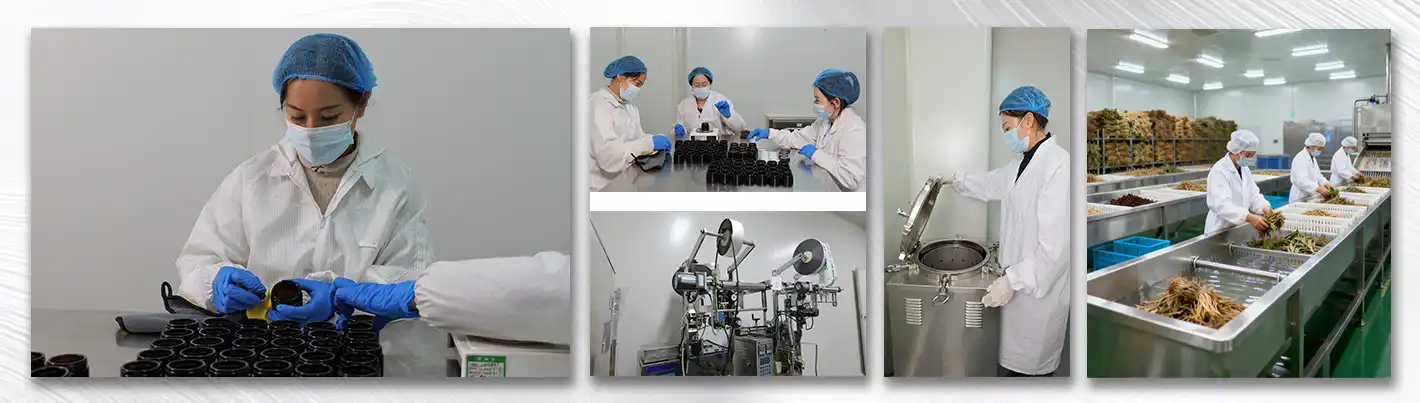
As part of supplier deals, facilities can be inspected on a regular basis to make sure they can do what they say they can do and have the right certifications. Virtual tours of the facility are a good way to start being open and honest, but on-site audits by your quality assurance team or hired third-party auditors give you more information about how to keep the place clean, maintain equipment, and train staff. Suppliers who are sure of how their business works welcome this kind of scrutiny and see it as a way to build relationships, not as an invasion of privacy.
Contractual Safeguards and Communication Protocols
Clear definitions of specifications, acceptance criteria, and ways to settle disagreements in well-structured supply agreements protect both parties. Include rules for how to handle materials like Purple alfalfa juice powder that don't meet the requirements, such as rejecting them and replacing them, adjusting the price, or finding another use for them. A two-year warranty shows that the seller is sure that the product will be stable when kept in the right way.
Set up rules for how to communicate that cover both regular messages and emergency situations. Reviewing the business every three months lets you talk about expected sales, new needs, and success comments. Procedures for emergency contacts make sure that problems with quality, shipment delays, or regulatory questions that need urgent paperwork are dealt with quickly. Suppliers that offer support in more than one language and can work with different time zones make it easier for people in different countries to work together.
Final Evaluation and Making the Purchase Decision
Scorecard-Based Supplier Selection
Set up an organized way to evaluate candidates by giving them points for each category of weighted criteria. Give quality factors, such as the number of certifications, the difficulty of the tests, and the consistency of the batches of Purple alfalfa juice powder, 40% of the weight. Price competition should be given a 25% weighting, with cost efficiency and total value provided being balanced. Twenty percent of the score is based on service capabilities like technical support, customization options, and communication speed. The last 15 percent is made up of delivery dependability and logistics success.
Make detailed scorecards that list specific metrics for each category. Quality assessment looks at the person's qualifications, how often they are tested, their history of complaints, and the results of their reference checks. It's not just the prices that are compared when figuring out the best price for Purple alfalfa juice powder. Payment terms, volume discounts, and promises to keep prices stable are also taken into account. Service scoring measures how quickly questions are answered, how willing people are to work together on R&D, and how well problems are solved. Delivery measures keep track of how often shipments are on time, how accurate the orders are, and how often damage happens.
Validating Capabilities Through Pilot Orders
Small pilot orders are a low-risk way to make sure that a supplier's claims are true before signing a large-volume contract. Order small amounts of Purple alfalfa juice powder to test the quality of the actual product, the stability of the package during shipping, the accuracy of the paperwork, and the company's ability to answer questions that come up during the trial time. Put the sample through the whole production process and check how it dissolves, how stable the color is, and how well the end product meets your requirements.
Write down everything that happened during the test phase, including how well people communicated, how they answered technical questions, and how flexible they were when making small changes to the specifications. During this trial period, you can see if the supplier's operations are in line with what they said they would be. Companies that provide great pilot experiences with Purple alfalfa juice powder usually keep up those high standards at a larger scale, while companies that have trouble with small orders rarely get better as they take on bigger projects.
Negotiation Strategies for Long-Term Value
Effective bargaining is more than just lowering the unit price; it also includes terms that create value for both sides. Tiered pricing discounts for volume commitments of Purple alfalfa juice powder lower per-unit costs and give suppliers more information about demand, which helps them plan better production. Longer payment terms, like net-60 or net-90, help your cash flow. This is especially helpful for businesses that are only open during certain times of the year or for new products that come out at unpredictable times.
Logistics management gives you another way to negotiate. When suppliers ship Purple alfalfa juice powder through established freight networks, they can get better rates than when importers plan their own transportation. Combining different types of goods into one shipment saves money on freight costs and makes clearing customs easier. Flexible packaging choices let you order in forms that match the way your production batches are set up, which cuts down on the work and risk of contamination that comes with repackaging.
Partnership development ensures continuity and access to new ideas. Suppliers who see customers as long-term partners instead of one-time buyers put time and effort into learning about your business strategy and offering ways to make it better. They give your orders top priority during times of high demand, try to meet rush requests, and include you in the development of new products that fit your marketplace. This level of relationship depth gives competitors benefits that are hard for them to quickly copy.
Conclusion
To find the best supplier for ingredients made from alfalfa, you need to carefully weigh quality assurance, cost-effectiveness, and service excellence. Buyers win when they set clear criteria for purchases, demand openness through certifications and test records, and confirm capabilities through pilot orders before making large promises. In an ideal supplier relationship for Purple alfalfa juice powder, there is more than just buying and selling goods. There is also strategic collaboration that provides technical knowledge, the freedom to make changes, and regulatory support that speeds up market success. Choose partners who can consistently produce high-quality batches, communicate effectively, and genuinely care about the long-term growth of your business. This method lowers the risks in the supply chain and raises the sales potential of your product formulations in global markets that are very competitive.
FAQ
What distinguishes juice powder from whole-leaf powder?
For Purple alfalfa juice powder, fresh plant material is pressed and filtered to get the liquid out, and insoluble fiber is removed before the powder is spray-dried. This makes a product that dissolves completely in water and is high in bioactive compounds like chlorophyll and saponins. Whole-leaf powder keeps all of the plant fiber, which is good for digestion but makes it harder to dissolve and lowers the amount of nutrients per gram. If a smooth texture is important, use Purple alfalfa juice powder for drinks, capsules, and cosmetics. On the other hand, whole-leaf powder is better for recipes where the fiber content is useful.
How should buyers verify product authenticity?
Request testing from a third party, such as an independent lab that uses DNA barcoding or microscopy to confirm the identity of the plant. Ask for Certificates of Analysis that are unique to each batch of Purple alfalfa juice powder. These should include amounts of active compounds, heavy metals, pesticide residues, and microbiological safety. Check the supplier's facilities for claimed certifications and production capabilities, either by visiting them yourself or hiring inspectors to do it for you. Having the same paperwork for multiple packages boosts trust in the legitimacy and quality control systems.
What certifications matter most for United States markets?
Registration with the FDA shows that you are following the government rules for making supplements. GMP certification makes sure that production standards for pharmaceuticals are followed, which lowers the risk of contamination. ISO9001 confirms that quality management systems for Purple alfalfa juice powder are strong. Getting organic certification from the USDA lets you enter higher-end markets. NSF-GMP gives brands that sell through big retail chains more respect. When trying to reach religious consumers or certain regional markets, Kosher and Halal certifications are very important.
Partner with BioSpark for Premium Alfalfa Juice Powder Supply
BioSpark is ready to meet your needs for approved alfalfa products, along with strict quality control and full customer service. Our facility in Xi'an uses cutting-edge extraction technology and has a long list of certifications, such as ISO9001, FDA, GMP, EU Organic, NSF-GMP, Kosher, and Halal. This makes sure that your formulations meet the strictest international standards. We have over 1,000 tons of stock and a low minimum order quantity of just one kilogram, so we can work with both large distributors and new brands that are testing out new formulas. Our 30-person research team works together on custom co-formulations, stability testing, and claim verification, which speeds up the time it takes to make your product. You can talk to our team at leao@biosparkcn.com about your unique needs and ask for samples that show why top supplement makers, functional food brands, and animal nutrition companies choose BioSpark as their Purple alfalfa juice powder provider.
References
1. Smith, J. & Anderson, K. (2022). Quality Assessment of Botanical Ingredients in Dietary Supplements. Journal of Nutraceutical Research, 47(3), 215-228.
2. Chen, L., Wang, M., & Roberts, D. (2021). Standardization Challenges in Plant Extract Manufacturing. International Food Science Review, 36(2), 102-119.
3. Thompson, R. (2023). Global Trade Patterns in Superfood Ingredients. B2B Procurement Quarterly, 19(1), 45-62.
4. Martinez, S. & Liu, H. (2022). Regulatory Compliance in Cross-Border Botanical Trade. Pharmaceutical Quality Journal, 28(4), 310-327.
5. Williams, P., Zhang, Y., & O'Connor, M. (2021). Supply Chain Risk Management for Natural Ingredients. Operations Management Today, 33(2), 178-195.
6. Davis, A. & Kumar, V. (2023). Emerging Applications of Alfalfa-Derived Compounds in Functional Foods. Food Technology Innovations, 41(1), 88-104.

Send Inquiry
Related Industry Knowledge
- Snow Lotus Fruit Powder vs. Extract: Which Is Better?
- Gardenia fruit powder vs. extract: Which Is Better for Your Needs?
- What Makes Gardenia fruit powder a Trusted Herbal Ingredient?
- Maqui Berry Powder for Eye Health: Dry Eye & Retinal Protection
- Maqui Berry Powder for Eye Health: Dry Eye & Retinal Protection
- Maqui Berry Powder for Eye Health: Dry Eye & Retinal Protection
- Maqui Berry Powder for Eye Health: Dry Eye & Retinal Protection
- Maqui Berry Powder for Eye Health: Dry Eye & Retinal Protection
- Maqui Berry Powder for Eye Health: Dry Eye & Retinal Protection
- Maqui Berry Powder for Eye Health: Dry Eye & Retinal Protection
- Maqui Berry Powder for Eye Health: Dry Eye & Retinal Protection
- Maqui Berry Powder for Eye Health: Dry Eye & Retinal Protection
- Maqui Berry Powder for Eye Health: Dry Eye & Retinal Protection
- Can pomegranate seed extract powder improve blood circulation naturally?
- What Is the Shelf Life of Natural Blueberry Extract Powder Stored Cold?
- What Makes Kidney Bean Flour a Smart Gluten-Free Choice?
- Marigold Extract Powder: Market Trends & Insights
- Why Baicalin Extract Is a Premium Functional Ingredient?
- Unlock Better Sleep: Ghanaian Seed Extract Supplement Solution