Can Liposomal Vitamin K2 Improve Nutrient Absorption?
Oct 19, 2026
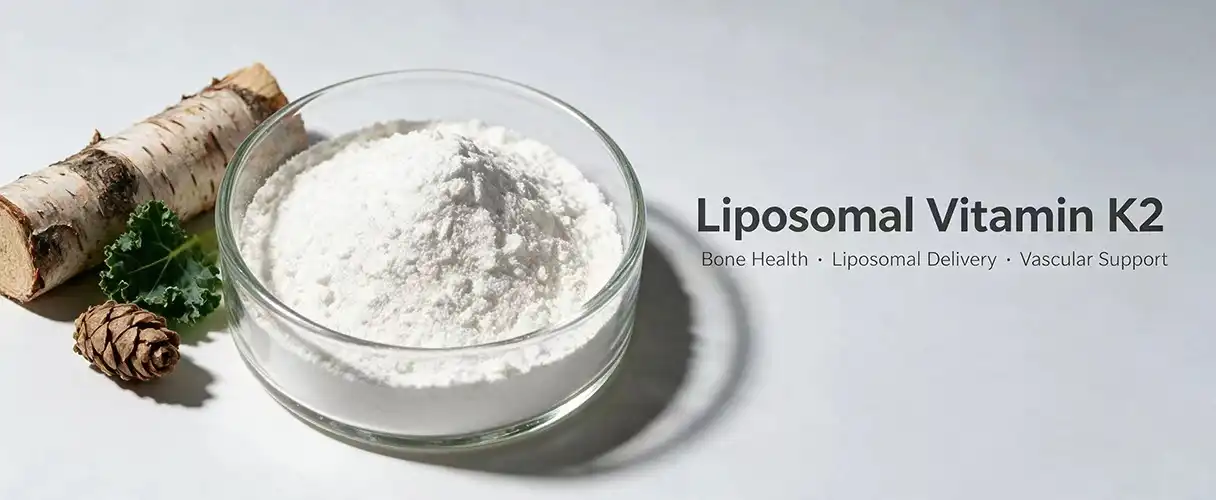
Liposomal vitamin K2 increases the uptake of nutrients. And the explanation for this is simple. Typical vitamin K2 supplements usually have varying bioavailability from person to person because bile salts and dietary fat are required for absorption. The active ingredient is liposomal vitamin K2, which is encased in a phospholipid bilayer similar to the human cell membrane. The vitamin bypasses much of the digestive process and goes directly into the lymphatic system. Brands and manufacturers buying functional ingredients are directly impacted by the difference in delivery efficiency on the performance of their end products.
Understanding Liposomal Vitamin K2 and Its Absorption Advantages
How Phospholipid Encapsulation Works
The liposomal vitamin K2 is encapsulated in nanosphere particles which are typically 100-200 nm in size and covered by a stable phospholipid shell surrounding the fat-soluble vitamin. This structure protects the nutrient from being destroyed by stomach acid until it reaches the small intestine. Capsules or softgels dissolve randomly at some point in the digestive process. But the liposomal coating preserves the vitamin K2 until it reaches the intestinal wall and is absorbed. This leads to a higher and more consistent peak plasma concentration (Cmax) than that of the non-encapsulated forms.
Bioavailability Evidence from Clinical Research
In peer-reviewed research lipos, liposomal delivery systems have shown higher Cmax values than oil-based softgels that include fat-soluble vitamins. This is mainly because liposomes do not need pre-emulsification by bile; hence, absorption is not dependent on the digestive capacity of the person. This is particularly true for elderly people, those suffering from gastrointestinal illnesses, and athletes who have problems with stress-induced gut permeability — all populations that high-end supplement producers aim for.
Protecting K2 from Degradation in Mixed Formulations
Vitamin K2, particularly in its MK-7 form, is chemically delicate. When made with mineral salts or certain excipients, it decomposes with the passage of time. The active constituent of liposomal vitamin K2 is physically isolated inside the phospholipid bilayer, preventing breakdown by touch. Zeta Potential above ±30 mV implies colloidal stability, a quantitative measure of shelf-life integrity. Ask for Dynamic Light Scattering (DLS) reports and a Polydispersity Index (PDI) of less than 0.3 to ensure you are obtaining a real liposomal structure for manufacturers sourcing this ingredient.
Benefits and Applications of Liposomal Vitamin K2 in B2B Procurement
Bone Health and Cardiovascular Product Lines
Liposomal vitamin K2 activates osteocalcin, a protein that binds calcium directly to bone tissue, helping to enhance bone density. It also activates the Matrix Gla Protein (MGP) in the walls of arteries, which keeps calcium from building up in the blood vessels. This dual action resolves what experts call the “Calcium Paradox” – when calcium consumed by vitamin D3 ends up in arteries and not in bones. The approach offers demonstrable clinical advantage to nutraceutical firms that market bone health or cardiovascular support lines.
Market Sectors with High Procurement Demand
In several sectors of the company, there is a rising need for bioavailable Vitamin K2 compounds. Mainly in the following areas liposomal vitamin K2 gives the best value for the product:
- Constant absorption profile helps nutraceutical companies to build better bone and joint supplements for the senior client segments in particular.
- It gives functional food and beverage makers a stable, encapsulated ingredient that maintains its potency in processed applications with a longer shelf life.
- Sports nutrition companies may provide a fat-independent vitamin K2 source to increase bone density and immune function in athletes without requiring a high-fat meal for activation.
What these businesses have in common is a need for an ingredient that can provide, irrespective of the consumer’s digestive condition, making liposomal vitamin K2 a viable sourcing option.
OEM and Private Label Opportunities
Startups and established firms may use liposomal vitamin K2 formulations to differentiate themselves in the crowded supplement market by partnering with OEM or ODM. Liposomal K2 with vitamin D3 (often a 5,000 IU D3 to 100 mcg K2 MK-7 ratio) is a science-backed combination therapy that matches current consumer understanding of calcium regulation.
Comparing Liposomal Vitamin K2 with Other Vitamin K2 and Vitamin D3 Forms
Liposomal vs. Standard Oil-Based Vitamin K2
Oil-based vitamin K2 pills work because they provide the vitamin in a fat-soluble form, but they require bile emulsification, and not everyone has the same amount of it. No matter what the meal is made of, the liposomal vitamin K2 is always absorbed in the same way. MK-7 is stable, since it is coated with phospholipids, protecting it from oxidation and chemical reactions. These procedures extend the shelf life of the food, even at 40°C/75% RH. This steady state means less waste and better quality batch to batch when teams buy in bulk.
MK-7 vs. MK-4 in Liposomal Formats
The half-life of MK-7 in vivo is around 72 hours, whereas the half-life of MK-4 is approximately 1–2 hours. So you should take one MK-7 a day. MK-7 is likewise encapsulated in a liposome that maintains it in “All-Trans” form. HPLC testing shows this is the physiologically active form. MK-4 gets going slower, but goes faster. It affects the pricing and the way people follow the rules. For most B2B clients that produce supplements for regular use, liposomal MK-7 is the ideal option.
Synergistic Formulations with Vitamin D3
One tablet contains a combination of vitamin K2 and cholecalciferol (D3). They operate together to help the body use calcium in two different ways. K2 tells bone cells to absorb calcium, and D3 shows them how to do it. The liposomes assist in stabilizing the vitamins since they hate water. So that both drugs may fill the same capillary route. And that’s why D3+K2 liposomal tablets are among the best combinations for your health right now.
Practical Guidance on Dosage, Safety, and Application for Industrial Clients
Recommended Dosage Ranges
Most finished products are in the range of 45 to 180 mcg of vitamin K2 MK-7. However, it might vary because of health claims and market limits. This is good for the heart and bones, and is often taken alongside 1,000 to 5,000 IU of D3. Before finalizing product specifications, firms’ purchasers should check that dose recommendations are legal. This means that the recommended doses comply with the standards of the FDA for food supplements for the US market.
Safety Profile and Contraindications
Most people can tolerate the prescribed dosages of vitamin K2. K2 may counteract the effects of drugs that block vitamin K, such as warfarin and other blood thinners. People taking these drugs should not use the supplements. This time it implies the labels must convey the relevant warnings. Liposomal delivery does not change the way K2 operates as a medicine but does stabilize the blood levels. The label on the finished product must clearly indicate the dosage.
Storage and Supply Chain Handling
Keeping liposomal vitamin k2 capK2les at the right temperature may retain the quality of the capsules. If you want to retain it for a long time, you need to maintain it at 2°C to 8°C. It should be below 25oC for short trips. Excessive heat or UV radiation might destroy the phospholipid shell. Sellers should inform you how stable the product is and how quickly it goes bad so that the lipid oxidation levels are safe. These qualities make it safe from the point of its creation to the point of shipment to the customer.
Sourcing Liposomal Vitamin K2: How to Choose Reliable Suppliers and Brands
Key Certification and Quality Standards
A liposomal vitamin K2 maker must have third-party certification. The first thing you want to look for is this. You have to follow cGMPs. They should be able to offer you HPLC findings demonstrating the All-Trans MK-7 isomer is pure, DLS data showing the particles are 100-200 nm, and the PDI is less than 0.3, TEM pictures showing the spherical bilayer structure, and ICP-MS heavy metal screening results. Anyone selling anything will have confirmation that the source of the phospholipids is non-GMO sunflower lecithin and that more than 90% of the items are packaged.
Evaluating Supplier Transparency and Traceability
You should be able to see the whole process at a respectable business. From the crude phospholipids to testing the finished product. It’s more transparent, faster, and offers you more options for batch sizes than utilizing a marketplace, mostly dealing directly with suppliers. If a business wants to maintain good quality throughout more than one run, it is advisable to acquire straight from a checked-out facility.
Pricing, Batch Flexibility, and Long-Term Partnership
It costs more per unit than regular powder, since it takes more effort to make the nanospheres for liposomal vitamin K2. In contrast, people with higher uptake rates need less medication each dose, and this may be helpful in certain ways. For instance, if suppliers have variable minimum order quantities, brands may experiment with different recipes before mass production by producing new items in small batches.
Conclusion
Liposomal vitamin K2 is easier to take than other types of vitamin K2 since it has a phospholipid covering that protects the active ingredient. This means stronger clinical support for finished goods, more transparent label claims, and a more consistent customer experience for those who buy supplements and nutraceuticals for diverse firms. It is of critical importance to buy from companies who are able to test their products to ensure that the particles are the right size, the isomers are pure, the packaging is a decent one and the things are reliable. If these are true, then buying liposomal vitamin K2 directly will make the product better.
FAQ
Does liposomal vitamin K2 require food for absorption?
No. Because liposomes provide their own phospholipid delivery vehicle, vitamin K2 absorption does not depend on dietary fat intake. This makes liposomal formulations suitable for fasting protocols and consumers with irregular eating patterns.
How can I verify that a product is truly liposomal and not just an emulsion?
Request the DLS report from your supplier. A PDI below 0.3 confirms a structured liposomal system. A PDI above 0.3–0.4 typically indicates an unstable emulsion that lacks the bilayer structure needed for consistent absorption.
What phospholipid source is preferred for liposomal vitamin K2?
Non-GMO sunflower lecithin is the preferred source. It avoids soy allergens and phytoestrogens, making the final product suitable for a broader consumer base, including those with soy sensitivities.
What are the main quality tests to request from a liposomal vitamin K2 supplier?
Key tests include HPLC for All-Trans MK-7 isomer confirmation, DLS for particle size and PDI, TEM for structural visualization, TOTOX for lipid oxidation, and ICP-MS for heavy metal screening.
Partner with BioSpark for Your Liposomal Vitamin K2 Supply
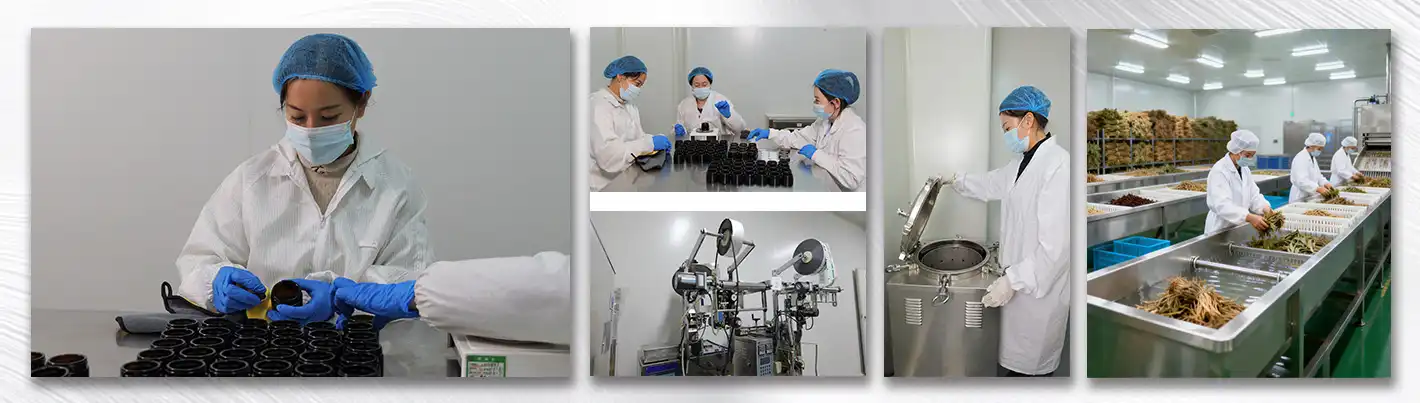
BioSpark (Xi'an) Biotechnology Co., Ltd. makes and sells approved liposomal vitamin K2. Their products are made in a way that follows all good manufacturing practices (cGMPs), have testing proof from a third party, and can be made in different amounts to meet the needs of both small-batch research and large-scale sales. We offer steady shipping to markets in the U.S. and other countries as a provider of liposomal vitamin K2. You can also tell us exactly what you want, and we can make goods as OEM or ODM products. You can get in touch with our team at leao@biosparkcn.com or visit https://www.biosparkcn.com/ to get a product specs sheet and start looking for a product right away.
References
1. Vermeer, C. (2012). Vitamin K: The effect on health beyond coagulation — An overview. Food & Nutrition Research, 56(1).
2. Geleijnse, J. M., et al. (2004). Dietary intake of menaquinone is associated with a reduced risk of coronary heart disease. The Journal of Nutrition, 134(11), 3100–3105.
3. van Ballegooijen, A. J., & Beulens, J. W. J. (2017). The role of vitamin K status in cardiovascular health: Evidence from observational and clinical studies. Current Nutrition Reports, 6(3), 197–205.
4. Akbari, S., & Rasouli-Ghahroudi, A. A. (2018). Vitamin K and bone metabolism: A review of the latest evidence in preclinical studies. BioMed Research International, 2018.
5. Tiozzo, E., et al. (2020). Liposomal delivery systems for fat-soluble vitamins: Stability, bioavailability, and industrial applications. Journal of Functional Foods, 64, 103674.
6. Plaza, M., et al. (2021). Encapsulation of bioactive compounds using liposomal technology: Advances and challenges in nutraceutical applications. Trends in Food Science & Technology, 115, 473–484.

Send Inquiry
Related Industry Knowledge
- How Does Liposomal Ferrous Fumarate Support Daily Wellness?
- Is Kidney Bean Flour a Good Plant Protein Ingredient?
- What Makes Premium Broad Bean Powder Different?
- Is Coconut Milk Extract Powder More Cost-Effective Than Canned?
- Is Coconut Milk Extract Powder More Cost-Effective Than Canned?
- Is Coconut Milk Extract Powder More Cost-Effective Than Canned?
- Is Coconut Milk Extract Powder More Cost-Effective Than Canned?
- Is Coconut Milk Extract Powder More Cost-Effective Than Canned?
- Is Coconut Milk Extract Powder More Cost-Effective Than Canned?
- Is Coconut Milk Extract Powder More Cost-Effective Than Canned?
- Is Coconut Milk Extract Powder More Cost-Effective Than Canned?
- Is Coconut Milk Extract Powder More Cost-Effective Than Canned?
- Is Coconut Milk Extract Powder More Cost-Effective Than Canned?
- Need Stable Liquorice Extract Powder for Food Applications?
- Why Do Brands Prefer American Ginseng Extract Powder Today?
- Does Ganoderma Extract Powder Help with Stress and Sleep?
- Pomegranate Seed Extract Powder for Hormonal Balance: Effective?
- Is Coconut Milk Extract Powder a Healthy Dairy Alternative?
- Can Baicalin Extract Enhance Overall Cellular Health?