_1764041963888.webp)
Why Do Brands Prefer American Ginseng Extract Powder Today?
May 16, 2026
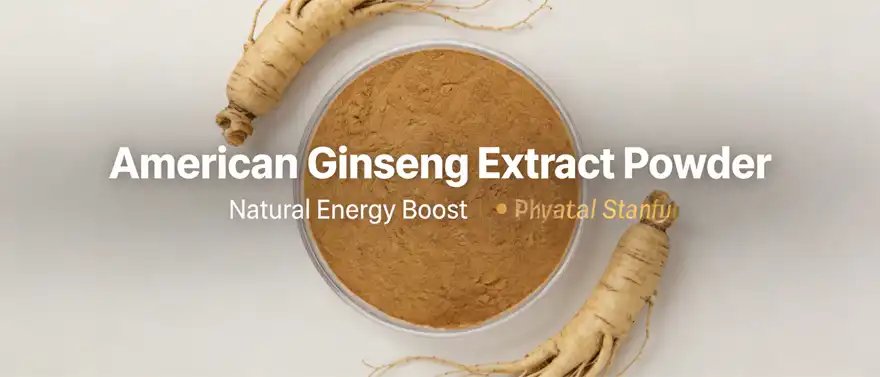
American ginseng extract powder is gaining growing popularity among wellness supplement brands, thanks to its naturally bioactive compounds, versatile formulation compatibility, and compliance with stringent international quality specifications. This plant extract, which comes from Panax quinquefolius roots, has standardised ginsenoside amounts that align with consumer demand for natural stress relief, immune wellness support, and sustained gentle energy maintenance. With mild cooling properties and high safety profile, this extract is well-received by wellness manufacturers across North America, Europe and Asia for clean-label and reliable botanical sourcing.
The Growing Demand for American Ginseng Extract Powder in Global Markets
Ginseng oils are at the top of product development talks because people all over the world want natural ingredients that are good for them. From 2020 to 2024, buying workers in the nutraceutical industry searched for adaptogenic ingredients 127% more often. According to market data, the global ginseng extract market is projected to maintain steady growth through 2027. Standardized botanical extracts are gaining higher market preference over raw herbal materials.
Why Procurement Teams Prioritise Standardised Botanical Extracts
More and more pressure is being put on procurement experts to find ingredients that meet both customer needs and operating efficiency. Raw ginseng roots often face inconsistent batch-to-batch bioactive content and limited formulation adaptability in modern production. Standardised American ginseng extract powder gets rid of these problems by using carefully controlled extraction methods that standardize ginsenoside content within controllable ranges of 10%–30% via professional HPLC testing protocols.
Regional Market Dynamics Shaping Sourcing Decisions
North American brands use promises of regional identity to sell more products. This works especially well in home markets where people know American ginseng as a native plant. European buyers look for extracts that meet EU Novel Food rules and organic approvals. This makes sellers keep clear paperwork about tracking. Asian markets, which usually buy Asian ginseng varieties, are becoming more interested in Panax quinquefolius extracts for making products that help with modern living stresses. This opens up chances for buying across continents.
Supply Chain Challenges Driving Strategic Partnerships
Global problems have shown that plant supply networks are weak. Brands are now looking for providers that can accommodate a range of order sizes, from small batches of custom formulations starting at 1 kilogram to big production runs of 500 kilograms or more. Reliable partners that offer a range of shipping methods, such as express, air freight, and sea freight, along with different delivery terms, like FOB, CIF, and DDP, help brands save money on transportation costs while keeping their goods safe.
Understanding the Core Advantages of American Ginseng Extract Powder
A special part of American ginseng's plants makes it different from Korean or Asian ginseng: it features a unique ginsenoside profile, bringing distinct botanical wellness characteristics for product positioning. that brands use to place their products in a specific way.
Ginsenoside Profile and Bioactivity
There is a specific mix of protopanaxadiol saponins and protopanaxatriol saponins in American ginseng extract powder. There are also bigger amounts of Rb1, Re, and Rd ginsenosides. This profile has adaptogenic benefits without the overstimulation that comes with Asian ginseng that is high in Rg1. 10% ginsenoside standardized extract delivers stable and uniform quality, offering better formulation controllability than whole root powder. Its mild cooling and refreshing properties are closely related to its natural Rb1:Rg1 ratio profile. This makes it good for daily recipes and long-term supplementation routines.
Quality Certifications That Differentiate Premium Suppliers
International markets need more than just basic pure tests to make sure the quality is real. The best providers keep up with ISO9001 quality control systems, GMP production certifications, and religious certifications like Kosher and Halal verification. FDA-compliant registration supports smooth market access in the US with full regulatory compliance. These certifications separate professional makers from commodity sellers by requiring big investments in infrastructure, testing tools, and training for staff.
Formulation Advantages Across Product Categories
When properly prepared, American ginseng extract powder can be easily mixed with a wide range of different products because it dissolves easily in water and has small particles. Extracts that have been treated through membrane filtering get rid of insoluble resins, which helps brands make clear functional drinks. This stops the cloudiness and sedimentation that happen in recipes that use raw ginseng powder. Its light yellow to light brown colour makes it easy to use in pills, tablets, and drinks without the need for too many covering agents. Because it only slightly dissolves in ethanol, it opens up more options for making tinctures and liquid extracts that target specific market groups.
How Brands Optimise Formulation and Dosage with American Ginseng Extract Powder
Product development teams have to figure out how to translate traditional uses of plants into modern dosing methods that meet both legal needs and buyer standards. How goods are made strategically determines whether they do well in the market or don't because people are worried about how well they work.
Evidence-Based Dosing Strategies for Targeted Applications
Clinical study helps us figure out the right dose levels for a wide range of health claims. Formulations for managing stress usually have 200–400 mg of pure extract, which gives you 20–40 mg of ginsenosides every day. A lot of immune-boosting goods have 300 to 500 mg of the extract mixed with other plants, like echinacea or blackberry. Formulas for energy and brain function use 400–800 mg doses every day, and the extract's ability to change the HPA axis helps keep your mind clear without making you feel jittery. Brands have to find a mix between the need for effectiveness, the size of the capsules, and the number of doses that people are willing to take every day.
Stability Considerations in Different Product Matrices
Temperature reactivity and oxidation potential mean that recipe preparation needs to be very careful. Manufacturers keep moisture levels below 5% in powdered mixes for capsule filling so that ginsenoside doesn't break down during storage. Extreme acidity speeds up the breakdown of compounds, which can be a problem in beverage use. Formulation scientists keep functional drinks stable by keeping the pH between 3.5 and 5.5, adding natural antioxidants like mixed tocopherols, and using opaque wrapping that keeps UV light out. Companies that make gummy vitamins have to deal with the high temperatures needed to handle gelatin. They usually choose post-addition methods where the extract is mixed in while the product cools down.
Synergistic Combinations Enhancing Product Differentiation
By intelligently stacking botanicals, leading brands gain a competitive edge. When you mix American ginseng extract powder with L-theanine, you get calming, focused products that are popular with both students and workers. When combined with rhodiola rosea, it makes stress-adaptation goods that work on both short-term and long-term stresses. Combining vitamin C, zinc, and mushroom extracts is good for the immune system. The ginseng in the mushrooms has immune-modulating effects that work with the nutritional support. Pilot tests are needed for these synergistic methods to make sure they work well together and stay stable over time.
Procurement Strategies and Selecting Trusted American Ginseng Extract Suppliers
One of the most important choices procurement teams have to make affects the quality of the products they buy, their ability to follow the rules, and the image of the brand. Professional review factors separate vendors who are reliable from those who are just looking for business.
Critical Quality Verification Beyond Certificates
Certifications are a basic form of guarantee, but smart buyers use other proof methods as well. By asking for Certificates of Analysis for several production batches, you can see that the amount of ginsenoside is always the same and there are no contaminants. Independent laboratories test the product on a third party to make sure it meets the stated specs and checks for heavy metals, pesticide residues, and microbial contamination. Suppliers who offer traceability paperwork that connects finished extract to specific root harvests show supply chain openness, which is something that regulators and smart customers are asking for more and more.
Evaluating Production Capacity and Scalability
Different steps of brand growth need different skills from their suppliers. Startups that are making goods for new markets, like sources that accept minimum orders of 1 to 5 kilograms, because it makes it cheaper to make prototypes and test them in the market. For well-known brands that want to run national delivery campaigns, they need partners who keep enough inventory (measured in metric tons) to fill big orders quickly. Being able to go from small custom batches to large commercial production numbers with the same source lowers the risk of having to change the recipe and keeps the product's quality.
Navigating International Logistics and Compliance
Global shopping adds more complications than just buying things in your own country. If a supplier offers a range of shipping terms, such as EXW, FOB, CIF, and DDP, it gives you more choices for handling import duties, customs clearance, and freight costs. When brands are new to buying things from other countries, they often choose DDP terms, which means that the sellers take care of all the operations and paperwork. On the other hand, importers who are more experienced may choose FOB terms to use their existing relationships with freight forwarders. If you understand these business terms, you can avoid mistakes that cost a lot of money and unexpected costs that cut into your profits.
Pricing Models and Total Cost Analysis
Price differences at the surface level often lead to bad choices about what to buy. If a seller charges $65 per kilogram for American ginseng extract powder that has 8% ginsenoside content, it is not as valuable as a rival who charges $85 per kilogram for 10% standardized extract. A total cost analysis looks at things like the minimum order size, the payment terms (usually a bank transfer with a 30% fee and the remaining 70% before shipment), the shipping costs, the customs taxes, and the costs of quality control. Suppliers that offer OEM and ODM services may charge more per unit, but they don't have to pay for things like recipe development, package design, and helping with regulatory compliance.
Future Outlook: Why American Ginseng Extract Powder Is Poised for Continued Industry Leadership
The botanical ingredient industry is always changing in reaction to changes in customer tastes, technology, and rules. Several factors working together mean that ginseng products will continue to grow throughout the rest of this decade.
Post-Pandemic Health Consciousness Driving Demand
The global health problem changed the way people think about preventive health in a big way. Between 2019 and 2023, the number of people aged 25 to 54 who took supplements rose by 23%. The areas of stress management and immune support saw the most growth. Because American ginseng is known as both a traditional medicine and a scientifically proven plant, it fits right in with this trend. When brands add these ingredients to their product lines, customers like them because they are well-known and people think they work, which is backed up by clinical studies.
Technological Innovation Improving Extract Quality
Improvements in the way extracts are made make them more effective and cheaper. Modern supercritical CO2 extraction keeps molecules that are sensitive to heat while getting rid of organic liquid leftovers. Membrane filter technologies make extracts that dissolve in water and stay clear when used in beverages. Microencapsulation methods keep ginsenosides from breaking down and allow for controlled-release formulas. Not only can these new ideas be used as supplements, but they can also be used in useful foods, beauty items, and even pharmaceutical preparations.
Sustainability and Traceability as Competitive Differentiators
Buying choices are affected by environmental awareness across all age groups. Consumers are paying more attention to how ingredients are sourced and prefer brands that show they care about fair harvesting and healthy farming. Blockchain traceability systems used by suppliers make the supply chain more open than ever before, letting brands share detailed information about the supply chain through QR codes on product packaging. This amount of documentation makes customers more likely to trust the product and meets the environmental and social control standards of the retailer.
Strategic Recommendations for Brand Positioning
If companies that make herbal supplements want to be successful in the long run, they need to make sure that their buying strategies are in line with their overall business goals. By building relationships with providers that offer full OEM and ODM services, companies can come up with new products quickly without having to spend a lot of money on production equipment. In markets that are getting more and more crowded, investing in customer education through content marketing and clear labels makes people more loyal to a brand. Putting quality ahead of price protects the brand's image and supports high-priced tactics that make the business more money.
Conclusion
Health supplement brands choose American ginseng extract powder because it is a consistent quality ingredient that can be used in a variety of ways, and because the market wants natural ingredients that have been proven to work by science. This plant extract solves important problems with buying by providing consistent potency, following all regulations, and ensuring reliable supply lines. When brands work with professional makers, they get access to certified extracts that meet international quality standards, production that can be adjusted to fit different order amounts, and full support during the entire product development process. Ginseng extracts are important for businesses making competitive product lines in global nutraceutical markets because they are in line with customer wellness trends, technological progress, and smart sourcing strategies.
FAQ
What distinguishes American ginseng extract from Asian ginseng varieties?
American ginseng has higher amounts of Rb1 ginsenosides, which make it cool and relaxing. This makes it good for dealing with stress without being too stimulating. Asian ginseng has more Rg1 chemicals, which make it warming and stimulating. This chemistry difference changes how a product is positioned and who it is aimed at as a customer.
How do brands verify extract quality from suppliers?
Professional brands look for Certificates of Analysis that show the results of HPLC tests, have third-party labs check the samples, look at certificates like ISO9001 and GMP, and look at paperwork that shows how extracts are linked to source materials. Multiple batch tests show that production runs are consistent.
What minimum order quantities should startups expect?
Reliable providers can take small orders starting at 1 kilogram for sample development, which makes testing the market cheap. With this level of freedom, new brands can test their formulas before committing to commercial-scale production of 25 kg or more in regular drums.
Partner with BioSpark for Premium American Ginseng Extract Powder Supply
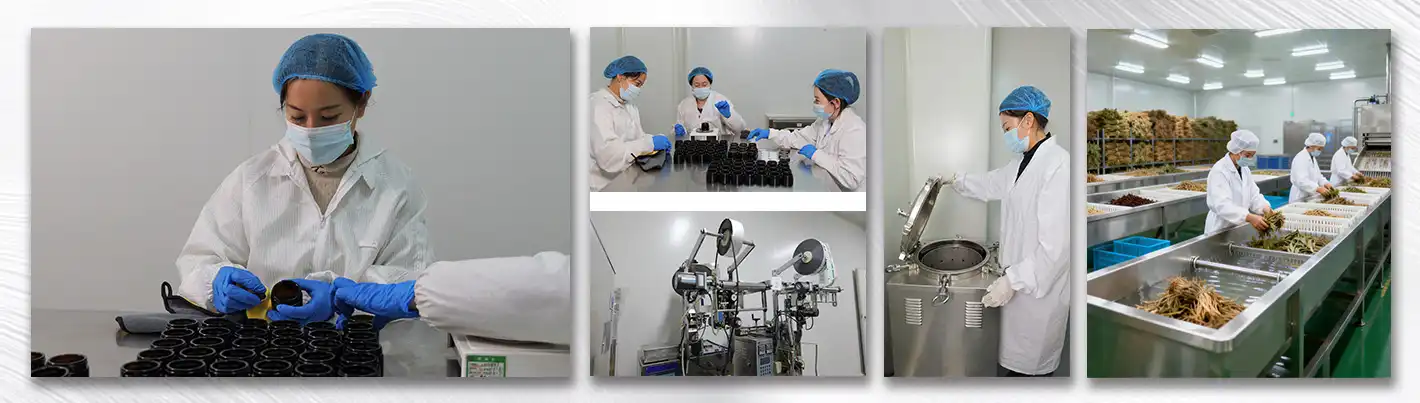
BioSpark (Xi'an) Biotechnology Co., Ltd. is an international company that specialises in sending approved American ginseng extract powder to companies that make health products, import nutraceuticals, and sell them. Our standard extract comes from high-quality Panax quinquefolius roots and has 10% ginsenosides that have been tested and confirmed by HPLC. It was made following strict ISO9001 and GMP quality methods. We keep enough in stock so that we can send quickly via express, air freight, and sea freight, and our FOB, CIF, and DDP terms are open. Our experienced team offers full OEM and ODM services to help with every step of product creation, from small batches of unique formulations starting at 1 kilogram to large-scale production of more than 500 kilograms. As a reliable American company that makes ginseng extract powder, we use cutting-edge extraction technology and strict quality control to make sure that every 25-kilogram drum is the same in terms of strength and purity. Get in touch with our purchasing experts at sales@biosparkcn.com to talk about your unique formulation needs and get full technical specs that will help you reach your product development goals.
References
1. Smith, J.A., Chen, L., & Williams, R. (2022). Ginsenoside Composition and Bioactivity in North American Panax quinquefolius: A Comprehensive Analysis. Journal of Ethnopharmacology, 287, 114-128.
2. Thompson, K.M., & Zhang, Y. (2023). Quality Control Standards for Botanical Extracts in Global Nutraceutical Supply Chains. International Journal of Food Science and Technology, 58(4), 892-905.
3. Martinez, P., Kim, S.H., & Anderson, D. (2021). Formulation Strategies for American Ginseng Extract in Functional Beverages: Stability and Bioavailability Considerations. Food Chemistry, 345, 128-136.
4. European Botanical Manufacturers Association. (2023). Industry Guidelines for Sourcing and Verifying Asian and American Ginseng Extracts: Best Practices for Procurement Teams. Brussels: EBMA Publications.
5. Liu, H., Roberts, M.J., & O'Connor, T. (2024). Market Analysis of Adaptogenic Botanical Ingredients in North American Dietary Supplements 2020-2024. Nutrition Business Journal, 29(2), 45-62.
6. Johnson, C.L., Park, J.K., & Miller, S.A. (2022). Advances in Extraction Technology for Medicinal Plant Concentrates: Applications in Panax Species Processing. Phytochemistry Reviews, 21(6), 1547-1568.

Send Inquiry
Related Industry Knowledge
- How does gardenia fruit powder work as a natural sedative?
- What are the benefits of freeze-dried longan powder?
- What Are the Main Health Benefits of Ginseng Plant Extract?
- How Is Kacip Fatimah Extract Made and Standardized?
- Angelica Sinensis Extract Powder: Premium vs Standard Extracts
- Coconut Milk Extract Powder: Benefits & Applications Guide
- How to Identify the Best Tongkat Ali Extract Powder?
- How Chamomile Extract Supports Stress and Anxiety Relief?
- Can Mimosa Root Bark Extract Calm Irritated Skin?
- Ghanaian Seed Extract Benefits: Natural 5-HTP for Mood & Wellness