Bulk Creatine Monohydrate Powder Buying Guide: What Matters?
Nov 16, 2026
How should I buy bulk creatine monohydrate powder? What should I look for? To begin, you should get an analysis certificate that is specific to the batch and a particle size that works with your product's format. When you compare prices, you should not only look at the price per kilogram. You should also look at the packaging, the paperwork, the supplier's capacity, and the total cost when it gets to your door. The bulk creatine monohydrate powder sold by BioSpark (Xi'an) Biotechnology Co., Ltd. is at least 99.5% pure, as shown by HPLC tests on 25 kg drums of the powder of the company. The particles are between 80 and 200 mesh in size. That way, your brand, distributor, or contract manufacturing team can source with confidence, and there won't be any nasty surprises that cost a lot of money. This guide tells you how I judge each factor.
What Is Bulk Creatine Monohydrate Powder?
Definition and Chemistry
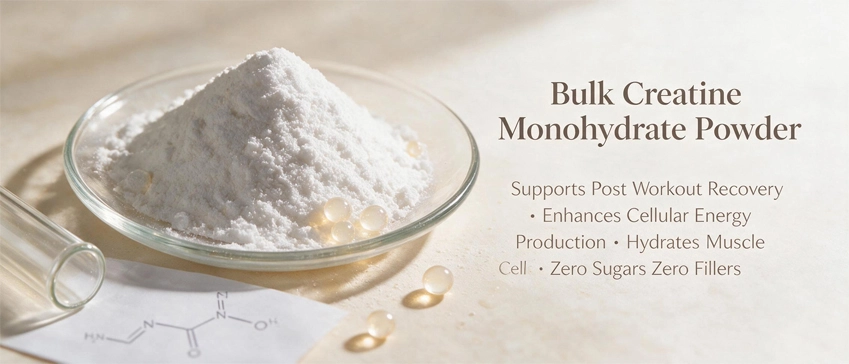
You may get creatine monohydrate powder in bulk to construct your own supplements, to sell in bulk, to repackage and create your own brand-name products. It has the chemical formula C₄H₉N₃O₂·H₂O and a molecular weight of 149.15. The molecular name is N-(aminoiminomethyl)-N-methylglycine monohydrate. 88% is crystalline water (12%). Most of your creatine is in the form of phosphocreatine, which helps your body create ATP. This is the main reason why creatine monohydrate is looked at a lot in sports nutrition. It is so good for you that the International Society of Sports Nutrition calls it one of the best supplements for hard exercise. If you know this basic chemistry, you'll know how to read a specification sheet, right?
How the Powder Is Made and Supplied
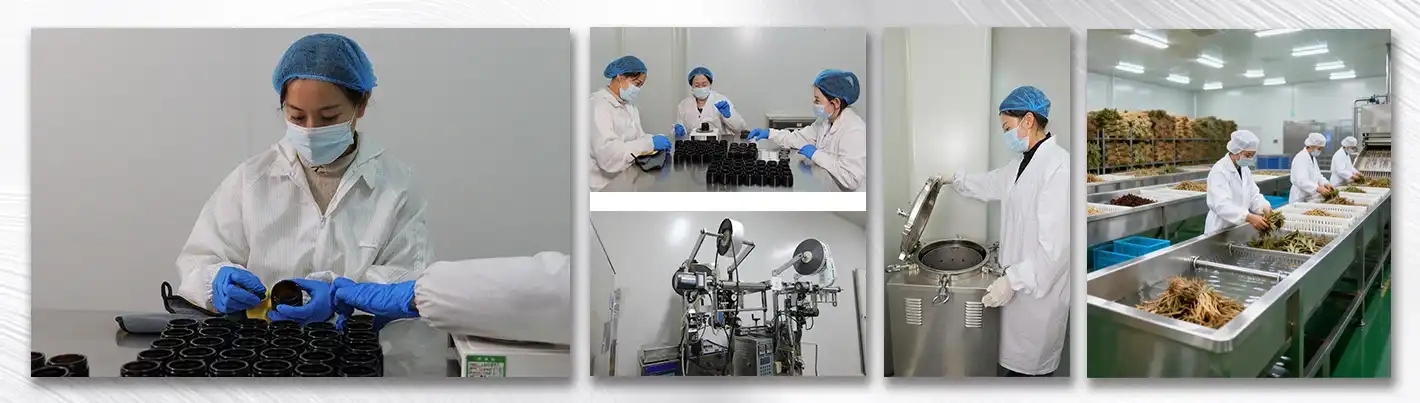
This is how our bulk creatine monohydrate powder is made: sarcosine and cyanamide are made in China. After that, the powder gets better. You'll end up with a crystalline powder that is white to off-white and doesn't smell like anything. People who work for businesses can order as little as 1 kg to try it out before they buy more. It comes in 25 kg drums. When tubs are sold to businesses, they should come with a list of specs and records for each batch. Before you place an order, you should get copies of the suppliers' certificates and ask them what traces of impurities they test for in the process. This is because the process is done in a lab. You don't have to buy a lot of powder at once. You can try a small amount on your own line first.
Where Brands Use It
There are three main places where bulk creatine monohydrate powder is used. Protein bars, energy drinks, pre-workout powders, and recovery blends need to be able to move quickly through pouch-filling lines so that they can be used as sports nutrition. Because creatine monohydrate doesn't dissolve all the way in water, a finer grade is better for drinks that are already made. That's not all. It can also be used to feed pets, make things that help people age well, and make functional foods. Make sure you know the rules in your area and the heavy metals limit (≤10 ppm) before you use these. First, choose what you want to make, since the pressure on the ingredient varies from place to place. That option cuts down on the details you need to give, which speeds up the quote process.
Product Quality and Format for Bulk Creatine Monohydrate Powder
Purity, Identity, and Documentation
How pure the bulk creatine monohydrate powder is is the first thing that will be talked about in any review. HPLC is one way to separate parts of a sample and measure them. This means that our stuff is at least 99.5% pure. It's only helpful to have a purity number that goes with a COA that is unique to the batch. 21 CFR Part 111 says that US companies that make dietary supplements must test each ingredient on their own to make sure it is what it says it is. Check the batch number, test date, method, and lab name. You can meet other needs if you have a COA from a qualified supplier. Get copies of the COA and certificates before you buy something and compare them to what you've written.
Particle Size and Mesh Selection
Our pieces are between 80 and 200 mesh. The holes in the sieve are smaller when there is more mesh. 80 mesh is the same as 177 microns, and 200 mesh is the same as 74 microns. Large powder is easier to move through hoppers and machines that fill them. More fine powder, on the other hand, can keep drinks from settling because it spreads out more. To find out how pure something is chemically, don't just look at the mesh. Also, look at the test scores. Not much or any grade will be enough to completely break down creatine monohydrate. The mesh grade for your bulk creatine monohydrate powder will depend on how you work. Take a quick test after that.
Matching Format to Your Application
You have the most control over the sweeteners, flavors, and other actives when you use plain powder in your recipes. It might be easier to mix with instant or flavored formats, but they don't let you do as much. Compare the different types of creatine monohydrate by checking how well they dissolve, how much they cost, how well-known the product is, and how well the idea for the product works. Reports from 2017 say that there is no proof that any other form works better than monohydrate. We can help you figure out how to keep the mixture from clumping if you mix things that soak up water, like citrulline malate or beta-alanine. Pick the grade of bulk creatine monohydrate powder that works best with your gear and try it out in ready-made capsules and tablets.
Safety, Dosage, Shelf Life, and Regulatory Considerations
Safety Testing and Consumer Cautions
To get results for each batch, you should ask for allergen statements, heavy metal, and microbiological results. The ISSN position statement found that healthy people can take supplements in the right amounts without any problems. A lot of research has been done on the safety of creatine. It is the rule in this area that people with kidney problems should talk to a doctor before taking creatine. The item itself should also have this warning on it. Check the heavy metal levels before buying bulk creatine monohydrate powder for your pet's food or to help them stay healthy as they age. The level should be less than 10 parts per million (ppm). So that audits can be done quickly, keep a file for each supplier with all the proof.
Dosage and Labeling Responsibility
The brand is in charge of the labels, dosages, and health claims that fall under the laws of their home country once the goods are made. Researchers have already found that most people take 3 to 5 grams of creatine monohydrate every day. As part of some plans, people also take about 0.3 grams of creatine monohydrate per kilogram of body weight for 5 to 7 days. Not label advice, but those numbers show the steps for research. The Dietary Supplement Health and Education Act and FDA labeling rules say that supplement products in the US must follow strict rules. Before you go on sale, make sure that a qualified regulatory professional has approved the serving size, claim language, and required statements. If you do a review early on, you can avoid having to rebrand or start late.
Shelf Life, Storage, and Solution Stability
When it's dry, it doesn't change shape, but when water is added, it can change into creatinine. When you make something ready to drink, make sure it doesn't change when the pH level changes or over time. Powder should not be mixed with water because wet stuff gets cakey and takes longer to fill up. Close the lids on the drums of bulk creatine monohydrate powder and put them somewhere dry. Write down when the goods were made and when they go bad or need to be tested again after you get them. Don't guess the number; ask your supplier to write down how long it will last and how to store it. Then, think about what you already know about stability and compare that to what you learned. If you keep good records, you can connect any good question to a certain lot.
Supplier Evaluation, Total Cost, and Supply Chain Planning
Qualifying the Supplier and Reading the COA
Check with a business to see if they make, sell, or trade bulk creatine monohydrate powder before you buy it. It will depend on the type of business you run, on technical support, minimum order quantities, and the ability to make changes. It works on health products, designs them, makes them, and sells them all over the world, in places like the Middle East, North America, Europe, and South America. You should ask for the same things as the client: a specification, a recent COA, a sample, a lead time, an MOQ, and a quote. First, check that the batch number matches the date it was made. After that, look at the test date and the test method. Finally, check the outcomes against what was asked for. Last, check that the lab and method are correct. If the certificate doesn't have a batch number, it doesn't say anything about your lot.
Calculating Total Landed Cost
Price per kg doesn't always tell you what's going on. To find out how much the product cost when it arrived, you have to add up the costs of testing, shipping, insurance, customs fees, and handling fees. Next, add up all the costs you might not have thought of, like extra labels, delays, batches that are turned down, product loss, and emergency freight. Find out how pure the bulk creatine monohydrate powder is, how big the particles are, how it will be packed, how it can be customized, where it will go, and how you can pay for it. When these things happen, a deal that was cheaper might cost more. Do a sample or a 1-kg test first, and then move on to a pilot order. Talk about why you should keep getting the powder once it works well in your recipe.
Packaging, Shipping, and Inventory Planning
We pack bulk creatine monohydrate powder that comes in 25 kg drums. Check that the inner liner, the strength of the seal, and the way the package is closed will keep the powder dry. Also, make sure that the pack works with the way you use pallets and work in the warehouse. Before you place an order, make sure you know what the Incoterms mean. These terms spell out who is responsible for paying for the freight, taking the risk, and getting the goods through customs. Also, make sure you know who the official importer is for goods coming into the U.S. To figure out how much safety stock you need, look at your production schedule, the lead time for your suppliers, the minimum order quantity, and the risk of customs. We can take orders of any size, from a few items to a lot of them. As a brand grows, a recurring supply plan can help it stay trouble-free.
OEM, ODM, and Procurement Checklist
OEM and ODM Workflow
You can buy different types of bulk creatine monohydrate powder, such as raw materials, finished goods with your own brand, custom formulations, or full contract manufacturing. From coming up with ideas and recipes to making the goods, packing them up, and sending them out, we help with the whole process. You should know who you want to buy the product, how it will be packed, how many servings it will have, what flavor it will have, what labels you need, and how much you hope to sell before you do so. When the needs are known and a sample is made, the next steps are controlled production for the pilot, quality review, mass production, and shipping. There is a checkpoint at every step that makes the business and the technology safer. Kindly let us know as soon as possible about your launch date so that we can plan our work around that.
Common Buying Mistakes
People who want to save money usually pick the cheapest option without looking at the details. Accept a generic COA, don't pay attention to destination-market rules, and don't test the final formula. They also think that micronized powder is always better. Each one can cost more, not work as well, be hard to label, slow down customs, or lead to batches being turned down. Fine mesh doesn't tell you anything about whether something is good or bad. It's not very helpful to look at a brochure because creatine works in different ways in water, acidic drinks, protein blends, flavored powders, capsules, and tablets. It's better to do a bench test. You should compare a supplier's level of purity, the tests they do, their packaging, their ISO terms, and their paperwork before you choose one.
Final Procurement Checklist
Before you sign anything, make sure you understand everything in writing. Name, test, particle size, moisture, look, dispersibility, microbiological limits, heavy metals, shelf life, and how to store it are some of the things that need to be written down. It is important to keep a COA for each batch, a specification sheet, an SDS, copies of certificates, a statement of origin, and records of how the products were made. Business terms include minimum order quantities (MOQs), price breaks, packaging, lead time, payment terms, Incoterms, shipping, customization fees, and how to make a replacement. Things that make up performance are application results, landed cost, regulatory suitability, the ability to increase volume, and making sure that quality assurance staff know what they're supposed to do. They can get a controlled first order of bulk creatine monohydrate powder if they write down a story for each line. Save this list of approved sellers and look it over every time you place an order.
Conclusion
When shopping for a bulk creatine monohydrate powder, the most important things to look for are proof and fit. A COA and HPLC confirmation of purity for each batch are used to judge the quality. The mesh size and shape are what make the powder work in blends, drinks, capsules, and pouches. This item is safe since it is kept dry, goes through safety checks, and tells you how long it will last. Laws in the area still say that the brand is in charge of the claims, labeling, and dosage. Price isn't the only thing that should be used to compare suppliers. You should also look at the same paperwork, the total cost when it arrives at your door, the packaging, the shipping terms, and see if they can do OEM or ODM work. People don't take the first test or accept a generic COA, which are both common mistakes. This keeps costs and risks low. Writing these steps down on a list will let you use them again and again.
FAQ
What is the minimum order for business customers?
You must order at least 1 kg. Before they buy more, businesses can use it for pilot runs and small tests.
Which particle sizes and packaging do you offer?
We have 25 kg drums of 80–200 mesh for sale. The rougher grades work better with filling machines most of the time, while the smoother grades work better for drinks.
Which documents can I request before ordering?
You should get a COA and copies of the certificates before you place an order. Then you should check to see if they meet your needs for bulk creatine monohydrate powder.
Do you provide OEM and ODM services?
Yes. As long as we know how to do it, we can help with OEM and ODM projects, from small-batch customization to mass production.
Is the powder suitable for ready-to-drink products?
Because it doesn't dissolve all the way in water, a finer grade can help keep creatine monohydrate from going to the bottom of the bottle. After being mixed with other things, creatine can change into creatinine. Check to see if it stays the same at different pH levels.
Request Bulk Creatine Monohydrate Powder From BioSpark
Want to find a company that sells bulk creatine monohydrate powder that is at least 99.5% pure by HPLC, costs at least 1 kg, and comes in 25 kg drums? BioSpark (Xi'an) Biotechnology Co., Ltd. can be reached at leao@biosparkcn.com. They need to know who you are, what kind of mesh you want, how much you need, and whether you need OEM or ODM services. Visit https://www.biosparkcn.com/ to learn more about the company and ask for a COA and copies of the certificates. We'll get your brand things.
References
1. Journal of the International Society of Sports Nutrition, 2017 – International Society of Sports Nutrition position stand: safety and efficacy of creatine supplementation in exercise, sport, and medicine
2. Physiological Reviews, 2000 – Creatine and creatinine metabolism
3. Amino Acids, 2011 – Analysis of the efficacy, safety, and regulatory status of novel forms of creatine
4. Journal of the International Society of Sports Nutrition, 2021 – Common questions and misconceptions about creatine supplementation: what does the scientific evidence really show?
5. U.S. Food and Drug Administration, 2007 – Current Good Manufacturing Practice in Manufacturing, Packaging, Labeling, or Holding Operations for Dietary Supplements (21 CFR Part 111)
6. U.S. Congress, 1994 – Dietary Supplement Health and Education Act

Send Inquiry
Related Industry Knowledge
- What Is Bulk Kale Powder? Processing, Quality, and Applications
- What Makes Sophora Japonica Flower Extract Effective?
- Can Liposomal Zinc Glycinate Improve Zinc Absorption?
- Could Liposomal Ferrous Fumarate Improve Iron Tolerance?
- Yellow peach powder Applications in Drinks, Bakery, and Snacks
- Bitter Melon Extract Powder: Appetite Regulation & Satiety Mechanism
- How Does Pure Corn Extract Powder Support Daily Nutrition?
- How Does Yellow Peach Powder Improve Snack Formulations?
- How Effective Is Rosehip Extract Powder for Inflammation?
- Baicalin Extract for Skin: Anti-Aging & Protective Boost