Can Liposomal Zinc Glycinate Improve Zinc Absorption?
Oct 16, 2026
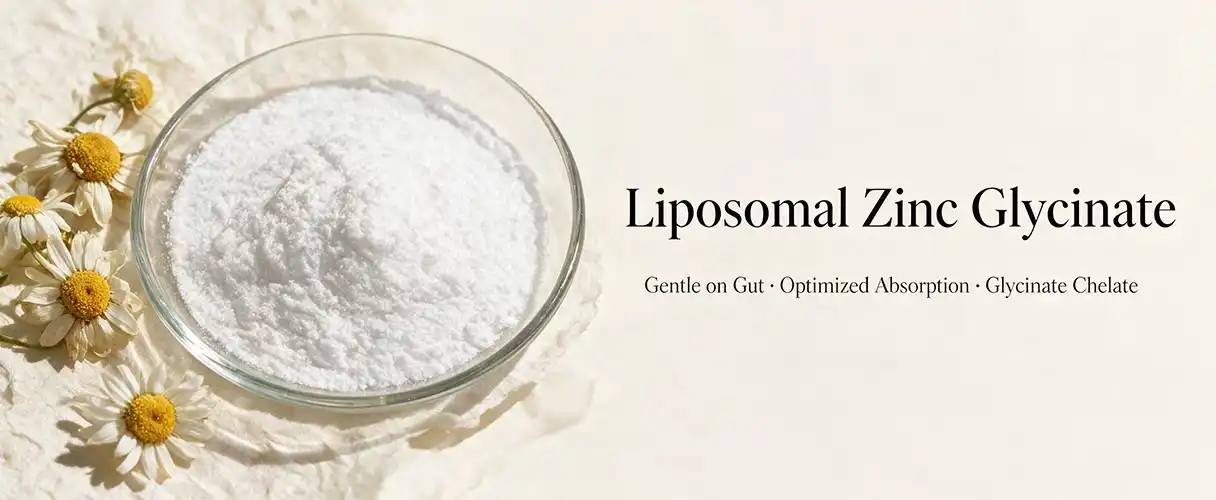
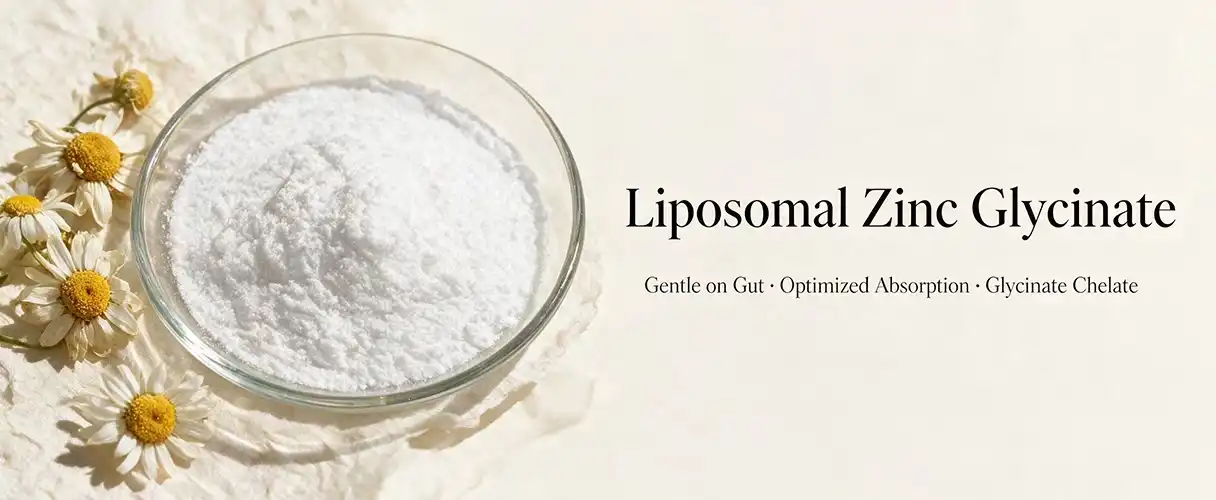
Liposomal zinc glycinate genuinely improves zinc absorption compared to conventional zinc forms. Standard zinc supplements often face low bioavailability because zinc ions can bind with dietary compounds in the gut, reducing uptake. Liposomal zinc glycinate addresses this by encapsulating a zinc-glycine chelate inside phospholipid nanovesicles (80–150 nm), which protect the mineral through the gastrointestinal tract and support direct cellular uptake. Research on liposomal nutrient delivery consistently shows higher plasma zinc levels versus unencapsulated forms, making this ingredient a smart choice for supplement brands focused on clinical-grade efficacy.
Understanding Liposomal Zinc Glycinate and Zinc Absorption
How Liposomes Aid Gastrointestinal Transport
Zinc ions join with two glycine molecules to make zinc glycinate. This is what liposomal zinc glycinate is made of. These zinc salts that have been chelated are more stable and better for your gut than real zinc salts. There is another layer of defense called the liposomal layer. Around this area, round phospholipid nanovesicles with particles that are 80–150 nm in size keep the zinc-glycine complex moist on the inside. When the vesicles' surfaces are changed with PEG, they get a layer that attracts water. This makes them more stable when they're spread out and less likely to be broken down by enzymes.
Encapsulation Rate and Key Parameters
After being eaten, they don't break down in the stomach acid. They stay mostly whole as they move through the intestines. As they do this, they join with enterocyte membranes to send zinc straight to the cells that line the gut. When competitive ion absorption channels get in the way, zinc can't get in. But this route gets around them. When you look at liposomal nutrient transport next to free ionic zinc forms, you can see that this method can help cells store a lot more zinc.
Health Benefits and Applications
Immune, Skin, and Hair Health
For the immune system, zinc is a key mineral because it changes how T cells work, helps protect enzyme systems, and lowers signs of reactive stress. This works better for longer because liposomal delivery brings more zinc into cells. Zinc helps collagen and keratinocytes divide, which also makes hair and skin grow. There is high-bioavailability zinc glycinate that works well in oral beauty products when mixed with vitamin C or collagen peptides. This item works well for a number of fast-growing B2B markets.
Specialized Nutrition Markets
To begin, you should pay attention to these main points:
- Immune health products — Positioned as gentle, effective zinc support for flu-season consumers or daily immune maintenance, with minimal gastric side effects.
- Children's and prenatal nutrition — Addresses zinc deficiency caused by picky eating or changed taste perception in pregnancy; the glycinate chelate's mild profile suits sensitive groups.
- Sports nutrition and male health — Athletes lose zinc through sweat; liposomal zinc glycinate supports recovery and reproductive health with reliable absorption.
- Clinical nutritional support — Used in formulas for burn patients, post-surgical recovery, and intestinal absorption disorders where standard zinc forms underperform.
These are zinc vitamins for immune health. They are safe and good for people who have the flu or who want to keep their immune systems strong every day. They don't make your stomach hurt. Because the glycinate chelate is light, it is good for groups that are easily affected. Not getting enough zinc can happen when a child doesn't like certain foods or when a woman's taste buds change during pregnancy. (Healthy eating for athletes and men) When people sweat, they lose zinc. Recovery and reproductive health are aided by liposomal zinc glycinate, which is easily absorbed. Standard forms of zinc don't work well for people who have been burned, are healing from surgery, or have trouble getting zinc in their gut. This type of zinc is used in formulas for these groups.
Dosage and Safety Guidance
Companies really want these groups. There are clear facts that brands can use to back up their claims that their goods are better at absorption.
Comparing Liposomal Zinc Glycinate with Other Zinc Formulations
Bioavailability Comparison
It is hard to absorb zinc oxide and hard to break it down. People can absorb zinc sulfate pretty well, but it often makes them sick. Zinc citrate and gluconate aren't as strong, but they still have to pass through the gut without doing any work. Zinc picolinate can be absorbed, but not all groups have the same results. Liposomal zinc glycinate consists of a chelate that is simple to absorb and a delivery system that keeps the chelate secure. It changes how zinc is taken in in two ways at the same time: chemically and biologically.
Side Effect Profiles
A lot of the time, zinc supplements make people really sick. Some of the zinc sulfate can make you sick in small amounts. The glycinate chelate base of our ingredient is very soft, and the zinc ions don't touch the gut walls because they are packaged in liposomes. This is a good way for brands to get the attention of kids, pregnant women, or people who easily get upset.
Manufacturing Relevance for OEM Buyers
There is a certain way to make liposomal zinc glycinate. For that reason, you can support this type of high-end goods. Some brands can charge more for their finished goods because they keep this ingredient on hand. These zinc pills can reach people that other pills can't.
Procurement Considerations for Liposomal Zinc Glycinate
Certifications and Quality Standards
Keep in mind that the company you buy liposomal zinc glycinate from should follow well-known quality standards. You should pay attention to ISO, GMP, and making sure you follow food additive rules like GB 1903.6. Request certificates of analysis (COA) that list the metals present, the amount of bacterial toxins, the particle size, the rate of packaging, and the peroxide and zinc levels.
Bulk Options and Private Label Availability
If you freeze-dry it, it turns into a cake that is white to off-white. If you mix it with liquid, it turns into a clear, milky suspension. You can turn either form into functional drinks, capsules, sachets, or liquids that you drink. Suppliers you can trust can take care of everything, from small test orders sent by DHL, FedEx, or UPS to big ocean freight runs. They also use a lot of different trade words, like FOB, CIF, DDP, and DAP.
Evaluating Supplier Credibility
You can look at a supplier's past sales, audit records from a third party, and customer cases from the US or EU market to get an idea of their track record. Both sides of a real business-to-business deal should be able to talk clearly about things like lead times, shelf life, and legal papers.
Implementing Liposomal Zinc Glycinate in Your Product Line
Formulation Best Practices
It's easy to add freeze-dried liposomal zinc glycinate to drinks, powders, and pills to make them more liquid again. To keep the shape of the chelate, keep the pH between 6.0 and 7.0 while it forms. Processing shouldn't be done at temperatures above 50°C because they can hurt the vesicles. The freeze-dried types are filled with nitrogen-flush and have lyoprotectants based on trehalose that make them last longer.
Marketing and Regulatory Alignment
Americans who care about their health and are interested in supplement science really get "liposomal delivery" when it comes to business. The absorption effect can be measured and talked about. Brands can talk about particle size, encapsulation rate, and process in their ads without making claims about drugs that aren't backed up by proof. Dietary supplements must follow the rules set by the FDA (21 CFR Part 111). This is also true for labels on finished goods. Make sure that the right warnings are on all of the signs.
Real-World Application Validation
Liposomal zinc products from Immune Health and Elite Wellness can be bought for 30–50% more than regular zinc tablets. Customers were able to do this because they knew about bioavailability. It's safe and makes sense from a scientific point of view, so that part can be used in subscription-based goods. Supplement stores in the U.S. sell a lot of these, and a lot of people send them back.
Conclusion
Liposomal zinc glycinate is an example of a new zinc product that is backed by science. Its glycinate chelate base, 80–150 nm nanovesicle structure, and ≥85% encapsulation rate all work together to make zinc delivery much better than with other kinds. Companies that make supplements, nutraceuticals, or OEMs can start with this ingredient if they want to get into competitive U.S. market segments like immune health, healthy kids, beauty from the inside out, or sports recovery. It's also good for business.
FAQ
Is liposomal zinc glycinate safe for long-term use?
Yes. The glycinate form of zinc is well-tolerated, and liposomal encapsulation reduces direct gastric exposure. Formulated within the NIH's tolerable upper intake level of 40 mg/day for adults, long-term use is considered safe. Always recommend that end consumers consult a healthcare provider for personalized guidance.
What dosage is recommended in finished supplement products?
Most B2B formulations target 8–25 mg elemental zinc per serving. Because liposomal delivery increases absorption efficiency, you may achieve adequate zinc repletion at the lower end of this range — useful for products marketed to sensitive populations such as children or pregnant women.
Why does liposomal zinc absorb better than standard zinc?
Standard zinc ions compete with other minerals for intestinal transporters and can be blocked by phytates or fiber. Liposomal encapsulation bypasses these barriers by fusing directly with intestinal cell membranes, releasing zinc intracellularly rather than relying solely on passive diffusion channels.
Can this ingredient be used across different product formats?
Yes. The freeze-dried powder integrates into capsules, stickpacks, and sachets. The liquid colloid suits oral drops, functional drinks, and ampoule formats. Both forms maintain structural integrity when processed correctly within recommended temperature and pH ranges.
Partner with BioSpark for Premium Liposomal Zinc Glycinate Supply
People can trust BioSpark (Xi'an) Biotechnology Co., Ltd. to make liposomal zinc glycinate and provide full OEM/ODM services, from providing the raw materials to sending out the finished product. Our raw materials can be tracked, and we can ship anywhere in the world. This means that we can do anything from small test runs to tons of production. We can help you get what you want, whether it's to start your own business or buy a lot of things. Send us an email at leao@biosparkcn.com or go to www.biosparkcn.com right away to get samples and full datasheets.
References
1. Prasad, A. S. (2013). Discovery of Human Zinc Deficiency: Its Impact on Human Health and Disease. Advances in Nutrition.
2. Hambidge, K. M., & Krebs, N. F. (2007). Zinc Deficiency: A Special Challenge. Journal of Nutrition.
3. Bhattacharya, P. T., Misra, S. R., & Hussain, M. (2016). Nutritional Aspects of Essential Trace Elements in Oral Health and Disease. Scientifica.
4. Semalty, A., Semalty, M., & Singh, R. (2010). Phospholipid-Based Systems for Drug Delivery. Critical Reviews in Therapeutic Drug Carrier Systems.
5. Wegmüller, R., Tay, F., Zeder, C., Brnic, M., & Hurrell, R. F. (2014). Zinc Absorption by Young Adults from Supplemental Zinc Citrate Is Comparable with That from Zinc Gluconate and Higher than from Zinc Oxide. Journal of Nutrition.
6. National Institutes of Health, Office of Dietary Supplements. (2022). Zinc: Fact Sheet for Health Professionals. NIH Office of Dietary Supplements.

Send Inquiry

Related Industry Knowledge
- Why Is Dracorhodin Important in Dragon’s Blood Research?
- What Should Buyers Know About Banana Juice Powder Quality?
- Damiana Peptide for B2B: Quality and Sourcing Guide
- Top Snow Lotus Fruit Powder Uses in Functional Foods
- What Makes Gardenia fruit powder a Trusted Herbal Ingredient?
- Want a reliable Maqui Berry Powder Manufacturer for Bulk Orders?
- Can Hydrolyzed Rice Extract Reduce Skin Dullness Effectively?
- Rosehip Extract Powder Benefits: What Does Science Say?
- How does Ilex Leaf Extract Enhance Metabolic Health?
- How Ginseng Plant Extract Boosts Immune Function?