What Makes Sophora Japonica Flower Extract Effective?
Nov 02, 2026
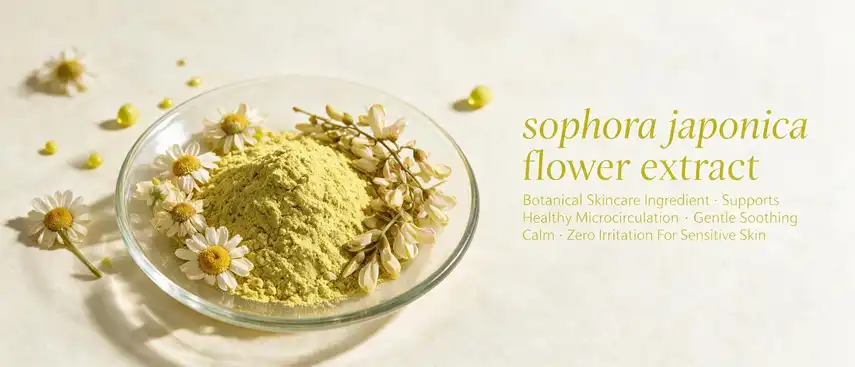
Sophora japonica flower extract is a high-purity botanical extract obtained from the dried buds and flowers of the Styphnolobium japonicum tree. It works because it has a very high concentration of bioflavonoids, especially rutin (quercetin-3-rutinoside), which is a natural antioxidant, capillary stabilizer, and anti-inflammatory. This extract has shown in pharmaceutical, nutraceutical, and dermacosmetic applications higher safety and bioactivity than several synthetic equivalents. For B2B procurement teams, the first step in creating high-performance product lines is to understand what drives its effectiveness.
Understanding Sophora Japonica Flower Extract: Composition and Properties
The chemicals that are in Sophora japonica flower extract have a direct effect on how well it works in living things. When procurement teams know the composition, they can correctly judge what sellers say.
Primary Active Compound: Rutin
The flavonoid rutin is a major component of Sophora japonica flower extract, representing around 95% or more. This is what makes the extract pharma-grade. Chemically, rutin is a glycoside of quercetin. This means it contains a sugar moiety, which makes it far more water-soluble than the aglycone version. Rutin is the finest natural form of vitamin P for commercial usage because of the way it is manufactured.
Rutin vs. Quercetin: Why the Difference Matters
Rutin and quercetin do various things in the body. Rutin is helpful for vascular health as it helps to maintain capillaries steady, and quercetin is good for the immune system and decreases inflammation throughout the body. You need to keep a careful check on how much rutin is converted to quercetin throughout the extraction process. A reputable manufacturer will employ certified HPLC testing to monitor this shift and make sure that the levels of quercetin are within tight pharmaceutical parameters so that the quality of the product remains the same.
Extraction Methods and Their Impact on Quality
We produce Sophora japonica flower extract using food-grade ethanol and filtered water, ensuring the flavonoids are pure and free from any undesirable elements. Water extraction with pH control is also used by high-tech producers to avoid breakdown of flavonoids. The purity, yield, and stability of rutin are directly dependent on the extraction method. Before choosing a supplier, procurement teams should employ Certificates of Analysis (COA) to verify these aspects of a source.
Core Benefits and Uses of Sophora Japonica Flower Extract
The flower from the Sophora japonica plant can be used in three important business areas, and each one has different performance needs.
Pharmaceutical and Nutraceutical Applications
Because it contains sophora japonica flower extract, a medicine used to treat chronic venous insufficiency (CVI) and hemorrhoids can work better. Stopping the enzymes that break down the arterial tissue is what rutin does to make the walls of capillaries stronger. When there is high venous pressure, this helps blood flow. Taking 500 mg of rutin every day has been shown in clinical tests to greatly reduce swelling and improve blood flow through veins. It is often mixed with Vitamin C to help blood vessels heal faster. Nutraceuticals have done a lot of research on this mix.
Dermacosmetic and Skincare Applications
Collagenase and elastase, enzymes that break down collagen and elastin, are prevented from working by Sophora japonica flower extract, which protects the skin matrix. Because it fights oxidative stress caused by UV light, the extract is often found in skin care lines that claim to be "anti-redness" and "anti-aging." Also, hyaluronidase can't do its job, which is to keep the skin tight and moist. It's easy for the extract to work in complex emulsion systems that need to stay solid under UV light and be able to handle different pH levels.
Functional Food and Industrial Stabilization
To preserve edible oils and make high-fat foods healthier, sophora japonica flower extract is used. It has antioxidants in it naturally. At high temperatures, it keeps lipids from going bad and oxidizing, which is better than many botanical extracts that break down at high temperatures. In drinks with a low pH, cyclodextrin encapsulation or micronization techniques make the extract easier for the body to use and keep it from clumping together. This means that the extract can be trusted to work in a lot of different types of useful foods and drinks.
Comparing Sophora Japonica Flower Extract with Other Natural Extracts
A lot of antioxidants that come from plants are competing for space in products. This is how sophora japonica flower extract compares to some other popular choices.
Rutin Content Advantage Over Green Tea Extract
Many people know that EGCG, which is a type of catechin, is found in green tea extract. Most green tea extracts only have 40–60% total polyphenols. But Sophora japonica flower extract has a lot more rutin per gram—often more than 95% standardized. You can get more rutin from the pagoda tree extract, which is better and cheaper for vascular health products that want to use it as the active ingredient.
HPLC vs. UV-VIS Testing: A Quality Benchmark
One very important difference is how quality is checked. It is possible for UV-VIS spectroscopy to give falsely high purity readings when it is used to measure the total amount of flavonoids. With HPLC, rutin gets a unique molecular fingerprint that lets you find any contaminants and precisely measure how much of it there is. When evaluating suppliers, you must insist on HPLC-based COA documentation. This will help you tell the difference between good suppliers of sophora japonica flower extract and bad ones.
Natural vs. Synthetic Alternatives
On the market, you can find manufactured rutin analogs like troxerutin (hydroxyethyl-rutin), which mixes better with liquids. Toxerutin can be helpful in some cases, but the natural extract from the Sophora japonica flower is still more popular in health and fitness products with a clean label. It comes from a traditional plant type that has not been genetically modified. It is also non-GMO and does not contain any toxins. A lot of U.S. health supplement companies want to attract people who care about clean products because of these traits.
Procurement Guide: How to Choose and Buy Sophora Japonica Flower Extract
To find the best seller of sophora japonica flower extract, you need to do more than just look at price lists. Trustworthy relationships are different from costly breakdowns because of how honest the supply chain is.
The most important things for business-to-business buyers to look at when they buy something are:
- Standardization and Purity Documentation: Confirm rutin content via HPLC-based COA, not UV-VIS reports alone. Pharmaceutical-grade material typically specifies ≥95% rutin with defined limits for residual solvents and heavy metals.
- Certifications and Compliance: GMP certification, ISO compliance, and non-GMO verification are baseline requirements. For U.S. market entry, check FDA facility registration and adherence to 21 CFR Part 111.
- Storage and Shelf Life Requirements: Sophora japonica flower extract is light- and moisture-sensitive. It must be stored in double-layered food-grade PE bags within fiber drums, in a cool, dark, dry environment. Properly stored, it maintains a 24-month shelf life.
- Solubility for Your Formulation Type: Raw rutin has limited aqueous solubility. For water-based products, request water-soluble rutin derivatives or confirm the supplier's capacity for nanotechnology-assisted formulation support.
- Minimum Order Quantities and Flexibility: Verify whether the supplier accommodates both small-batch trials and large-scale production orders without compromising batch consistency.
The main issues that come up when botanical extracts are sourced are directly addressed by these criteria. To have a long-term business-to-business relationship with a partner, they need to meet all five of these requirements.
Future Prospects and Research Trends in Sophora Japonica Flower Extract
Growing Demand for Natural Antioxidants
The worldwide rutin market is developing as consumers are increasingly looking for plant-derived bioactives rather than additions from the laboratory. Drug firms and personal care corporations are also investing more in plant actives with transparent supply chains. Sophora japonica flower extract is a viable choice to address this need since it is effective and can be manufactured on a big scale.
Emerging Bioavailability Technologies
Rutin has always had the issue of not being particularly bioavailable when you consume it. Scientists are working hard to develop cyclodextrin inclusion complexes, encapsulation by nanoparticles, and phospholipid complexes in an effort to tackle this. These technologies are already employed in production, which implies that the chemical may be used in additional dosage forms such as solid and liquid.
Regulatory and Sustainability Outlook
US and EU regulations are making it more difficult to source plant-based goods and test for pollutants. As compliance standards increase, supplement brands will be able to distinguish themselves by purchasing from firms that are honest about the entire process, from where the raw ingredients originate to the final extract.
Conclusion
Sophora japonica flower extract works because it contains high-purity rutin. Rutin preserves structural proteins in many kinds of tissue, maintains capillaries open, and decreases oxidative stress. It is a scientifically valid and economically viable option for firms that purchase health supplements, nutraceuticals, and dermacosmetics, since it originates from a plant that can be traced to its source. The quality of the product is dependent on the choice of the source of sophora japonica flower extract on a wide scale. The provider should have papers confirmed by HPLC, be GMP-compliant in manufacturing, and offer a selection of order sizes.
FAQ
1. What is the difference between rutin and quercetin in sophora japonica flower extract?
Quercetin comes in two different forms: rutin and quercetin aglycone. Rutin is easier to dissolve in water and mostly improves the health of blood vessels by keeping the permeability of capillaries fixed. Quercetin helps the body's immune system and reduces inflammation all over. They are both made from flower extracts of the Sophora japonica plant, but they are mixed in different ways.
2. Can sophora japonica flower extract be used in water-based formulations?
Raw rutin is not easy to mix with water. To use a clear liquid, it is best to use rutin derivatives that break down in water or nanotechnology-based processing. Troxerutin is a hydroxyethyl derivative that works well in clear to very clear liquids.
3. How should this extract be stored to prevent degradation?
That stuff doesn't like light or water. Place it somewhere cool, dark, and dry, and wrap it twice in food-grade PE bags and put them inside fiber drums. It will last for 24 months if you keep it this way.
4. Is sophora japonica flower extract non-GMO and allergen-free?
Yes. Most of the time, the pagoda tree (Styphnolobium japonicum) is used. Genes don't change when food-grade ethanol and clean water are used for standard extraction. Tough tests have shown that there are no GMOs or allergens that come from plants.
5. What testing method confirms rutin purity accurately?
It can find impurities like quercetin that are made when rutin is broken down and give an exact chemical fingerprint of how much rutin is present. When measuring total flavonoids, UV-VIS might give you a false impression of how pure something is. Expect your supplier to give you HPLC-based COA paperwork at all times.
Partner with BioSpark for Verified Sophora Japonica Flower Extract Supply
It is a business called BioSpark (Xi'an) Biotechnology Co., Ltd. that makes sophora japonica flower extract for health supplement brands, nutraceutical companies, and distributors all over the world and in North America. It follows GMP, is non-GMO, and has been checked by HPLC. It also comes in different batch sizes so that you can fit it into your production schedule. Email our team at leao@biosparkcn.com right away to get samples and prices.
References
1. Ganeshpurkar, A., & Saluja, A. K. (2017). The Pharmacological Potential of Rutin. Saudi Pharmaceutical Journal, 25(2), 149–164.
2. Selloum, L., Bouriche, H., Tigrine, C., & Boudoukha, C. (2003). Anti-inflammatory effect of rutin on rat paw oedema, and on neutrophil chemotaxis and degranulation. Experimental and Toxicologic Pathology, 54(4), 313–318.
3. Enogieru, A. B., Haylett, W., Hiss, D. C., Bardien, S., & Ekpo, O. E. (2018). Rutin as a Potent Antioxidant: Implications for Neurodegenerative Disorders. Oxidative Medicine and Cellular Longevity, 2018, Article 6241017.
4. Barreca, D., Bellocco, E., D'Onofrio, G., & Lagana, G. (2020). Flavonoids: Promising molecules with anti-inflammatory properties. Journal of Functional Foods, 74, 104200.
5. Huang, W. Y., Cai, Y. Z., & Zhang, Y. (2010). Natural phenolic compounds from medicinal herbs and dietary plants: Potential use for cancer prevention. Nutrition and Cancer, 62(1), 1–20.
6. Agrawal, A. D. (2011). Pharmacological activities of flavonoids: A review. International Journal of Pharmaceutical Sciences and Nanotechnology, 4(2), 1394–1398.

Send Inquiry

Related Industry Knowledge
- How to Choose a Reliable Purslane Saponins Supplier?
- How Are Purslane Saponins Used in Natural Products?
- Damiana Peptide: Benefits, Uses, and Applications
- Can Wolfberry Peptide Support Antioxidant-Focused Formulas?
- Top 7 Uses of Papaya Juice Powder in Food and Beverages
- Coconut Milk Extract Powder: The Ultimate Plant-Based Dairy Swap
- Coconut Milk Extract Powder: The Ultimate Plant-Based Dairy Swap
- Coconut Milk Extract Powder: The Ultimate Plant-Based Dairy Swap
- Coconut Milk Extract Powder: The Ultimate Plant-Based Dairy Swap
- Coconut Milk Extract Powder: The Ultimate Plant-Based Dairy Swap
- Coconut Milk Extract Powder: The Ultimate Plant-Based Dairy Swap
- Coconut Milk Extract Powder: The Ultimate Plant-Based Dairy Swap
- Coconut Milk Extract Powder: The Ultimate Plant-Based Dairy Swap
- Coconut Milk Extract Powder: The Ultimate Plant-Based Dairy Swap
- How Does Yellow Peach Powder Improve Snack Formulations?
- Garcinia Cambogia Extract: How Effective Is It for Fat Loss?
- How Rhizoma Chuanxiong Extract Relieves Headaches?
- Does Pure Corn Extract Powder Help Maintain Healthy Blood?