What Is Bulk Kale Powder? Processing, Quality, and Applications
Nov 05, 2026
Bulk kale powder is available in kilo quantities and by the tonne for use in drinks, meals, vitamins, and private label goods. The kale leaves are washed, dried, and then powdered finely. Freeze drying, air drying, and spray drying have various qualities and costs. Buyers must consider moisture, particle size, microbiological limitations, and batch-specific COAs to match the grade to drinks, capsules, or functional foods.
What Is Bulk Kale Powder and How Is It Made?
Defining Bulk Kale Powder for Commercial Use
Bulk kale powder for commercial use is a kind of kale ( Brassica oleracea var. bellica ) that has been dried and processed into a fine powder. There are four major classes of purchasers. Leaf powder is formed from leaves, and it preserves most of the fibre that doesn't dissolve in water. Whole plant powder may include stems and other plant pieces that alter colour and fibre. Juice powder is created from squeezed and dried juice. It is simpler to break down but contains less fibre. Products ready to sell are already packed for the buyers, not mixed up with most of your ingredient purchases. Write the precise kind of each order. If you just search for "kale powder," you could get something that doesn't work well in your recipe.
From Field to Fine Powder: The Processing Steps
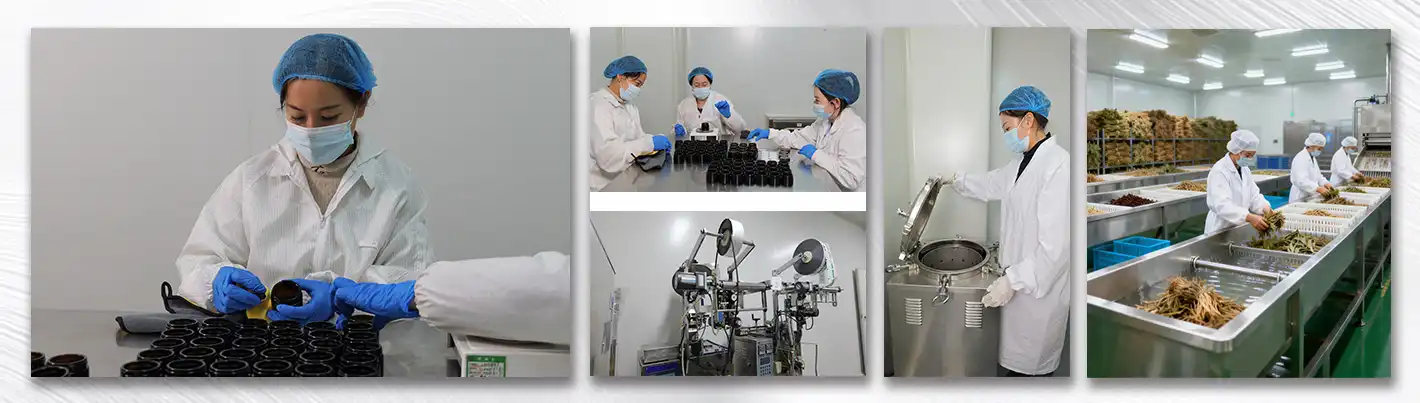
In commercial processing, objects are grown, harvested, sorted, washed, dried, milled, sieved, inspected, and stored. No cutting or blanching. Rinse them off and sift them, removing any dirt and broken leaves. Blanch them, and the colour will last longer. When drying occurs, there is less moisture present for bacteria to multiply or cluster. The particle size may be changed via milling and sieving. Most grades in the commercial sector are 60 to 120 mesh. The rougher the powder, the better it is for filling capsules; the finer the powder, the better it blends and feels smoother in drinks. Then the green tint is retained by packaging that excludes oxygen and light. Raw kale is around 84 percent water, according to data from USDA FoodData Central. After drying, it is much lighter, and hence the freight cost per unit of dry goods is lower.
Freeze-Drying, Air-Drying, and Spray-Drying Compared
The way you dry things makes a difference in how well they operate and how much they cost. Freezing and then drying something at a low temperature helps keep the colour and flavour the same. Freeze-drying is better than hot-air drying, but is more expensive, Ratti noted in a Journal of Food Engineering paper in 2001. Soups, baked products and capsule mixtures are all rich in fibre and air-dry well for less. You may spray-dry wet foods, like kale juice, to generate a powder that makes beverages taste wonderful. There isn't one-size-fits-all answer. Don’t take a process statement at face value; examine its specifications, yield, ingredient list, and test data.
Bulk Kale Powder Nutrition and Quality Standards
Nutrition Facts and Serving Considerations
How nutritious kale is depends on the variety you consume, how it was cultivated, how it was processed, the size of the pieces, and how long they were kept. Such factors as moisture, ash, carbs, calories, chlorophyll, fibre, plant protein, vitamins, and minerals will often be included in a specification. According to the USDA’s FoodData Central, 100 grams of raw kale contains 390 milligrams of vitamin K. Kale contains vitamin K. The powder is more potent, but each batch has a different quantity. Do not use database numbers. Ask for an analysis of the bulk kale powder that is unique to the batch. A few tablets are not a single scoop in a smoothie. People who take warfarin need to keep their vitamin K intake consistent from day to day. A medication maker should review the warnings and the doses that are offered. Add health claims based on plants or easy to use. Under DSHEA, statements of this kind about structure and function must be submitted to the FDA and include a disclaimer.
Food-Grade Specifications to Request
A suitable specification will include the kind of plant, its appearance, smell and taste, particle size, moisture, water activity, bulk density, dispersibility and microbiological restrictions. Little things add up. Moisture is evidence. A lot of kale powders strive to keep the water below 5 percent. Few bacteria thrive in water with an activity below 0.6. This will keep the powder flowing well and fresh for longer. Buyers may also ask for documentation that the item is organic, non-GMO, vegan, gluten-free, allergen-free, pesticide-free, or heavy metal-free. In the US, if you want to label anything as organic, you have to be authorised by the USDA National Organic Program. There should be a match of necessity to end use. The product must mix and settle properly when preparing beverages and flow smoothly and have a low bulk density when creating capsules.
Certificates of Analysis and Compliance Records
The number on the certificate of analysis should correspond to the lot number of the examined items. It should also include test techniques, limits, findings, manufacturing dates, and quality approval. Supporting documentation may include HACCP plans, organic certifications, allergy statements, country-of-origin declarations, etc. Other documentation includes ISO or other food safety certifications. Here’s what the law says you need in the U.S. Under 21 CFR Part 111, the FDA mandates that supplement companies must test ingredients to ensure they are what they claim they are. Food makers must comply with 21 CFR Part 117. BioSpark is in compliance with international quality requirements. Raw ingredients, manufacturing process, and final goods are all verified for safety, purity, and consistency. Tell us the formats you need to order your bulk kale powder in early, and we will have them available for you.
Bulk Kale Powder Applications and Comparisons
Commercial Applications Across Product Categories
Bulk kale powder is an excellent addition to smoothies, baked goods, soups, meal replacements, snacks, pills and tablets. But you have to test the colour, the bitterness, the clumping, and the sedimentation on a bench before you ramp up. These attributes are a result of grade, drying procedure, and formula; therefore, bench testing is a function of quality control to discover faults early on.
Bulk Kale Powder vs. Fresh Kale
If you purchase kale powder in bulk, you don’t have to wash and cut it beforehand. It keeps fresh at room temperature, ships fast, and doesn't need to be evenly dosed. There's a lot more powder than there is fresh kale, since raw kale is primarily water. The precise quantity depends on the yield and the amount of water. But in contrast, powder is not as healthful as fresh veggies. Some compounds, like vitamin C, deteriorate when dried and kept in light, heat, and air. When you mill fibre, it also alters how it functions. Don't use fresh kale tables to set the values for the labels. Instead, you should see each batch of the powder like this.
Kale vs. Spinach and Other Green Powders
Also, kale juice powder is not the same as kale leaf powder. As a rule, kale juice powder disperses more rapidly and performs better in drinks, while leaf powder retains more insoluble fibre and behaves differently in formulation. The two also differ in yield, taste, colour and cost, so test both in your actual matrix before you decide.
How to Buy Bulk Kale Powder With Confidence
How to Choose the Best Bulk Kale Powder Supplier
First, find out if the business you're dealing with is a manufacturer, a distributor, a trading company, or a contract producer. Then, look at where the item was made and the person who is in charge of making sure the quality is good. Review raw-material sourcing, processing controls, traceability, laboratory support, capacity, export experience, and customer service. There are different needs for buyers. Food companies want goods that are always available and meet their standards. Supplement brands need better certification and proof of claims. The distributors also want stock that is close by and flexible packaging. The BioSpark (Xi'an) Biotechnology Co., Ltd does work all over the world on research and development, production, and sales. Also, they help OEMs and ODMs with everything, from coming up with ideas to making the goods, packing them up, and shipping them. Many people in North America, Europe, the Middle East, and South America have bought our bulk kale powder. US buyers should look at the labeling, residue limits, organic recognition, and import steps before giving their approval.
Bulk Kale Powder Pricing, MOQ, Packaging, and Shelf Life
What is the wholesale price per kilogram or pound? What is the Incoterm? Who pays for the freight? How do I pay? How much do samples or tests cost? How long is the quote good for? Let them know what your MOQ is for each SKU, package size, custom blend, or production batch. Goods are packed in drums, retail pouches, multi-wall lined bags, and bulk totes. How long something can be kept depends on how it's stored, how much water is in it, and how it's kept. In the business world, most grades can be kept for up to 24 months in cool, dry, and unopened containers. Make sure the grade number is correct. Both new and well-known brands can start at a volume that works for them.
A Practical Buying Checklist for Bulk Kale Powder
This list aims to review the quotes that are all the same and to choose the best one. The questions are divided into 3 categories.
- Product identification: Make sure you are purchasing leaf powder, whole plant powder, or juice powder. Verify plant identity, source, drying technique, particle size, moisture content, and usage. Ask each supplier to provide you with these statistics on a technical data sheet so you can compare apples to apples.
- Quality documents: Food-grade status, organic certification, non-GMO, vegan and gluten-free declarations, allergy management, a COA specific to that batch, pesticide and heavy-metal discoveries, and HACCP controls. Please mention the lot, test method, and date for each submission, not simply the product name.
- Terms of use: Specify MOQ, price, packaging, delivery time, payment terms, shipping needs, export documents, and private-label possibilities. Put these specifications in writing before you receive a sample; changing suppliers after a pilot order will cost more time and money than dealing with questions up front.
These three organisations catch flaws in the documentation and standards early on. This means that launches won't need to be delayed or large shipments of kale powder rejected.
How to Verify Samples Before Placing a Large Order
After you taste it, feel it, and mix the sample together, you should have a sample that is acceptable. Read the manuals as well. Compare colour, aroma, bitterness, particle size, flowability, clumping, and dispersibility to the actual product matrix. After processing, the pilot batch should be monitored for stability of flavour and colour, water and sediment migration, ingredient interaction, and storage. Connect the approved sample lot to the production lot to be produced so that the specifications and test results are consistent. Ask the supplier about their policies on changes, complaints, recalls and re-orders. A controlled pilot order ahead of a long-term supply arrangement mitigates the technical and commercial risk. The principle is simple: The powder that leaves your lab should be the same powder that arrives at your port.
Conclusion
Finding the correct sort of bulk kale powder is vital for a product’s worth. Bulk kale powder is made from kale that is milled and dried and is used in beverages, meals and supplements. Juice powders, whole-plant powders and leaf powders have variable quantities of fibre. If you want to dry anything, you may freeze-dry, air-dry, or spray-dry it. These are more significant than database values and process names since nutrition varies from batch to batch. The certs of analysis, process names, water activity, etc. are what they are. It’s healthier to consume fresh kale, but kale powder is simpler to send and store. It may be used to create soups, tablets, baked items, and smoothies. With unambiguous quotes and sample trials connected to a production lot, things are safer for companies, suppliers, and the government.
FAQ
What is bulk kale powder used for?
Brands are using it in baked products, bars, soups, sauces, supplements, smoothies, and greens blends. The correct grade is not the same for a beverage, a pill, a dry mix, and a cooked meal.
Is kale leaf powder the same as kale juice powder?
Powders come in many varieties, each with its own quantity of fibre, its own solubility, flavour, colour, and yield. Please be sure of the kind of powder you desire before ordering.
Which drying method is best?
There is not one approach that works for every project. Use samples in your own formula to determine the greatest fit for your budget, performance objectives, and government requirements.
Which documents should I request?
Ask the supplier for more information, such as batch-specific COAs, records of microbiological and contaminant tests, certifications, and tips on how to store the goods.
Does BioSpark offer private-label or OEM support?
Yes. All the way up to mass production, we offer OEM and ODM services, as long as they don't exceed our production limits.
Request Bulk Kale Powder Samples or a Quote From BioSpark
Are you ready to look at different specs? Send an email to leao@biosparkcn.com with the type of powder you want, how you'd like it dried, what you plan to use it for, how much you think you'll need, who you want to reach, and what kind of packaging you need. We offer both OEM and ODM services as a bulk kale powder supplier. We can take care of both small and large orders, and we can help you come up with a good specification. Go to https://www.biosparkcn.com/ to find out more, and let our team make you a sample plan and quote.
References
1. U.S. Department of Agriculture, FoodData Central: Kale, Raw, 2019.
2. National Institutes of Health, Office of Dietary Supplements, Vitamin K: Fact Sheet for Health Professionals, 2021.
3. U.S. Food and Drug Administration, 21 CFR Part 111: Current Good Manufacturing Practice in Manufacturing, Packaging, Labeling, or Holding Operations for Dietary Supplements, 2007.
4. U.S. Food and Drug Administration, 21 CFR Part 117: Current Good Manufacturing Practice, Hazard Analysis, and Risk-Based Preventive Controls for Human Food, 2015.
5. Ratti, C., Hot Air and Freeze-Drying of High-Value Foods: A Review, Journal of Food Engineering, 2001.
6. U.S. Congress, Dietary Supplement Health and Education Act, 1994.

Send Inquiry
Related Industry Knowledge
- OEM Ashwagandha Leaf Extract: Formulation and Sourcing Guide
- Can Wolfberry Peptide Support Beauty Product Formulation?
- What Is Bovine Spleen Peptide and How Does It Work?
- What Should Buyers Know About Banana Juice Powder Quality?
- Sea Buckthorn Juice Powder OEM: From Formula to Bulk Supply
- What is Holy Berry powder used for in Herbal Supplements?
- How to Choose High-Quality Maqui Berry Powder for Formulas?
- What Are the Key Benefits of Ayurvedic Indian Herbal Extracts?
- Rhizoma Chuanxiong Extract Benefits for Blood Circulation
- Inositol Pearl Extract for Mood and Emotional Support