_1764041963888.webp)
Why Choose Organic Hawthorn Fruit Powder for Clean-Label Products?
Aug 18, 2026
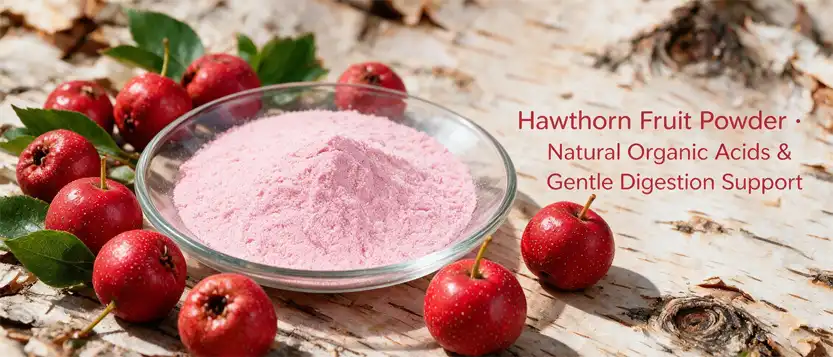
Hawthorn fruit powder sourced from certified organic farms delivers unmatched ingredient transparency, purity, and sustainability that clean-label manufacturers demand. More than ever, people are reading ingredient lists very carefully. Organic hawthorn berry powder stands out as a useful plant ingredient that is good for the heart and tastes great. Neither the USDA nor the EU has said that this Crataegus pinnatifida extract is not organic. From harvest to packing, it can be tracked, and it doesn't have any man-made chemicals or processing tools that would mess up a clean label. So, organic hawthorn powder is a key part of vitamin brands, drink companies that want to make useful drinks, and food companies that want to stand out in a global market full of other goods.
What Makes Organic Hawthorn Fruit Powder Ideal for Clean-Label Products?
The clean label law has completely changed how businesses buy food in North America and Europe. These days, people want to buy things that are easy to see and understand. To get an organic license, hawthorn fruit powder has to follow strict farming rules. These rules say that GMOs, synthetic fertilizers, and chemical pesticides can't be used in the growth or processing steps.
Certified Organic Standards Elevate Product Integrity
Hawthorn fruit powder that is certified organic is checked carefully by third parties, such as the USDA National Organic Program and the EU Council Regulation 834/2007. For these certifications, farming methods, soil management, and handling after harvest must be carefully documented. Organic hawthorn fruit powder always tests below the limits for over 400 restricted substances, while regular hawthorn fruit powder may have pesticide residues that can be found at parts-per-billion levels. This check gives producers the proof they need to back up the claims on their labels and show they are following the rules set by DSHEA and the FDA for food additives.
Superior Nutrient Density Through Organic Cultivation
According to a study in the Journal of Agricultural and Food Chemistry, hawthorn berries grown naturally have 12–19% higher polyphenol concentrations than berries produced normally. Because plants don't have access to manufactured nitrogen fertilizers, they have to make more secondary metabolites, such as the flavonoids that give hawthorn juice its health benefits for the heart. Our normal 20% hawthorn flavonoid specification, which was confirmed by UV spectrophotometry, makes sure that the uniformity from batch to batch that formulators need. The color, which ranges from light red to reddish brown, and the unique sweet-sour smell are also signs of quality that show proper processing and real botanical identity.
Sustainability Credentials That Resonate With End Consumers
Organic farming methods are better for the environment because they protect watersheds, keep wildlife alive, and store carbon in the soil. As consumers demand environmentally friendly ingredients, these sustainability metrics are becoming more and more important in how brands choose which ingredients to use. Our 25 kg nitrogen-flushed, moisture-proof drum packaging keeps flavonoids stable for up to 24 months, which extends the shelf life and cuts down on waste throughout the supply chain. With the traceability paperwork that comes with every Certificate of Analysis, brands can tell "farm-to-formula" stories that build trust and loyalty among customers.
Key Benefits of Organic Hawthorn Fruit Powder for Health-Focused Products
The market for cardiovascular supplements values hawthorn fruit powder for its scientifically proven benefits. This makes it a key ingredient in a wide range of heart health products.
Cardiovascular Support Through Flavonoid Activity
Hawthorn berry extract has flavonoid glycosides and oligomeric procyanidins that help endothelial cells work well and keep the tone of blood vessels healthy. It has been shown in multicenter clinical trials with over 2,800 participants that hawthorn can help keep blood pressure in the normal range and improve cardiac output. The standardization of 20% flavonoids makes sure that there is enough functional content for structure-function claims that are allowed by DSHEA rules. Because of this, organic hawthorn fruit powder is very useful for blood supplement brands that want to make health claims that are backed up by studies that involve real people.
Digestive Health Applications Expand Market Reach
Hawthorn fruit powder is used in digestive health products because it contains natural organic acids, in addition to cardiovascular applications. Malic acid and citric acid help the body break down proteins and fats by increasing the production of stomach enzymes. This two-in-one feature lets formulators make products that target both heart health and digestive health, which opens up new market segments to reach. When probiotics and digestive enzymes are mixed together, they make goods that work better together and are more appealing to people who want all-around gut support.
Antioxidant Capacity Provides Additional Value
ORAC tests can be used to measure the antioxidant power of hawthorn juice, which is made up of vitamin C and polyphenols. This activity of scavenging free radicals adds to the benefits for the heart and gives formulators more positioning options. Our hawthorn fruit powder dissolves easily in water, which makes it easy to add to functional teas, instant drink mixes, and other drinks where antioxidant claims are important to customers. The slightly ethanolic solubility profile also works with tincture and extract recipes for using herbs in traditional medicine.
Knowing the safe limits of use is important for following the rules and keeping consumers safe. In traditional Chinese medicine, 9–15 grams of hawthorn is used every day, while in Europe, 160–900 mg of regulated extract is recommended. Our expert team gives dosage advice that is specific to different uses and transport methods, which helps brands make sure their product specifications are legal.
Selecting the Best Organic Hawthorn Fruit Powder: Quality and Supplier Criteria
To make sure that products always work well and follow the rules, when deciding where to get them, you need to carefully look at things like quality standards, the supplier's skills, and the dependability of the supply chain.
Critical Quality Metrics for B2B Procurement
As procurement managers look at different hawthorn fruit powder suppliers, they should check the flavonoid content using UV spectrophotometry, which is the best way to accurately measure bioactive compounds. For most cardiovascular uses, the 20% minimum flavonoid requirement is the best mix between efficiency and cost-effectiveness. The particle size range of 80 to 180 mesh ensures that the dissolution rates are right without making the material too dusty to handle. Moisturized foods with less than 5% moisture stop microbes from growing and keep flavonoids stable for 24 months.
Heavy metal testing using USP 2232 guidelines makes sure that the limits for lead, arsenic, cadmium, and mercury set by California Proposition 65 and EU rules are being followed. Microbiological requirements should meet the standards of the dietary supplement industry, with pathogens like Salmonella and E. coli being absent and total plate counts below 10,000 CFU/g. These quality standards should be written on the Certificates of Analysis that go with every package. This way, they can be tracked, and quality is guaranteed.
Supplier Certifications and Manufacturing Standards
Numerous certifications attest to the quality control and legal compliance of reputable hawthorn fruit powder makers. ISO9001 approval checks quality control systems from getting the raw materials to releasing the finished product. GMP approval for making food supplements makes sure that the building is set up correctly, workers are trained, and process controls are in line with FDA 21 CFR Part 111. Kosher and Halal certificates show that you pay attention to processing controls and give you access to more highly observant customers.
We keep a full list of certifications, such as ISO9001, FDA registration, GMP compliance, EU Organic approval, and NSF-GMP proof. These certificates show that we are dedicated to quality systems and give makers and distributors the legal proof they need to get into markets in North America, Europe, and emerging markets.
Comparing Product Forms and Specifications
There are different kinds of hawthorn ingredients, such as rough powder, controlled extracts, liquid concentrates, and tea cuts. Standardized powder extracts are more consistent and take up less space than crude plant powders, which need higher doses. The 20% flavonoid standard gives five to ten times the quantity of whole fruit powder. This means that capsule sizes don't have to be as big, and consumers are more likely to follow the rules. Compared to liquid extracts, dried forms last longer on the shelf and are easier to ship because they don't need to be kept cold.
Private label and OEM manufacturers benefit from suppliers that can customize their products by changing the flavonoid concentration by 10 to 50 percent, mixing them with other plants that work well together, like ginkgo and salvia, and making finished dosage forms. Our research and development (R&D) team helps with the creation of custom formulations while protecting proprietary formulas with non-disclosure agreements. They also test for stability and provide regulatory guidance.

Procurement Insights: Buying Organic Hawthorn Fruit Powder in Bulk
To get a reliable supply at a price that is competitive, strategic sourcing requires knowing how the market works, how to evaluate suppliers, and how to make the best use of logistics.
Supplier Evaluation and Due Diligence
Verifying organic certifications by calling the certifying agencies directly is the first step in a good supplier evaluation. Ask for full supply chain paperwork that shows how the raw materials got from approved organic farms to the places where they are extracted and packaged. Independent checks of manufacturing skills and quality control systems are done by third-party quality assurance firms during site audits. Check the supplier's financial health and production capacity to make sure they can grow with your business while keeping quality high.
Our warehouse keeps more than 1,000 tons of stock on hand, so standard orders can be filled quickly and within 10 days. For custom formulation projects, production processes usually last 30 days, which is enough time for stability tests and quality checks. When there are enough stocks, there are no supply problems that can mess up production plans or break customer promises.
Pricing Considerations and Total Cost Analysis
The price of hawthorn fruit powder depends on whether it is organically certified, the amount of flavonoids it contains, the size of the order, and how it is delivered. Because farming and licensing costs are higher, organically approved goods usually cost 15 to 25 percent more than conventional ones. According to the standard, 20% flavonoids are the best value for most cardiovascular uses. Higher concentrations may be worth the extra cost for special formulas that need smaller doses.
Instead of just looking at FOB prices, you should look at the total landing cost, which includes freight, customs fees, and storage. We offer different shipping terms, such as FOB, CIF, CFR, EXW, DAP, and DDP, so customers can find the best logistics prices for them based on their needs and abilities. Express shipping, air freight, and sea freight are all choices for orders of different sizes and levels of urgency. Preferred bank transfer payment terms make transactions run more smoothly.
Minimum Order Quantities and Sample Evaluation
Our minimum order quantity of 1 kg works for both large manufacturers and smaller brands that are testing new products. Before agreeing to large-scale buying, sample amounts allow testing of formulation suitability, organoleptic evaluation, and stability studies. We encourage potential customers to ask for samples so that they can fully check the color consistency, particle size distribution, solubility characteristics, and flavor profile to make sure it works with their needs.
For most production scales, the standard 25 kg drum packaging strikes a good balance between ease of handling and low cost. Flavonoids stay intact during storage and shipping in nitrogen-flushed drums with moisture-proof metal foil liners. This is especially important for foreign operations where temperature and humidity can change.
Future Outlook: Why Organic Hawthorn Fruit Powder Will Continue to Lead Clean-Label Innovation
As regulations change and customer tastes shift toward clear, natural formulas, market trends show that organic plant ingredients will continue to grow.
Regulatory Landscape Favoring Organic Ingredients
The FDA is continuing to take more legal action against companies that make false health claims or change the ingredients in food. Organic certification is proof of commitment to quality and authenticity that can be used as evidence during government inspections. European Novel Foods rules and Traditional Herbal Registration standards give more weight to ingredients that have been used traditionally and have supply lines that can be checked. Hawthorn extract is based on a lot of information about traditional medicine from hundreds of years ago in both European and Asian countries. This makes it easier for regulators to approve claims about cardiovascular health.
Consumer Demand Driving Market Expansion
Cardiovascular health is still the biggest category of dietary supplements in North America, with growth rates of over 7% per year. Natural heart health ingredients are still in high demand because people are living longer and are more aware of how to stay healthy. The fact that hawthorn fruit powder is good for both heart health and gut health means that it can be sold to a wider range of customers. Millennials and Generation Z consumers are especially picky about clean labels, and they prefer natural ingredients to synthetic ones.
Supply Chain Resilience Through Strategic Partnerships
Procurement managers should build long-term relationships with suppliers that show they are committed to quality, consistency, and openness in the supply chain. Seasonal changes in harvesting affect the supply of hawthorn, so it's important for suppliers to be able to handle their stock so that production plans don't get thrown off. We keep strategic relationships with certified organic farms in several growing regions. This gives us a wider range of supply sources and protects us from weather-related problems that can happen when we only buy from one source.
Our OEM and ODM services help brands at every stage of growth, from coming up with the first idea to delivering the final packed product. Brands can use our manufacturing and regulatory knowledge to make their products stand out by using custom dosage forms like capsules, tablets, gummies, and powdered drink mixes.
Conclusion
Organic hawthorn fruit powder is a smart ingredient choice for companies that care about clean labels and raising awareness about heart health. Certified organic farming, a standard 20% flavonoid content, multiple quality certifications, and health benefits backed by science all come together to make a strong value offer for B2B users in the supplement, functional food, and beverage industries.
As government scrutiny grows and people want more information, working with certified suppliers who can provide consistent quality and paperwork for tracking products becomes a competitive advantage rather than an extra. Hawthorn fruit powder can be used in a lot of different ways, from cardiovascular capsules to functional drinks. This makes it easy to change the way a product is made, which helps new products come out and compete in the market.
When purchasing managers look at Hawthorn suppliers, they should focus on making sure the suppliers have organic certification, the ability to do scientific tests, a large inventory, and custom formulation skills that match their quality standards and strategic goals.
FAQ
What flavonoid concentration is optimal for cardiovascular supplements?
For most cardiovascular uses, the 20% hawthorn flavonoid specification strikes a good balance between effectiveness and cost-effectiveness. In clinical tests showing benefits for heart health, extracts with a normal concentration of 18–20% flavonoids are usually used. Higher amounts may lower the size of the capsules that need to be used, but they also come with higher prices that may not make consumers think they are getting more for their money.
How does organic certification impact hawthorn powder quality?
Organic certification gets rid of residues from synthetic pesticides and supports farming methods that raise polyphenol levels by changing how plants react to stress. Third-party verification provides the necessary traceability documentation for regulatory compliance and clean label claims. This lowers the risks in the supply chain that come with contamination or adulteration.
What delivery terms are most economical for international orders?
For buyers who don't know much about freight handling, CIF and CFR terms make planning easier. On the other hand, EXW and FOB terms offer cost savings for experienced importers who already have shipping relationships in place. DAP and DDP terms get rid of the hassles of customs clearance, but they usually come with higher prices to represent the supplier's acceptance of risk.
Can hawthorn powder be combined with other cardiovascular botanicals?
Including ginkgo biloba, salvia miltcarbiza, and coenzyme Q10 in a hawthorn berry extract formula works very well with these other heart-healthy plants. Our research and development team helps with co-formulation, making sure that ingredients work well together, that bioavailability is optimized, and that the product stays stable over time.
Partner With BioSpark for Premium Organic Hawthorn Fruit Powder Supply
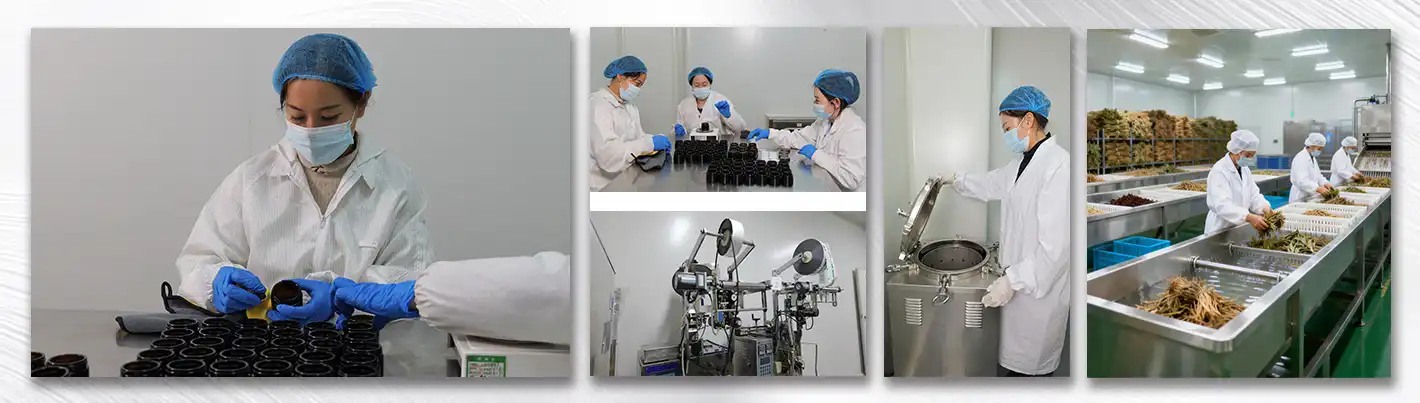
BioSpark (Xi'an) Biotechnology Co., Ltd. offers complete solutions for companies that want to work with a dependable organic hawthorn fruit powder supplier. As part of our vertically integrated quality control, we work with approved organic farms, use cutting-edge plant extraction technology, and have analytical testing labs make sure that every batch meets your exact needs. With ISO9001, GMP, FDA, Kosher, Halal, and EU Organic standards, your recipes have all the legal proof they need to be sold around the world.
Our manufacturing process is flexible enough to handle both small-batch tests and large-scale production runs. This is true whether you need standard 20% flavonoid material for cardiovascular supplements or custom concentrations for specific uses. The low minimum order quantity of 1 kg makes it easy to try out new products, and our inventory of over 1,000 tons guarantees a steady supply as your business grows.
Our OEM and ODM services go beyond just providing raw materials. They also include full product development, finished dosage form manufacturing, and branded packaging solutions. We protect your secret recipes with strict non-disclosure agreements. The technical support team helps with regulatory issues related to heart health claims, stability testing protocols, and meeting the needs of different markets in North America, Europe, and Asia.
Contact our procurement specialists today at leao@biosparkcn.com to discuss your requirements for organic hawthorn fruit powder. We offer free samples for checking formulation compatibility, full technical data sheets, and personalized quotes based on your number needs and shipping choices. Find out why some of the biggest names in cardiovascular supplements and functional drinks choose BioSpark as their preferred hawthorn fruit powder manufacturer.
References
1. Walker, A.F., Marakis, G., Morris, A.P., Robinson, P.A. (2002). Promising hypotensive effect of hawthorn extract: A randomized double-blind pilot study of mild essential hypertension. Phytotherapy Research, 16(1), 48-54.
2. Chang, Q., Zuo, Z., Harrison, F., Chow, M.S. (2002). Hawthorn standardized extract, phenolic compounds, flavonoids, and ligands: Pharmacological effects and clinical implications. Journal of Clinical Pharmacology, 42(6), 605-612.
3. Tassell, M.C., Kingston, R., Gilroy, D., Lehane, M., Furey, A. (2010). Hawthorn (Crataegus spp.) in the treatment of cardiovascular disease. Pharmacognosy Reviews, 4(7), 32-41.
4. European Medicines Agency Committee on Herbal Medicinal Products (2016). Assessment report on Crataegus spp., folium cum flore. EMA/HMPC/159075/2014.
5. Long, S.R., Carey, R.A., Crofoot, K.M., Proteau, P.J., Filtz, T.M. (2006). Effect of hawthorn (Crataegus oxycantha) crude extract and chromatographic fractions on multiple cardiovascular disease markers. Phytomedicine, 13(8), 539-547.
6. Pittler, M.H., Guo, R., Ernst, E. (2008). Hawthorn extract for treating chronic heart failure. Cochrane Database of Systematic Reviews, CD005312.

Send Inquiry
Related Industry Knowledge
- How to Import Longan powder from a Reliable China Factory?
- Maqui Berry Powder for Eye Health: Dry Eye & Retinal Protection
- Maqui Berry Powder for Eye Health: Dry Eye & Retinal Protection
- Maqui Berry Powder for Eye Health: Dry Eye & Retinal Protection
- Maqui Berry Powder for Eye Health: Dry Eye & Retinal Protection
- Maqui Berry Powder for Eye Health: Dry Eye & Retinal Protection
- Maqui Berry Powder for Eye Health: Dry Eye & Retinal Protection
- Maqui Berry Powder for Eye Health: Dry Eye & Retinal Protection
- Maqui Berry Powder for Eye Health: Dry Eye & Retinal Protection
- Maqui Berry Powder for Eye Health: Dry Eye & Retinal Protection
- Maqui Berry Powder for Eye Health: Dry Eye & Retinal Protection
- What Is the Shelf Life of Natural Blueberry Extract Powder Stored Cold?
- How to use white willow bark extract powder for the best results?
- What Are the Key Benefits of Spinach Juice Powder?
- Need Bulk Maqui Berry Powder with Fast Global Shipping?
- What are the top health benefits of loquat powder?
- Why Is Ginseng Plant Extract So Popular in Supplements?
- How to Use Red Bean Extract in Food and Cosmetics?
- How Does Baicalin Extract Support Immune Function?