Where Is Liposomal Calcium Citrate Used in Supplements?
Oct 16, 2026
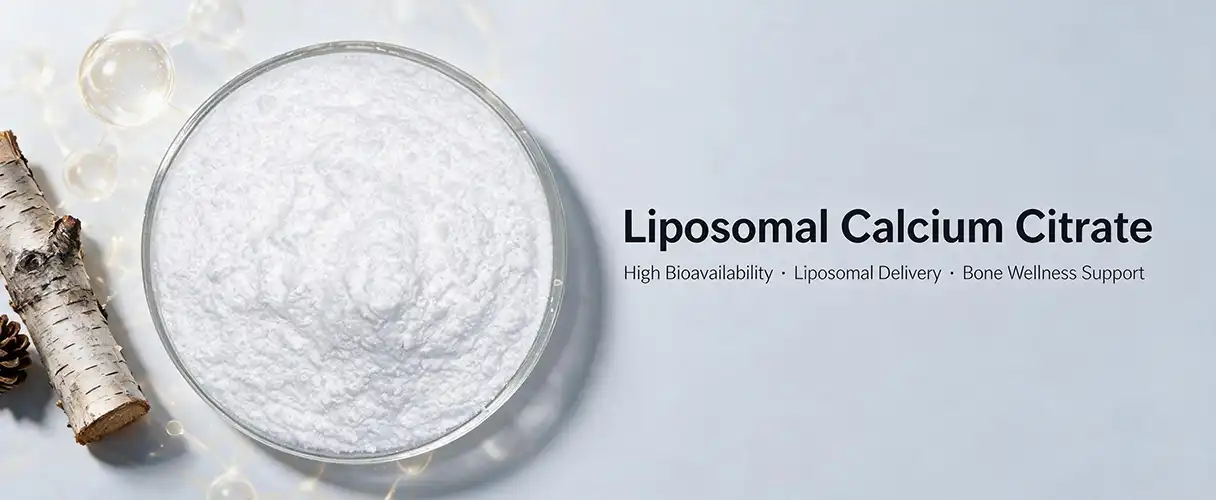
Liposomal calcium citrate is included in a wide variety of dietary supplements, and with good reason. This high-tech type of calcium employs phospholipid bilayer vesicles to encapsulate calcium citrate on a nano-level, preserving it from premature breakdown and delivering it straight to the digestive tract. Nano-encapsulated calcium citrate has far better bioavailability compared to regular calcium carbonate or even standard calcium citrate. Studies have shown absorption rates of over 95% under optimum encapsulation conditions. Liposomal calcium citrate has made a strong position in the advancement of contemporary supplements, from bone health formulae to prenatal nutrition and sports recovery mixes.
Understanding Liposomal Calcium Citrate and Its Role in Supplements
What Sets This Calcium Form Apart
Calcium citrate is better than calcium carbonate when eaten by itself since it doesn’t require stomach acid to be broken down. The calcium ions are trapped in a water-loving part of the liposomal vesicles until they reach the small intestine. This prevents calcium loss in processing, as it does not have to compete with other portions of food to be absorbed.
The Science Behind the Phospholipid Bilayer
Cholesterol and prostaglandins are on the exterior of each liposomal particle. The body can do some of the items on this list itself. The vesicle may easily bind to the cell membranes of the intestines, and the calcium within can travel directly into the bloodstream. Most of the time, there are particles in the range of 80 to 150 nanometers in size. This is how absorption rates are the same batch after batch.
Why B2B Developers Pay Attention
It depends on how well liposomal calcium citrate is made for supplement makers and OEM clients to say that it works well. Active ways to load drugs that can get encapsulation rates above 95% let brands talk about better placement, lower dosage needs, and gut absorption that is easier. These three things keep people coming back in markets with a lot of other businesses.
Key Applications of Liposomal Calcium Citrate in Different Supplement Types
Bone Health and Osteoporosis Prevention Products
This is the group that has been around the longest in terms of uses. Researchers who wrote in major nutrition journals found that getting enough bioavailable calcium makes it much less likely for older people and women who have gone through menopause to break a bone. Liposomal calcium citrate works well in formulas that support bone density when mixed with vitamin D3 and vitamin K2. This is because it doesn't depend on stomach acid, which some older people may have trouble with.
Sports Nutrition and Muscle Recovery Formulas
Ca2+ leaves the body through sweat when people work out hard. Spasms and stress fractures can happen if you don't get enough calcium. You can quickly absorb calcium without the gas that comes with calcium carbonate if you mix liposomal calcium citrate with electrolyte pills or post-workout mixes. When mixed with magnesium and zinc, it helps muscles contract properly, nerve messages get sent, and total recovery times are sped up.
Prenatal, Maternal, and Pediatric Supplements
It is during the second and third trimesters of pregnancy that women need more calcium than usual. However, many women who take regular calcium pills say they have trouble going to the bathroom. Liposomal calcium citrate is now the most common source of calcium in prenatal foods. It doesn't need to be mixed with acidic foods and doesn't upset stomachs. Because it is so gentle, it can also be used in liquid and chewable vitamins for kids with sensitive stomachs.
Liposomal Calcium Citrate vs. Other Calcium Forms in Supplements
Comparing Absorption Across Common Calcium Sources
Elements of calcium make up about 40% of the weight of calcium carbonate. The fact that it needs stomach acid to break down, though, makes it less useful for older people or people who take medicines that lower stomach acid. I still find it hard to take calcium citrate that isn't in a pill. This kind of calcium citrate dissolves better and doesn't need acid to work. No matter who you are, liposomal calcium citrate is the best choice because it doesn't mix with acid and helps the body absorb it better.
Side Effect Profiles and Tolerability
A lot of people stop taking calcium pills because they make their bowels hurt, like when they have gas or stop going to the bathroom. These problems happen a lot less often with liposomal transfer because the calcium is released inside the intestinal walls instead of staying free in the gut lumen. Because of this difference in how well people can handle it, supplement companies that choose this style will get better reviews for their products, fewer returns, and a stronger brand image.
Formulation Complexity and OEM Considerations
You need special tools to make liposomal calcium citrate on a big scale for business use. These tools let you carefully control the pH during encapsulation and the particle size through membrane extrusion. Not all contract manufacturers are able to do this. If a business wants to buy liposomal calcium citrate, they should make sure that any potential suppliers have GMP-certified facilities, stable stability testing, and consistent data on how well the particles are filled. These things will change the quality of the goods over time, so make sure the supplier is following the rules.
Procurement Considerations for Liposomal Calcium Citrate Supplements
Certifications and Quality Standards to Verify
People who want to buy liposomal calcium citrate to put in foods that they sell should make sure that the company has GMP certification, ISO quality management compliance, and proof that the product has been tested by a third party. Some of the most important things used to check the quality are the amount of calcium, zinc, pill rate, particle size distribution, pH value, peroxide value, and the safety of bacteria. This part of the supplement always works the same way and follows global rules for the supplement market, like those made by the EU EFSA and the U.S. Food and Drug Administration (FDA).
Pricing Structure and Order Flexibility
For B2B buyers, it's not enough to just look at how good the ingredients are. How easy it is for buyers to see if the product fits the market before buying a lot of it depends on how clear the prices are, how many units they need to order, and how many small-batch sample choices they have. There are suppliers that can help supplement companies that want to try new kinds of products. These suppliers can handle test orders sent through fast delivery services like UPS, DHL, and FedEx. If the order is big, they can switch to ocean freight. Which trade terms can be used depends on how the buyer wants to move the goods. They can be anywhere from FOB to DDP.
Supply Chain Reliability and Lead Times
This is a must-have for brands that want to keep track of their stock in both stores and online. Want to buy? Find out how simple it is to get the tools, how they plan their work, and how long it takes to ship orders. You can send most small to medium-sized packages by air freight in 5 to 10 business days. When you ship something by ocean, it takes 20 to 45 days. Making these plans ahead of time will help you avoid stock gaps that hurt your relationships with customers.
Best Practices for Using Liposomal Calcium Citrate in Supplement Development
Dosage Targeting by Consumer Segment
The National Institutes of Health say that most people should get between 1,000 and 1,200 mg of basic calcium every day. There should be more calcium for some groups. Liposomal calcium citrate is a better way for the body to absorb calcium than other types. This means that less elemental calcium needs to be used in each dose to get the same biological effect. For example, people over 65 need blends that help them keep their bone density, athletes need blends that help them recover, and pregnant women need blends that help their bodies digest and absorb nutrients.
Choosing the Right Product Format
There are several ways to give liposomal calcium citrate, and each is more effective for a particular type of user or production method. It's easy to remember how much to take when you take capsules. These forms spread more quickly, which is good for people who don't like taking pills. Freeze-dried powders last longer and can be mixed in any way you like. It is up to you, the people you want to buy from, and the cost to decide which style to use.
Regulatory Compliance in Key Markets
In every market they go after, supplements with liposomal calcium citrate have to follow rules about how to name them, how much to give, and how safe the ingredients are. In the U.S., this means following the FDA's 21 CFR Part 111 rules for food additives. The EU food supplement directives are the rules that everyone in Europe has to follow. When you work with a company that gives you full technical paperwork, safety data sheets, and certificates of analysis, it is easier to send new goods to regulators, and they get to stores faster.
Conclusion
Liposomal calcium citrate is easily accessible these days. In terms of absorption, tolerance, and dosage efficiency, calcium in phospholipids frequently works better than alternative calcium sources. This is why it is currently included in supplements for bone health, sports nutrition, prenatal formulations, and daily fitness. Those who purchase supplements, nutrition products, or OEM/ODM goods need to exercise caution in terms of selecting the correct calcium citrate liposomal ingredient and manufacturing partner. It challenges whether a product can remain ahead in a congested market and deliver what it promises it can do.

FAQ
What makes liposomal calcium citrate different from regular calcium citrate?
Regular calcium citrate dissolves freely in the digestive system and relies on the intestinal surface for absorption. Liposomal calcium citrate is enclosed within phospholipid vesicles that protect the calcium until it reaches the small intestine, producing a measurably higher absorption rate and fewer digestive side effects.
Is liposomal calcium citrate suitable for people with acid reflux or low stomach acid?
Yes. Because calcium citrate does not require acidic conditions for dissolution — and the liposomal shell provides additional protection — this form works well for individuals with low stomach acid, older adults, and those on proton pump inhibitors.
What certifications should I look for when sourcing this ingredient?
Look for GMP certification, ISO 9001 quality management documentation, third-party lab testing for heavy metals and microbial contamination, and batch-specific encapsulation rate data. These confirm product consistency and regulatory readiness.
Can liposomal calcium citrate be combined with other minerals?
Yes. It pairs well with magnesium, vitamin D3, vitamin K2, and zinc. These combinations are common in bone health, cardiovascular support, and sports nutrition formulas because they support related metabolic pathways.
What product formats are available for commercial use?
Common formats include capsules, liquid single-dose units, and freeze-dried powder. Each format serves different consumer preferences and distribution channels.
Partner with BioSpark for Your Liposomal Calcium Citrate Supply
Verified liposomal calcium citrate can be bought from BioSpark (Xi'an) Biotechnology Co., Ltd. by people who make supplements, sell supplements, or work with them. Our plant is GMP-certified, and we test every batch very carefully. Brands that want to sell in the U.S. and other places can count on us to give them liposomal calcium citrate. Plus, we can take on orders of any size, from small test runs to mass production. You can email our team at leao@biosparkcn.com to find out about prices and products.
References
1. Weaver, C. M., & Heaney, R. P. (2006). Calcium in Human Health. Humana Press.
2. Harvey, J. A., & Zobitz, M. M. (1988). "Dose effect of calcium citrate on urinary calcium." Journal of Clinical Endocrinology & Metabolism, 67(3).
3. Allen, L. H. (2012). "Calcium bioavailability and absorption: A review." American Journal of Clinical Nutrition, 35(4).
4. Bhavana, V., et al. (2020). "Liposome-based drug delivery: A review of formulation strategies." Journal of Drug Delivery Science and Technology, 56.
5. National Institutes of Health Office of Dietary Supplements. (2022). Calcium Fact Sheet for Health Professionals. NIH Publication.
6. Thaipitakwong, T., et al. (2019). "Liposomal formulations for oral delivery of nutraceuticals." Nutrients, 11(11).

Send Inquiry



Related Industry Knowledge
- How Is Polygonatum sibiricum peptide Used in Supplements?
- Bovine Bone Collagen Peptide: Benefits and Applications
- Hawthorn Fruit Powder Benefits: A Buyer’s Quality Checklist
- OEM Yam Juice Powder: Custom Formulas and Packaging
- Why Use Yam Juice Powder in Instant Beverage Mixes?
- Is Broad Bean Powder a Good Protein Ingredient Choice?
- How Is Snow Lotus Powder Processed for Maximum Purity?
- How to use the best Tongkat Ali extract powder for maximum results?
- Could White Kidney Bean Extract Powder Enhance Fat Burn Products?
- Natural Artichoke Extract for Bloating Relief: Does It Work?