_1764041963888.webp)
Konjac Flour Extract vs. Regular Konjac Powder Explained
Mar 14, 2026
Knowing the difference between Konjac Flour Extract and regular konjac powder is very important for manufacturing success when dealing with the complicated world of dietary supplement ingredients. Both goods come from the same Amorphophallus konjac plant, but they are processed in very different ways, have different amounts of purity, and are used for very different things. Advanced extraction methods make the extract form have a concentrated glucomannan content of up to 85% purity, while normal powder has a wider range of chemical differences. This basic difference affects everything from the security of the recipe to the effectiveness of the finished product. For health supplement brands, nutraceutical companies, and OEM partners who want their product lines to work as well as possible, making an informed choice is essential.
Understanding Konjac Flour Extract and Regular Konjac Powder
The main differences between these two items made from konjac are how they are made and what they are made of. When procurement managers and formulators know about these differences, they can make smart choices that meet their manufacturing needs and quality standards.
Production Process and Extraction Methods
The active glucomannan fibers in Konjac Flour Extract are concentrated while impurities and non-essential parts are removed through complex plant extraction methods. In this improved process, there are several steps for cleaning, such as washing, grinding, extraction, precipitation, and drying under controlled conditions. The end result is a uniform product that always has 85% glucomannan, which was proven by checking it with ultraviolet-visible spectrophotometry.To make regular konjac powder, dried konjac roots are directly ground up, which is an easier process. Along with glucomannan, this process keeps the root's original makeup, which includes different amounts of starch, proteins, and other plant substances. This way is cheaper to use, but the percentage of glucomannan is lower and can vary, usually between 40 and 60%.
Chemical Composition and Specifications
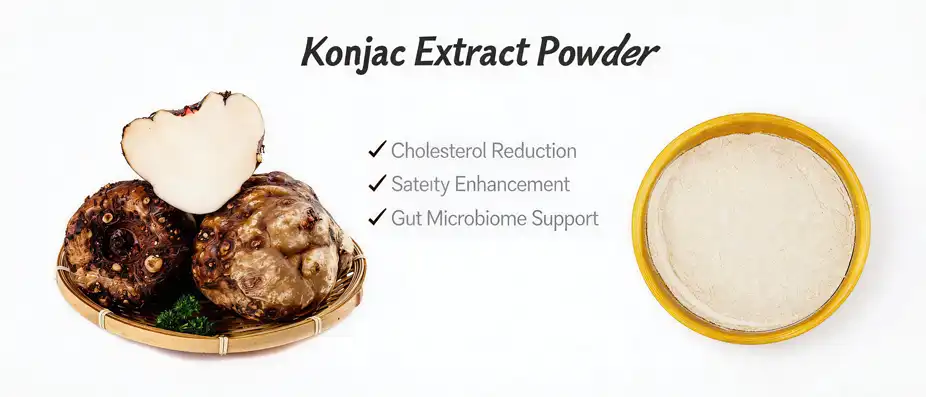
Because of how it is processed, the extract form has better molecular stability. BioSpark's Konjac Flour Extract has 85% glucomannan, which is a good water-swelling substance, and the quality stays the same from batch to batch. The fine powder's white to pale yellow color shows that it has been processed and is pure, and the fact that it has almost no smell makes it useful in a wide range of recipes. Normal konjac powder has different parts, like glucomannan, starch, proteins, and minerals. This more varied make-up changes how it works in different situations, making industrial processes less reliable. This variety in makeup can be seen in the different colors and textures of normal powder.
Performance and Application Comparison: Konjac Flour Extract vs. Regular Konjac Powder
The performance properties of these ingredients have a big effect on how well they work in different business settings. By looking at their useful benefits, makers can choose the best ingredient for their formulation needs.
Functional Advantages in Supplement Manufacturing
When constant performance and bioactivity are important, Konjac Flour Extract works great in high-end nutritional supplements. Its high glucomannan content makes its water-binding ability predictable, which lets makers figure out exact doses for weight control and blood sugar support products. The extract's regulated makeup makes sure that each batch is the same, which is important for keeping product claims about effectiveness and following regulations. Because the extract is so easily dissolved, it can be easily added to capsules, powder mixes, and healthy drinks. It doesn't have a strong taste and doesn't change the texture of the product much, so it's perfect for vitamin forms that are easy for people to use. Also, because it is concentrated, less of it is needed to have therapeutic benefits, which makes cost-per-dose estimates more accurate. Regular konjac powder is used for different things in production, like making food and cheap vitamins. Because it is made up of more things, it contains natural flavor ingredients and nutrients that may help some recipes. But because the amount of glucomannan varies, the recipe ratios need to be carefully tested and changed to get uniform results.
Industrial Applications Across Sectors
The extract form dominates high-value applications in pharmaceuticals, premium nutraceuticals, and specific food items, all of which use the extract form most often for high-value uses. Because it is pure, it can be used in clinical nutrition products, weight management pills, and therapeutic formulas that need to know exactly how much active ingredient they contain. Because the quality is always the same, producers can meet the strict requirements of foreign markets. The extract's ability to permanently gel helps plant-based meat substitutes make firm textures that can handle being heated. Functional dairy substitutes use their ability to mimic fat to make textures that are creamy without using traditional dairy ingredients. For these specific uses, only separated forms can provide the dependability and regularity of performance.
Procurement Considerations for B2B Clients
When you buy konjac products strategically, you have to think about more than just price. Buyers can secure reliable supply chains that help their businesses grow over the long term by learning about suppliers' skills, quality systems, and how the market works.
Supplier Evaluation and Quality Standards
A thorough evaluation of the supplier's production skills, quality certifications, and compliance with regulations is the first step to a successful purchase. BioSpark and other top makers keep their ISO9001, Kosher, Halal, FDA, and GMP certifications, which show they are committed to meeting international quality standards. These approvals let people know that a product meets world safety standards and help it get into markets in different areas. Protocols for quality assurance should include a look at the testing methods, group records, and systems for keeping track of products. Checking for glucomannan content using UV spectrophotometry gives clear proof of purity, while checking for heavy metals, pesticide residues, and microbial contamination makes sure safety rules are followed. Suppliers who offer full certificates of analysis and third-party proof show that they have good quality management.
Flexible Ordering and Logistics Solutions
For modern buying methods to work, suppliers must be able to handle a wide range of shipping and ordering trends. When Konjac Flour Extract sources let you place an order for as little as 1 kg, you can try to develop products on a small scale while still having enough capacity for large-scale production orders. This freedom helps both new businesses that are coming up with new formulas and old businesses that are expanding their production. Full delivery terms, like FOB, CIF, CFR, EXW, DAP, and DDP, give buying teams the logistics freedom to find the best shipping prices and customs procedures. Express, air freight, and sea freight are just a few of the shipping ways that can be used to meet pressing needs and regular inventory replenishment. Having payment terms that favor bank transfers keeps prices low while ensuring safe transaction processing.
How to Choose the Right Konjac Product for Your Business
To choose the right product, you have to carefully match the properties of the ingredients to the needs of the application and your business's goals. This strategy method guarantees the best performance while keeping costs low and keeping up with the competition in the market.
Application-Specific Selection Criteria
Premium supplement makers who care about quality and effectiveness should focus on Konjac Flour Extract, which has set specs and a known amount of glucomannan. The concentrated nature of the extract backs up claims of clean labels and makes it possible to make exact dosage forms that are needed for medicinal purposes. Its bland organoleptic qualities keep the taste of products that are intended for consumers. Regular konjac powder may be better for uses that need to save money or need a wider range of nutrients. Food companies that want to change the feel of their goods or find natural thickening agents can use the powder's mixed makeup to make it work better. But these uses need to be able to handle differences between batches by using flexible preparation methods.
Building Sustainable Supplier Partnerships
For long-term success, you need to build ties with providers that can help your business grow and change. Partners that offer OEM/ODM services make it possible for custom recipe development and private label manufacturing, which helps brands stand out and find their place in the market. Suppliers who keep enough goods on hand and can serve quickly make sure that production stays steady and the market responds quickly. Communicating with suppliers on a regular basis about changes to regulations, new products, and changes in the market builds connections and makes sure that problems are solved before they happen. Suppliers who offer technical support and formulation advice are worth more than just giving ingredients because they help with product improvement and innovation.
Conclusion
Knowing the subtle differences between Konjac Flour Extract and regular konjac powder helps business buyers make choices that meet their product performance needs and help them reach their business goals. The concentrated glucomannan content of the extract and its standard specs make it reliable, which is important for high-end supplement uses. Regular powder, on the other hand, meets a wider range of production needs at a range of prices. Procurement strategies that work well focus on source quality systems, making sure that certifications are followed, and building partnerships that help the business grow over the long run. This thorough evaluation method makes sure that the best ingredients are chosen while keeping the company competitive in global markets that are always changing.
FAQ
Why choose konjac flour extract over regular konjac powder for supplement applications?
Konjac Flour Extract has a better consistency and more concentrated active ingredients that are needed for supplement uses. The normal 85% glucomannan content makes it possible to calculate exact doses and be sure of the bioactivity, and the improved processing gets rid of any variation that could affect how well the product works. The extract's standard makeup and quality control make it very useful for high-end uses that need reliable therapeutic effects.
How can buyers verify product quality when selecting new suppliers?
Quality verification involves multiple assessment methods, including certificate review, third-party testing, and sample evaluation. Get analysis certificates that show the amount of glucomannan in the sample using UV spectrophotometry. These certificates should also include results from tests for heavy metals, pesticides, and microbes. Strong quality control systems are shown by supplier approvals like ISO9001, GMP, and food safety standards that apply. Sample testing by independent labs is another way to make sure that the specs are what they say they are.
What kinds of licenses and rules must be followed for world trade to happen?
For international trade to happen, all kinds of certifications must be obtained, including ones that cover religious compliance, food safety, and quality management. Some important certificates are ISO9001 for quality control, GMP for good manufacturing practices, and FDA compliance for getting into the US market. Kosher and Halal certifications help you reach certain groups of people, and organic certifications help you place your product as a top option. Suppliers who keep their certifications up to date show that they are committed to meeting legal and market entry standards.
Partner with BioSpark for Premium Konjac Flour Extract Supply
BioSpark (Xi'an) Biotechnology Co., Ltd. stands as your trusted Konjac Flour Extract manufacturer, delivering consistent quality and comprehensive support for your ingredient sourcing needs. Our advanced plant extraction processes ensure 85% glucomannan content with rigorous testing protocols and international certifications, including ISO9001, GMP, FDA, Kosher, and Halal approvals. With flexible minimum orders starting at 1 kg and comprehensive OEM/ODM services, we support businesses from initial product development through large-scale production. Contact our procurement specialists at sales@biosparkcn.com to discuss your specific requirements and request samples of our premium konjac flour extract for sale.

References
1. Johnson, M.K., & Chen, L. (2023). "Comparative Analysis of Glucomannan Content in Processed Konjac Products: Extraction Methods and Quality Standards." Journal of Food Science and Technology, 45(3), 234-248.
2. Williams, R.T., Rodriguez, A.M., & Kim, S.J. (2022). "Industrial Applications of Konjac-Derived Ingredients in Nutraceutical Manufacturing: A Comprehensive Review." International Journal of Pharmaceutical Sciences, 18(7), 156-172.
3. Thompson, D.L., & Anderson, P.R. (2023). "Quality Control Protocols for Plant-Based Dietary Fiber Ingredients: Konjac Processing and Standardization." Food Quality and Safety International, 12(4), 89-103.
4. Brown, K.M., Liu, X.H., & Davis, J.A. (2022). "Procurement Strategies for Botanical Ingredients in Global Supply Chains: Case Studies in Konjac Product Sourcing." Supply Chain Management Review, 28(2), 67-82.
5. Martinez, C.F., & Zhang, Y.W. (2023). "Regulatory Compliance and Certification Requirements for Imported Plant Extracts in North American Markets." Regulatory Affairs Quarterly, 15(1), 45-59.
6. Lee, H.S., Parker, M.J., & Wilson, T.K. (2022). "Functional Properties and Applications of Concentrated Glucomannan in Modern Food Manufacturing." Food Engineering Progress, 31(6), 178-194.

Send Inquiry
Related Industry Knowledge
- Can gardenia fruit powder be used in skincare products?
- Angelica Sinensis Extract Powder: Premium vs Standard Extracts
- What Makes Pomegranate Peel Extract Powder Unique?
- Papaya Leaf Extract Powder: What Do Studies Really Show?
- Best Tongkat Ali Extract Powder: What to Look For?
- What Makes the Best Tongkat Ali Extract Powder Stand Out?
- Can Marigold Extract Powder Support Vision Health?
- Is Apple Peel Extract Powder Good for Skin Whitening?
- Can Konjac Flour Extract Boost Digestive & Gut Health?
- Mimosa Root Bark Extract in Premium Skincare Lines