_1764041963888.webp)
Loquat Powder Quality Standards Every B2B Buyer Should Know
Jul 31, 2026
When sourcing botanical ingredients for health supplements or nutraceutical formulations, understanding quality benchmarks becomes essential for product success and regulatory compliance. Loquat powder, extracted from the Eriobotrya japonica plant, has gained significant traction among B2B buyers seeking natural respiratory support ingredients. Quality loquat powder specifications typically include verified active ingredient concentrations—such as triterpenic acids at 20% measured via HPLC—alongside comprehensive certifications including ISO9001, GMP, Kosher, and Halal. Buyers should prioritize suppliers offering transparent testing documentation, controlled extraction processes, and batch-to-batch consistency to ensure their finished products meet both market expectations and international safety standards.
Understanding Loquat Powder: Composition and Quality Basics
The global health market keeps accepting plant products that have been shown to have bioactive profiles. Using advanced plant extraction technology on carefully chosen loquat fruits and leaves, this ingredient delivers concentrated nutritional compounds that health-conscious consumers are looking for more and more in their daily supplements.
Key Bioactive Compounds in High-Quality Products
Premium plant powders have special active ingredients that make them work. Specifically, ursolic and oleanolic acids are the main beneficial compounds that are responsible for the health benefits for the lungs. These substances are usually standardised at a 20% concentration, which can be checked using High-Performance Liquid Chromatography (HPLC). This makes sure that all production runs have the same amount of potency. This standardisation directly addresses the important B2B pain point of variable ingredients that can hurt the performance of the end product.
In addition to triterpenic acids, quality profiles include antioxidants like carotenoids and polyphenols, as well as polysaccharides that help control the immune system. When making food supplements for lung health, immune support, or antioxidant defence, the nutrients they contain are very important. Buyers who are making product lines should ask for specific Certificates of Analysis (COA) for each batch they receive that list these chemicals.
Physical Characteristics That Signal Quality
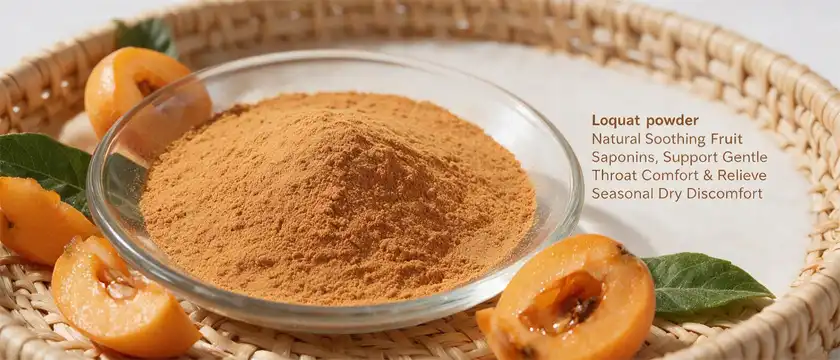
Visual evaluation gives you instant information about quality. Premium Loquat powder looks like a fine, light yellowish-brown to brownish-tan powder and smells like a mix of fruit and herbs. This profile shows that the processing was done correctly, keeping the natural chemicals without breaking them down at high temperatures. If the product doesn't look like it should, like if it's dark brown or smells burnt, it was likely exposed to too much heat during the extraction or drying process, which could damage its biological structure.
Another important physical parameter is solubility. Formulations that dissolve easily in water can be used in functional drinks, quick drinks, and herbal teas. Formulations that dissolve slightly in ethanol can be used in a variety of ways in pills, tablets, and liquid supplements. Before placing big orders, procurement managers can better match the properties of raw materials to the forms they will be used in by understanding these solubility characteristics.
Raw Material Purity and Source Origin Verification
Traceability from growing to handling sets the standard for quality assurance. China is still the main place where commercial loquats are grown, with well-established farming areas that provide controlled growing conditions. Buyers should check to see if the raw materials come from standard or organic farming, as the difference affects the levels of pesticides present and how the final goods are positioned in the market.
Measures to stop contamination protect the quality of products all along the supply chain. Heavy metals (such as lead, cadmium, arsenic, and mercury) and chemical residues are the main safety issues that need to be thoroughly tested. Maximum levels are set by international standards. For example, lead levels should be below 3.0 ppm, total heavy metal levels should be below 20 ppm, and pesticide residues should be in line with FDA and EU rules. Asking for proof of testing from a third party for each batch greatly lowers the chances of later compliance issues.
Essential Quality Standards and Certifications for B2B Buyers
To find your way around the complicated world of botanical ingredient certifications, you need to know which credentials really prove high-quality manufacturing and which ones just back up marketing claims. Quality management systems that have been around for a while will protect your brand's reputation and make sure that you follow the rules in all international markets.
Core Certifications That Validate Manufacturing Excellence
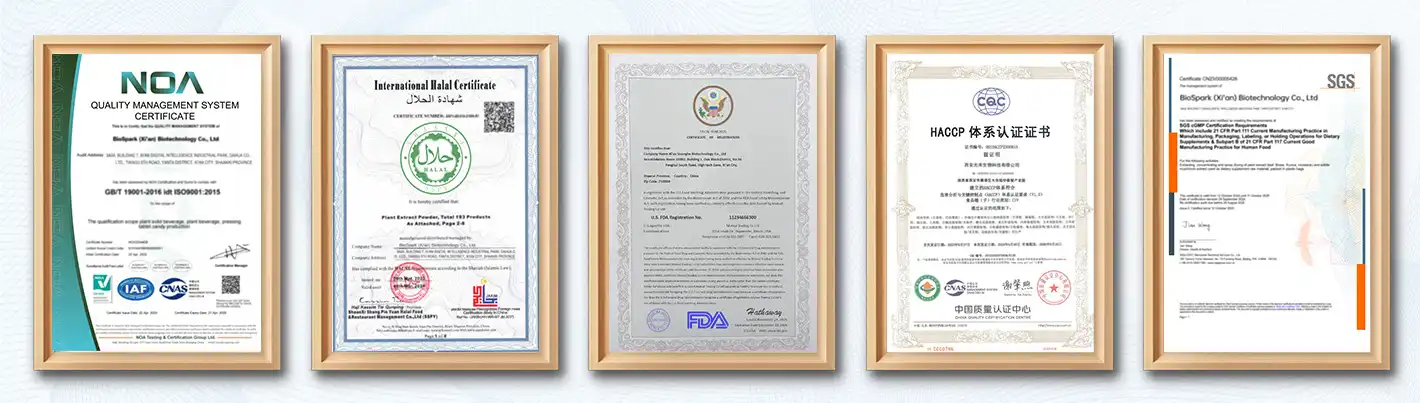
Getting ISO9001 certification shows that you are committed to managing quality in a systematic way across all of your production processes. This standard is known all over the world and makes sure that providers follow written steps for process control, corrective actions, and ongoing growth. When looking at possible partners, it's better to check their current certification status with independent registrars than to just believe what the seller says.
Good Manufacturing Practices (GMP) compliance is a requirement that sellers of nutrition ingredients must meet without fail. GMP standards control how buildings are built, how equipment is maintained, how employees are trained, how to keep things clean, and how quality control tests are done. Suppliers who keep their GMP certification are regularly checked to make sure they are following these strict rules. This certification is especially important when making goods for markets controlled by the FDA or for distribution routes in Europe.
Religious and dietary certifications make the market bigger. Kosher and Halal certifications help companies market their products to specific groups of people while also showing that they follow strict rules for checking ingredients and separating production areas. These certifications need to be overseen on a regular basis by qualified faith leaders. This adds another level of independent verification to seller quality claims.
Laboratory Testing Protocols and Quality Seals
Third-party testing is an unbiased way to make sure that a product meets its safety and performance standards. Reliable labs use tested analytical methods like HPLC to measure the amount of active ingredient, ICP-MS to look for heavy metals, and GC-MS to check for pesticide residue. When starting a new supplier relationship or making sure that a new batch is safe, buyers should work with approved labs that are ISO/IEC 17025 certified to check the quality of new batches.
Quality assurance methods include more than just testing the finished product. Comprehensive programs include checking the identity of the raw materials using microscopic analysis or DNA barcoding, keeping an eye on the process while they are being extracted and dried, and testing their stability under fast conditions to set guidelines for their shelf life. When suppliers offer full paperwork for these quality touchpoints, it shows that their operations are mature, which lowers the risks of buying.
Evaluating Supplier Quality Management Systems
Strong quality systems start with being able to track raw materials back to specific growing areas, harvest dates, and processing runs for each batch of Loquat powder. This fine-grained tracking makes it easy to find and separate quality problems, which keeps your production plans safe from contamination events further down the line. During the supplier qualification process, make sure you get detailed traceability documentation, such as sample batch records that show this is possible.
Controlled methods of extraction and drying keep bioactive substances safe and get rid of bacterial contamination. Advanced processing methods include vacuum drying systems that keep heat exposure to a minimum and supercritical fluid extraction, which doesn't use harsh chemical solvents. Knowing how the seller processes orders helps you guess how consistent the product will be and how well its quality will hold up during storage. When compared to older methods, suppliers who use modern extraction technologies usually get higher yields of active ingredients with lower impurity profiles.
Comparing Loquat Powder Products: What Differentiates Quality?
There are different levels of quality in the plant products market, which is due to different farming methods, processing technologies, and investments in quality control. To do successful procurement, you need to be able to tell the difference between standard materials and premium specifications that are in line with how you want to market your product and meet regulatory needs.
Organic Versus Conventional Quality Profiles
Organic approval means that farming methods that don't use synthetic fertilisers, herbicides, or pesticides are recorded. This difference is very important for brands that want to attract health-conscious customers who value products with clean labels. Organic plant powders usually cost more than regular ones—often 30 to 50 percent more—but they leave behind fewer chemicals and are better at standing out in the market.
The nutritional value of organic and non-organic products may be different. According to research, organic farming can sometimes produce higher levels of polyphenols because plants' natural reactions to stress cause them to make more secondary metabolites. However, these differences in finished ingredient specifications are usually balanced out by standardising the active ingredient through extraction and mixing. Based on the company's positioning and the tastes of the buyers' target market, buyers should decide if the extra cost of organic certification is worth it.
Product Format Considerations Beyond Standard Powder
For some uses, different types of delivery systems, like tea cuts, concentrated syrups, and encapsulated pills, are better than others. Powder forms offer the most formulation freedom, letting you precisely control dosing and working with a wide range of supplement types, such as pills, tablets, gummies, and drinks. Tea cuts are popular in traditional medicine and health drinks, but they are harder to standardise, which makes quality control harder than with removed powders.
The active ingredient mass and manufacturing behaviour of concentrated extracts and spray-dried powders are very different. For accurate doses, standard extracts with 20% triterpenic acids need to be carefully calculated. Higher concentration versions (50–80%) allow smaller serving sizes but may have problems dissolving. Knowing these technical differences helps buying teams choose the right specs that meet the needs of the formulation and the production capabilities.
Supplier Transparency and Reliability Indicators
Full technical documentation is the first step toward making a product clear. Suppliers of good quality don't hold back when it comes to giving full product specs, analytical methods, stability data, and legal status paperwork. There are big worries about quality, stability, and following the rules when there isn't enough information available, or people don't want to share testing data. Before committing to trial orders, ask for full technical data packages from suppliers while you are evaluating them.
How long-lasting relationships are depends on how reliable the supply line is. Check with current customers to get information about the supplier's ability to produce, how they handle inventory, and how well they've delivered in the past. Suppliers who keep enough stock on hand—for example, Loquat powder quantities of 25 kg that are always on hand—and offer flexible delivery terms (FOB, CIF, CFR, EXW, DAP, DDP) show operational maturity, which lowers the risk of supply disruption. Minimum order numbers (MOQs) also show how a company positions itself in the market. Lower MOQs, like 1 kg, are good for startups and the creation stages of new products, while bulk-focused providers may demand higher volume levels.
Procurement Guidelines for Loquat Powder: Ensuring Quality and Value
Strategic buying is more than just setting quality standards; it also includes thinking about the total cost of ownership, transportation, and managing relationships with suppliers. Creating structured procurement frameworks makes decisions more consistent and increases the value delivered across all ingredient portfolios.
Aligning Quality Standards With Application Requirements
The context of product creation decides the right quality standards. For respiratory health supplements to be clinically effective, they need to have standardised active ingredient amounts and studies to back them up. In functional beverage uses, bioactive material is less important than solubility and flavour traits. Cosmetic formulas stress antioxidant levels and information about how well they work with skin. By making it clear what the applications are before engaging a supplier, you can be sure that the discussions about specifications will focus on relevant quality parameters instead of general industry standards.
Volume needs affect which suppliers are chosen and how prices are set. OEM and ODM partnerships usually involve long-term production relationships with steady commitments. This lets prices be discussed based on yearly forecasts instead of purchases made on the spot. On the other hand, importers and wholesalers who handle a wide range of products may value suppliers who are flexible enough to handle different order amounts for a number of botanical ingredients. Figuring out your volume profile helps you find sources whose business models fit with how you run your business.
Cost-Effectiveness Metrics Beyond Price Per Kilogram
A full cost analysis looks at all the landed costs, which include freight, customs duties, quality inspection fees, and the cost of keeping inventory on hand. Delivery terms have a big effect on total cost structures. For example, FOB pricing puts the cost and risk of shipping on the buyer, while DDP (Delivered Duty Paid) makes logistics easier because the supplier handles import clearance. To accurately compare suppliers, prices must be adjusted so that they are all based on the same shipping terms and end destination points.
Quality approval status explains higher prices by lowering the risk of not following the rules and giving you better access to markets. Materials with multiple certificates, such as ISO9001, GMP, Kosher, Halal, and FDA registration, cost more, but they avoid expensive quality problems, regulatory violations, and damage to the brand's image. When you look at the possible costs of poor quality, like product recalls, fines from the government, and paying customers, you can see that premium-certified foods are a better deal when you take into account the risk.
Logistics and Storage Considerations for Quality Preservation
Specifications for packaging protect the quality of ingredients while they are being shipped and stored. Standard 25 kg fibre drums with polyethylene bottoms keep out wetness and damage, and they're good for most transport situations. Botanical powders that are sensitive to humidity do better in vacuum-sealed inner packaging. If they are going to be stored for a long time, nitrogen flushing may be needed to stop oxidative degradation. Before you place your order for Loquat powder, make sure that the packaging requirements match your storage space and the rate at which you plan to sell your goods.
The way something is stored has a direct effect on its shelf life and biological stability. The best way to store things is to keep them cool (below 25°C), dry (below 60% RH), and out of direct sunlight. Suppliers should provide stable data that shows how well the quality stays the same under different storage conditions. This will help with figuring out the true shelf life and planning how to handle inventory. By understanding these parameters, you can keep the quality of your warehouses from dropping, which could affect how well your finished products work.
Customs and import regulations vary significantly across jurisdictions. Botanical ingredients that come into the United States are regulated by the FDA, which can require advance notice and even detention for testing. European markets have new rules about food and maximum waste limits that need a lot of paperwork. Working with providers who have experience in the markets you want to reach and can provide full regulatory paperwork and customs support speeds up the import process and cuts down on clearance delays that could throw off production plans.
Best Practices for Quality Control and Long-Term Supplier Partnerships
For ingredient quality to last, there needs to be a system for checking quality and relationships with suppliers that are based on openness and constant improvement. Using structured quality management methods keeps your operations safe from problems in the supply chain and leads to continuous performance improvement.
Implementing Rigorous Incoming Quality Inspection Protocols
A representative sample method makes sure that inspection results are a true reflection of all shipments. Statistical sampling plans, like ANSI/ASQ Z1.4, figure out the right sample size by looking at the number of items in a lot and the quality standards that can be accepted. Random sampling from different containers during shipping stops the acceptance of mixed lots where quality changes from unit to unit. By writing down the sampling methods, receiving activities, and communications with suppliers will be consistent.
Laboratory testing scope should match risk profiles and regulatory requirements. Core tests include checking the product's identity using HPLC fingerprinting, measuring the amount of active ingredient using approved methods, checking for heavy metals, analysing pesticide residues, and microbiologically checking for yeast/mold, pathogens, and total plate count. Setting clear acceptance criteria for each factor, which should be written down in supplier deals, provides concrete pass/fail criteria that get rid of subjective quality choices.
Documentation procedures turn testing data into quality information that can be used. Before a material is sent to production, it should go through a Certificate of Analysis review to make sure that the testing scope, methods, and results analysis are correct. Trend analysis across multiple batches finds drift patterns that point to process changes or differences in raw materials that need to be looked into by the supplier. Keeping detailed records of quality helps with legal compliance and builds historical databases that help with choices about where to get materials in the future.
Establishing Rejection Criteria and Corrective Action Processes
Clear rejection limits keep materials that aren't up to par from getting into production. In specifications for Loquat powder, there should be clear upper and lower limits for important factors like active ingredients, heavy metals, and bacterial standards. There should also be acceptable ranges for minor factors like moisture content, particle size, and colour. Making clear pass/fail choices based on set criteria cuts down on disagreements and speeds up the resolution of quality problems.
Instead of focusing on symptoms, corrective action protocols get to the root causes. For processes to work, providers must look into quality problems, figure out what caused them, take steps to fix them, and then test again to make sure they worked. Buyers should set response times and escalation procedures to make sure problems are solved quickly and with as little impact on the business as possible. Writing down what was done to fix problems creates institutional knowledge that stops problems from happening again and shows that the quality management system works well during customer surveys.
Building Collaborative Supplier Relationships
Verification of credentials builds the basis of a relationship. Facility audits (virtual or on-site), certification verification through issuing bodies, reference checks with current customers, and an assessment of the company's financial stability are all part of thorough due diligence. This upfront investment finds partners who are qualified and weeds out sellers who don't have the right skills or a commitment to quality excellence.
Clear communication keeps everyone on the same page and builds trust. Talking about production plans, changes in where to get raw materials, new rules, and market trends on a regular basis helps solve problems before they affect operations. Sharing accurate data and performance measures makes people responsible and shows that you want to build partnerships instead of business relationships.
Excellence is driven by continuous improvement through regular audits and group feedback. Every year, evaluations of suppliers' quality performance, shipping dependability, timeliness, and ability to innovate help find partners who are doing a great job and deserve more business, while also pointing out areas where they can grow. Getting suppliers involved in talks about new products and projects to improve formulations improves relationships beyond just buying and selling goods. This can give you a competitive edge by giving you special abilities or priority when supplies are low.
Conclusion
To buy Loquat powder, you have to find a balance between quality control, following the rules, keeping costs low, and managing the relationships with suppliers. To be successful, you need to know about technical requirements like standardising active ingredients, setting up strict quality control procedures, and choosing partners whose skills and values match your business goals. Throughout this talk, frameworks have been used to show organised ways to buy Loquat powder that reduce risks and increase value. Setting thorough quality standards from the beginning of the supplier evaluation process to the ongoing management of the partnership protects the reputation of your brand and makes sure that the finished products meet customer expectations. When you invest in properly qualifying suppliers, lab testing equipment, and working together with them, you get consistent ingredient quality, regulatory compliance, and a stable supply chain that helps your business grow over time.
FAQ
1. What respiratory health benefits does loquat powder provide?
Botanical studies show that triterpenic acids, especially ursolic acid, which is highly concentrated in quality products, help the lungs stay healthy by reducing mucus. These chemicals help keep mucus at a healthy consistency and make breathing easier. Carotenoids and polyphenols are examples of antioxidants that help protect cells from oxidative stress in the environment. Nutraceutical products are usually made to help with seasonal breathing, throat comfort, and the health of the respiratory system as a whole, rather than treating specific illnesses.
2. How can buyers be sure that a seller is real and trustworthy?
Instead of depending only on documentation given by the supplier, the first step in verifying credentials is to check the validity of the certification directly with the organisations that issue them. To find out about the current status and audit histories, contact certification bodies. Ask for current results from third-party labs that are accredited and show full testing, such as confirming the identity, measuring the amount of active ingredient, and checking for contamination. Checking references with current customers can give you operational information about how reliable your delivery is, how quickly you respond to communications, and how consistent your quality is. Facility checks, whether they are done virtually or in person, show how well the quality management system is being used and how much output can be produced.
3. Are there safety concerns with large-scale usage in commercial products?
Botanical ingredients that are allowed for use in food supplements are safe when taken in the amounts that are advised. Safety limits are set by regulatory systems like FDA dietary ingredient warnings and the European plant advice documents. Based on toxicological data and experience of traditional use, suppliers should give advice on the highest amount that should be taken each day. Developers of finished goods must make sure that recipes stay within these safety limits while also doing the right quality control and stability testing. When thinking about safety, you should also think about allergen status, possible drug combinations, and special steps for certain groups of people that should be made clear on the product label for Loquat powder.
Partner With BioSpark for Premium Loquat Powder Supply
Getting botanical ingredient sources you can trust will decide whether your product launches work or fail due to problems with quality and supply. BioSpark (Xi'an) Biotechnology Co., Ltd. is a company that specialises in providing pharmaceutical-grade Loquat powder. It has many approvals, such as ISO9001, GMP, Kosher, Halal, and FDA registration. Our standard 20% triterpenic acids specification, which has been checked by HPLC testing, makes sure that the consistency from batch to batch that your formulations need.
As an experienced producer of Loquat powder, we keep enough in stock to offer fast delivery through a variety of shipping methods, including express, air freight, or sea freight. We also offer flexible terms, ranging from FOB to DDP, to accommodate your preferred operations. Our OEM and ODM services help with product development from the idea stage to commercial production. With minimum order quantities as low as 1 kg, we can work with both new businesses and large companies that need large amounts.
Email our technical team at leao@biosparkcn.com to talk about your specific needs, ask for samples of our products along with full analytical documentation, or look into the possibility of a custom formulation.
References
1. Chen, J., Li, W.L., Wu, J.L., Ren, B.R., & Zhang, H.Q. (2008). Hypoglycemic effects of a sesquiterpene glycoside isolated from leaves of loquat (Eriobotrya japonica). Phytomedicine, 15(1-2), 98-102.
2. Ferreres, F., Gomes, D., Valentão, P., Gonçalves, R., Pio, R., Chagas, E.A., Seabra, R.M., & Andrade, P.B. (2009). Improved loquat (Eriobotrya japonica Lindl.) cultivars: Variation of phenolics and antioxidative potential. Food Chemistry, 114(3), 1019-1027.
3. International Organization for Standardization. (2015). ISO 9001:2015 Quality Management Systems – Requirements. Geneva: ISO.
4. Liu, Y., Zhang, W., Xu, C., & Li, X. (2016). Biological activities of extracts from loquat (Eriobotrya japonica Lindl.): A review. International Journal of Molecular Sciences, 17(12), 1983.
5. United States Food and Drug Administration. (2019). Current Good Manufacturing Practice in Manufacturing, Packaging, Labeling, or Holding Operations for Dietary Supplements. 21 CFR Part 111.
6. Zhou, C., Sun, C., Chen, K., & Li, X. (2011). Flavonoids, phenolics, and antioxidant capacity in the flower of Eriobotrya japonica Lindl. International Journal of Molecular Sciences, 12(5), 2935-2945.

Send Inquiry
Related Industry Knowledge
- How to Choose High-Quality Fulvic Acid Powder Products?
- Kidney Bean Flour vs Wheat Flour: Which Performs Better?
- Is Chinese Cabbage Powder Good for Instant Drinks?
- Can Broad Bean Powder Support High-Fiber Formulations?
- How Does Cape Gooseberry Powder Enhance Smoothie Taste?
- How Effective Is Saffron Extract Powder 10:1 for Stress Relief?
- Rosa Roxburghii Extract for High-Performance Health Products
- Maca Extract Powder for Antioxidant-Rich Formulations
- Are Spirulina Extract Tablets Good for Detoxification?
- How Do Spirulina Extract Tablets Support Heart Health?