Liposomal Vitamin K2 Benefits: What Should You Know?
Oct 25, 2026
Chances are, whether you’re involved in supplement sourcing, product development, or nutraceutical manufacturing, you’ve noticed liposomal vitamin K2 increasingly popping up on formulation briefs and buyer conversations. And there is a reason for it. This new kind of vitamin K2 has shown higher absorption, better clinical outcomes, and a better story to present to end consumers. In this post, I’m going to walk you through what liposomal vitamin K2 really is, why it’s superior to older forms, and what procurement teams should look for when buying it.
Understanding Liposomal Vitamin K2: Composition and Mechanism
What Is Liposomal Vitamin K2?
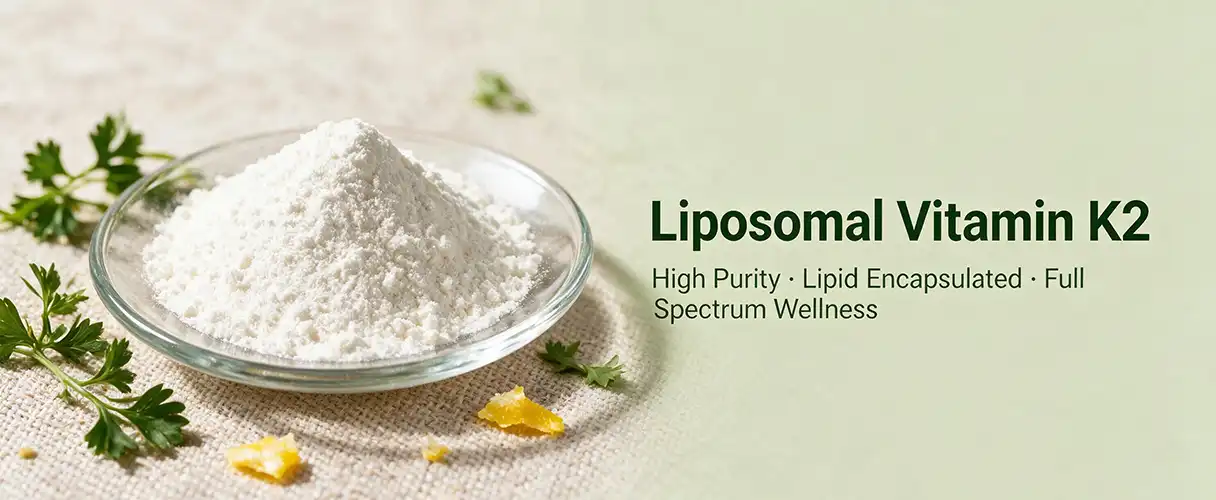
Liposomal vitamin K2 is Menaquinone-7 (MK-7) that has been encapsulated in vesicles of phospholipid bilayer, which are commonly made from non-GMO sunflower lecithin. The sizes of these nanospheres are 100-200 nm. Its lipid covering prevents MK-7 from being destroyed by stomach acid and allows it to be absorbed directly into the lymphatic system, bypassing the unpredictable bile-dependent absorption route used by conventional capsules.
How Liposome Technology Improves Bioavailability
Vitamin K2 softgels need bile salts to emulsify lipids for absorption. Bile production varies from person to person, especially in older persons or those with gastrointestinal disorders. Such variability is entirely avoided with liposomal administration. The phospholipid membrane is similar to the body’s own cell structure, allowing more direct entrance into circulation of the payload. It has been shown in studies that peak plasma concentrations (Cmax) are much higher using liposomal formulations compared to non-encapsulated drugs.
Synergistic Nutrients: D3, Magnesium, and MK-7
Liposomal Vitamin K2 works best when paired with Vitamin D3 and magnesium. D3 helps your intestines absorb calcium, and then K2 (MK-7) activates osteocalcin and Matrix Gla Protein (MGP) to direct that calcium into the bone tissue and not arterial walls. Magnesium is needed for the conversion of vitamin D in the liver. The gold standard for bone and cardiovascular support formulations is the combination of all three in one liposomal pill (commonly 5,000 IU D3 to 100 mcg K2).
Core Benefits of Liposomal Vitamin K2 for Health and Industry
Bone Mineralization and Calcium Metabolism
Liposomal vitamin K2 is considered to help maintain healthy bones. Osteocalcin is the bone protein that binds calcium. It will work with MK-7. A 2019 study published in Osteoporosis International showed that post-menopausal women using MK-7 supplements had significantly higher bone mineral density. If the liposomal form holds up the serum levels, it’s good for folks who have poor digestion.
Cardiovascular Protection Through MGP Activation
The arteries become stiff. That’s one of the key reasons why people have vascular disease. K2 MK-7 stimulates MGP in the walls of your arteries to inhibit the formation of calcium deposits in the vascular tissue. The researchers found that the more MK-7 they consumed, the less inactive MGP they had in a publication published in the journal Thrombosis and Hemostasis. This is a measure of the chance of arteries becoming hard. Liposomal vitamin K2 is more bioavailable than ordinary tablets, so it reaches therapeutic blood levels more quickly and more often.
Faster Onset and Competitive Product Differentiation
It’s the story of how the addition was made that makes the names significant. Liposomal vitamin K2 is absorbed faster, works independently of food intake, and is stable over time, since the bilayer physically separates MK-7 from harmful excipients. The product's features mean more claims on the label, better ratings from customers, and a premium positioning which enables the store to charge a premium for it. For OEM clients, this leads to more sellable finished goods that have been scientifically shown to work.
How to Choose Quality Liposomal Vitamin K2 Supplements: A B2B Procurement Guide
Key Certifications and Quality Benchmarks
When you are purchasing liposomal vitamin K2 for your product line, the first thing you need to do is verify credentials. Look for items that are cGMP-compliant, have been third-party tested, and are labeled non-GMO. From DLS tests, we know that the real liposomal formulations have a PDI value smaller than 0.3. Therefore, if PDI > 0.3, it is probable that the emulsion is unstable and it is not a real nanoliposome structure. If the zeta potential is more than ±30 mV, then the colloids will be stable during the shelf life of the product.
Verifying Supplier Reliability and Transparency
You don’t want to have to depend on a supplier’s credentials to know how competent they are. Teams buying things should get HPLC test data to illustrate the difference between the active All-Trans MK-7 isomer and the inactive Cis-isomers. This is because only the All-Trans variant can be medically useful. Check TOTOX number reports for the quantity of lipid degraded to the carrier. We want to test for heavy metals like arsenic, lead, mercury, and cadmium. It is very much required to use ICP-MS. From the Transmission Electron Microscopy (TEM) pictures, the structure was spherical and double-layered. The coverage percentage should be 90%.
Format, Packaging, and Bulk Sourcing Considerations
Liposomal vitamin K2 is available in three forms: capsules, liquid, and softgel. The ideal way of keeping the liposomal structures together is in capsules, since they are air-tight. Amber bottles or blister packs flushed with nitrogen will not degrade the phospholipid shell and will prolong the shelf life of the substance. Business-to-business customers need flexible minimum order numbers whether they’re launching a new SKU or expanding an existing line. If your current supplier can handle both small batch testing and big volume production, you may not need to switch vendors as you grow.
Market Insights: Trends & Demand for Liposomal Vitamin K2
Rising Consumer Preference for High-Bioavailability Formats
The worldwide vitamin K2 market size was evaluated at USD 67 million and is anticipated to rise at a compound annual growth rate (CAGR) of 8.0% from 2024 to 2030, according to Grand View Research. As awareness of quality increases, liposomal vitamin K2 and other high-bioavailability formulations are becoming more popular than normal tablets. You may witness this change in an evaluation of an online store and search traffic data. People usually seem to click through more if you utilize the word “liposomal.”
MK-7 Leads the Market and Expands Into New Categories
Most people supplement with MK-7 vitamin K2 since it has a longer half-life and more studies to back it up than MK-4. Now you can find vitamin K2 in liposomes in supplements for heart health, sports nutrition, and even in cosmetic care products for anti-aging. These products are good for vascular health from the inside out. This industry expansion presents new potential for companies willing to invest in the development of high-quality liposomes to generate new goods.
Innovation in Delivery Systems Drives B2B Demand
The technology of liposome manufacturing is being improved all the time. Two types of liposomes are being tested by manufacturers. One of the liposomes contains Magnesium, D3, and K2. It will make drugs easier to take, and more people will do what their doctor tells them. The government is showing more and more interest in label claims. Businesses are finding it more useful to write down absorption data. Brands that partner with suppliers that undertake open and honest lab testing can back up their claims and establish customer trust over time.
Conclusion
Liposomal vitamin K2 isn’t trendy. This is science-backed with demonstrated advantages in absorption, stability, and usefulness that outclass regular MK-7 pills. The most important thing to understand about the way this is made is that it enables you to make better products, get to it more easily, and establish more trust with your clientele. If you are looking to boost bone health, heart health, or sports recovery, this product will help you reach your goal.
FAQ
Is liposomal vitamin K2 absorbed better than regular K2?
Yes. Standard K2 depends on bile salt emulsification, which varies between individuals. Liposomal K2 uses a phospholipid shell to enter the lymphatic system directly, producing higher and more consistent plasma concentrations.
Can liposomal vitamin K2 be taken without food?
Yes. Because the liposome provides its own phospholipid carrier, dietary fat is not required for absorption. This makes it practical for fasting protocols or consumers with irregular eating habits.
How can I verify that a supplier's product is genuinely liposomal?
Request a Dynamic Light Scattering (DLS) report showing particle size between 100–200 nm and a PDI below 0.3. Also ask for HPLC documentation confirming All-Trans MK-7 content and encapsulation efficiency above 90%.
Are there any side effects associated with liposomal vitamin K2?
MK-7 is generally well tolerated. At standard doses (90–200 mcg/day), adverse effects are rare. Individuals taking anticoagulant medications such as warfarin should consult a healthcare provider before use, as vitamin K2 can interact with blood-thinning therapy.
What phospholipid source is used in quality liposomal K2 products?
Non-GMO sunflower lecithin is the preferred source. It avoids common soy allergens and phytoestrogens, broadening the product's suitability across diverse consumer groups.
Partner With BioSpark for Trusted Liposomal Vitamin K2 Supply
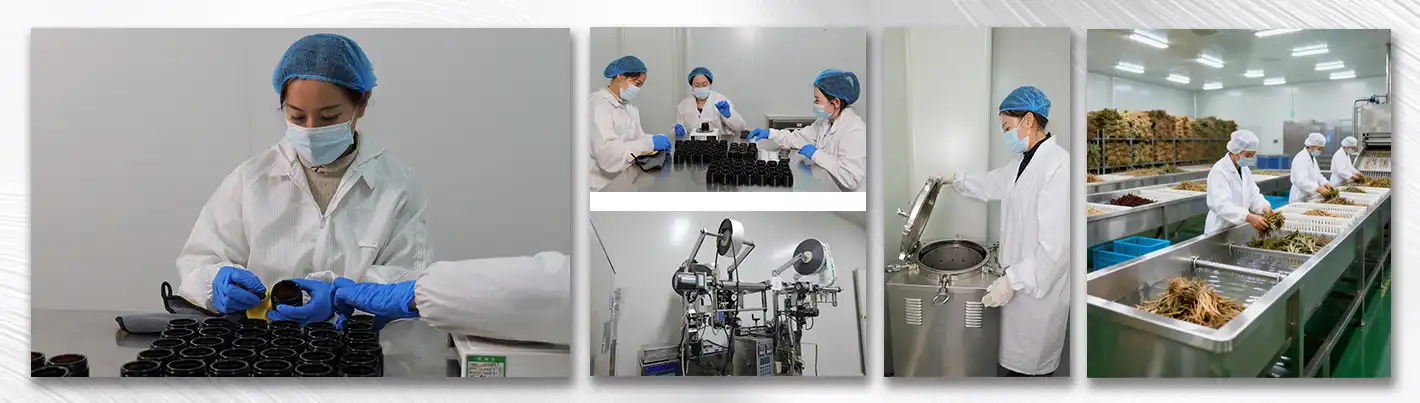
Liposomal vitamin K2 is made by BioSpark (Xi'an) Biotechnology Co., Ltd., which is GMP-certified. They help with every step of the OEM and ODM process, from making the formula to packing the finished product. As long as the paperwork has been checked, we can handle both small-batch tests and large orders. Get in touch with us right away to get demos or information sheets for free. You can go to www.biosparkcn.com or email us at leao@biosparkcn.com to start your question.
References
1. Knapen, M.H.J., et al. "Three-year low-dose menaquinone-7 supplementation helps decrease bone loss in healthy postmenopausal women." Osteoporosis International, 2013.
2. Geleijnse, J.M., et al. "Dietary intake of menaquinone is associated with a reduced risk of coronary heart disease." Journal of Nutrition, 2004.
3. Schurgers, L.J., et al. "Vitamin K-containing dietary supplements: comparison of synthetic vitamin K1 and natto-derived menaquinone-7." Blood, 2007.
4. Westenfeld, R., et al. "Effect of Vitamin K2 supplementation on functional vitamin K deficiency in hemodialysis patients." American Journal of Kidney Diseases, 2012.
5. Dalmeijer, G.W. et al. "Circulating matrix Gla protein is associated with coronary artery calcification and vitamin K status in healthy women." Journal of Nutritional Biochemistry, 2013.
6. Kidd, P.M. "Vitamins D and K as pleiotropic nutrients: clinical importance to the skeletal and cardiovascular systems and preliminary evidence for synergy." Alternative Medicine Review, 2010.

Send Inquiry

Related Industry Knowledge
- What Certifications Matter for Bovine Bone Collagen Peptide?
- Where to Buy Papaya Juice Powder for Bulk Import and Distribution
- Best Hami Melon Powder Supplier: A Buyer’s Guide
- How Can Barley Sprout Powder Enhance Nutrition Products?
- Longan powder vs Fresh Longan: Which Is Better for Manufacturing?
- What Should You Check Before Buying Cape gooseberry powder?
- Could Maqui Berry Powder Boost Your Antioxidant Products?
- Why Is Ginseng Plant Extract So Popular in Supplements?
- Gotu Kola Extract Powder: What Makes It So Popular?
- Papaya Leaf Extract Powder Benefits: What Does Science Say?