Liposomal Vitamin B9 Dosage, Quality, and Labeling Guide
Oct 18, 2026
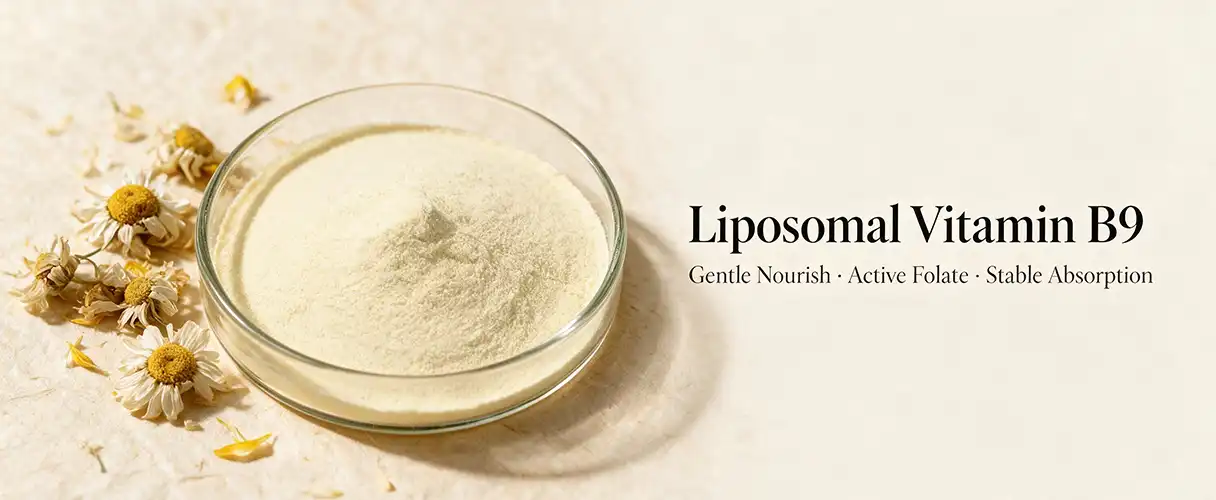
If you work in dietary supplements, nutraceuticals, or OEM manufacturing, you already know that ingredient quality determines product success. Liposomal vitamin B9 has become one of the most sought-after folate forms in premium supplement formulations — and for good reason. This guide walks purchasing managers, formulation engineers, distributors, and private label brands through the key decisions around dosage, quality standards, and labeling compliance, so you can confidently source and build products that meet both regulatory requirements and consumer expectations.
Understanding Liposomal Vitamin B9: Definition, Benefits, and Mechanism
Folic acid supplements are mostly used by people. A lot of them work through passive diffusion and carrier-mediated transport, and when the amount is increased, they work very fast. It is done in a different way for liposomal vitamin B9.
What Is Liposomal Vitamin B9?
In a phospholipid membrane primarily composed of phosphatidylcholine, liposomal vitamin B9 contains active folate. Most of the time, 5-MTHF is the active form of folate. The walls are made to look like those in live cells. In other words, the food can get into cells without having to use transport proteins that are already full. The Polydispersity Index (PDI) should be less than 0.3, and the particle size should be between 100 and 200nm for a smooth spread.
Key Bioavailability Advantages
Liposomal vitamin B9 is not broken down in the stomach, which is very acidic, when it is delivered in liposomes. Folic acid doesn't always work well in the small gut, so this is important. In other words, the phospholipid shell of liposomal vitamin B9 breaks down in both fat and water. It takes longer for the peak plasma concentration (Cmax) and total exposure (AUC) to happen than with free crystalline folic acid or even sublingual forms.
Why It Matters for MTHFR-Affected Populations
There are only about 10 to 15 people in the world who have the MTHFR C677T gene type. This makes it harder for them to turn the man-made form of folic acid into the active form. Liposomal vitamin B9 skips right over this enzyme block when 5-MTHF is used as a vessel. When the pH changes, it's important to keep the ingredients in functional drinks that are good for pregnant women, heart-healthy recipes that aim to lower homocysteine levels, and recipes that are good for pregnant women.
Dosage Guidelines and Safe Usage of Liposomal Vitamin B9
The right amount changes how the government sees the product and how well it works. If you want to get the most out of liposomal delivery, the right doses might not be the same as with supplements.
Standard Dosage Ranges by Application
Folate is something that adults in the United States should eat every day. 400 mcg of DFE should be given to them. While you are pregnant, this amount should go up to 600 micrograms DFE. Liposomal vitamin B9 pills usually have 400 to 800 micrograms of vitamin B9 per dose for health reasons. Each dose of most prenatal formulas has 800 to 1000 mcg. It's easier for the body to process in liposomal form, so it doesn't get too much nutrition by accident.
Safety Profile and Side Effects
The National Institutes of Health (NIH) in the United States says that people can get up to 1,000 micrograms (mcg) of folate every day from foods that are high in folate. Liposomal vitamin B9 in these amounts is safe to take as long as it is done the right way. It is known that not getting enough vitamin B12 can be hidden by too much man-made folic acid. This is not as likely to happen with active forms of 5-MTHF. These are in a lot of liposomal goods.
OEM Dosage Labeling Considerations
The FDA says in 21 CFR Part 101 that the amount per serving must be very clear on labels that are made for OEM or private label goods. Regulation (EC) No. 1169/2011 says that markets in the EU must follow it. Folate needs to be given in both micrograms and as a %DV that stands for the Daily Value. Folate types like folic acid and 5-MTHF are becoming more and more common, so it's important to say which one was used.
Quality Standards and Labeling Best Practices
There are numerous forms of liposomal vitamin B9. There are a lot of products on the market that are really just simple emulsions that are called liposomal. This difference has a direct effect on performance.
Defining "True Liposomal" Grade
The most important thing is how well the enclosure works. If the EE% is more than 85–90%, the product is really liposomal grade. When this amount is reached, most of the folate floats in the transport fluid instead of being in the protected membrane. You should ask for Dynamic Light Scattering (DLS) reports that show the particle size distribution and Zeta Potential values to make sure the structure is solid and won't stick together over time. They should be either less than -30mV or more than +30mV. Here are the core analytical methods used to verify liposomal vitamin B9 quality:
- DLS Analysis: When the PDI is less than 0.3 and the particle size is between 100 and 200 nm, it means that liposomes are uniform.
- HPLC Testing: checks the quality of the phospholipids and finds out how much folate there is. The right amount of PC should be in sunflower or soy lecithin.
- TEM or Cryo-SEM Imaging: If you use TEM or Cryo-SEM imaging, you can see the bilayer structure on a sphere and tell the difference between real liposomes and emulsions.
- Encapsulation Efficiency Testing: One way to test the effectiveness of encapsulation is to separate B9 that is enclosed from B9 that is free. This shows that the liposomes are, in fact, liposomes.
- Stability Stress Testing: To get an idea of how long the product will last, Stability Stress Testing looks for oxidation signs (Peroxide Value) and how fast it leaks at high speeds.
Applying these tests systematically gives procurement teams solid documentation for both internal quality records and regulatory submissions.
Supplier Certifications to Request
GMP certification (FDA 21 CFR Part 111 for the U.S. market), ISO 9001 quality control certification, and proof that the product was tried by someone outside the company are all signs that you can believe them. A Certificate of Analysis (CoA) should be included with every batch. You shouldn't be able to skip it as an extra.
US and EU Labeling Requirements
The FDA says that the Supplement Facts panel needs to show how much folate is in micrograms DFE and talk about where the folate came from. Like in the US, the EU has rules about what food supplements need to say, but each country has its own rules about language. Do not say things about health that aren't allowed in the structure/function scheme. At least in the U.S., claims that a product can stop birth problems must use certain words that have already been cleared.
Procurement Insights: How to Choose and Buy Liposomal Vitamin B9 for Your Business
To find the best liposomal vitamin B9 service, you can't just look at price lists. A trustworthy partner knows a lot about science and has an open supply chain.
Evaluating Supplier Credibility
People should give more weight to providers who can track the whole batch, from finding the raw phospholipids to making sure the finished ingredients are correct. Ask them straight out if they make liposomes with high-pressure homogenization or microfluidics. At the business level, these are the only two ways to reliably make particles smaller than 200nm. A seller probably won't give you liposomal-grade material if they can't explain how they make their products.
Pricing Models and MOQ Flexibility
Drug-grade phosphatidylcholine is expensive, and making nanoparticles is hard. This is why liposomal vitamin B9 costs more than regular folic acid. The prices of the products will probably show this. If you work with a manufacturer who lets you change the minimum order quantity (MOQ), you can make changes to both small test runs and full-scale production without worrying about it. These liquid liposomal forms need to be packed so that air doesn't get in. That way, they can stay fresh for 12 to 24 months. Check to see if this is possible with the way your service packs things.
Supply Chain Resilience
The output plan you make will depend on how stable your raw materials and lead times are. Talk to your providers about what they will do if they run out of non-GMO soy or sunflower phosphatidylcholine or other raw materials. Trouble with one source of supply is less likely to hurt your business if your sellers offer backup stock plans or two sources of supply.
Case Studies and Practical Applications in Industry
Prenatal Supplement Brand — North America
A private label brand in the US changed how their prenatal line works by adding 800 mcg of liposomal vitamin B9 to every serving. By switching from regular folic acid to liposomal form, they could sell directly to people who knew about MTHFR. This is helping the group that knows about MTHFR grow and speak out. To go with the new recipe, they needed new Supplement Facts labels and new CoA papers. Their OEM maker gave them these by the agreed-upon production date.
Functional Beverage Manufacturer — RTD Application
A functional drink company was going to add folate to a ready-to-drink (RTD) drink. When folic acid sold in shops was exposed to oxygen and UV light, it quickly lost its value. It didn't do what it said on the package. By enclosing the active ingredient in a membrane, liposomal vitamin B9 solved this issue. The phospholipid shell got rid of the bitter taste that can come from using a lot of bioflavonoids. Even though it didn't change anything else, this made the item taste better.
Distributor Sourcing Challenge — Quality Verification
A cheaper element called "liposomal vitamin B9" from an unknown source had an EE% below 60%, which means it was more like a mixture than a real liposomal product. The distributor didn't have to deal with any calls from regulators or product returns after they moved to a GMP-certified source that could show proof of DLS and EE%. This case shows how important it is to have papers written by experts.
Conclusion
Taking liposomal vitamin B9 is one of the best new ways to get folate that is backed by science right now. The choices a company makes about label compliance, dosage standards, and quality checks directly affect whether the finished product does what it's supposed to do and passes regulatory review. Folic acid costs more than regular folic acid, but valuable things are worth more. When brands do this right, they get smart customers and build trust that lasts. When you want to buy something, you should be able to trust the company that made it. They can keep track of the whole process.
FAQ
Does liposomal vitamin B9 work for people with the MTHFR mutation?
Yes. A certain kind of MTHFR, known as C677T, stops the active folate from going through the enzyme step when the 5-MTHF does. It doesn't need to be changed by the MTHFR enzyme before it can get to cells. Liposomal vitamin B9 transfer makes this possible.
How does liposomal folate compare to sublingual B9?
It's not the same as the B9 that you put under your tongue, right? Even if the mucous membrane is open, the medicine does not go through the gut when it is put under the tongue. Most of the time, liposomal vitamin B9 has higher Cmax and AUC. As the nutrient moves through the GI tract, the bilayer keeps it safe and lets the membrane take it in.
Can liposomal vitamin B9 be added to hot beverages or liquids?
You shouldn't be outside when it's over 40–50°C. When the temperature goes above this range, the phospholipid bilayer is not as stable. Phase shifts and payload leaks happen because of this. This makes the product the same as any other solution and takes away any liposomal benefits.
What is the standard shelf life for liquid liposomal B9?
How long can liquid liposomal B9 be kept in general? It should last 12 to 24 months if you clean it with nitrogen and seal the air out of it. Before you choose a recipe, you should always check to see if the liposomes' structure will work with the manufacturer's way of keeping them safe.
Why does liposomal B9 cost more than regular folic acid?
Folic acid and liposomal vitamin B9 cost different amounts. Why does that take place? The price is high because the phosphatidylcholine materials used are very pure and have to be made in a very specific way (using high-pressure blending or microfluidics). You can't just mix these things together.
Partner with BioSpark for Premium Liposomal Vitamin B9 Supply
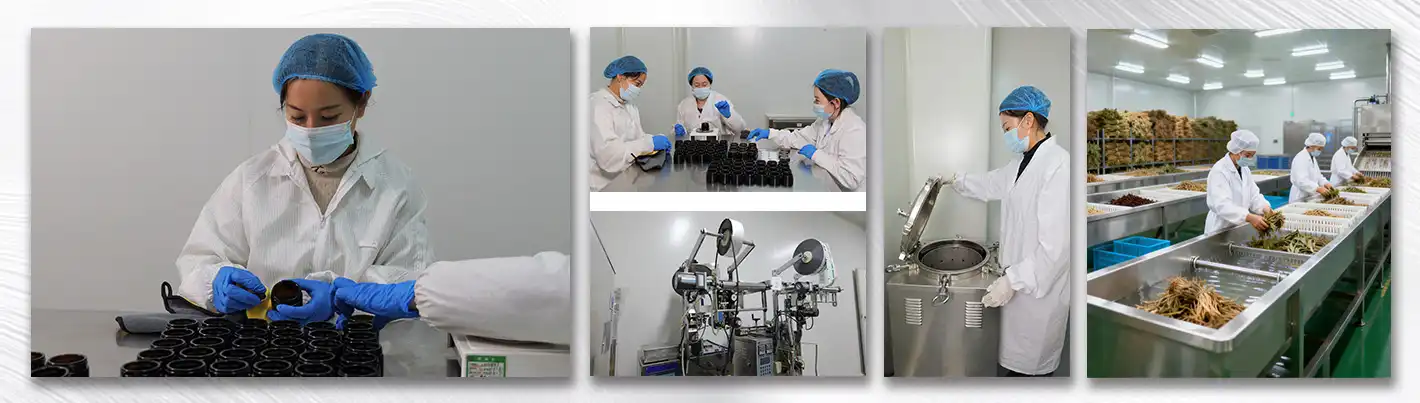
BioSpark (Xi'an) Biotechnology Co., Ltd. is a good company that makes liposomal vitamin B9. People in North America, Europe, and other places buy from them as OEMs. They also work with vitamin makers and people who buy in bulk. They follow GMP rules and can make anything from small test runs to large sales. A third party checks each batch and can figure out where each one came from. Do you not know how to begin your project? Our technical team is ready to help you whether you need a prenatal formula made just for you or an ingredient that will work in a drink. You can get a price for a sample or a lot of them right now by emailing leao@biosparkcn.com or going to https://www.biosparkcn.com/.
References
1. Bailey, L. B., & Gregory, J. F. (1999). Folate metabolism and requirements. Journal of Nutrition, 129(4), 779–782.
2. Czeizel, A. E., Dudás, I., Vereczkey, A., & Bánhidy, F. (2013). Folate deficiency and folic acid supplementation: The prevention of neural-tube defects and congenital heart defects. Nutrients, 5(11), 4760–4775.
3. Obeid, R., Holzgreve, W., & Pietrzik, K. (2013). Is 5-methyltetrahydrofolate an alternative to folic acid for the prevention of neural tube defects? Journal of Perinatal Medicine, 41(5), 469–483.
4. Bhatt, D. L., & Bhatt, A. B. (2020). Homocysteine and cardiovascular disease risk: The folate-B12 axis. Journal of the American College of Cardiology, 76(22), 2573–2575.
5. Patel, A., & Cholkar, K. (2021). Liposomal drug delivery systems: Recent advances and clinical applications. International Journal of Pharmaceutics, 605, 120842.
6. National Institutes of Health, Office of Dietary Supplements. (2023). Folate: Fact sheet for health professionals. NIH Office of Dietary Supplements.

Send Inquiry
Related Industry Knowledge
- Bovine Bone Collagen Peptide: Benefits and Applications
- How to Choose the Right Cherry Fruit Powder Supplier?
- Why Import Sea Buckthorn Juice Powder for Your Product Line?
- What Makes Kidney Bean Flour a Smart Gluten-Free Choice?
- Can Tribulus Terrestris Extract Powder Improve Muscle Growth?
- What Are the Health Benefits of Konjac Flour Extract Fiber?
- What Are the Key Benefits of Pomegranate Seed Extract Powder?
- Why Choose Saffron Extract Powder 10:1 for Daily Wellness?
- How Chamomile Extract Supports Stress and Anxiety Relief?
- Does Kacip Fatimah Extract Improve Menstrual Comfort?