_1764041963888.webp)
How to Choose the Right Cherry Fruit Powder Supplier?
Sep 09, 2026
Choosing the right cherry fruit powder supplier requires careful evaluation of quality standards, certifications, production capabilities, and supply chain reliability. This decision directly impacts your product consistency, regulatory compliance, and market competitiveness. Prioritizing suppliers with verified extraction methods, standardized active ingredients like anthocyanins, and comprehensive certifications—such as ISO9001, GMP, Kosher, and Halal—ensures you receive consistent, traceable, and safe ingredients. Transparent communication, flexible minimum order quantities, and OEM/ODM support are equally critical for long-term partnership success in the nutraceutical and wellness product sectors.
Understanding the Decision Scenario in Cherry Fruit Powder Procurement
Defining Your Business Needs and Goals
To be successful at procurement, you must first clearly define your operational needs. Label claims on health supplements need to be backed up by uniform active ingredient amounts, such as 5% anthocyanins that can be proven by HPLC testing, to make sure that the supplements are always the same from batch to batch. Nutraceutical companies put a high priority on traceability and proof that their products work to back up their claims. Importers and distributors need suppliers that can handle a range of order sizes, from small 1 kg test batches to large 25 kg drum shipments, so they can meet the needs of their many clients.
Quality expectations depend on the context of your application. Powders that dissolve quickly in water and don't have a strong flavor are needed for sports nutrition formulas. Color stability across pH ranges is important for beauty-from-within products. Food manufacturers put a lot of emphasis on keeping natural colors and being able to handle heat during processing. Knowing these differences can help you match the skills of your supplier with your specific formulation goals.
Recognizing Different Cherry Powder Types
There are different kinds of cherry powder on the market. Cherry varieties that are sweet (Prunus avium) have milder flavors that work well in drinks and sweets. On the other hand, cherry powders that are tart have higher polyphenol concentrations that are better for recovery supplements. The way the plant is extracted is very important. For example, membrane separation techniques keep heat-sensitive compounds like melatonin and anthocyanins better than regular spray-drying methods.
Levels of standardization are very different. Premium providers offer HPLC-verified specs that guaranty stable anthocyanin percentages, which are usually between 5% and 25%. This allows for exact formulation control. Fine powders that are light pink to pink and smell like sweet cherries show that the processing and keeping conditions were right. Different types of solubility affect how many uses something can have. Powders that dissolve in water are good for drinking uses, while powders that dissolve slightly in ethanol are good for liquor and extract recipes.
Essential Quality and Safety Standards
As a main way to tell if something like Cherry fruit powder is good, certifications are used. Getting ISO9001 approval shows that you follow an organized approach to quality management. Good Manufacturing Practices (GMP) compliance makes sure that production areas are safe for pharmaceuticals. Kosher and Halal licenses make markets bigger and easier to get into. FDA registration shows that a product follows U.S. rules and regulations. All of these credentials lower the risk of not following the rules and make it easier for people from different regions to get into the market.
Lab testing procedures are important, not just qualifications. Testing with High-Performance Liquid Chromatography (HPLC) gives exact amounts of active ingredients. End users are kept safe through heavy metal screening, bacterial testing, and chemical residue analysis. Reliable suppliers give Certificates of Analysis (CoA) for every batch of production, which show how pure the product is and that it doesn't contain any contaminants.
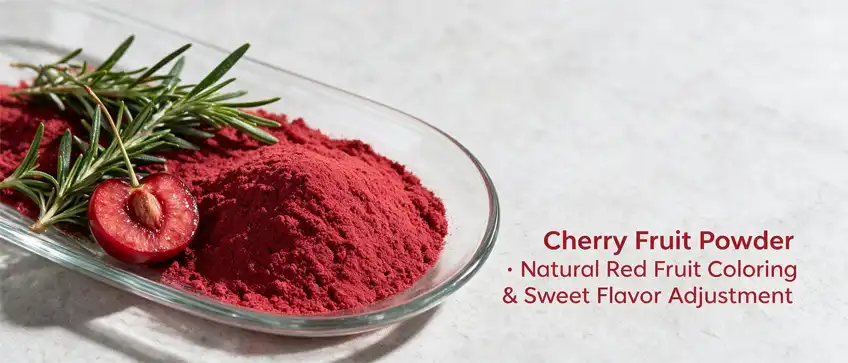
Core Metrics to Evaluate When Screening Cherry Fruit Powder Suppliers
Product Quality Indicators
Where the raw materials come from has a big effect on their quality. With its advanced plant extraction facilities and strict farming rules, China has become a major producer of botanical extracts. Food Chemistry (2021) says that cherry anthocyanins from well-kept trees are more stable and bioactive than those from sources that aren't under control. Making sure that suppliers have relationships with certified growers guaranties the quality of the raw materials.
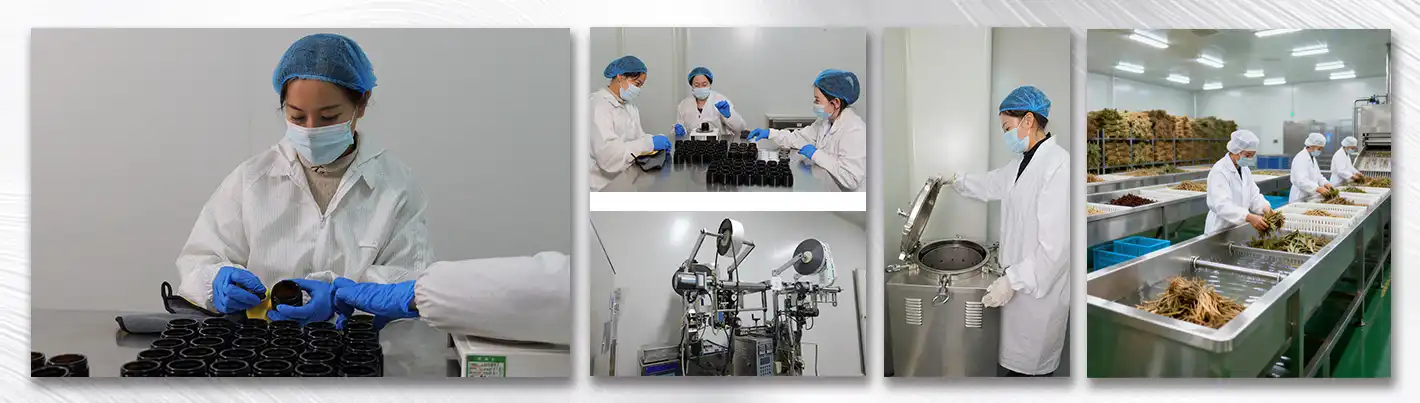
Best practices in manufacturing include processing areas with controlled temperatures, clean rooms, and extraction protocols that have been tested and proven to work. Methods that don't use high heat, like cold pressing and membrane separation, are better at keeping delicate phytonutrients. Standardized production batches starting at 25 kg drums make it possible to do both pilot tests and large-scale production. Consistency in appearance—staying a light pink to pink fine powder—indicates good processing controls.
Pricing Evaluation Considerations
The unit cost study needs to look at more than just base prices. Total procurement costs are affected by bulk discount structures, especially for orders that are placed over and over again. Logistics costs change a lot depending on the terms of delivery. FOB, CIF, CFR, EXW, DAP, and DDP all have different cost effects. If you understand these terms, you can avoid surprises when you're doing business internationally.
Minimum Order Quantity (MOQ) flexibility shows that a seller is ready to work with businesses of all sizes. Premium suppliers like BioSpark have MOQs as low as 1 kg, which lets startups do formulation trials without having to buy too much inventory. This method cuts down on costs and lets product developers test how well ingredients work before committing to larger quantities.
Supplier Reputation Assessment
Consistently delivering high-quality goods and communicating clearly build trust in a brand. Suppliers with a long history of exporting show that they know how to navigate regulatory issues in a number of different markets. BioSpark has relationships in Europe, North America, South America, Southeast Asia, and the Middle East. These partnerships show that BioSpark is reliable when it comes to safety and logistics.
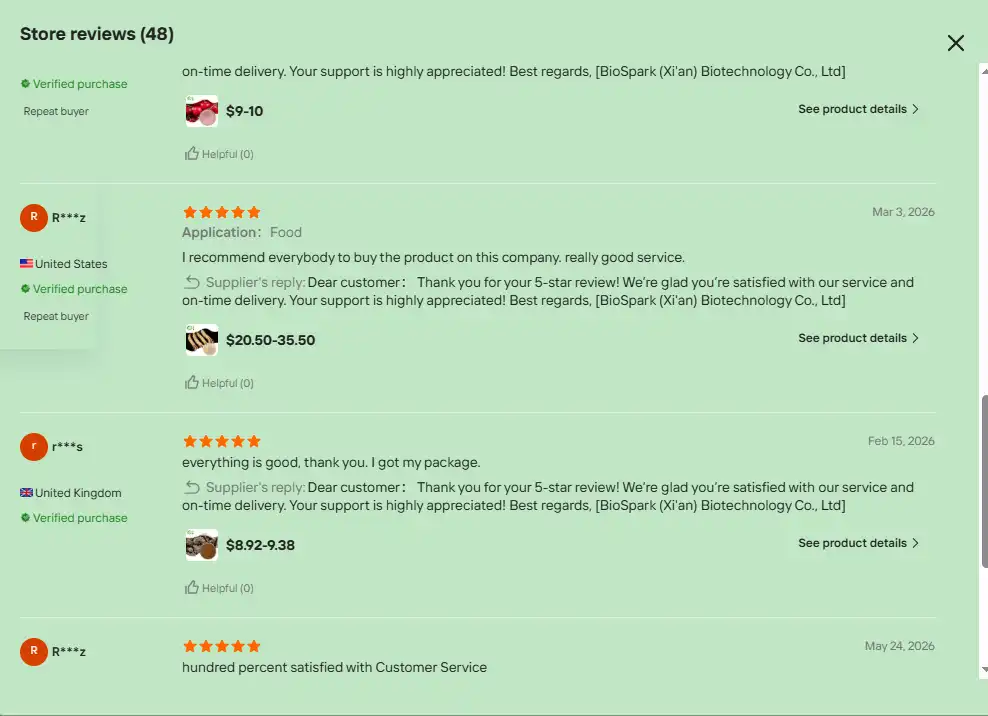
Customer reviews are a useful way to find out how well a company is doing. Checking with past clients for references shows how quickly they respond, how they solve problems, and how consistent the quality is over long periods of time. Participation in the industry, like having a booth at Vitafoods Europe or SupplySide West, shows that you are interested in the market and want to keep up with changes in regulations.
Matching Supplier Capabilities to Your Specific Procurement Needs
Application-Specific Specialization
The skills of suppliers vary depending on the end use. Manufacturers of dietary supplements need powders that meet high pharmaceutical standards and have stable data that backs up the expiration dates. Sports nutrition brands focus on ingredients that dissolve quickly and have bland flavors that don't change the taste of the drink. For baking and extruding, food manufacturers need ingredients that have proof that they can handle high temperatures.
BioSpark specializes in making nutrition solutions that are specifically designed for a wide range of uses. Our standardized cherry extract, such as Cherry fruit powder with 5% anthocyanins, works well in sleep aids that use natural melatonin, giving 100–200 ng/g concentrations that keep circadian rhythms in check without the side effects of drugs. The same ingredient helps muscles heal. Peer-reviewed studies have shown that it significantly lowers deladelayed-onsetcle soreness (DOMS) and inflammation markers like CRP and IL-6.
Customization and OEM/ODM Options
Full-process OEM/ODM help turns providers into partners in business. Concept creation help turns market opportunities into product recipes that can be sold. Formulation optimization services change the amounts of ingredients in a formula to get the desired functional and taste qualities. New types of packaging, like single-serving sachets and bulk drums, help with a variety of market positioning strategies.
Customizing certification makes the market more accessible. Suppliers who can get organic certificates, non-GMO certifications, or allergen-free paperwork for their products can sell them to high-end customers. Launch timelines are shortened by private marketing services that offer artwork development that is in line with regulations.
Production Flexibility and Supply Chain Reliability
Being able to change the order number helps businesses grow. Low MOQs are good for startups because they let them make changes to the formula over and over again without worrying about running out of stock. Well-known companies need to be sure they have enough capacity to handle seasonal demand spikes without lowering the quality of their products. Stockout risks that effeaffectduction plans are kept to a minimum by suppliers who show they have enough stock and can deliver quickly, like BioSpark's strong inventory management.
Being able to predict lead times has an effect on planning supplies. Express shipping choices are available for people who need to reformulate quickly. For medium-sized orders, air freight strikes a good balance between speed and cost. When you plan ahead, sea freight is a cheap way to move large amounts of goods over longer distances. Multimodal logistics ensures that supplies don't run out in different situations.
Making the Final Choice — Evaluation and Decision-Making Strategies
Implementing a Weighted Scoring Model
Subjective bias can't happen with structured rating systems. By making a scoring matrix with weighted criteria for quality (40%), certifications (20%), pricing (15%), responsiveness (15%), and capacity (10%), it is possible to compare suppliers in an objective way. Giving each criterion a numbnumericalre turns subjective impressions into measurable rankings.
Evaluating samples before committing to something gives you real-world proof of quality. Performance characteristics that aren't captured by specifications alone can be found by testing dissolution characteristics, organoleptic properties, and formulation compatibility in real production conditions. Shelf-life performance can be predicted by testing stability under fast conditions.
Risk Mitigation Through Comprehensive Due Diligence
Verification of certification stops the risk of fakes. Making direct contact with the organizations that issued the credentials—for example, calling Kosher certification agencies or ISO registrars—ensures their reliability. Asking for batch-specific COAs with testing done by a separate lab shows that the quality will stay high after the first samples are delivered.
Redundancy plans in the supply chain protect against problems. Finding backup sources for important ingredients keeps production going even when there are gaps that were not expected. Setting safety stock levels based on lead times and changes in demand makes you less vulnerable to delays in logistics.
Building Long-Term Strategic Partnerships
More value can be gained by switching from transactional relationships to strategic partnerships. Joint product development projects use the technical knowledge of suppliers to come up with new formulations. Sharing market information with others helps find new trends, which leads to strategic product pipeline development. Continuous performance feedback loops help both parties get better, which is good for everyone.
BioSpark sees relationships as working together as a team, going beyond just supplying ingredients like Cherry fruit powder. Our specialized account management offers professional help for the whole lifecycle of a product. Regular updates on the markets for raw materials, changes to regulations, and new developments in the industry help clients feel confident as things change.
Case Studies: Successful Procurement of Cherry Fruit Powder by Leading B2B Clients
Food Manufacturer Achieves Consistency Through Rigorous Vetting
A natural foods business in North America was looking for organic cherry powder for a new line of useful drinks that would help people sleep. Their purchasing team looked at eight suppliers and used a weighted scoring matrix to focus on certification depth, standardization of anthocyanins, and supply chain transparency. After trying samples and finding big differences in how quickly they dissolved and how stable the color stayed, they chose a supplier whose 5% anthocyanin specs were HPLC-verified and whose stability data was wereensive.
The chosen union brought about real benefits. Batch-to-batch consistency made it possible to precisely formulate flavors, which cut down on delays in reformulation. Full documentation made USDA Organic certification easier. Retail distribution commitments were kept without safety stock inflation thanks to predictable lead times. After 18 months, the beverage line had a big share of the market. This was partly because the quality of the products stayed the same, which set them apart from rivals whose formulas changed all the time.
Supplement Brand Balances Cost and Quality Through Data-Driven Comparison
A European business that was making a high-end supplement for healing after a workout had to deal with price pressure while still meeting standards for effectiveness. Their technical team set minimum requirements, which included 5% anthocyanins, GMP certification, and published research that showed the product could reduce inflammation. When I compared five sellers' prices, I saw big differences that had nothing to do with quality.
A thorough cost analysis revealed that transportation problems were to blame for the higher prices. Choosing a provider with flexible payment terms and the best shipping combination cut total landed costs by 18% without lowering quality standards. Third-party testing of the final product formulation showed that it reduced muscle pain in a way that was clinically relevant. This supported marketing claims that led to sales success in stores. This partnership showed that choosing a strategic supplier can improve both margins and product performance.
Distributor Expands Portfolio Through Thorough Evaluation
A Southeast Asian company that sells health products wanted to add fine cherry powder to its line of plant extracts. At first, quality measurement was hard because there wasn't enough scientific knowledge. They contacted possible suppliers and asked for thorough product specs, documentation of third-party testing, and expert help for the application.
One supplier stood out by offering a wide range of educational resources, such as formulation guidelines, stability suggestions, and market positioning strategies. Sample trials with current clients led to good comments about how the samples dissolved and how they tasted. The wholesaler agreed to work with us and was able to successfully introduce cherry powder into a number of client products, such as sleep aids, healing drinks, and beauty products. This connection increased the value of their portfolio and made their ties with clients stronger by giving them a reliable way to get ingredients.
Conclusion
To find the best Cherry fruit powder supplier, you need to look at their quality standards, certifications, production capabilities, and potential for a partnership. Focusing on sources with standard requirements, like 5% anthocyanin amounts confirmed by HPLC testing, helps keep formulations consistent and in line with regulations. Quality assurance starts with important certifications like ISO9001, GMP, Kosher, Halal, and FDA registration. Businesses of all sizes, from startups to large corporations, can use our flexible minimum order amounts, different shipping terms, and OEM/ODM customization options. Strategic partnerships with open communication, technical support, and a promise to always get better deliver long-term value that goes beyond transactional relationships. By using structured review frameworks and doing a lot of research, procurement workers can find reliable ingredient sources that will help their products succeed in the long run and stay competitive in the market.
FAQ
What certifications should I prioritize when selecting a cherry fruit powder supplier?
ISO9001 certification shows that quality management is being used in an organized way, and GMP certification makes sure that output standards meet pharmaceutical standards. Kosher and Halal approvals make markets more accessible to a wider range of consumers. FDA registration shows that a product follows U.S. rules, which makes it easier to import products and get into new markets. For clean-label marketing, organic certificates check how farming is done. All of these qualifications work together to provide full quality assurance and legal compliance, which supports the integrity of the product.
How can I verify the anthocyanin content claimed by suppliers?
Ask for Certificates of Analysis (CoA) that list the results of the HPLC tests done on certain output runs. Testing by a lab that is not connected to the company gives extra proof. When evaluating a provider, find out how often they test their products and what quality control procedures they use to make sure that each batch is the same. Reliable suppliers, like BioSpark, provide detailed documentation to back up standardized specifications. This lets formulation development be done with confidence and label claims to brue.
What factors affect cherry fruit powder shelf life?
The conditions of storage have a big effect on stability. Cool places (below 25°C) and humidity controls (below 60% relative humidity) stop moisture from absobeing absorbed breaking down. Light speeds up the breakdown of anthocyanin; opaque packaging with aluminum foil barriers keeps the pigment's integrity. If you package it right, like in 25 kg drums with desiccants, it will usually last for 24 months. Suppliers should give stable data that backs up expiration dates when stored in the way that is suggested.
Partner with BioSpark for Premium Cherry Fruit Powder Supply
BioSpark (Xi'an) Biotechnology Co., Ltd is ready to help you find Cherry fruit powder because they have a lot of experience making it and care about their customers. Our plant extraction methods keep heat-sensitive anthocyanins safe while giving you uniform 5% amounts that have been checked by HPLC. We meet the highest international quality standards that your brand needs with certificates like ISO9001, Kosher, Halal, FDA registration, and GMP compliance.
Our method is flexible enough to meet the needs of a wide range of businesses. For example, we accept orders as small as 1 kg to help new businesses build their formulas, and we keep enough stock on hand and have enough production capacity to meet the needs of large businesses. Shipping is flexible on a global scale thanks to different delivery options, such as FOB, CIF, CFR, EXW, DAP, and DDP. Full OEM/ODM services turn your product ideas into formulas that are ready for the market, helping you with the whole process from development to delivery.
As a Cherry fruit powder manufacturer with years of experience working with wellness companies, nutraceutical brands, and distributors in Europe, North America, Southeast Asia, and other places, we know how important it is for the supply chain to be reliable and for quality to stay the same. Email our technical team at leao@biosparkcn.com to talk about your unique needs, ask for examples of our products, and get personalized quotes. Visit https://www.biosparkcn.com/ to see our full line of botanical extracts and learn how our relationship method can help you succeed in the health market over the long run.
References
1. Nutraceuticals World. (2022). "Functional Fruit Powders Market Analysis and Growth Projections." Available at: https://www.nutraceuticalsworld.com/issues/2022-07-01/view_features/functional-fruit-ingredients-market-growth/
2. U.S. Food & Drug Administration. (2021). "Dietary Supplement Current Good Manufacturing Practices (CGMPs) and Interim Final Rule (IFR) Facts." Available at: https://www.fda.gov/food/dietary-supplements-guidance-documents-regulatory-information/dietary-supplement-current-good-manufacturing-practices-cgmps-and-interim-final-rule-ifr-facts
3. Food Chemistry. (2021). "Anthocyanin Stability and Bioactivity in Cherry Extracts: Impact of Processing and Storage." Volume 338, Article 127826. Available at: https://www.sciencedirect.com/science/article/abs/pii/S0308814620316794
4. Journal of the International Society of Sports Nutrition. (2020). "Tart Cherry Supplementation and Recovery From Exercise-Induced Muscle Damage: A Systematic Review and Meta-analysis." Available at: https://jissn.biomedcentral.com/articles/10.1186/s12970-020-00383-4
5. Nutrients. (2023). "Cherry Consumption and Health: A Comprehensive Review of the Evidence." Volume 15, Issue 8. Available at: https://www.mdpi.com/2072-6643/15/8/1849
6. Natural Products Insider. (2022). "Global Botanical Extract Manufacturing Standards and Quality Assurance." Available at: https://www.naturalproductsinsider.com/supply-chain/global-botanical-extract-quality-standards

Send Inquiry
Related Industry Knowledge
- Sea Buckthorn Juice Powder OEM: From Formula to Bulk Supply
- Maqui Berry Powder for Eye Health: Dry Eye & Retinal Protection
- Coconut Milk Extract Powder: The Ultimate Plant-Based Dairy Swap
- Maqui Berry Powder for Eye Health: Dry Eye & Retinal Protection
- Coconut Milk Extract Powder: The Ultimate Plant-Based Dairy Swap
- Coconut Milk Extract Powder: The Ultimate Plant-Based Dairy Swap
- Maqui Berry Powder for Eye Health: Dry Eye & Retinal Protection
- Maqui Berry Powder for Eye Health: Dry Eye & Retinal Protection
- Coconut Milk Extract Powder: The Ultimate Plant-Based Dairy Swap
- Maqui Berry Powder for Eye Health: Dry Eye & Retinal Protection
- Coconut Milk Extract Powder: The Ultimate Plant-Based Dairy Swap
- Maqui Berry Powder for Eye Health: Dry Eye & Retinal Protection
- Coconut Milk Extract Powder: The Ultimate Plant-Based Dairy Swap
- Maqui Berry Powder for Eye Health: Dry Eye & Retinal Protection
- Coconut Milk Extract Powder: The Ultimate Plant-Based Dairy Swap
- Maqui Berry Powder for Eye Health: Dry Eye & Retinal Protection
- Coconut Milk Extract Powder: The Ultimate Plant-Based Dairy Swap
- Maqui Berry Powder for Eye Health: Dry Eye & Retinal Protection
- Coconut Milk Extract Powder: The Ultimate Plant-Based Dairy Swap
- Maqui Berry Powder for Eye Health: Dry Eye & Retinal Protection
- How does rosehip extract powder support skin rejuvenation and repair?
- Bulk Chinese Cabbage Powder: Cost vs Quality Considerations?
- How does longan powder support digestive health?
- What Are the Health Benefits of Konjac Flour Extract Fiber?
- Best Tongkat Ali Extract Powder: What to Look For?
- Does Kacip Fatimah Extract Improve Menstrual Comfort?
- Mimosa Root Bark Extract: Natural Antimicrobial Agent