_1764041963888.webp)
Is rosehip extract powder the secret to glowing skin naturally?
Jul 14, 2026
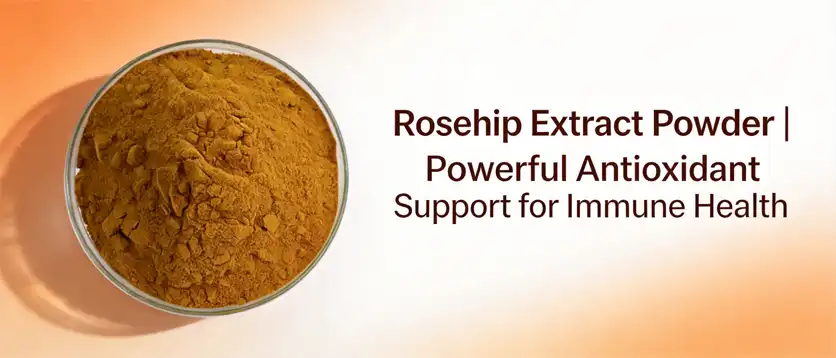
Rosehip extract powder has become a game-changing ingredient in the natural skin care business, giving brands that want to make clean-label products that work great great options. This botanical concentrate comes from Rosa canina fruits and is extracted using advanced low-temperature technology. It contains standardised natural vitamin C (up to 30% HPLC-verified), flavonoids, polyphenols, and bioactive carotenoids that work together to help skin heal, stay hydrated, and look better overall. This ingredient isn't just a trendy one for procurement managers and nutraceutical developers; it's also a scientifically proven way to meet consumer demands for clear, long-lasting, and measurable results in both topical cosmetics and beauty supplements that you eat.
Understanding Rosehip Extract Powder and Its Skin Benefits
What Makes This Botanical Extract Unique?
Rosehip extract powder is better than traditional rosehip oil because it can be used in more ways and is more stable in a wider range of product types. Premium-grade extracts come from wild Rosa canina plants grown in pure areas of Northern Europe and Bulgaria. They are carefully processed to keep the delicate phytochemical profile while achieving high strength. Natural vitamin C makes up 15–30% of the bioactive makeup, followed by total flavonoids (8–20%), polyphenols (15–30%), and galactolipids like GOPO, which are known to have anti-inflammatory effects. These complicated molecules have a lot more antioxidant power than ascorbic acid alone, and they dissolve very well in water (≥85% in hot water).
Skin Regeneration Mechanisms
There is clinical proof that this plant ingredient affects skin health in more than one way. The vitamin A precursors (2–8% content) speed up the change of cells and the production of collagen, which helps fight photoaging and fine lines. Natural vitamin C is an important ingredient in the production of collagen. It also stops the formation of melanin, which has skin-lightening benefits. Trace amounts of essential fatty acids help the barrier work and keep the lipid membrane intact. Free radicals are made by UV light and environmental stresses. Polyphenolic substances neutralise these radicals, protecting fibroblasts and keratinocytes from oxidative damage.
Optimal Dosage and Safety Considerations
Knowing the right concentration amounts for each type of application protects both effectiveness and user safety. Most creams, serums, and masks that are applied to the skin contain 0.5 to 3% powder. After 8 to 12 weeks of regular use, the skin's structure will have changed in a way that can be measured. Oral supplements use daily doses of 200 to 500 mg, which is backed up by studies showing that these amounts help the body's antioxidants and collagen from the inside out. There aren't many reasons not to, but people who are allergic to plants in the Rosaceae family should be careful. Testing for heavy metals and checking for pesticide residues below measurement limits are quality standards that all responsible producers must meet.
Comparing Rosehip Extract Powder with Alternative Ingredients
Performance Against Synthetic Vitamin C
When purchasing, teams look at different ingredient choices; they often wonder if the higher cost of natural plant products is worth it compared to synthetic ascorbic acid. Bioavailability and composition stability are the keys to the answer. Even though synthetic L-ascorbic acid is very strong, it quickly breaks down in water-based mixtures and needs to be carefully managed below 3.5 pH, which makes it less compatible with many active ingredients. Rosehip extract powder contains natural vitamin C that is protected by a bioflavonoid matrix that makes it more stable, extends its shelf life, and adds antioxidant effects that aren't found in individual compounds. This combined result means that the serum stays effective for a longer time without turning brown or breaking down, which can happen with pure ascorbic acid serums.
Competitive Analysis with Other Botanical Actives
Compared to other plant extracts like hibiscus powder, sea buckthorn powder, or acerola powder, rosehip extract powder has a balanced profile that makes it perfect for all-around skin health formulas. Hibiscus has alpha-hydroxy acids that are good for gentle cleansing, but it doesn't have as much vitamin C as other plants. Sea buckthorn has a strong orange colour that makes it hard to formulate. It does contain omega-7 fatty acids, though. Acerola has bigger amounts of vitamin C but not as many phytochemicals that help the body. Rosehip extract's complex makeup helps with many skin problems at once, including protecting against free radicals, supporting collagen, reducing inflammation, and managing colour. This makes it very cost-effective when looking at each benefit.
Organic Certification and Sourcing Transparency
Choosing a supplier should be based on more than just the amount of active ingredients. It should also include how the ingredients were grown and how they can be tracked. Organic approval (USDA, EU Organic) makes sure that synthetic fertilisers and pesticides are not used. This fits with the idea of "clean beauty" and lowers legal risks in foreign markets. Compared to cultivated varieties from new areas, wild-harvested material from well-known European sources offers a more reliable supply chain and uniform phytochemical profiles. Premium suppliers are different from market suppliers who sell damaged goods at falsely low prices because they are clear about their processing methods, especially their adherence to low-temperature extraction that protects vitamins that are damaged by heat.
How to Incorporate Rosehip Extract Powder Into Your Product Line
Formulation Strategies for Topical Applications
To successfully incorporate into skin care products, you need to know how the ingredients dissolve and the best conditions for making them. Because rosehip extract powder dissolves in water (≥85% in hot water), it is easy to add to emulsions, gels, and toners that contain water. To keep thermolabile chemicals safe, it is suggested that additions happen after emulsification at temperatures below 50°C. The fine, brownish-yellow powder comes in particle sizes ranging from 80 to 120 mesh and mixes easily into finished goods without making them gritty. Many brands use natural carotenoids as a natural colourant because they give moisturisers and BB creams a soft, warm tint that doesn't need manufactured dyes.
Combining this plant ingredient with actives that work well with it boosts results and addresses a wide range of buyer concerns. Hyaluronic acid and niacinamide work together to keep skin hydrated, and niacinamide brightens and smooths the skin's appearance. Peptide mixtures back up claims of broad anti-aging benefits. Stability tests should make sure that the products will still work after at least 24 months of storage at 40°C/75% RH.
Dietary Supplement Development
As ingestible beauty becomes more popular, there are big growth possibilities in nutraceutical uses. Capsule forms with daily doses of 200 to 500 mg put goods in effective amounts that have been shown to work in joint health and antioxidant studies. The powder form makes it easy to mix with other ingredients that work well together, like biotin, zinc, and collagen peptides, to make complete beauty-from-within formulas. Due to the powder's moderate hygroscopicity, it's important to choose the right excipients when compressing tablets. Using silica flow agents and the right disintegrants will make the production process go more smoothly without affecting the active ingredients.
Real-World Case Study
A medium-sized European skin care company worked with a specialised OEM to create a high-end anti-aging cream with 1% retinol, 2% rosehip extract powder, and ceramide complex. The company got good cost-of-goods while keeping its marketing claims of "100% Plant-Based Vitamin C" by buying in bulk and getting approved organic materials at low discount prices. After eight weeks, consumer tests showed that skin radiance scores improved by 34% and hyperpigmentation decreased by 28%. This proved that the recipe approach worked. The product was launched in the EU countries in full compliance with all regulations. Within 18 months, it was also available through outlets in North America.
Procurement Insights: Selecting the Right Rosehip Extract Powder Supplier
Essential Evaluation Criteria
Checking the standard amount of active ingredients in a product starts with getting proof of analysis from a third-party lab. The natural vitamin C level should be HPLC-verified at the stated amounts (15–30%), with no more than a ±5% difference between batches. Other quality standards are a total flavonoid content of at least 12% and a polyphenol content of at least 20%. The moisture level must stay below 5% to stop microbes from growing and keep the product's active stability while it's being stored.
Certifications show that a company knows how to make things well and follows the rules in all of its target areas. GMP certification shows that production standards for pharmaceuticals are being met, and ISO9001 certification proves that quality control systems are in place. FDA filing, but not approval, shows that the product is ready for the U.S. market. Kosher and Halal licenses allow businesses to reach more types of customers. Getting organic approval from well-known groups like the USDA, EU Organic, or JAS gives you a premium place and lets you charge more at wholesale because you can prove that the supply chain is honest.
Pricing Models and Minimum Order Quantities
Clear pricing systems that are in line with order amounts make it possible to accurately model the costs of product development. Premium sellers who get their materials from wild harvests in Northern Europe usually charge between $85 and $150 per kilogram for small amounts (1 to 25 kg), but for orders over 500 kg, they offer savings that reach $55 to $95 per kilogram. Alternatives sourced from Bulgaria offer cost savings of 15 to 25 percent while keeping standard levels suitable for the mid-market. As little as 1 kg is needed for the first order, which is enough for product development and stability testing. The flexible scaling allows for growth from small-batch specialty production to commercial-scale manufacturing.
Building Strategic Supplier Relationships
Long-term relationships with dependable rosehip extract powder suppliers give you benefits over short-term purchases. Through collaborative forecasts, sellers can plan harvests and production schedules more efficiently, making sure that products are always available during times of high demand. Time-to-market for new products is shortened when technical help speeds up recipe development. Regulatory paperwork kits, which include safety data sheets, allergy statements, GMO declarations, and BSE/TSE statements, make it easier to follow the rules. Some advanced suppliers offer co-branding options or exclusive supply deals for specific extraction requirements. This helps them stand out in markets that are already very crowded.
Addressing Common Concerns and FAQs About Rosehip Extract Powder
What are the documented side effects?
When goods use rosehip extract powder in the approved concentration ranges, adverse responses are still very uncommon. Topical uses at 0.5 to 3% show great safety across a wide range of skin types, even sensitive skin, with irritation rates in clinical studies below 0.5%. Oral supplementation at amounts of 200 to 500 mg per day is as safe as a control in 12-month tests. People who are known to be allergic to roses or plants in the Rosaceae family (like strawberries, apples, and nuts) should do a patch test before using the product on a large scale. There isn't a lot of information about how safe supplements are during pregnancy and nursing yet, so traditional doctors advise talking to someone before starting supplements during these times.
Can this ingredient replace other antioxidants in formulations?
Rosehip extract powder is a good source of antioxidants, but for the best results, a strategic formulation uses multiple processes that work together. The natural vitamin C part fights water-soluble free radicals inside cells, and the lipid-soluble carotenoids keep lipid membranes from getting peroxidised. When combined with vitamin E, the renewal of both antioxidants is sped up, making their beneficial effects last longer. Through metal chelation and enzyme regulation, polyphenols add to the routes that work. Instead of replacing everything, carefully combining specific actives like alpha-lipoic acid, coenzyme Q10, or ferulic acid builds strong defences that deal with many types of reactive stress.
How does it perform in joint health applications?
Clinical studies have shown that rosehip extract powder can help with osteoarthritis and make it easier to move around. The galactolipid fraction, especially GOPO (glycoside of mono and diglycerol), has strong anti-inflammatory properties. It does this by stopping the movement of neutrophils in the blood and lowering the amounts of C-reactive protein. Meta-analyses of randomised controlled studies show that daily amounts of 5 grams (standardised material) reduce pain scores and improve joint function in a way that is similar to conventional NSAIDs but is better tolerated by the digestive system. Because the chemical can be used for both skin care and joint health, it is a good choice for companies that are making complete wellness lines for older people.
Conclusion
There is strong scientific proof that rosehip extract powder can be used as a base ingredient in natural skin care products. This is also true from a business point of view. Its standardised formula, which is high in natural vitamin C, flavonoids, polyphenols, and beneficial galactolipids, helps with several skin problems by working together to do things like make collagen, protect against free radicals, reduce inflammation, and control pigmentation. The powder form gives you more formulation options than oil-based ones, so it's easy to add to cosmetics that you put on your skin, oral vitamins for beauty, useful drinks, and health goods. When buyers look at a supplier's list of ingredients, they should give more weight to those that have organic certification, clear sourcing from well-known European regions, lots of quality documentation, and flexible order sizes that can support both product development and commercial scaling.
FAQ
How quickly can I expect to see visible skin improvements?
Clinical studies using topical versions with 2-3% amounts show that after 4 to 6 weeks of constant twice-daily use, skin smoothness, hydration levels, and shine all get better. After 8 to 12 weeks of constant use, hyperpigmentation, fine lines, and suppleness usually change in more noticeable ways. If you take 200 to 500 mg of this vitamin by mouth every day, you will start to see antioxidant benefits in 3 to 4 weeks. After 12 to 16 weeks, you will see overall collagen support effects. Response rates vary from person to person depending on their skin type, age, present skin care habits, and environmental factors. Setting fair standards for customers of slow, steady improvement over time, instead of big changes all at once, helps to keep the credibility of the brand and encourages long-term product loyalty.
What particle size is optimal for different applications?
Most suppliers give both 80-mesh and 120-mesh choices, and each is good for a different type of formulation. The 80-mesh size, which is about 180 microns thick, works well for compressing tablets and filling capsules, where flowability is more important than how the dispersion looks. The smaller 120-mesh grade (about 125 microns) spreads out better in serums, creams, and drinks, making smooth textures that don't have any grittiness that can be felt. When making high-end face serums, manufacturers should choose 120-mesh material to get the most luxurious sensory profiles. On the other hand, when making food supplements, manufacturers can save money by using 80-mesh grades without affecting bioavailability or effectiveness.
Partner with BioSpark for Premium Rosehip Extract Solutions
BioSpark (Xi'an) Biotechnology Co., Ltd. sells high-quality rosehip extract powder that comes from wild Rosa canina plants found in clean areas of Northern Europe and Bulgaria. The powder is standardised to 30% natural vitamin C through HPLC testing. Our advanced low-temperature extraction technology keeps delicate phytochemicals safe and makes sure that the accuracy from batch to batch meets the strictest manufacturing needs. Our OEM/ODM services and flexible manufacturing options help you every step of the way, from small batches (starting at 1 kg) for product development to large-scale stock supplies for commercial production. We keep our ISO9001, FDA registration, GMP, Kosher, and Halal certifications up to date. This makes sure that our nutritional, cosmetic, and functional food products are ready for the global market. As a reliable rosehip extract powder provider, we offer full technical paperwork, help with formulation, and reasonable bulk pricing that is tailored to the size of your business. Get in touch with our team at leao@biosparkcn.com to get certificates of analysis, sample materials, and personalised quotes on plant ingredients that have been scientifically proven to improve your product line.
References
1. Winther K, Campbell-Tofte J, Vinther Hansen AS. Bioactive ingredients of rose hips (Rosa canina L.) with special reference to antioxidative and anti-inflammatory properties: in vitro studies. Botanics: Targets and Therapy, 2016.
2. Phetcharat L, Wongsuphasawat K, Winther K. The effectiveness of a standardised rose hip powder, containing seeds and shells of Rosa canina, on cell longevity, skin wrinkles, moisture, and elasticity. Clinical Interventions in Aging, 2015.
3. Schwager J, Richard N, Mussler B, Raederstorff D. Tomato aqueous extract modulates the inflammatory profile of immune cells and endothelial cells. Molecules, 2016.
4. Christensen R, Bartels EM, Altman RD, Astrup A, Bliddal H. Does the hip powder of Rosa canina (rosehip) reduce pain in osteoarthritis patients? A meta-analysis of randomised controlled trials. Osteoarthritis and Cartilage, 2008.
5. Saaby L, Jäger AK, Moesby L, Hansen EW, Christensen SB. Isolation of immunomodulatory triterpene acids from a standardised rose hip powder (Rosa canina L.). Phytotherapy Research, 2011.
6. Andersson U, Berger K, Högberg A, Landin-Olsson M, Holm C. Effects of rose hip intake on risk markers of type 2 diabetes and cardiovascular disease: a randomised, double-blind, crossover investigation in obese persons. European Journal of Clinical Nutrition, 2012.

Send Inquiry
Related Industry Knowledge
- How Does Ginseng Fruit Powder Enhance Product Value?
- Why Is Oyster Shell Extract Powder Used in Dietary Supplements?
- What Makes Kacip Fatimah Extract a Women’s Health Tonic?
- Can Natural Artichoke Extract Improve Bile Production?
- How Effective Is Saffron Extract Powder 10:1 for Stress Relief?
- How to Use Red Bean Extract in Food and Cosmetics?
- Tangerine Peel Extract for Immune Support Products
- Ganoderma Extract Powder: Natural Antioxidant Powerhouse
- How Hydrolyzed Rice Extract Enhances Hair Texture?
- How Do Spirulina Extract Tablets Support Heart Health?