Is Liposomal Silymarin the Next Step in Liver Wellness?
Oct 23, 2026
Liposomal silymarin is rapidly becoming one of the most talked-about ingredients in liver health supplements — and for good reason. Standard silymarin extracts from milk thistle have a well-documented absorption problem: most of the active compounds pass through the digestive system without reaching liver cells at therapeutic levels. Liposomal silymarin solves this by wrapping silybin — the primary active compound — inside phospholipid bilayers that mimic cell membranes, dramatically improving bioavailability. For supplement brands and OEM partners evaluating next-generation liver support ingredients, this formulation shift represents a clear clinical and commercial opportunity.
Understanding Liposomal Silymarin: Innovation in Liver Health Supplements
The Science Behind Liposomal Encapsulation
These are the same building blocks that make up cell walls. A liposome is a round bubble made of phospholipids. Because silybin is enclosed in this structure, stomach acid doesn't hurt it when it gets to the wall of the gut. The phospholipid shell then makes it easy for the molecules to move into cells without a lot of work. The Area Under the Curve (AUC) for silybin is 5 to 8 times higher than it is for regular silymarin powder, according to a pharmacokinetic study. The AUC tells us how much of the drug is taken in.
Key Health Benefits Supported by Evidence
For many years, people have been interested in milk thistle extract. When given in liposomal form, it has been shown to protect liver cells from damage caused by toxins and alcohol. It also fights free radicals and helps the liver grow back. Early research shows that it may also help control blood sugar. A study in the journal "Phytomedicine" found that phospholipid-complexed silybin helped people with long-term liver problems a lot with liver enzyme markers.
Safety Profile and Dosage Guidelines
Most people can handle liposomal silymarin powder well. The recommended daily dose for adults is between 140 mg and 360 mg, which can be split into two or three servings. This is for the health of your liver. The liposomal form lessens the stomach pain that can happen when you take a lot of standard extracts. It stays steady for 24 months if kept below 25°C in packaging that is covered and shielded from light. This is useful for businesses that need to keep track of their stock.
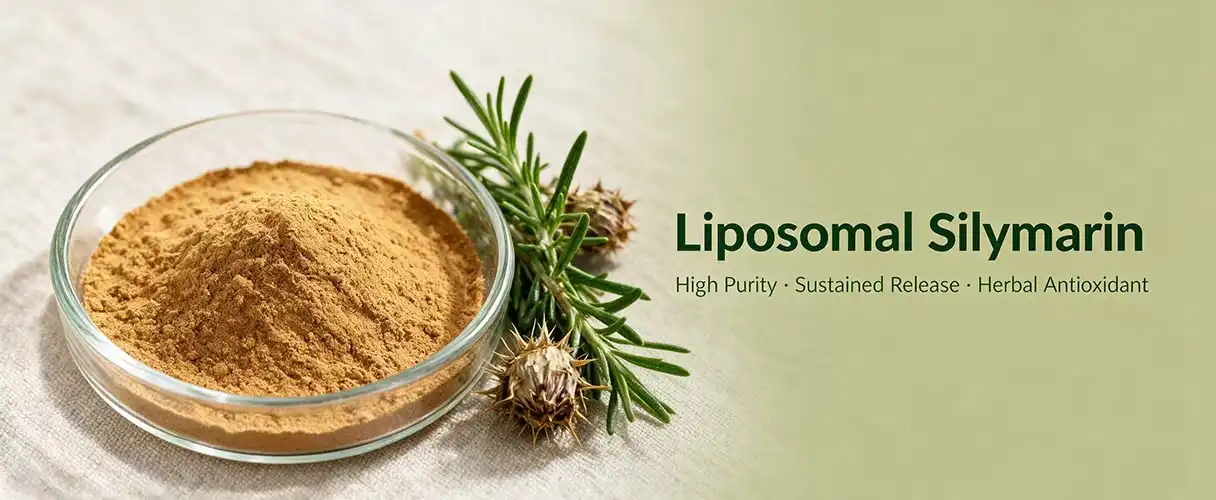
Liposomal Silymarin Versus Traditional Liver Supplements: A Comparative Analysis
Absorption and Clinical Efficacy
Standard 80% silymarin extract doesn't mix with water, which makes it harder for the body to take it in the gut, which is mostly water. It changes into a form that is easy to dissolve in water through liposome transport. This keeps it from sinking to the bottom of the cell and makes it more bioavailable without using any chemical cleaners. For healthy beverage recipes, this is a big technical plus: the powder doesn't separate when mixed with liquid, which doesn't happen with regular extracts that are hydrophobic.
Format Flexibility for Manufacturers
Liposomal silymarin powder can be mixed with many different kinds of goods. Here are the main types of forms for making things that you should look at:
- Capsules and softgels: The powder fills cleanly, offers precise dosing, and pairs well with other liver-support co-factors like phosphatidylcholine or N-acetyl cysteine.
- Functional beverages and shots: Water dispersibility allows stable integration without emulsifiers, making it practical for ready-to-drink liver detox products.
- Sachets and stick packs: Fine particle size supports uniform blending in single-serve formats targeted at on-the-go consumers.
These are the softgels and capsules: It's easy to measure out the right amount of powder, and it works well with other substances that help the liver, like N-acetyl cysteine or phosphatidylcholine.
For functional drinks and shots, water dispersibility lets stable integration happen without emulsifiers, which is helpful for liver detox drinks that are ready to drink.- For single-serve sachets and stick packs, the fine powder size helps the mix evenly. These are made for people who are always on the go.
Cost-Effectiveness Over Time
There are different rules for making and labeling each type. So long as brands work with a qualified OEM partner early on in the process, they can pick the right standard right away.
Procurement Insights: How and Where to Source Quality Liposomal Silymarin
Supplier Verification Criteria
Not all service providers offer liposomal encapsulation. A lot of people sell simple mixtures of silymarin and phospholipids that aren't structurally sound like liposomes. These are the things you should ask liposomal silymarin sellers when you're looking at them:
- GMP and ISO certification documentation
- Batch Certificate of Analysis (COA) confirming silybin content, phospholipid ratio, and particle size
- Independent third-party lab testing for heavy metals, microbial contamination, and solvent residues
- Confirmation of non-GMO phospholipid source — sunflower or soy lecithin are both acceptable, but verify each batch
Proof of ISO and GMP certification. A batch certificate of analysis (COA) that says how much silybin is in the sample, how many phospholipids are in it, and what size the particles are. A different lab will test for heavy metals, microbial contamination, and solvent residues. Proof that the source of the phospholipid is not genetically modified; sunflower or soy lecithin are both fine, but make sure to check each batch.
MOQ, Pricing, and Volume Strategy
These papers tell the difference between honest people who sell goods and people who just do that. Any business buyer entering a regulated market like the US must have them.
Direct Manufacturer vs. Online Marketplaces
The cost of pharmaceutical-grade liposomal silymarin powder changes based on how much silybin is present and how many phospholipids are present. You can usually cut down on wait time and get better deals if you work directly with a manufacturer instead of going through a trading site. Today, lots of companies let new businesses buy small amounts of their products at first so that formulas can be tested before they are made in large quantities.
Usage Guidelines and Best Practices for Liposomal Silymarin in B2B Applications
Recommended Dosing for Product Development
It has been found that liver health products for adults should contain between 200 mg and 300 mg of liposomal silymarin powder per serving. This is equal to between 100 mg and 150 mg of silybin. Tip: When working with liposomal powder, don't do it at temperatures above 60°C. This is because heat can break the phospholipid bilayer, which makes transfer less effective.
Interaction Considerations
The process of glucuronidation breaks down silybin. It may also have a small impact on medicines that are broken down in the same way. It should say on the labels of goods that people who take prescription drugs for the liver should talk to their doctor. This is what the FDA says should be done with vitamins that help the liver, and it's also the right thing to do.
Compliance and Label Communication
Supplement labels sold in the US must follow the rules set out by the FDA in 21 CFR Part 111. Brands shouldn't say that their product will cure a disease, but they should say that it absorbs better. As an example, "phospholipid delivery studied in humans" is a good structure/function claim paradigm. Customers are more likely to trust you when you back up your story about an ingredient with data from an independent test. This makes them more likely to stick with your brand and buy from you again.
Future Outlook: Why Liposomal Silymarin Represents the Next Step in Liver Wellness
Growing Market Demand for Bioavailability-Enhanced Supplements
The market for liver health products will likely grow at a rate of more than 5% per year. This is because more people are getting non-alcoholic fatty liver disease (NAFLD) and more people know how to clean their livers. Formats with high bioavailability are growing a lot faster than the other types in this group. People are ready to pay more for goods that have been shown to work because they know more about the ingredients in them.
Expanding Applications Beyond Liver Health
Liposomal delivery research is finding new ways to use silybin for things other than protecting the liver. Early studies show that antioxidants for the skin, metabolic support products that work on insulin sensitivity, and nutrients that help the body heal after exercise are all good ideas. For OEM brands, this means they can use the same base ingredient in more than one line of products and still work with the same source.
Strategic Positioning for B2B Brands
It helps brands stand out from the rest in the market when they use liposomal silymarin. In the US, regulators are becoming more interested in how well supplements work. To stand out from the competition, having clinically supported delivery data is becoming more important. When OEM partners help with the whole process of making a product, from finding raw materials to testing the finished item, brands can get their ideas to market more quickly without lowering the quality.
Conclusion
Liposomal silymarin is not a trend; it is a scientifically proven way to improve the absorption of plant-based ingredients that benefit the liver. It's easy to see how well it is absorbed and is safe, and the market for high-end liver health products keeps growing. People who make supplements, nutraceuticals, or goods for other companies should get pharmaceutical-grade liposomal silymarin from a reputable supplier if they want to make useful products. There is no question about whether to add this item or not. The question is who you can trust to give it to you.
FAQ
How does liposomal silymarin differ from standard milk thistle extract?
Standard milk thistle extract contains silymarin in its raw form, which is poorly water-soluble and absorbs inconsistently. Liposomal silymarin encapsulates the active silybin inside phospholipid vesicles, protecting it from gastric degradation and increasing absorption by 5 to 8 times based on AUC measurements.
Is long-term use of liposomal silymarin safe?
Current clinical evidence supports its safety at recommended doses. Non-GMO phospholipid carriers derived from sunflower or soy lecithin are used in professional-grade formulations, and the ingredient carries a favorable tolerability record in human studies.
What certifications should I require from a supplier?
At minimum, request GMP certification, ISO documentation, a batch COA with third-party lab verification, and confirmation of non-GMO phospholipid source. For US market entry, FSMA compliance is also worth confirming.
Can liposomal silymarin powder be used in beverages?
Yes. Its water-dispersible nature makes it suitable for functional shots and liquid supplements without sedimentation. Avoid processing temperatures above 60°C to preserve liposomal structure.
What is the minimum order quantity for bulk procurement?
MOQs vary by manufacturer. Reputable suppliers typically offer small-batch options for formulation trials, with pricing adjusted for larger production runs.
Partner with BioSpark — Your Trusted Liposomal Silymarin Manufacturer
BioSpark (Xi'an) Biotechnology Co., Ltd sells liposomal silymarin powder that is GMP-certified, can be tracked from batch to batch, comes from non-GMO sources, and doesn't have a large or small minimum order quantity (MOQ). Liposomal silymarin comes from us and is sold in North America, Europe, and other places around the world. We can help with OEM/ODM from the planning stage to the shipping phase. Email our team at leao@biosparkcn.com or visit www.biosparkcn.com right now to get samples, rates, and research data.
References
1. Abenavoli, L., et al. — "Milk Thistle in Liver Diseases: Past, Present, Future." Phytotherapy Research, 2010.
2. Loguercio, C., & Festi, D. — "Silybin and the Liver: From Basic Research to Clinical Practice." World Journal of Gastroenterology, 2011.
3. Yanyu, X., et al. — "The Preparation of Silybin–Phospholipid Complex and the Study on Its Pharmacokinetics in Rats." International Journal of Pharmaceutics, 2006.
4. Wah Kheong, C., et al. — "A Randomized Trial of Silymarin for the Treatment of Nonalcoholic Steatohepatitis." Clinical Gastroenterology and Hepatology, 2017.
5. Borah, A., et al. — "Liposomal Drug Delivery: A Review of the Formulation and Therapeutic Applications." Journal of Drug Delivery Science and Technology, 2021.
6. Grand View Research — "Liver Health Supplements Market Size, Share & Trends Analysis Report." Grand View Research, 2023.

Send Inquiry
Related Industry Knowledge
- How Does Dracorhodin Support Wound Healing Research?
- Where to Buy Sea Buckthorn Juice Powder in Bulk Worldwide
- Loquat Powder Applications Across Food and Nutrition Industries
- Purple cabbage powder Shelf Life, Storage, and Packaging Guide
- Is Coconut Milk Extract Powder More Cost-Effective Than Canned?
- Is Coconut Milk Extract Powder More Cost-Effective Than Canned?
- Is Coconut Milk Extract Powder More Cost-Effective Than Canned?
- Is Coconut Milk Extract Powder More Cost-Effective Than Canned?
- Is Coconut Milk Extract Powder More Cost-Effective Than Canned?
- Is Coconut Milk Extract Powder More Cost-Effective Than Canned?
- Is Coconut Milk Extract Powder More Cost-Effective Than Canned?
- Is Coconut Milk Extract Powder More Cost-Effective Than Canned?
- Is Coconut Milk Extract Powder More Cost-Effective Than Canned?
- Is Coconut Milk Extract Powder More Cost-Effective Than Canned?
- Spirulina Extract Tablets Dosage Guide: How Much Should You Take?
- What Makes Kidney Bean Flour a Smart Gluten-Free Choice?
- Can Kidney Bean Flour Improve High-Protein Food Formulas?
- Can Fulvic Acid Powder Improve Gut Health Naturally?
- Best Baicalin Extract Powder for Functional Foods & Supplements