_1764041963888.webp)
How to Find Reliable Broad Bean Powder Manufacturers?
Aug 31, 2026
Finding a reliable manufacturer of fava bean protein powder requires careful evaluation of certifications, production capabilities, and supply chain transparency. When sourcing broad bean powder for your health supplement brand or nutraceutical company, you should prioritize suppliers who demonstrate consistent quality control, adhere to international standards, and offer flexible production options from small batches to large-scale orders. Understanding the manufacturer's extraction methods, testing protocols, and commitment to traceability will position your business to secure a dependable partner that meets both regulatory requirements and your specific product development goals.
Understanding the Broad Bean Powder Market Landscape
People around the world are continuing to want plant-based proteins as they look for environmentally friendly and allergen-friendly food choices. Broad bean powder is different from other protein powders on the market because it has a full amino acid profile, a high protein concentration, and can be used in gluten-free, dairy-free, and soy-free recipes.
Demand for the market comes from many different areas. Manufacturers of nutritional supplements use Broad bean powder in sports nutrition formulas and meal replacement products. Food processors use it as an active ingredient in baked goods, plant-based meat alternatives, and drinks that are high in protein. More and more pet food makers are realizing how valuable it is as a high-quality protein source for high-end pet foods.
The US market for these ingredients is especially strong because people there are aware of their health benefits, and the government encourages new ideas in dietary supplements. The European markets are also growing quickly, especially when it comes to organic and approved products. Knowing what people in a certain area like helps buyers choose suppliers that meet the needs of their target market.
On the other hand, buying workers have a hard time finding these plant extracts. Quality differences happen because of where the raw materials come from, how they are processed, and how skilled the maker is. Some sellers don't have the right licenses or clear traceability systems, which makes it risky for brands to enter regulated markets without following the rules. If there are problems in the supply line in an agricultural area, it can affect prices and quantity.
The way the product is processed has a direct effect on its properties. Modern ways of extracting plants keep the nutritional value of Broad bean powder while still getting the right protein amounts. Manufacturers who use cutting-edge extraction technology usually make powders that are better at dissolving, have uniform particles, and perform their functions better than powders made with older methods.
The makers in the market range from those that only make plant extracts to those that supply a wide range of ingredients. China has become a major center for production, with low prices and quality control methods that are getting better all the time. When judging manufacturers, it's important to know not only what they can do now, but also how committed they are to always getting better and adapting to new international standards.
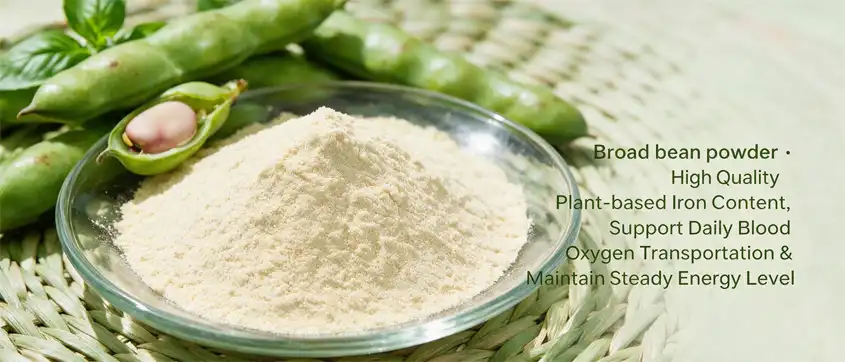
Key Criteria to Evaluate Reliable Broad Bean Powder Manufacturers
Defining Your Business Requirements
To choose the right manufacturer, you must first be clear about what you need. Think about whether you need wholesale bulk quantities to distribute or private labeling services for branded goods. Product specs are very important. The amount of protein, particle size ranges, solubility characteristics, and organoleptic qualities should all match exactly what you need for your formulation.
Figuring out how much you need to produce helps you find manufacturers who can meet your needs. Startups often benefit when sellers have low minimum order amounts. This lets them test their products and see if they're popular on the market without having to commit to a lot of inventory. Well-known brands usually look for manufacturers that can increase production to meet rising demand while keeping quality the same across all batch sizes.
Certifications and Quality Management Systems
Quality approvals are one of the most important ways to tell if a company you can trust. Having ISO9001 certification shows that a seller is dedicated to quality management systems and methods for ongoing growth. Good production practices (GMPs) must be followed when making food supplements and useful ingredients. Facilities that are registered with the FDA show that they follow U.S. regulations, which is especially important for brands that want to sell to Americans.
Certifications for religious and food needs open up more market possibilities. With Kosher and Halal certifications, products can meet the dietary needs of certain groups of people who follow religious rules. As the need for approved organic products grows, organic certifications make sure that the raw materials and processing methods used meet the standards for organic labeling.
In addition to having certificates, trustworthy manufacturers show that they care about quality by using open testing protocols. High-Performance Liquid Chromatography is the best way to check the amount of protein in a sample and find any possible contaminants. The Kjeldahl Method is a precise way to measure protein levels, and reputable providers are happy to share records of analysis that show the results of their tests for each production batch.
Production Capabilities and Technical Expertise
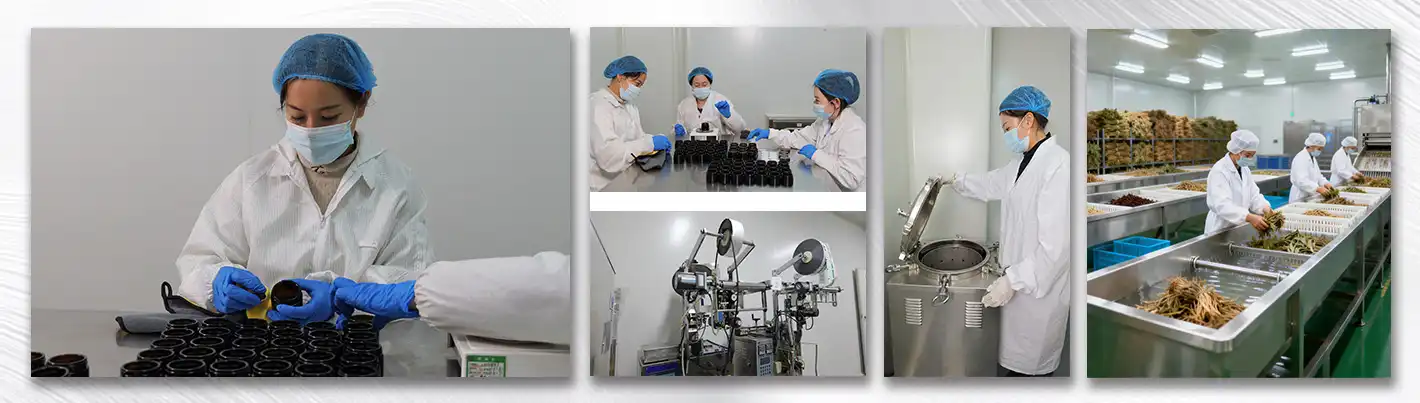
The quality and stability of a product are directly affected by the technology used to make it. When suppliers use modern plant extraction methods, the Broad bean powder sources are purer, and the nutritional compounds inside them are better preserved. Using membrane separation, supercritical extraction, and controlled drying processes can help make powders with better particle size distribution, moisture control, and microbiological safety.
Another important factor is the freedom of production. For example, your business may need custom protein ratios, mesh sizes that allow for the best flow, or solubility profiles that are just right for them. Manufacturers that offer OEM and ODM services can make goods that are exactly what you want, which helps your product stand out in a crowded market.
The ability to provide technical support is what sets exceptional manufacturers apart from basic commodity suppliers. Brands can get help with product development problems by talking to formulation scientists, application specialists, and regulatory experts. When manufacturers put money into customer service, they show that they want to build partnerships instead of just doing business with customers.
Supply Chain Transparency and Traceability
Learning about where raw materials come from can help you make sure that the quality is consistent and that you are using fair buying methods. Reliable manufacturers either work directly with agricultural suppliers or grow their own raw materials. This way, they have full control over the growing conditions and harvest times, which affect the quality of the finished product.
Traceability systems let you keep track of goods from where the raw materials come from to where they are processed, packed, and sent to customers. When dealing with quality issues or answering governmental questions, full tracking becomes necessary. When manufacturers use digital tracking systems, they provide better visibility and documentation that meet compliance requirements.
Managing your inventory and making sure deliveries are on time affect how you plan your operations. When suppliers keep enough stock on hand, they can quickly fill orders, and when they have established transportation partnerships, they can ship goods reliably across borders. If you know the manufacturer's shipping terms, like FOB, CIF, CFR, EXW, DAP, or DDP, you can get a better idea of the total landed costs and who is responsible for transportation.
Comparing Broad Bean Powder Manufacturers: What Sets Top Suppliers Apart?
Product Quality and Consistency Standards
Quality-conscious manufacturers are remarkable. If the fine powder is pale yellow to light brown and smells like beans, the beans were processed and kept properly. Different batches appear the same, indicating consistent manufacturing, while deviations indicate process control issues.
Protein is the major active ingredient standard. Premium broad bean powder provides at least 60% protein, according to stringent Kjeldahl Method testing. This amount delivers the maximum nutritional benefit at a low cost. Lower protein percentages may indicate poor processing or raw ingredients.
The number of uses of anything depends on its solubility. Powders that dissolve readily in water may be utilised in beverages and nutritious smoothies, whereas those that dissolve somewhat in ethanol can be used for extraction. With particle size optimisation between 80 and 120 mesh, materials flow readily during manufacturing and are equally dispersed in final items.
Microstructure affects performance. Water may soak in and remain stable after lengthy storage due to the uniform particle distribution and porous microstructure. The powder's physical qualities impact its baking and drinking properties.
Supply Chain Excellence and Scalability
Top makers have strong supply lines that keep their products available all year, even when the market is interrupted or the seasons change. Because they have ties with suppliers of raw materials, invest in inventory management, and spread out geographically, they can keep your production plans from being thrown off by supply interruptions.
Manufacturers can grow their businesses without lowering the quality of their products when they can scale up or down their production. Suppliers with flexible capacity can quickly and easily fill orders for anything from small amounts to try a product to large production runs to meet established market demand. This ability to grow or shrink is especially helpful for brands that are growing quickly or whose demand changes with the seasons.
Delivery performance tells you which providers are solid and which ones are troublesome. Manufacturers who are dedicated to on-time delivery keep production plans that are reasonable, let customers know ahead of time about any possible delays, and offer a variety of shipping choices, such as fast services, air freight, and cheap sea freight, so customers can choose the one that best fits their needs and budget.
Customer Service and Partnership Approach
Great producers see consumers as long-term partners, not simply revenue streams. They invest time and money in learning about your business's objectives, market position, and growth ambitions. This partnership emphasis appears in proactive communication, problem-solving, and willingness to adjust services to help you succeed.
Customisation goes beyond modifying product details. Leading vendors provide co-packing, private labelling, and bespoke packaging to simplify your operation. OEM and ODM let you market unique products without investing in manufacturing facilities.
Technical assistance aids product development and problem-solving. Expert application scientists improve formulations, and regulatory specialists aid with target market certification. Responsive customer service teams handle urgent and regular enquiries professionally.
Payment freedom demonstrates the creator trusts and commits to customers. Bank transfers are still common, but suppliers that provide reasonable payment periods or net payment choices for established customers improve business ties. Clear pricing with no hidden fees builds confidence and simplifies budgeting.
Procurement Process: How to Effectively Source and Buy Broad Bean Powder
Identifying Potential Suppliers
You should use more than one way to look for approved makers. B2B platforms that have been around for a while connect buyers with verified suppliers by letting you search by certifications, minimum order quantities, and product specifications. Often, these platforms give ratings and transaction histories of suppliers to help with the initial evaluation.
Industry trade shows give you the chance to talk to manufacturers directly. Face-to-face talks let you get a better sense of someone's technical skills, dedication to quality, and cultural fit. Looking at real examples and meeting the people who make things gives you information that you can't get from talking to people online.
Professional networks in the nutrition and dietary supplement fields can help you find good suppliers. Peers who are having the same sourcing problems can talk about how they found reliable partners or which manufacturers they should stay away from. These chances to share information are made possible by industry groups and buying associations.
Sample Evaluation and Testing
Before making a big buy, you should always ask for samples. Reliable makers are happy to send you samples to test, and the minimum order quantity for testing is usually only one kilogram. When you evaluate a sample, you should look at how it looks, smells, dissolves, and works in your specific applications.
Independent lab tests back up what the maker says about the amount of protein, the safety of microbes, and the lack of contaminants. While certificates of analysis from makers are helpful, third-party verification gives you even more peace of mind, especially when you're working with a new provider or joining a market with a lot of rules.
Application testing lets you know how well the powder works in your real recipes. To make sure the ingredient meets practical needs beyond what is written on the package, you should test how well it dissolves in your beverage base, how stable it is when stored, and how it tastes to people who are likely to buy it.
Negotiation and Contract Terms
When negotiating prices, the overall value should be taken into account, not just the lowest unit cost. Manufacturers who offer better quality, on-time delivery, technical support, and flexible minimum orders may be able to charge more because they are lowering their risk and running their business more efficiently. Volume discounts are usually given for bigger commitments, which balance the cost savings with the costs of keeping inventory.
The terms of the contract should clearly state quality standards, testing procedures, accepted deviation ranges, and ways to fix goods that don't meet the standards. Clear instructions stop arguments and set expectations for everyone. Include rules for regular quality checks, the need for documentation, and how to let people know about changes.
The delivery terms have a big effect on the total landing costs and who takes on the risk. Whether you're buying FOB origin or DDP destination changes the price, your insurance duties, and your customs compliance duties. Make sure that the packaging instructions are clear so that the goods arrive undamaged and well protected against wetness and contamination.
Logistics and Regulatory Compliance
When sending plant extracts across international borders, you need to be aware of customs rules, import license requirements, and paperwork needs. Reliable makers help with the paperwork that is needed, like phytosanitary certificates, certificates of origin, certificates of analysis, and other papers that meet the needs of the target country.
Packaging is more than just a way to keep things inside. It also needs to protect things and follow rules. For large powder ingredients, the industry standard is 25 kg drums covered in metal foil that won't let moisture in. Make sure that the packaging follows the rules for the sending method you've chosen and offers enough safety throughout the supply chain.
Tariffs and import taxes affect the total cost of a product and should be taken into account when choosing a seller. Different countries have different tariffs on Broad bean powder, and some origin countries may have lower taxes because of free trade deals. Consult with customs agents to get an exact idea of costs and make sure you're following the rules.
Case Studies: Successful Partnerships with Broad Bean Powder Manufacturers
Customized Protein Solutions for Sports Nutrition Brand
A sports nutrition business that is growing quickly went to a specialized Broad bean powder producer to ask for help making a plant-based recovery shake that would work best for their customers. The brand needed a product with 60% protein and the right balance of amino acids to help muscles heal while still being easy to mix for ready-to-use consumption.
The technical team from the maker worked closely with the brand's product creators and did many tests and formulation changes. They got the desired protein concentration while keeping natural compounds that help with recovery by using advanced extraction optimization. Because the manufacturer was flexible, they were able to do small initial production runs that let them test the market before going to full commercial volumes.
This partnership worked because the manufacturer showed that they cared about the success of the brand in more ways than just providing ingredients. Help with regulatory paperwork, technical support during product development, and reliable scaling as demand grew built trust and helped the brand's market growth.
Organic Certification for European Distribution Network
A network of stores in Europe that sells organic health and wellness products needed a stable source of organic Broad bean powder. Their buyers wanted strict organic approval, full tracking, and the same quality in all exports to different countries.
The chosen maker kept their organic approval throughout the whole supply chain, from getting the raw materials to processing and packing them. Their digital traceability system lets them keep track of individual batches from certain growing regions. This met the strict documentation needs of European organic rules.
Coordinating logistics turned out to be just as important. The distributor was able to keep inventory levels across their network without having to keep extra stock on hand because the manufacturer knew how to meet European export requirements, kept the distributor informed about the status of shipments, and delivered on time every time. The value of this partnership was solidified by consistent quality across dozens of shipments over several years.
Conclusion
To find trustworthy companies that make Broad bean powder, you need to carefully look at their quality certifications, production skills, supply chain openness, and focus on working together. A good procurement process combines technology requirements with business needs like adaptability, scalability, and customer support. There are a lot of sellers on the global market, but it's hard to tell the difference between great partners and basic product providers. You need to do your research and be clear about what your business needs. By following the steps and criteria in this guide, procurement professionals can build relationships with manufacturers that help with regulatory compliance, product quality, and business growth. Choosing a provider carefully pays off in the long run with stable ingredient quality, on-time delivery, and relationships that allow you to work together to take advantage of new market possibilities.
FAQ
1. What certifications should I require from fava bean protein powder manufacturers?
Some important certifications are ISO9001 for quality control systems, GMP for good production practices, and FDA registration to get into the U.S. market. Kosher and Halal certifications help products meet the needs of people with certain dietary needs, and organic certification helps products reach that market segment. Make sure the certificates are still valid and only apply to the goods you're buying and not to other activities at the facility that aren't linked.
2. How can I verify protein content claims before bulk purchasing?
Ask for certificates of analysis from recent production batches that show the results of testing using the Kjeldahl Method, which is the usual way to measure protein levels in the business. You might want to have samples tested by a third party outside of your company through accredited laboratories. HPLC testing can find possible adulterants and add to the verification process. Reliable manufacturers like this kind of verification because it shows that they are sure of the quality of their products.
3. What minimum order quantities should I expect?
Different manufacturers have very different minimum order amounts. For testing and developing new products, some suppliers will take orders as low as one kilogram, while others need at least 25 kg or larger business amounts. Manufacturers that offer OEM services are usually more flexible with the first orders they get because they know that brands need test numbers before they can move up to production amounts.
Partner with BioSpark for Premium Fava Bean Protein Solutions
BioSpark (Xi'an) Biotechnology Co., Ltd. makes high-quality Broad bean powder that meets the strict requirements of health supplement brands and nutraceutical companies around the world. Our advanced plant extraction technology makes a powder that has 60% protein, which has been proven by strict HPLC testing. It is sent in perfect 25 kg drums that keep all the moisture out. We keep a lot of certificates, like ISO9001, GMP, Kosher, Halal, and FDA registration, to help you follow the rules in all global markets.
Our OEM and ODM services give you full control over your order size, from small one-kilogram batches for product development to big production runs. We guarantee fast arrival whether you need express, air freight, or cheap sea freight because we keep enough stock on hand and offer a variety of shipping choices. Email our team at leao@biosparkcn.com to talk about your specific needs and find out how our experience as a Broad bean powder supplier can help you come up with new products and grow your business.
References
1. Anderson, K.M., & Zhang, L. (2022). Plant-Based Protein Ingredients: Processing Technologies and Market Applications. International Food Science Journal, 45(3), 287-304.
2. Bradley, R.T. (2021). Quality Management Systems in Botanical Extract Manufacturing: Best Practices for B2B Procurement. Journal of Nutraceutical Supply Chain Management, 18(2), 112-129.
3. Chen, W., & Roberts, P.D. (2023). Fava Bean Protein: Nutritional Composition, Functional Properties and Applications in Food Systems. Critical Reviews in Food Science and Nutrition, 63(8), 1543-1562.
4. European Botanical Extract Association. (2022). Guidelines for Sourcing and Quality Verification of Plant Protein Ingredients in Dietary Supplements. Brussels: EBEA Publications.
5. Martinez, S.J., Thompson, K., & Liu, H. (2021). Global Supply Chain Management for Specialty Food Ingredients: Risk Assessment and Supplier Selection Strategies. Supply Chain Management Review, 29(4), 76-91.
6. United States Pharmacopeia. (2023). Dietary Supplements Compendium: Standards for Botanical Ingredients and Finished Products. Rockville: USP Convention.

Send Inquiry

Related Industry Knowledge
- Blackberry Fruit Powder Guide: Specs, Solubility, and Storage
- How Is Snow Lotus Powder Processed for Maximum Purity?
- Egg yolk fruit powder for Functional Foods: Key Advantages
- How to Source Organic Bitter Melon Extract Powder in Bulk?
- What Makes Ghanaian Seed Extract a Powerful Antioxidant?
- How Is Broad Bean Powder Used in Functional Nutrition?
- Why Is Broad Bean Powder Trending in Plant-Based Markets?
- Why Indian Herbal Extracts Lead in Adaptogenic Blends?
- Why Baicalin Extract Is a Premium Functional Ingredient?
- Can Baicalin Extract Improve Skin Texture & Elasticity?