How to Evaluate Vine Tea Extract Powder Quality
Oct 28, 2026
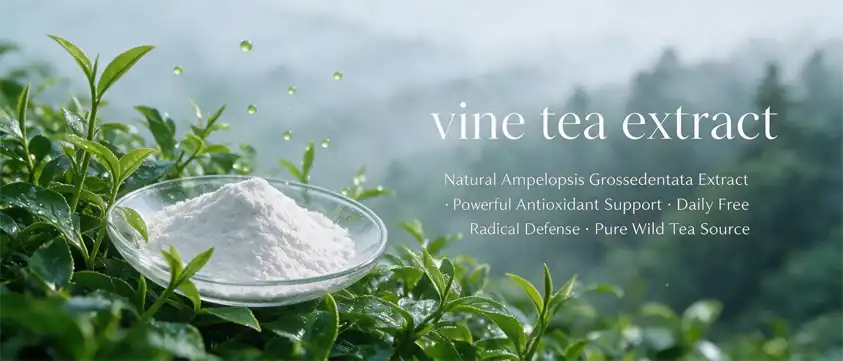
The most critical single step in getting vine tea extract for supplement formulation or private-label manufacturing is quality assessment. Extract of vine tea (Ampelopsis grossedentata) includes dihydromyricetin (DHM), a flavonoid with well-documented antioxidant and hepatoprotective action. In 2020, a study published in Food Chemistry demonstrated that the DHM content in standardized vine tea extract may be up to 98% pure. Knowing precisely what to test, what certifications to ask for, and what red flags to avoid before making any bulk purchase will save your brand from expensive compliance failures.
Understanding Vine Tea Extract Powder: Composition and Benefits
What Makes Vine Tea Extract Unique
The plant Ampelopsis grossedentata, which grows in southern China, has been used in traditional Chinese medicine for hundreds of years. Vine tea extract powder is made from its roots and leaves. The main ingredient in this plant-based antioxidant is dihydromyricetin, which makes it different from others. In tests for free radicals, DHM did much better than quercetin, according to a study that came out in the Journal of Agricultural and Food Chemistry.
Key Bioactive Compounds
It has more than just DHM. It also has other kinds of flavonoids. Flavonoids, different kinds of ampelopsin, and myricetin are a few of these. These chemicals work together to protect cells, help the liver, and reduce swelling. Vine tea extract is useful for B2B formulators who are making vitamins for liver health, functional drinks, and skin care lines that fight aging because it has a lot of different phytochemicals.
Bulk Supply Formats and Packaging Standards
Vine tea extract powder is typically offered for sale as a spray-dried or freeze-dried powder or as measured pills. Powder style is best for mixing a lot of things because it saves money and lets you make different mixes. Put things in boxes made of two layers of aluminum foil and fill them with nitrogen. This is how most things are kept from going bad while they are being moved or stored.
Core Criteria to Evaluate Vine Tea Extract Powder Quality
Antioxidant Capacity Testing
If you buy vine tea extract from a trustworthy business, they should be able to show you HPLC-verified Certificates of Analysis that show how much DHM is in the extract and how it matches standards for Ampelopsis grossedentata. This needs to be done so that people don't cheat by using fake DHM or cheaper flavonoid alternatives. To prove that standardized extracts are real, they should come with a chromatogram fingerprint. The DHM percentage should also be made clear. This is most often 50%, 90%, or 98%.
Contaminant Screening and Safety Standards
The safe range for mercury is below 0.1 ppm; for arsenic it is below 1 ppm, for cadmium it is below 1 ppm, and for lead it is below 3 ppm. There can't be more than 1,000 CFU/g of germs, and neither Salmonella nor E. coli can be present. More so when the extract comes from plants, it is important to look for both insecticide residue and PAHs.
Comparative Analysis: Vine Tea Extract Powder vs Other Tea Extracts
Antioxidant Potency Compared to Green and White Tea Extracts
A big part of the antioxidant power of green tea extract comes from EGC. On the other hand, white tea extract has fewer polyphenols. This stuff works better than both of them as long as the DHM level is at least 90%. A 2019 study published in LWT – Food Science and Technology found that at the same concentrations, extracts from Ampelopsis grossedentata were better at stopping DPPH than regular green tea extract.
Organic vs Conventional Vine Tea Extract
Vine tea extract with organic certification costs 15–30% more than regular grades, but health-conscious consumers in North America and Europe prefer it. There aren't as many pesticides that don't get to the source in organic farming. This lowers the chance that leftovers will end up in the finished product and make it unsafe to eat. It's worth the extra cost for brands that want to show they have clean labels to get organic approval.
Powder vs Capsule Format: Which Suits Your Production Line
When you buy it in bulk, powder form works better because you can mix it in more ways. It also lasts longer if you store it properly. Sometimes, brands want to cut down on the steps they need to take to package their own products. This is especially true for OEM orders that only come in small amounts. Vine tea extract powder is still the choice of most big supplement companies because it is better and costs less.
Selecting the Right Vine Tea Extract Supplier: Quality and Reliability Checklist
Certifications and Traceability Requirements
You may trust a firm that manufactures vine tea extract if it has at least GMP clearance. Also, organic and ISO 9001 are positive evidence of certification. There must be third-party lab reports. There must be records of where the raw ingredients originated from. And records of how each batch was modified. There should be complete records from the time the powder was picked up at factories until it was exported. This matters for your business.
Pricing Transparency and Bulk Order Flexibility
The price of vine tea extract powder in the market is determined by the certification of the DHM, the quantity ordered, and the standardization of the product. It costs between $30 and $120 a kilogram, depending on how clean it is. If you are purchasing vine tea extract from a reliable company, they will be open about their minimum order amounts and lead times. They will also charge various costs for little and big purchases. Don't purchase from people who don't provide you with samples or third-party test findings.
Evaluating Long-Term Supply Chain Stability
The supply chain has to be right, just as the product has to be right. Ask prospective suppliers how much money they earn in a year, where they receive their supplies, and what they do when their crops don’t develop as intended. They have in-house QC laboratories, specialized extraction facilities, and a history of delivering to EU and FDA-regulated markets, so they’re better positioned to maintain delivery dates and product quality over time.
Best Practices for Storing and Using Vine Tea Extract Powder
Recommended Storage Conditions
Vine tea extract powder should be kept between 2°C and 25°C, with relative humidity less than 60% and away from direct light. The DHM concentration is degraded by heat, moisture, or UV radiation, and the antioxidant action is decreased as well. Best performance in final formulations is achieved when resealed immediately after opening and used within 12 months of the manufacturing date.
Dosage Guidelines for Nutraceutical Applications
Published clinical references show beneficial DHM dosages of 150 mg to 500 mg per serving depending on the goal application – liver support, blood sugar control, or antioxidant supplements. Formulators should use vine tea extract with a known DHM % and determine the final dose appropriately. Always check with a trained formulation chemist before completing product specifications.
In-House Acceptance Testing Upon Delivery
When you get a shipment of vine tea extract, do a simple sensory check to determine its quality: the powder should be light yellow to off-white in color, fine in texture and able to pass through an 80-mesh filter, and have a mild, slightly bitter flavor. Compare the batch CoA with your purchase order criteria. Flag any variation in color, odor, or appearance and ask for re-testing from the supplier before the batch is fed into your manufacturing line.
Conclusion
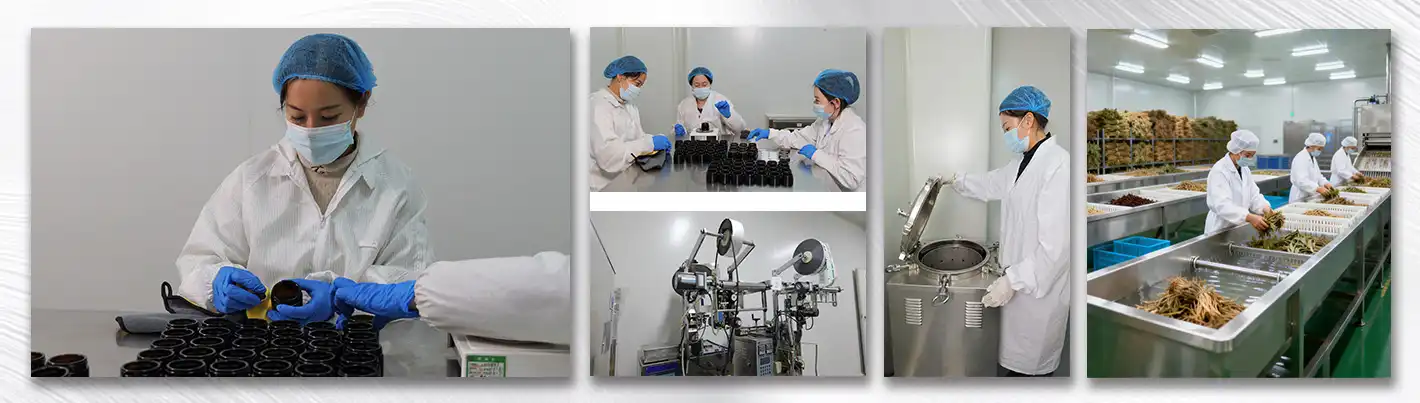
BioSpark (Xi’an) Biotechnology Co., Ltd. is a GMP-certified producer of vine tea extracts and a supplier of standardized DHM extracts with purity ranging from 50% to 98%. Our staff can assist you with a short test run or OEM manufacturing at full scale. We have competitive pricing, thorough documentation, and validated third-party test reports.
FAQ
1. What lab tests should I request before buying vine tea extract in bulk?
Request HPLC purity assay confirming DHM content, heavy metal panel (Pb, As, Cd, Hg), microbial screen per USP standards, and pesticide residue report. A full CoA with third-party lab verification is the baseline expectation for any credible vine tea extract manufacturer.
2. Does organic certification affect vine tea extract quality?
Organic certification primarily controls pesticide and synthetic fertilizer use during cultivation. It does not automatically guarantee higher DHM purity, but it significantly reduces contamination risk. For U.S. market products targeting clean-label positioning, USDA organic or equivalent certification strengthens consumer trust and regulatory standing.
3. What safety and import documentation do I need for the U.S. market?
You will need a supplier-issued CoA, FDA facility registration documentation for the manufacturer, a phytosanitary certificate if required, and records confirming compliance with FDA 21 CFR Part 111 GMP standards. Confirm that the vine tea extract appears correctly classified on customs documentation to avoid import delays.
4. Can vine tea extract be used in both food and supplement applications?
Yes. Vine tea extract is used in dietary supplements, functional beverages, and cosmetic formulations. Confirm the intended application with your supplier to ensure the grade, solubility profile, and regulatory documentation align with your specific product category.
Partner with BioSpark for Certified Vine Tea Extract Supply
You should ask for a PM2.5, As, Cd, and Hg heavy metal panel, a USP-compliant microbe screen, and a pesticide residue report. This will prove how much DHM there is. You can trust someone who makes vine tea extract if they give you a full COA with lab proof from a third party. You can get your product sheet and sample right now by emailing leao@biosparkcn.com.
References
1. Hou, X. L., et al. "Dihydromyricetin: A Review of Its Pharmacological Effects and Mechanisms." Food Chemistry, 2020.
2. Zhang, Z., et al. "Antioxidant Activity of Flavonoids from Ampelopsis grossedentata." Journal of Agricultural and Food Chemistry, 2012.
3. Wang, Y., et al. "Comparative Antioxidant Capacities of Plant Polyphenol Extracts." LWT – Food Science and Technology, 2019.
4. Shen, Y., et al. "Hepatoprotective Effects of Dihydromyricetin Against Alcohol-Induced Liver Injury." Phytomedicine, 2015.
5. United States Pharmacopeia. USP General Chapters <2021> and <2022>: Microbial Enumeration Tests. USP, 2023.
6. Xie, J., et al. "Bioavailability and Metabolic Profile of Dihydromyricetin in Human Subjects." European Journal of Nutrition, 2021.

Send Inquiry
Related Industry Knowledge
- Can Organic Chaga Mushroom Extract Improve Beverage Formulas?
- What Are the Key Benefits of Polygonatum sibiricum Peptide?
- Damiana Peptide: Benefits, Uses, and Applications
- Why Is Kidney Bean Flour Used in Gluten-Free Foods?
- Why Choose Hami Melon Powder for Clean-Label Products?
- Can Cape gooseberry powder Enhance Your Product Formula?
- What Makes Kidney Bean Flour a Smart Gluten-Free Choice?
- How does loquat powder benefit digestive health?
- What Makes Kacip Fatimah Extract a Women’s Health Tonic?
- Why Broccoli Extract Powder Boosts Cellular Health Naturally?