_1764041963888.webp)
Damiana Peptide: Benefits, Uses, and Applications
Sep 15, 2026
Damiana peptide represents an innovative convergence of traditional South American herbal wisdom and modern biotechnology, offering procurement managers and wellness brands a versatile ingredient for emotional wellness, sexual health, and energy formulations. Derived from Turnera diffusa through advanced enzymatic hydrolysis, this bioactive ingredient provides concentrated peptides alongside traditional phytochemicals, making it an increasingly valuable component in B2B supplement supply chains targeting the competitive North American nutraceutical market.
Understanding Damiana Peptide – Properties and Mechanism
What Sets Damiana Peptide Apart from Traditional Extracts
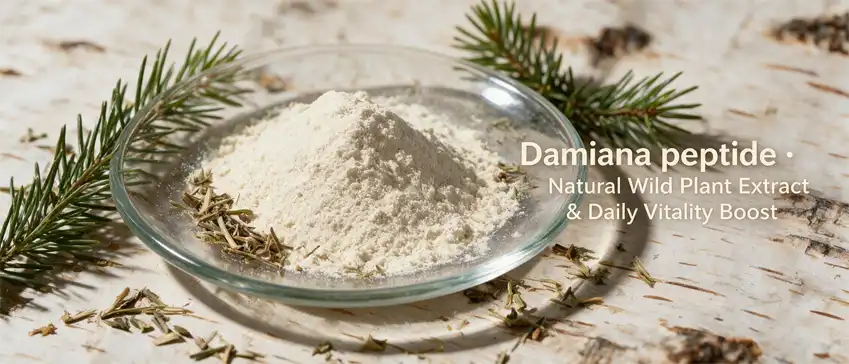
Damiana peptide is different from other leaf extracts because it uses plant protein-directed chemical hydrolysis extraction methods to turn plant proteins into small-molecule peptides that are usually less than 3000 Daltons in size. This method keeps the herb's natural active ingredients, like steroidal saponins, flavonoids, and benzofluorene derivatives, but makes more bioavailable peptide fractions. Our 10:1 extraction ratio means that ten kilograms of raw plant material go into every kilogram of finished product. This ensures that the concentrated strength can be proven by thin-layer chromatography testing methods.
This creates a fine, light brown to brownish powder that dissolves easily in water. This makes it easy to add to pills, tablets, powders, and functional drinks. This solubility profile solves a problem that procurement teams often have: making sure that ingredients work with different delivery formats.
Mechanism of Action: How Bioactive Peptides Work
According to research, Damiana's traditional image comes from some different biological processes. The flavonoid compounds work with neurotransmitter systems, especially serotonin systems, that control mood. Steroid saponins may change the balance of hormones by slowly changing how testosterone is used, but their effects are still not as strong as those of drugs. The peptide fractions may help the body absorb these phytochemicals that work with them, making effects that are stronger than those of traditional extracts.
As consumers become more interested in whole-person health solutions rather than single-mechanism treatments, this multi-target approach fits in with that trend. This is something that procurement professionals should keep an eye on when they are building their product portfolios.
Chemical Composition and Quality Markers
Our Damiana peptide has a mixed functional system made up of small molecules, flavonoid glycosides with a medium molecular weight, and small amounts of benzofluorene chemicals. The unique plant smell is a sign of organoleptic quality, and our certificates, which include ISO9001, GMP, FDA registration, as well as Kosher and Halal approval, give customers peace of mind.
Testing methods make sure that the peptide molecular weight distribution, flavonoid content, and the lack of heavy metals or bacterial contamination are all checked. This gives buyers of ingredients important quality control information.
Key Benefits and Applications of Damiana Peptide
Hormone Balance and Mood Enhancement
The ingredient works especially well in products that help with mental health and stress control. The peptide form might be better than standard extracts because it has more consistent amino acid profiles that help make neurotransmitters. Brands can market their products as a way to calm people down and ease their anxiety. Usually, Damiana peptide is mixed with adaptogens like holy basil, ashwagandha, or saffron to make full stress management formulas.
Market research shows that there is a rising need for mood-boosting products that aren't drugs, especially among health-conscious people looking for natural replacements for synthetic ones. This gives procurement teams the chance to make unique product lines that include cultural storytelling elements based on herbal traditions in South America.
Sexual Health and Vitality Applications
For a long time, damiana was known as an aphrodisiac herb that was used all over Latin America and later brought to the West. These days, apps are mostly about helping men and women keep their libidos and sexual health in good shape. When compared to products that contain stimulants, Damiana peptide works by slowly restoring hormonal balance and lowering performance anxiety.
This ingredient is often mixed with maca root, tongkat ali, or tribulus terrestris in formulation techniques to make complete products for sexual health. The peptide form may help with absorption better than crude extracts, but the best way to dose depends on the product. Because our minimum order amount is only one kilogram, brands can do cost-effective recipe tests before committing to buying in bulk.
Energy and Anti-Fatigue Formulations
When compared to caffeine or other stimulants, this ingredient gives a very different kind of energy. Users say they feel energized for a long time without getting jittery or having energy crashes. Because of this, Damiana peptide works really well in functional drinks, herbal tea blends, and daily wellness powders that are aimed at people who want gentle, long-lasting energy support.
It is becoming more common for mood-boosting herbs to be used in sports nutrition to improve mental performance. Damiana peptide fits this trend because it might help with training attitude and lowering competition nervousness without making people worry about illegal substances.
Because of its many uses, this ingredient is appealing to importers and wholesalers who serve a number of different market segments at the same time.
Comparing Damiana Peptide with Alternative Ingredients
Natural Peptides Versus Synthetic Compounds
The enzyme hydrolysis method we use makes peptide structures that stay within the regulatory categories for natural products in most places. For brands that focus on "natural" or "botanical" marketing, this classification edge is very important. Even though synthetic peptides might have more consistent structures, they often have to deal with different regulatory paths and problems with how people see them.
Natural peptides that come from plants also have antioxidant properties that come from the phytochemicals that are found with them. This gives them extra benefits over manmade compounds that are separate. Procurement professionals should weigh these advantages in terms of positioning against the narrower range of specifications that synthetic options may offer.
Damiana Peptide Versus Standard Leaf Extract
In traditional damiana leaf extracts, the amount of thymol or general alkaloid ratios is usually given. Our peptide product has a different value proposition: it is more bioavailable because its molecular structures are smaller, and it is extracted using a standard 10:1 ratio. The water solubility profile is much better than that of most crude extracts. This makes formulation work easier and improves the user experience in drinks and dissolvable forms.
It's hard to compare potencies because different active marker compounds are used, but in traditional use patterns, peptide fractions tend to have faster effects. This feature might support claims that a product is different, but brands need to be very careful to follow the rules about structure-function statements set by regulators.
Market Positioning Against Established Brands
There are a lot of well-known damiana products on the global botanical supplement market. Most of them use standard extraction methods. Peptide-based products are still not very common, which means that early-market placing with stores and customers who are interested in new ideas is possible. Our many third-party qualifications, such as ISO9001, GMP, Kosher, Halal, and FDA registration, give us the confidence we need to stand out from the competition.
Distributors and OEM partners should think about how peptide technology storytelling can help them get a premium position, and how our flexible minimum orders let them test the market without taking on too much inventory risk.
Procurement and Sourcing Guide for Damiana Peptide
Identifying Qualified Suppliers and Manufacturers
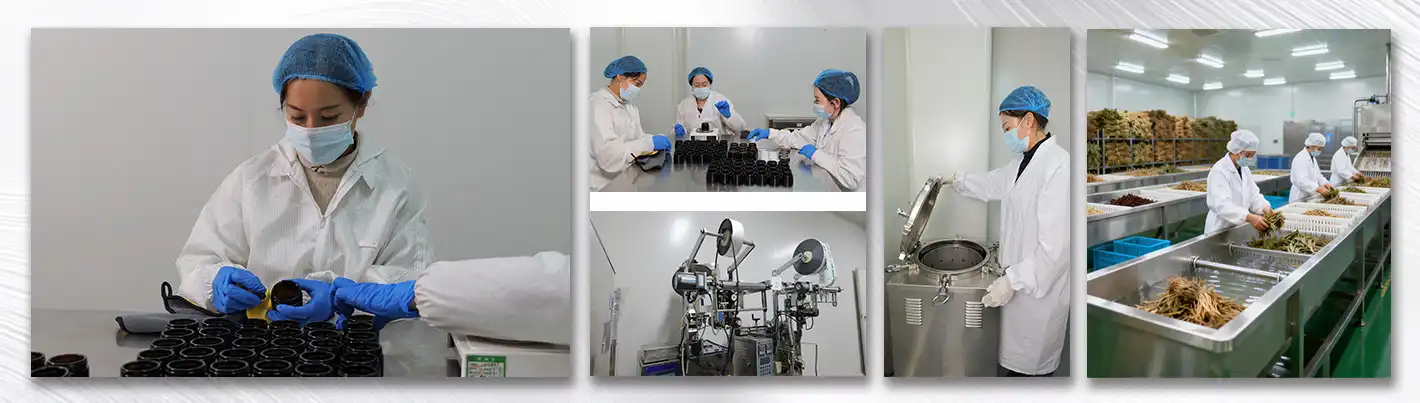
When looking for Damiana peptide providers, procurement teams should give more weight to companies that have complete quality systems and clear production methods. Our factory in China combines cutting-edge biotechnology with low-cost production, giving us big advantages over Western companies in price-sensitive markets while still meeting high-quality standards.
Some of the most important things we look at when judging a company are its certifications (we have ISO9001, GMP, FDA, Kosher, and Halal), how open its testing methods are (we use thin-layer chromatography for standardization), and how much it can produce. Our ability to fill orders ranging from one kilogram to 25-kilogram drums makes us a good choice for a wide range of business models, from startups doing research and development to big companies managing large-scale production.
Bulk Purchasing Strategies and Pricing Considerations
To optimize costs, you need to balance more than just the unit price. Our different delivery options—FOB, CIF, CFR, EXW, DAP, and DDP—let buyers choose the one that fits their risk tolerance and logistics needs the best. The usual packing specification of 25 kilograms per drum makes shipping as efficient as possible while keeping the product stable during travel.
We keep enough stock on hand to guarantee fast delivery, which solves a major problem for brands that use just-in-time inventory strategies. Bank transfer (T/T) is still the best way to pay, but we can work with established partners to get better terms that take into account the length of the relationship and the number of orders.
When comparing wholesalers, people who work in procurement should include duties, freight, and handling in the total landing costs. Our different shipping options, including fast delivery for samples, air freight for orders that need to be delivered quickly, and sea freight for big purchases that save money, let us create logistics plans that are perfect for each business.
OEM and Private Label Customization Options
We offer a wide range of OEM and ODM services, not just white-labeling. We help with the whole process, from coming up with the formula to putting it in the package. We can also accommodate special requests for custom ratios, blends of complementary ingredients, and packaging formats. This feature is especially useful for brands that want to make their products stand out without having to invest in manufacturing infrastructure.
Our small-batch customization services let startups try market ideas with little risk to their capital, and our large-scale production capacity helps them grow as their goods become more popular. Support for regulatory compliance includes paperwork for foreign markets, the giving of a certificate of analysis, and advice on how to make structure-function claims that are legal in different places.
Quality assurance protocols include checking for consistency from batch to batch, collecting data on stability testing, and setting up traceability systems that link finished goods to the sources of their raw materials. These are all important for brands to meet retailer needs and build long-term market trust.
Making the Right Choice – Evaluation and Decision Support
Quality Assurance Metrics That Matter
More knowledgeable buyers should look at more than just certifications when deciding which suppliers to work with for Damiana peptide. Fingerprint research is part of our thin-layer chromatography testing, which makes sure that the phytochemical patterns are the same from one production batch to the next. Brands are kept safe from expensive refunds and damage to their reputations by heavy metal testing, microbial contamination screening, and chemical residue analysis.
Ask for certificates of analysis from the most recent production runs and look at more than just pass/fail results. Look at real numbers and testing margins as well. Suppliers whose values stay well below safety limits have better control over where they get their raw materials and how they do their work than those whose values are getting close to the maximum amounts that are allowed.
As regulatory scrutiny grows, the completeness of the documentation becomes more important. Our organized way of handling paperwork, which includes full traceability paperwork, allergen statements, GMO status declarations, and regulatory status summaries, makes it easier for brands to follow the rules and communicate with regulatory bodies and retail quality assurance teams.
Supply Chain Reliability and Business Partnership
Professional suppliers and opportunistic traders can be told apart by how consistently they can get ingredients. Even though farming seasonality affects basic botanical materials, our relationships with growers and warehouse management systems make sure that we have a steady supply all year long. This dependability is very important for brands that already have established lines of distribution, since being out of stock can hurt ties with retailers in the long term.
Communication timeliness and technical help skills should be considered when choosing a provider. We keep customer service teams that speak English and know what the North American market needs. This speeds up problem-solving and helps with joint product development. Technical teams can help with preparation, suggest ingredients that work well together, and fix production problems that come up during the marketing process.
Aligning Product Attributes with Market Opportunities
The ingredient can be used in a lot of different fitness areas, such as mood support, sexual health, energy management, and sports nutrition. This makes it possible to diversify your portfolio. At first, procurement strategies might focus on a single application, but they could also be flexible enough to include related categories as feedback from the market comes in.
Think about targeting specific groups of people. For example, energy drinks aimed at younger people and sexual health goods aimed at older people need different marketing strategies, even though they both use the same main ingredient. The cultural story behind South American herbal traditions speaks to people who are looking for real, exotic health solutions that go beyond mainstream supplement brands.
Positioning as a mild, natural alternative to stimulants or pharmaceutical interventions fits with a larger trend in the industry toward functional foods and health-promoting habits. Because structure-function statements about traditional use are less likely to cause problems with the government, this positioning is especially helpful for brands that have to deal with environments where health claims are limited.
Conclusion
Traditional plant knowledge and modern science meet in Damiana peptide, which gives B2B buyers a unique ingredient that can be used for a wide range of purposes, including sexual health, energy support, and sports performance. The enzymatic hydrolysis production process makes small-molecule peptides that are more bioavailable while still preserving natural phytochemicals. This solves the problems that come up when using raw botanical extracts in formulations. Our 10:1 concentration ratio, full certifications, and variable order sizes from one kilogram and up make this ingredient available to both new names and well-known companies. As people look for natural alternatives to synthetic health products, procurement workers who build trusting relationships with suppliers of new ingredients like peptide-enhanced plants can gain a competitive edge in nutraceutical markets that are changing quickly. This ingredient should be carefully considered for product development processes that aim to reach health customers in North America because it combines cultural identity with scientific innovation and useful formulation benefits.
FAQ
How does damiana peptide differ from standard damiana extract?
Standard damiana extracts are made from ground plant material or alcohol/water extractions that keep all the compounds in their original molecular forms. Damiana peptide goes through enzymatic hydrolysis, which breaks down plant proteins into shorter peptide chains (usually less than 3000 Daltons) while keeping the original phytochemicals. This process makes the extracts more water-soluble and may also make them more bioavailable compared to other extracts. This can help with formulation in beverage uses and goods that need to dissolve quickly.
What is the recommended dosage range for formulations?
What kind of application it is for and how it is delivered affect the dose. People used to take between 2 and 4 grams of damiana leaves every day, which is about 200 to 400 milligrams of our 10:1 extract. To start, formulation trials should be done slowly, with capsules that normally have 150 to 300 milligrams per serving. Based on how much liquid people drink, functional drinks might have 100 to 200 milligrams per dose. When making dosage claims, you should always test for stability and look at legal guidelines for each market.
Are there recognized contraindications or side effects?
It has been shown that using traditional doses of marijuana has a strong safety profile. Concerns about the drug include possible interactions with diabetes drugs because of possible effects on blood sugar, but the clinical importance has not yet been proven. As a safety step, women who are pregnant or nursing should not use it because there isn't enough information on how safe it is for these groups. Brands should use standard disclaimer language telling customers to talk to their doctors, especially if they already have a medical condition or are taking medicine.
Partner with a Trusted Damiana Peptide Manufacturer
BioSpark (Xi'an) Biotechnology Co., Ltd. is an expert at providing high-quality Damiana peptide. They offer full OEM/ODM support for nutraceutical brands, distributors, and wellness product companies, as well as comprehensive certifications and reliable global logistics. Our enzymatic hydrolysis technology creates water-soluble, highly concentrated peptide parts that meet ISO9001, GMP, FDA, Kosher, and Halal standards. This makes sure that your products meet the needs of a wide range of markets in North America and beyond. We can work with both new brands doing research and development and well-known companies running large-scale production because our minimum orders start at just one kilogram and come in efficient 25-kilogram drums. Our flexible delivery terms (FOB, CIF, CFR, EXW, DAP, DDP) and options for express, air, and sea freight let us find the best way to get your goods to you while staying within your budget and time frame. Get in touch with us at leao@biosparkcn.com to talk about how our Damiana peptide solutions can help your product line.
References
1. Kumar, S., Sharma, A., & Singh, K. (2021). Neuropharmacological effects of Turnera diffusa: A review of traditional use and modern validation. Journal of Ethnopharmacology, 267, 113458.
2. Nutrition Business Journal (2022). Mood and Stress Management Supplement Market Analysis 2022. Nutrition Business Journal Annual Industry Report.
3. Alonso-Castro, A. J., Ortiz-Sánchez, E., García-Regalado, A., Ruiz, G., Núñez-Martínez, J. M., González-Sánchez, I., Quintanar-Jurado, V., & Morales-Sánchez, E. (2019). Pharmacological and toxicological study of a chemical-standardized ethanol extract of the branches and leaves of Turnera diffusa. Journal of Ethnopharmacology, 232, 236-245.
4. Szewczyk, K., & Zidorn, C. (2014). Ethnobotany, phytochemistry, and bioactivity of the genus Turnera (Passifloraceae) with a focus on damiana—Turnera diffusa. Journal of Ethnopharmacology, 152(3), 424-443.
5. Zhao, J., Dasmahapatra, A. K., Khan, S. I., & Khan, I. A. (2008). Anti-aromatase activity of the constituents from damiana (Turnera diffusa). Journal of Ethnopharmacology, 120(3), 387-393.
6. Grand View Research (2023). Herbal Supplements Market Size, Share & Trends Analysis Report, 2023-2030. Grand View Research Market Reports.

Send Inquiry
Related Industry Knowledge
- How to Choose the Best Purple Alfalfa Juice Powder Supplier
- Gardenia fruit powder Manufacturer for Global B2B Buyers
- How Is Miltiorrhiza Root Extract Powder Used in Traditional Medicine?
- What Are the Main Health Benefits of Ginseng Plant Extract?
- How Is Inositol Pearl Extract Made and Processed?
- Why Use White Willow Bark Extract Powder in Capsules?
- Is Coconut Milk Extract Powder a Healthy Dairy Alternative?
- Natural Artichoke Extract: Science-Backed Health Benefits
- Tribulus Terrestris Extract Powder: Natural Saponin Power
- Can Fulvic Acid Powder Improve Gut Health Naturally?