Can Organic Chaga Mushroom Extract Improve Beverage Formulas?
Oct 27, 2026
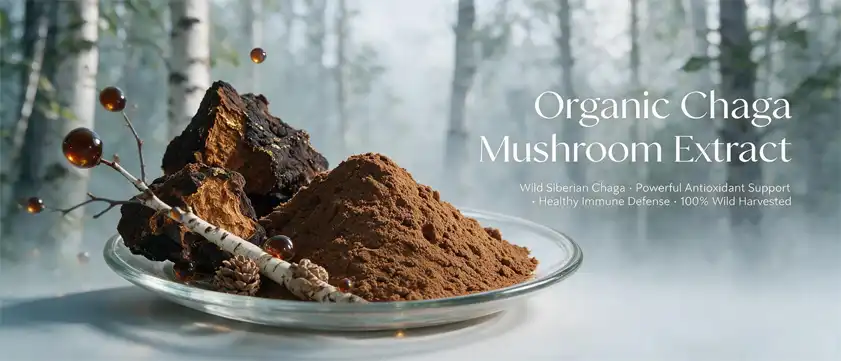
Organic chaga mushroom extract can genuinely improve beverage formulas. Derived from the Inonotus obliquus fungus harvested from wild birch forests in Siberia and northern Canada, this dark, concentrated extract carries a rich payload of beta-glucans, polyphenols, and melanin. These bioactive compounds support antioxidant activity, immune function, and product stability. For beverage brands targeting health-conscious consumers in the U.S. market, adding chaga extract is a practical way to build functional claims while maintaining a clean label — without relying on synthetic additives.
Understanding Organic Chaga Mushroom Extract and Its Benefits for Beverages
What Is Organic Chaga Mushroom Extract?
The Inonotus obliquus mushroom has tough chitin cell walls that need to be broken down. Hot water and ethanol are used to make organic chaga mushroom extract. This process releases chemicals that your body can use that the raw chaga powder can't get to you. The extract is organic according to both the USDA and the EU. This means it doesn't have any heavy metals, pesticides, or radiation in it. It always has the same amount of strength for formulators and has a clean label that can be tracked.
Key Bioactive Compounds and Their Roles
It's helpful because it has three main types of chemicals. Beta-glucans help the immune system do its job, with more than 20% of them. The ORAC value is high when it means that melanin and the chromogenic complex (often more than 25%) fight free radicals very well. Triterpenes like betulin and betulinic acid, which come from the birch tree host, make living things move around more. They looked at these chemicals together to describe the factor that lets them say it is healthy.
Why Consumers Are Drawn to Chaga-Infused Beverages
Fast growth is being seen in the market for healthy drinks in the United States. The world market for healthy drinks was worth more than $125 billion in 2023, according to Grand View Research. Adaptogens and natural immunity boosters are being sought after by more and more people. Chaga has a taste that is earthy and a bit like vanilla. It tastes good with both tea and coffee. It's good for both people who are just starting to drink for health reasons and people who already drink a lot because it's easy to use.
How Organic Chaga Mushroom Extract Enhances Beverage Formulas
Format Options: Powder, Tincture, and Liquid Extract
You need to pick the right style so that you can make the item quickly and well. As far as business models go, there are three main types:
- Fine dark powder: The most common format, it disperses well in hot beverages like mushroom coffee and instant teas. Its heat stability — a key technical property — means it survives pasteurization and hot-fill processes without losing potency.
- Liquid extract (tincture): Suited for ready-to-drink (RTD) applications, energy shots, and cold-brew formulations where uniform mixing at room temperature is needed. Bioavailability is high since the extraction is already complete.
- Tea extract granules: Designed for single-serve sachets or shiitake mushroom extract powder-stick applications, offering precise dosing and convenience for consumer retail products.
It can be used to make cold brew, energy shots, and ready-to-drink drinks that just need to be mixed well at room temperature. Because the extraction was already done, there is a lot of absorption.
It is easy and accurate to dose tea extract grains for consumer goods because they come in single-serve bags or powder sticks.
Dosage Guidelines for Different Beverage Types
They have to make sure that each format works with the drink base they want to use. To do this, they check how well it dissolves, how strong the taste is, and how much to use.
Real-World Application Example
How it is used changes the dose. Each cup of functional tea or coffee blend has between 300 mg and 1,000 mg of mushrooms added to it. It is sometimes added to health shots and energy drinks with up to 1,500 mg. The main point of the product story is how it works. So that the flavors don't clash, most shakes and juices stay between 200 mg and 500 mg. If a provider gives formulators uniform extracts with known beta-glucan amounts, they can be sure that the doses they use are always the same.
Comparing Organic Chaga Mushroom Extract with Other Mushroom Extracts and Formats
Chaga vs. Reishi: Which Fits Beverage Applications Better?
People know that some mushrooms, like chaga and reishi, can do useful things. They are, however, used in various goods in various ways. Reishi is very sour, so it needs to be mixed with something else in most drinks. There's no need to change the taste of chaga because it goes well with coffee, chocolate, and tea as they are. Some health claims say that chaga is better at fighting free radicals and reishi is better at helping you sleep and feel less stressed. Most of the time, chaga is the better choice for drink brands that want to improve health and immunity.
Extract Format Comparison: Pros and Cons
You can change both the price and the quality of an extract by picking the right file when you buy something. Compare these two:
- Standardized powder extract: Consistent potency, easy to scale, shelf-stable. Best for high-volume production where batch uniformity is non-negotiable.
- Dual-extracted tincture: Highest bioavailability, but higher cost per unit and shorter shelf life after opening. Better suited for premium or clinical-grade positioning.
- Non-standardized raw powder: Lower cost, but variable active compound levels create quality control challenges and weaken health claim credibility.
Some drink companies think that the best value for money is a shiitake mushroom extract powder that is USDA-certified and has a known amount of carbs.
High-Potency vs. Regular Extract: A Buyer's Consideration
Less elements can be used in each dose of high-potency extracts (10:1 or 20:1). They will still work. This lowers the price per unit of the element when used in large amounts. Plain extracts are a good price for brands that want to keep their costs low. The price goal, the customer, and the place where the label is put all play a role. In either case, the extract needs to be made the same. When you sell "organic chaga mushroom extract" but don't say how much beta-glucan it has, buyers and regulators don't trust it very much.
Procurement Insights: Buying Organic Chaga Mushroom Extract for Beverage Manufacturing
What to Look for in a Supplier
You should look at the proof instead of the claims if you want to get chaga extract. A reputable company that sells organic chaga mushroom extract will have a clear list of how much polysaccharide and beta-glucan are in each batch. They will also have had heavy metal testing done by a third party. They will also have organic certificates from the USDA and the EU. People in the US and Europe are becoming more and more interested in where the raw chaga came from. One more name for this is "traceability." If these papers aren't shown, firms that work with names could get in trouble with the law.
Pricing, MOQ, and Volume Discounts
Pure chongue extract powder can cost anywhere from $40 to $120 per kilogram, based on where it comes from, how much you buy, and the size of your order. Most respected manufacturers base their prices on a system of levels, and orders between 25 kg and 50 kg get huge savings. A company should find a supplier of organic chaga mushroom extract that lets them try out small amounts before going big. This way, they don't have to meet full business MOQs.
Logistics and International Shipping Considerations
When American beverage companies buy from Asia or Eastern Europe, it usually takes 15 to 30 days for them to get their goods by sea freight. If you hire a service that takes care of all your customs paperwork, like the COA, phytosanitary certificates, and organic transaction certificates, you won't have to wait at the port. Being able to ship on time is an important part of the supply chain, not just a nice-to-have. Brands that want to make unique things need to have written production plans to back up what they say about their supply.
Addressing Safety, Side Effects, and Regulatory Compliance
Known Side Effects and Contraindications
Chaga in the amounts that are suggested is safe for most people. Because it has a lot of oxalate, though, it can give people who are prone to kidney stones kidney stones. It might also not work well with medicines that make the blood thinner. Labels on drinks should have warnings that are safe for these groups. It has been shown that functional drinks are safe for healthy adults to use as long as they are made in the right amounts.
Regulatory Framework: U.S. and EU Standards
If it is sold as a drink in the U.S., it has to follow the FDA's Generally Recognized As Safe (GRAS) rules. If it is going to be offered as a food product, the DSHEA has to be followed. Before it can be sold in Europe, chaga has to follow the rules set by the EU Nano Food Regulation. Things have to be approved as organic all the way through the supply chain, from the time they are picked to the time they are sold.
Third-Party Testing and Documentation
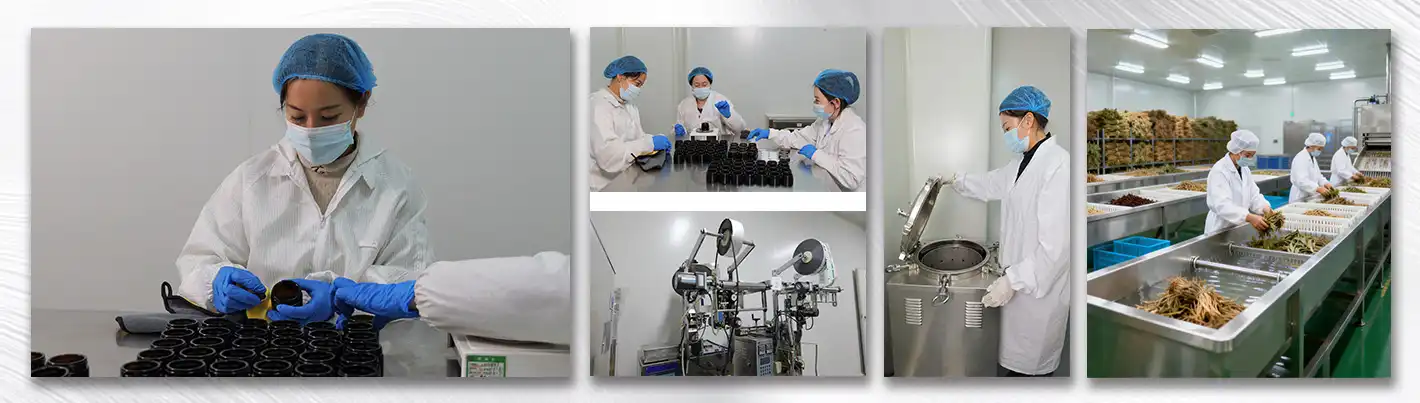
A trustworthy provider is different from a cheap one because they test for identity, heavy metals, microbial limits, and proof of active ingredients in a separate lab. Authorities won't be able to take action against brands that use organic chaga mushroom extract that has been checked by a third party. This builds trust among customers. Get a full Certificate of Analysis (COA) before you place an order. This is good business practice.
Conclusion
Organic chaga mushroom extract is a cheap and scientifically proven ingredient that can be used to make drinks. It tastes the same when cooked and is known to be good for you, so it works well in mushroom coffee, functional teas, ready-to-drink health drinks, and energy shots.
FAQ
1. Is chaga extract suitable for all beverage types?
Chaga is a good ingredient that people like, so brands can use it to get into or grow in the functional drink market. This is a very rare mix in a market that's getting more and more crowded.
2. What dosage range is recommended for functional beverages?
The amount can be anywhere from 300 mg to 1500 mg per dose, depending on the type of food and how the health claim is written. Most coffee and tea mixes have between 500 mg and 1000 mg of mushrooms. Before you make a new batch, make sure that all of the standardized extracts have the same amount of beta-glucan.
3. How does chaga's antioxidant activity compare to synthetic alternatives?
Chaga extract has one of the highest ORAC values of all the natural ingredients that were studied. An antioxidant like BHA or BHT is made in a lab. Chaga's polyphenol and melanin complex, on the other hand, comes from nature, is safe, and people like it. Natural products are a great way for brands to stand out and attract customers who care about their health.
4. Does organic certification affect extract quality?
Yes, organic certification from the EU and the USDA makes sure that the raw materials weren't grown or handled with synthetic pesticides or other chemicals that shouldn't have been used. If this happens, it changes the heavy metal risk, how well the label works, and how reliable any "clean label" claims on the finished product are.
Partner with BioSpark for Premium Organic Chaga Mushroom Extract
If they say they sell pure chaga mushroom juice, you can be sure they are telling the truth. They offer standard, dual-extracted ingredients that are approved by the USDA for people who make drinks. We can do everything, from testing small batches to full-scale OEM/ODM production of organic chaga mushroom extract. Also, there is written proof of every order from a third party. Right away, get in touch with our formulation team to learn more about the product, get a free sample, or find out how much it costs in bulk. You can email us at leao@biosparkcn.com.
References
1. Grand View Research. Functional Beverage Market Size, Share & Trends Analysis Report. 2023.
2. Géry, A., Dubreule, C., André, V., et al. "Chaga (Inonotus obliquus), a Future Potential Medicinal Fungus in Oncology?" Integrative Cancer Therapies. 2018.
3. Zheng, W., Miao, K., Liu, Y., et al. "Chemical Diversity of Biologically Active Metabolites in the Sclerotia of Inonotus obliquus and Submerged Culture Strategies." Applied Microbiology and Biotechnology. 2010.
4. Glamočlija, J., Ćirić, A., Nikolić, M., et al. "Chemical Characterization and Biological Activity of Chaga (Inonotus obliquus)." Food Chemistry. 2015.
5. U.S. Food and Drug Administration. Dietary Supplements: New Dietary Ingredient Notifications and Related Issues. 2022.
6. European Food Safety Authority (EFSA). Novel Foods Authorisation: Application for Inonotus obliquus (Chaga). EFSA Journal. 2021.

Send Inquiry
Related Industry Knowledge
- What Should Buyers Know About Bovine Bone Collagen Peptide?
- What Factors Affect Barley Sprout Powder Price?
- What Should You Check Before Buying Yellow Peach Powder?
- Can pomegranate seed extract powder improve blood circulation naturally?
- Freeze-Dried Barley Sprout Powder vs Regular Powder?
- Could Natural Blueberry Extract Powder Improve Beverage Formulas?
- What Are the Key Benefits of Ayurvedic Indian Herbal Extracts?
- What Makes Kacip Fatimah Extract a Women’s Health Tonic?
- Red Bean Extract: A Functional Ingredient for Modern Diets
- Why Ghanaian Seed Extract Is a Top Choice in Functional Foods?