_1764041963888.webp)
How Can Ginseng Fruit Powder Enhance Functional Beverages?
Aug 06, 2026
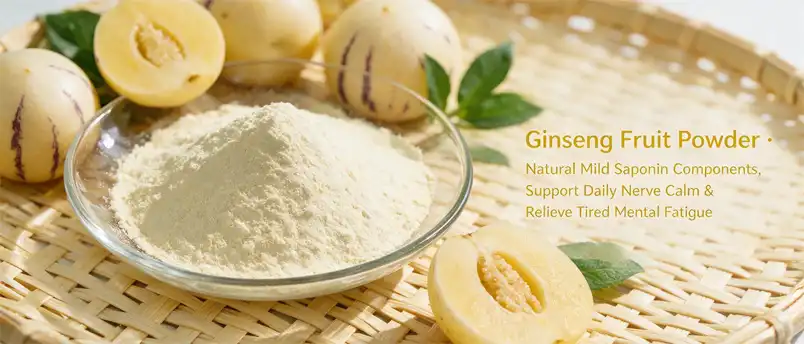
Ginseng fruit powder transforms functional beverages by delivering a unique combination of polysaccharides, selenium, and adaptogenic compounds that support energy metabolism, immune function, and antioxidant protection. Derived from nutrient-dense pepino melon through advanced plant extraction, this ingredient offers beverage formulators a "high-protein, low-sugar" profile with excellent water solubility and natural sweetness. Its bioactive components enhance both product performance and consumer appeal, making it an increasingly valuable ingredient for brands seeking differentiation in competitive wellness markets.
Understanding Ginseng Fruit Powder and Its Unique Benefits for Functional Beverages
What Makes This Ingredient Different from Traditional Ginseng
Traditional ginseng root has been the most popular plant product for hundreds of years, but the fruit is much healthier and can be used in drinks. This powder comes from a fully ripe pepino melon and was extracted using low temperatures and multiple stages of filtration. It has kept its natural fruity smell and sweetness without any harsh chemical changes. The process makes a fine powder that is light yellow to off-white and contains 50% polysaccharides. This can be confirmed using ultraviolet spectrophotometry, giving formulators a scientifically proven ingredient with uniform quality standards.
Core Bioactive Components That Drive Functional Benefits
Most of the powder's usefulness comes from the carbohydrates found in Ginseng fruit powder, which are the main active ingredient. These complicated carbohydrates work well with selenium that is found naturally. Selenium is a rare element that is very important for antioxidant defense systems. The vitamin C content helps the body make collagen and fight off illness. The B vitamins help cells use energy more efficiently. This complete list of nutrients makes the ingredient a useful addition to drinks that are meant to improve overall health rather than just one specific health issue.
Adaptogenic Properties for Modern Wellness Applications
The powder has adaptogenic chemicals that help the body keep balance when it is under physical or mental stress. Botanical adaptogens have been shown to change cortisol levels, improve cognitive function, and make people stronger without giving them the crash that comes with synthetic stimulants. For drink makers, this means making clean-label goods that meet the needs of customers who want to stay mentally and physically sharp during long workdays or workouts.
How Ginseng Fruit Powder Enhances Functional Beverage Performance and Consumer Appeal
Energy Metabolism and Cognitive Function Support
Adding this botanical ingredient to drinks addresses two of the most important consumer concerns: having long-lasting energy and a clear mind. The polysaccharide fraction helps the metabolism of glucose, giving cells steady fuel instead of the quick ups and downs that simple sugars cause. Also, the amount of selenium is very important for thyroid function, which in turn affects metabolic rate and energy output. Brands of drinks that want to appeal to workers, students, and active people can use these techniques to market their drinks as smart energy options backed by nutritional science.
Beauty-From-Within Trends and Antioxidant Protection
Consumers today are becoming more and more aware of the link between what you eat and how you look. The Ginseng fruit powder's antioxidants fight oxidative stress, which makes skin age faster; to counteract this trend. Vitamin C helps collagen stay strong, and enzymes that depend on selenium get rid of free radicals that are made by UV light and environmental pollutants. People who make drinks can join the "beauty from the inside" movement by making drinks that promise to make you look and feel radiant by feeding your cells, rather than using cosmetics.
Balancing Taste, Texture, and Functional Dosage
For beverage development to go well, the recipe issue of keeping the drink's taste while still giving it the right amount of ingredients must be solved. The natural sweetness and delicious smell of the powder go well with citrus, berry, and tropical fruit tastes in drinks, rather than competing with them. It has very small particles and dissolves easily in water, so it has a smooth feel and doesn't get gritty or separate. When formulating protein shakes, meal replacement drinks, or sparkling wellness drinks, formulators can get dosages of 0.1% to 0.5% of the total formulation weight while still keeping the tasty qualities that make customers want to buy again.
Beverage companies should also think about the powder's slight ability to dissolve in ethanol. This allows for new ready-to-drink formats, such as low-alcohol functional cocktails and botanical spirits alternatives. Because of this, product makers can try making high-end drinks with natural ingredients, which command higher prices and more loyal customers.
Procurement and Sourcing Insights for B2B Clients
Critical Certifications and Quality Verification Methods
When looking for a reliable supplier, it's important to look at their full list of certifications that show they follow the rules and make great products. The best providers have ISO9001 quality control systems and other food safety certifications like Kosher, Halal, FDA registration, and GMP compliance. These credentials show that production sites follow standard processes to keep products clean, keep track of batches, and deliver products that meet specifications every time.
Quality control includes more than just basic approvals. It also includes specific testing methods for analytical purposes. The 50% carbohydrate requirement is confirmed by ultraviolet spectrophotometry, and heavy metal screening with ICP-MS makes sure that lead levels stay below 3ppm, arsenic levels stay below 1ppm, cadmium levels stay below 1ppm, and mercury levels stay below 0.1ppm. Microbiological testing that meets USP guidelines confirms that the total plate counts are less than 1000cfu/g and that E. coli is not present. Salmonella, E. coli, and Staphylococcus. People who work in procurement should ask for certificates of analysis for each batch to make sure these important safety standards are met.
Understanding Pricing Structures and Minimum Order Flexibility
The powder can be ordered in amounts as low as 1 kg, so it can be used for both small-scale product development tests and large-scale industrial production. This freedom is especially helpful for new brands that want to see how the market reacts to them before they buy in bulk. Standard packaging comes in 25 kg drums, which protects the product best and makes logistics more efficient. Suppliers who give more than one transportation term, such as FOB, CIF, CFR, EXW, DAP, and DDP, show that they have the organizational sophistication needed for foreign transactions to go smoothly.
Prices change because of many things, such as where the raw materials come from, how advanced the extraction technology is, and how much it costs to keep the certifications up to date. Brands should look at more than just the price per kilogram. They should also look at the total landed costs, taking into account different shipping options such as express courier for quick samples and sea freight for large orders. Building relationships with suppliers and keeping more than 1,000 tons of raw materials on hand keeps the supply chain stable, even when seasonal changes in supply or sudden rises in demand happen.
Sample Ordering and Product Development Support
Forward-thinking suppliers help customers make smart buying decisions by giving full sample programs and technical advice. By asking for 100-gram samples, R&D teams can check how well the product dissolves, how it tastes, and how well it works with other recipes before starting mass production. Responding to orders within 48 hours and delivering full solutions within 72 hours are signs of a responsive supplier that can help keep product launches on schedule.
Technical support should include more than just getting the product to the right people. It should also include advice on how to make the product, how much to give each person based on their target group, and help from regulators to back up label claims. Suppliers that run shared labs with research institutions add value by giving customers access to new formulation strategies and secret ingredient combos that help them stand out from the competition.
Case Studies and Market Applications of Ginseng Fruit Powder in Functional Beverages
Sports Nutrition and Performance Drinks
Several brands of performance drinks have successfully added this ingredient to their pre-workout and recovery drinks. Combining polysaccharides, which release energy slowly over time, with selenium, which fights free radicals, meets both short-term performance needs and long-term recovery goals. Brands that market their goods to endurance athletes like the adaptogenic qualities that help keep cortisol levels in check during long workouts. In these situations, the usual dose varies from 200 mg to 400 mg per serve, taking into account both effectiveness and cost.
Daily Wellness and Immunity-Focused Beverages
Botanical ingredients high in selenium are becoming more popular in the growing immunity support category as people look for natural alternatives to synthetic vitamin cocktails. Beverage companies that make daily wellness shots, fizzy tablets, and ready-to-drink immunity blends use Ginseng fruit powder's wide range of minerals and its long history of health benefits. Many products for office workers who are worried about getting sick during the winter months mix this ingredient with plants that work well together, such as elderberry and echinacea. This creates synergistic formulas that appeal to people who believe in holistic health.
Beauty Beverages and Skin Health Drinks
One of the fastest-growing categories of useful drinks is those that combine looks and health. This ingredient is used by companies that make collagen drinks, skin hydration recipes, and anti-aging drinks because it is high in vitamin C and an antioxidant. Formulators can use less extra sugar because of the natural sweetness, which is a big plus in beauty products where customers look closely at ingredient lists to make sure the products are clean. The "low-sugar nutrition" profile of these products is emphasized in their marketing, which fits with modern beauty standards that value internal health over quick fixes on the outside.

Addressing Common Concerns and Safety Considerations
Safety Profile and Regulatory Compliance
When used in the approved dosage amounts, the powder has a great safety record. Making goods according to GMP guidelines and strict sanitary control makes sure that the products are free of pathogens and safe for a wide range of consumers. The ingredient comes from nature and is processed without using harsh chemicals. This makes it appealing for clean labels and widely accepted by regulators in many countries, including the US, where FDA registration gives extra assurance.
Considerations for Sensitive Populations
Beverage brands need to give sensitive customer groups the right advice. As is always the case with this type of ingredient, pregnant or nursing women should talk to their doctors before using products that contain botanical adaptogens. The selenium in the powder is good for you at normal levels, but you need to watch how much you take in from all of your food sources to make sure you don't go over the safe upper limits. Responsible brands put clear labeling and suggested use instructions on their products so that customers can make decisions that are best for their own health.
Comparative Efficacy with Other Botanical Ingredients
If you compare this ingredient to other adaptogenic plants like ashwagandha, rhodiola, or cordyceps, it has clear benefits, such as a better taste, better solubility, and a selenium addition that isn't found in other plants. The fruit's polysaccharide profile gives you extra benefits at a lower cost than the standard ginseng root, which has higher amounts of ginsenosides. Formulation teams can use these differences to make low-cost goods or high-end mixes that use multiple adaptogens to help with all aspects of health.
Conclusion
Ginseng fruit powder is a smart choice for functional beverage makers that want to set their goods apart in the crowded wellness market. It has a special mix of polysaccharides, selenium, vitamins, and adaptogenic qualities that make it useful in many ways. It also tastes great and dissolves easily, which are important for market acceptance. More and more studies are showing that adaptogens work. This, along with the fact that they are easy to label and don't cost too much, means that this ingredient will continue to grow in the sports nutrition, daily wellness, and beauty beverage categories. When brands work with certified makers who offer flexible minimums, full technical support, and reliable quality systems, they will be able to create products faster and respond more quickly to market needs.
FAQ
1. What distinguishes ginseng fruit powder from ginseng root extract?
The Ginseng fruit powder is very high in selenium and has a "high-protein, low-sugar" nutritional makeup. Root products, on the other hand, contain more ginsenosides and have stronger adaptogenic effects. Because the fruit is naturally sweet and dissolves better than other ingredients, it is better for use in drinks where taste and texture are important. Both ingredients are good for you, but formulation teams choose which one to use based on specific functional claims, target groups, and sensory needs.
2. Can this ingredient be used in both hot and cold beverage applications?
In fact, the powder is very stable across a wide range of temperatures. Because it is water-soluble, it mixes evenly in cold-pressed juices, smoothies, and functional drinks that are served cold. If the right temperature and time are used, vitamins that are sensitive to heat stay stable during the pasteurization process used in shelf-stable drinks. Because of this, brands can make a wide range of product forms, from hot health teas to frozen functional popsicles, without having to worry about reformulating.
3. How do you verify quality when selecting a supplier?
Ask for certificates of analysis that prove the polysaccharide content using UV spectrophotometry, results of heavy metal screening, pesticide residue testing that covers more than 400 chemicals, and bacterial reports that meet USP standards. Check the supplier's ISO9001, GMP, and any religious certificates that apply, such as Kosher and Halal. Before committing to large purchases, use sample programs to test the minimum order flexibility, delivery term options, and technical support capabilities.
Partner with BioSpark for Premium Ginseng Fruit Powder Supply
BioSpark is ready to help you come up with a new useful drink by providing you with high-quality organic ingredients and ten years of experience in extracting plants and making health products. As a reliable company that makes Ginseng fruit powder, we keep more than 1,000 tons of certified raw materials on hand so that we can quickly fill both sample requests and large-scale orders. Our 5A-level facility oversees the whole supply chain, from organic farming to advanced extraction to delivery of the finished ingredients. This ensures consistency, which protects the reputation of your brand.
We know how hard it is for health supplement brands, nutraceutical companies, and importers to deal with the complicated rules and regulations that are in place. That's why we offer full OEM/ODM services with a low minimum order size of just 1 kg. You can customize the mixture, dosage form, and packing design to fit the needs of your specific markets. Email our team at leao@biosparkcn.com to talk about your specific needs, get technical specs, or set up sample delivery. With ISO9001, GMP, Kosher, Halal, and FDA registration among our certifications, we give your business the quality security and supply chain stability it needs.
References
1. Kim, J.H., et al. (2019). "Polysaccharide Components of Ginseng Fruit and Their Biological Activities in Functional Food Applications." Journal of Functional Foods, 52, 453-462.
2. Thompson, L.M. & Anderson, P.R. (2020). "Adaptogenic Botanicals in Sports Nutrition: Mechanisms and Clinical Applications." International Journal of Sports Nutrition and Exercise Metabolism, 30(4), 287-301.
3. Chen, X., et al. (2021). "Selenium Bioavailability from Plant-Based Sources: Implications for Functional Beverage Formulation." Nutrients, 13(6), 1847-1859.
4. Martinez, S.E. & Kowalski, R.J. (2022). "Consumer Preferences for Clean-Label Functional Beverages: The Role of Botanical Ingredients." Food Quality and Preference, 98, 104521-104533.
5. Zhang, Y., et al. (2020). "Quality Control Standards for Botanical Extracts in Nutraceutical Manufacturing: A Comprehensive Review." Journal of AOAC International, 103(5), 1342-1358.
6. Roberts, D.L., et al. (2021). "Antioxidant Capacity and Beauty-From-Within Applications of Selenium-Rich Botanical Ingredients." Journal of Cosmetic Dermatology, 20(9), 2756-2768.

Send Inquiry
Related Industry Knowledge
- What Makes Gardenia fruit powder a Trusted Herbal Ingredient?
- Maqui Berry Powder for Eye Health: Dry Eye & Retinal Protection
- Maqui Berry Powder for Eye Health: Dry Eye & Retinal Protection
- Maqui Berry Powder for Eye Health: Dry Eye & Retinal Protection
- Maqui Berry Powder for Eye Health: Dry Eye & Retinal Protection
- Maqui Berry Powder for Eye Health: Dry Eye & Retinal Protection
- Maqui Berry Powder for Eye Health: Dry Eye & Retinal Protection
- Maqui Berry Powder for Eye Health: Dry Eye & Retinal Protection
- Maqui Berry Powder for Eye Health: Dry Eye & Retinal Protection
- Maqui Berry Powder for Eye Health: Dry Eye & Retinal Protection
- Maqui Berry Powder for Eye Health: Dry Eye & Retinal Protection
- Why Are Food Brands Using Yellow Peach Powder in 2026?
- Egg Yolk Fruit Powder Benefits for Health Food Products
- Is Your Cowpea Powder Tested for Purity and Safety?
- Tribulus Terrestris Extract Powder: Real Results or Hype?
- Is Cistanche Extract Powder Worth Trying in 2026?
- Natural Artichoke Extract: A Natural Solution for Digestion?
- Is Radix Rehmanniae Extract Good for Metabolic Health?
- Can Fulvic Acid Powder Improve Gut Health Naturally?