_1764041963888.webp)
How Are Fish Collagen Peptides Used in Functional Foods?
Sep 16, 2026
Fish collagen peptides are transforming functional food formulation by delivering high bioavailability, superior solubility, and clean-label appeal. Extracted through directed enzymatic hydrolysis from marine sources, these peptides feature molecular weights below 2,000 Daltons, ensuring rapid intestinal absorption and systemic bioactivity. Functional food manufacturers integrate them into ready-to-drink beverages, protein bars, beauty shots, and fortified snacks to meet growing consumer demand for nutricosmetic and joint health solutions while maintaining product clarity, neutral taste, and formulation stability across diverse processing conditions.
Understanding Fish Collagen Peptides in Functional Foods
What Are Marine Collagen Peptides?
With the help of enzymes, fish skin, scales, or bones are broken down in a controlled way to make marine collagen peptides. When collagen is hydrolyzed, its bands are broken up into pieces that are between 1,000 and 3,000 Daltons in size. Native collagen has a high molecular weight. Because of this change in structure, the intestines are more permeable. This means that peptides can get into the bloodstream more easily without being broken down too much. The pattern of amino acids is a lot like Type I collagen found in humans, which makes up about 70% of the skin structure. These peptides are very useful for skin health because of this.
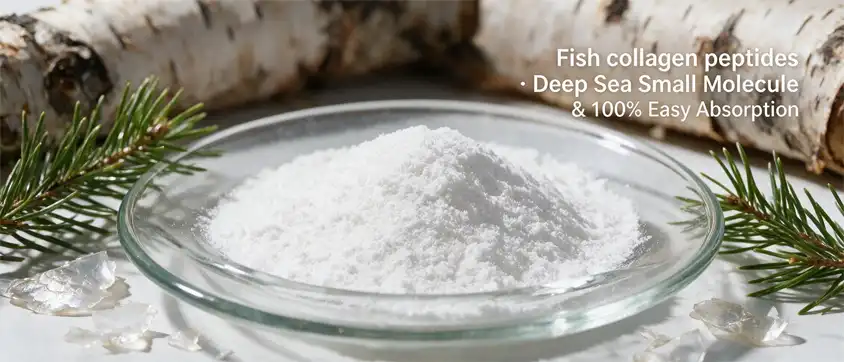
Directed enzyme breakdown is how we make a fine powder that is white to off-white, 90% pure, and HPLC tests show this. All recipes will follow this rule and work the same way. No dust is left behind when the powder is mixed with cold water. For uses in drinks that need to be clear and have a uniform mouthfeel, this is a very important quality. There is a faint fishy smell, but there are types that don't have any smell for clear protein drinks or beauty shots, where it's important to keep the senses neutral.
Types and Forms Available
When it comes to making things, marine collagen peptides come in a number of different shapes and sizes. Businesses usually buy powdered types because they can be used in many ways, stay stable when kept, and are simple to mix into dry mixes, quick drinks, and vitamins that are put in capsules. Liquid hydrolysates help companies that make ready-to-drink drinks because they are already broken down and have the same thickness all over. Brands of nutraceuticals that want to sell supplements put the supplements inside veggie or gelatin pills.
Brands that care about the environment love buying in ways that are good for the environment. Circular economy ideas are backed up by fish collagen that comes from cold-water species caught in the wild or from food processing waste that is reused. Products can be tracked with certifications like Marine Stewardship Council (MSC) or Ocean Wise. This helps customers trust a brand and learn about its history. Companies that want to reach their ESG (environmental, social, and governance) targets should work with suppliers who are dedicated to responsible buying and clear supply chain records.
Biological Mechanisms and Efficacy
Fish collagen peptides are easier for the body to absorb through the skin and throughout the body because of their small chemical structure. Skin Pharmacology and Physiology says that taking vitamins by mouth makes the skin more flexible, hydrated, and high in collagen. It also makes lines less deep. Fibroblasts in the skin layer become more active when peptides are present. This causes new collagen to be made and the extracellular matrix to be renewed. There are more and more products on the market that claim to make you beautiful from the inside out.
Collagen peptides can provide amino acids that are needed to repair and build cartilage, which is used in joint health. Researchers have found that older people and athletes who regularly eat collagen peptides have less joint pain and can move around better. The quick absorption rate makes sure that bioactive peptides quickly reach the right tissues, which makes treatment work better. When B2B clients who make supplements for bone health or sports nutrition highlight these benefits in their marketing materials and regulatory filings, they get an edge over their competitors.
Key Considerations When Integrating Fish Collagen Peptides into Functional Foods
Dosage Accuracy and Formulation Challenges
Depending on the health claims and the people being targeted, doses of 2.5 to 10 grams per day work well. Most nutricosmetic solutions have 5 grams per dose, which is a good mix between how well it works and how much it costs. For many joint health products, you need to take up to 10 grams of amino acids in order to get levels that are clinically useful. Manufacturers need to figure out exact inclusion rates in order to keep formulation economics and keep labels.
When formulating, it's hard to figure out how to make something dissolve and stay stable during processes. The marine collagen peptides are very easy to break down in water; they break down totally at room temperature. But peptides may not be stable in places where the pH is below 3.0 or above 9.0 over time. Pepsins need to be carefully checked to make sure that heat methods like ultra-high-temperature (UHT) pasteurization or retort cleaning don't hurt them. No damage is done to our collagen peptides when processed with UHT. During the time they're stored, they keep their bioactivity and taste. By making sure the product is safe to use with vitamins, minerals, and plant extracts, interactions that could hurt the product's quality or stability are avoided.
Comparison with Other Collagen Sources
Fish collagen peptides are absorbed faster than those made from cows or pigs. There is more glycine-proline-hydroxyproline tripeptide in marine collagen peptides, which makes them 1.5 times better at getting into cells. It can also be at different levels of purity. Animal diseases like bovine spongiform encephalopathy (BSE) and porcine viruses are much more dangerous when they come from land sources. Peptides that come from fish are Halal and Kosher, which makes the market easier for people who have to follow religious meals to get into.
Marine collagen made from trash is better for the environment because it helps blue economy projects and reduces trash. This difference in the story is good for brands that care about the earth. When producers look at collagen sources, they should think about how well the body can take them, how safe they are, how well regulators like them, and what people want. All of these things are true for our Fish collagen peptides because they are approved by ISO9001, GMP, FDA, Halal, and Kosher.
Safety, Regulatory Compliance, and Certifications
The first step in making sure of safety is to have a third party test the food for heavy metals, bacterial contamination, and allergen leftovers. At 90%, HPLC testing makes sure that the quality is good and that every batch of the product is the same. A certificate of analysis (COA) is included with every package. This makes things clear and easy to keep track of. How to follow the rules is different in different parts of the world. Collagen peptides are generally recognized as safe (GRAS) by the European Food Safety Authority (EFSA) and the US Food and Drug Administration (FDA). This means that they can be used in foods and supplements. It's easier to sell to Jews, people from North Africa, and people from the Middle East if your food is certified as Halal or Kosher.
Business-to-business clients should put more trust in service providers with strong quality management systems. GMP compliance makes sure that areas used for making medicines are clean enough to be used for medical purposes, and ISO9001 approval makes sure that controls used during operations are consistent. At our place, these certifications are kept up to date through frequent exams and ways to keep growing. People are less likely to get sued, get approvals faster, and have a better brand image when they buy from qualified sellers who are dedicated to quality excellence.
Market Trends and Procurement Insights for B2B Clients
Global Demand Drivers and Regional Preferences
Marine collagen peptides are found in useful foods that are most popular in North America and Europe. And this is because older people want to slow down the aging process, and busy people need help for their bodies. The nutricosmetics market has grown at an 8.5% annual rate. This shows that people would rather use beauty products that they can eat than ones that they can only put on their skin. More than 40% of collagen-enhanced functional foods come in the form of drinks. People like these because they are simple to use, absorb quickly, and come in many flavors.
Supplier Selection Criteria
The quality of your products, the dependability of your supply chain, and your long-term profits will all depend on how well you choose your suppliers. Companies that make things should look at sellers' credentials (ISO9001, GMP, FDA, Halal, Kosher), the way they test their products (HPLC verification), and the paperwork that shows how the goods were made. Badges that show a company cares about the environment, like MSC approval or proof that they use waste materials, are in line with their ESG claims.
Bulk Purchasing Benefits and Pricing Strategies
You can save money by buying more because the cost per unit goes down as a result of economies of scale. Suppliers who give deals for big orders urge customers to do so and keep the supply steady. Prices stay the same even if the cost of raw materials goes up or down because of long-term contracts. This protects producers from changes in the market. Our packing standards of 25 kg per drum save time and money on shipping and storage while also making the goods easier to move.
Practical Applications and Case Studies
Beverage Formulations
Ready-to-drink collagen drinks are the type of useful food that needs to grow the fastest. Collagen peptides from the sea are added to 5 to 10 grams of beauty shots, protein waters, and fruit juices. When the pH level is between 3.0 and 4.0, our peptides stay clear and don't form ugly precipitates. Heat resistance keeps the food stable during UHT cooking and also makes it last longer without having to be cooled. There are times when flavor systems really shine through when taste profiles are bland. This makes it possible for a lot of different taste experiences, from tropical mixes to berry drinks.
Snacks and Nutrition Bars
Marine collagen peptides are added to functional snacks and protein bars to make them healthier without changing the way they taste or feel. Our peptides are easy to add to dry mixes, and they stay with other ingredients while they are being cooked or extruded. They add protein and back up claims that collagen is good for you, which makes snacks stand out in the tight food market. Controlling the moisture while the product is being made keeps it from clumping and the quality of the finished product level.
OEM Partnership Models
Because of OEM and ODM partnerships for Fish collagen peptides, you can make new products without having to do your own R&D or build your own factories. Brands come up with concepts, target groups, and health claims they want to make. Manufacturing partners then make the goods, make sure they meet all the rules, package them, and make sure they are made. As part of our OEM services, we come up with new flavors, help customers choose the right shape (powder, liquid, or pill), and create packaging that matches the style of the brand. The paperwork that our clients need to send to the FDA, EFSA, or Health Canada is something we help them with.
Future Outlook: Opportunities and Innovations
Advances in Extraction Technologies
Peptides are now easier for the body to use and last longer thanks to new ways of removing them. Using targeted protease blends to improve enzymatic hydrolysis increases the yield of tripeptides, which makes them more useful in clinical settings. Membrane filtering cleans peptides to pharmaceutical standards, which are very strict government rules for use in medical nutrition. With these new ideas, functional foods can be used in more situations, which lets businesses charge more for them.
Eco-friendly ways of processing are better for the earth. Many people make less trash when they use closed-loop water systems and dry things in ways that use less energy. Suppliers that spend in green production bring in names that care about the environment, which is in line with what customers want and with government trends that encourage people to be responsible for the environment. Our center helps clients reach their ESG goals in an eco-friendly way that keeps costs low and product quality high.
Traceability and Transparency Trends
It is easy to see the whole supply chain, from where the fish comes from to where the finished product goes, thanks to blockchain technology and digital traceability platforms. People are becoming more and more interested in what's in their food and whether it meets moral and environmental standards. Providing tracking documents makes a supplier stand out, which builds customer trust in the brand and loyalty to it. The source rules tell us where the fish came from, how it was handled, and what tests were done on it. This lets our clients fully back up what they say in their ads and make sure they are following the rules.
There are always new certifications. There are now some organic marine collagen certifications out there, but rules and laws are still being made. A brand should keep an eye on licensing trends and be ready to use new rules as they come out on the market. People think that brands that work closely with industry groups and certification bodies are the most honest and high-quality.
Expanding Health Applications
Collagen peptides from the sea may be good for more than just your skin and joints. They might also be good for your heart, gut, and sports injuries. A new study shows that collagen peptides help the barrier in the gut work and keep the right amount of bacteria. Nutrients says that this means there are more choices for gut health goods. Quick-release amino acids are used in sports nutrition to help muscles heal and connective tissue grow back. A cardiovascular study looks into how collagen changes the way vessels bend and how blood pressure is managed.
People in business should read science papers and clinical studies to find new ways to use things. When brands make health claims based on data early on, it gives them an edge over their competitors and makes them stars in the field. Our scientists keep up with new research and help clients come up with recipe plans that are in line with the newest research and market trends.
Conclusion
Marine collagen peptides, such as Fish collagen peptides, are a well-known, flexible, and useful material for making new beneficial foods. People want them because they are easy to absorb, have clean labels, and have many health benefits. This helps the business grow. For things to work well together, you need to pay close attention to formulation science, follow the rules, and pick the right seller. It's safer, faster, and more noticeable when you work with qualified manufacturers that offer full-process OEM/ODM support. As methods for extracting them get better and more uses are found for them, marine collagen peptides will continue to shape the future of functional foods. You will also have a lot of chances for brands to adapt to changing health concerns among customers.

FAQ
What is the recommended daily dosage of marine collagen peptides in functional foods?
The health benefits that were sought after were supported by daily amounts of 2.5 to 10 grams. A serving for skin health should have 5 grams of amino acids, but a serving for joint health should have 10 grams to get therapeutic levels of amino acids. There are different rules about how to use drugs in different places. As long as the amount stays safe, the FDA and EFSA don't mind changing it.
Are marine collagen peptides safe for all consumer groups?
Collagen peptides from the sea are safe for most people to use. If you are allergic to fish, don't eat these things. If a woman is pregnant or nursing, she should talk to her doctor before taking vitamins. People of faith can get the food they need from products that are recognized as Halal or Kosher. This is done by a third party to make sure that all kind of consumers are safe.
How can manufacturers verify supplier quality and product authenticity?
Bring along certificates of analysis (COA) that show tests were done on the product to check for contaminants, purity, and molecular weight distribution. Check for ISO9001, GMP, FDA, Halal, and Kosher approvals, among others. You can check up on your sellers yourself or hire someone else to do it for you. Form long-term relationships with providers who are honest and can show consistent quality, traceability, and legal compliance.
Partner with a Trusted Fish Collagen Peptides Manufacturer for Your Next Product Innovation
BioSpark (Xi'an) Biotechnology Co., Ltd. uses directed enzymatic hydrolysis to make high-quality marine collagen peptides that are 90% pure according to HPLC tests. The fact that we have ISO9001, GMP, FDA, Halal, and Kosher certificates shows that we care about quality and following the rules. We offer a variety of ways to buy, and the smallest sale is just 1 kg. These include everything from testing a product on a small scale to making a lot of them for sale. Our OEM and ODM services help brands with everything from making formulas to sending goods all over the world. We make sure that supply chains are quick, safe, and reliable.
Our tech team can help you with any project, like making nutricosmetic drinks, vitamins for healthy joints, or snacks that do more than one thing. That is, they will give you advice that fits your needs. When you send an order by express, air freight, or sea freight, we have enough in stock to fill it quickly. Customers in other countries can pick from different ways to get their goods, like FOB, CIF, CFR, EXW, DAP, and DDP. We want to hear about your project and find out how our Fish collagen peptides can help your product line and help you do better in the market. Email us at leao@biosparkcn.com right now.
References
1. Journal of Agricultural and Food Chemistry (2019). "Bioavailability and Absorption of Marine Collagen Peptides."
2. Skin Pharmacology and Physiology (2014). "Oral Supplementation of Specific Collagen Peptides Has Beneficial Effects on Human Skin Physiology."
3. Current Medical Research and Opinion (2008). "Collagen Hydrolysate for the Treatment of Osteoarthritis and Other Joint Disorders."
4. Marine Drugs (2015). "Marine-Derived Collagen Peptides: A Review of Production, Bioactivity, and Applications."
5. Nutrition Business Journal (2021). "Nutricosmetics Market Trends and Consumer Preferences."
6. Nutrients (2020). "Collagen Peptides and Gastrointestinal Health: Mechanisms and Clinical Evidence."

Send Inquiry





Related Industry Knowledge
- How to Choose High-Quality Eggshell Membrane Peptide?
- Why Use Yam Juice Powder in Instant Beverage Mixes?
- How to Source ISO-Certified Natural Blueberry Extract Powder in Bulk?
- Bitter Melon Extract Powder for Metabolic Syndrome: 3-Way Action
- Does Liquorice Extract Powder Work as a Natural Tobacco Flavoring?
- Spirulina Extract Tablets Dosage Guide: How Much Should You Take?
- What Makes Kidney Bean Flour a Smart Gluten-Free Choice?
- Need Bulk Maqui Berry Powder with Fast Global Shipping?
- How does Ilex Leaf Extract Enhance Metabolic Health?
- Top Uses of Oyster Shell Extract Powder in Nutraceuticals