_1764041963888.webp)
Hawthorn Fruit Powder vs Extract: Which Ingredient Fits Best?
Aug 26, 2026
When sourcing ingredients for cardiovascular or digestive health products, understanding the difference between hawthorn fruit powder and hawthorn extract becomes essential. Whole hawthorn fruits are dried out and then ground up to make hawthorn fruit powder. It also has flavonoids, organic acids, vitamin C, and other good things for you. In functional foods, drinks, and dietary supplements, it works great because of this. These are all meant to improve health in different ways. But when chemicals are used to process hawthorn juice, the amount of some beneficial substances that are present goes up. This makes it very strong, which is exactly what is needed for drug recipes and certain supplement plans. It depends on the treatment claims you want to back up, the goals of the product, the needs of the regulatory body, and the cost.
Core Criteria to Choose Between Hawthorn Powder and Extract
To choose the right hawthorn material, you need to carefully look at a lot of technical and business factors. The decision framework should match how you place your goods, what your target market wants, and what your supply chain can do.
Intended Application and Product Format
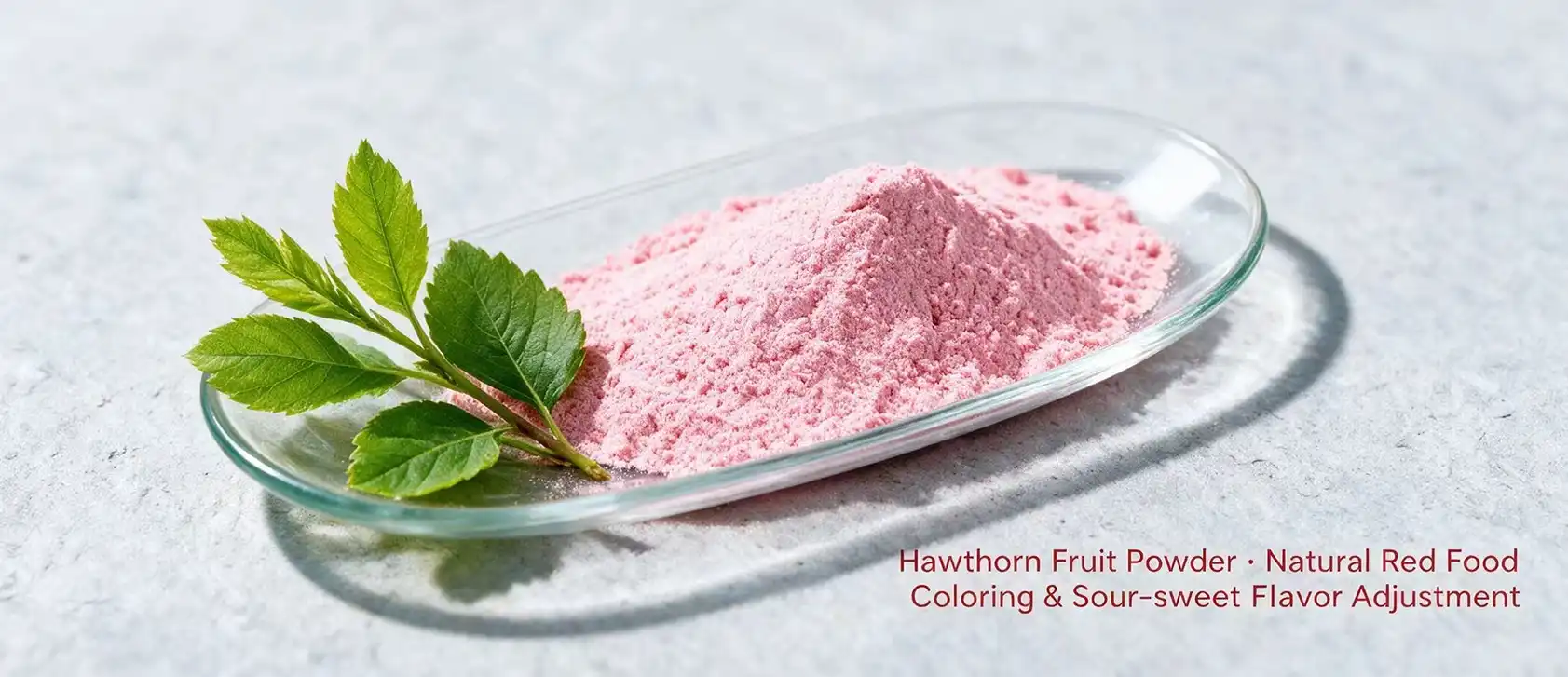
The end use of your recipe has a big impact on the ingredients you choose. Functional beverage makers who are making fruit teas, sports drinks, or instant health drinks often choose Hawthorn fruit powder because it has a real taste and can be used as a natural colorant. The powder adds a real hawthorn flavor and a light red color without any artificial ingredients, which is what consumers who like clean labels want. Because it dissolves easily in water, it can be used in ready-to-drink and instant-mix drinks where quick dispersion is important.
On the other hand, supplement companies that make pills, tablets, or gummies for particular heart or digestive health claims usually need the exact strength that standardized extracts provide. A 500 mg tablet with standardized hawthorn extract at 20% flavonoids delivers bioactive substances consistently, which backs up promises on the label and clinical evidence. Pharmaceutical companies that are making traditional Chinese medicine formulations or compound preparations also like to use extracts that meet the standards set by the pharmacopeia.
Bioactive Content and Efficacy Requirements
The amount of active ingredients has a direct effect on how well it works as a medicine and how much to use. Hawthorn fruit powder has flavonoids, procyanidins, and organic acids in the amounts that they naturally occur in. The amount of total flavonoids can be anywhere from 1% to 5%, depending on the type of fruit and how it was harvested. As a result, the powder can be used in general wellness items where a modest amount of bioactives helps keep your health in good shape rather than focusing on specific problems.
Standardized hawthorn extract, especially versions that guarantee 20% flavonoid content through UV spectrophotometry testing, lets companies make health promises that are backed up by more solid research. Multicenter feeding studies on humans that show cardiovascular benefits usually use standardized extracts with known bioactive concentrations. This gives the evidence base needed for regulatory approval and consumer trust. Standardized extracts are necessary when your product strategy needs to show that it works to lower cholesterol or raise blood pressure.
Regulatory and Safety Compliance Considerations
In different areas, quality norms and documentation for ingredients are different. Under DSHEA, both types can be sold as food ingredients in the United States. However, products that make specific structure-function claims benefit from the batch consistency that standardized extracts offer. With extracts, it's easier to show proof of these claims, like Certificates of Analysis that show the flavonoid level of each order.
Hawthorn has been used traditionally in phytotherapy, and European markets recognize this. There are possible ways for it to be registered under the Traditional Herbal Medicinal Products Directive. Japanese markets that want to register functional foods with FOSHU and Korean traditional medicine users often need the consistent quality that can be achieved through standard extraction. Suppliers with ISO9001, GMP, FDA, Kosher, and Halal certifications, like those from well-known companies with strong quality systems, provide the paperwork needed for shipping around the world.
Cost-Efficiency and Supply Chain Factors
A budget should think about more than just unit prices; it should also think about overall landed costs and supply stability. Hawthorn fruit powder is appealing for high-volume applications where margins are tight because it typically has lower prices per kilogram due to its simplified processing. Buying in bulk in 25 kg drums with nitrogen-flushing and moisture-proof packaging saves money on shipping costs and keeps quality high during international shipping.
Standardized extracts are more expensive because they are harder to make and have higher concentrations of bioactive ingredients. The higher strength, on the other hand, means lower inclusion rates in finished products, which might make up for the difference in the cost of the raw materials. There are also different minimum order quantities. For example, suppliers who offer 1 kg minimums for sampling and prototyping let product development teams try out both forms before committing to production volumes. Different buying processes can use different delivery terms, such as FOB, CIF, CFR, EXW, DAP, and DDP. There are also many shipping options, such as express, air freight, or sea freight, that balance speed and cost.
Comparative Performance: Hawthorn Fruit Powder vs Extract
Knowing how these different types of ingredients work in terms of nutrition, function, and business helps sourcing teams make choices that are based on facts and are in line with product goals.
Nutritional Profile and Therapeutic Benefits
Beyond individual bioactives, Hawthorn fruit powder provides a full range of nutrients. The powder still has dietary fiber, which helps keep digestion normal; vitamin C, which helps the immune system and protects against free radicals; and organic acids, such as citric and malic acid, which give food a natural tart taste and help break down fats. Because it contains a lot of different ingredients, this powder is great for products that focus on overall health, digestive comfort, or whole-food nutrition. Even tho naturally occurring flavonoids are present in smaller amounts than extracts, they are still good for your heart if you eat them regularly as part of a healthy diet.
Standardized hawthorn extract concentrates the flavonoid and procyanidin parts that have been linked to certain therapeutic effects seen in clinical studies. Studies that look at hawthorn's benefits for the heart usually use extracts that are standardized to 18–20% oligomeric procyanidins or flavonoids. These show effects on capillary function, lipid metabolism, and artery health. The extract form makes it possible to formulate effective doses in easy-to-use delivery methods, so you can get enough bioactives without eating too much. Extracts give brands that want to stand out through clinical proof and specific health positioning the strength they need to make sure their products are made in line with published research protocols.
Formulation Versatility and Technical Performance
How each ingredient works in finished products is affected by technical factors like how well it dissolves, how stable it is, and how it tastes. Hawthorn fruit powder can be mixed with a wide range of materials because it dissolves easily in water and only slightly in ethanol. Its unique sweet-sour taste and reddish-brown color make it more appealing to the senses in situations where identifying hawthorn is important, like in traditional fruit tea mixes or drinks that are culturally appropriate. The powder can also be used as a natural acidulant in baked goods, yogurt, and ice cream, which cuts down on the need for artificial ones and adds nutritional value.
It is possible to make hawthorn extract dissolve better in certain systems so that it works better for certain purposes. Formulations that are designed for water solubility help make clear drinks when haze is not wanted. Because extracts are concentrated, they have a smaller effect on taste, color, and texture when these qualities need to be carefully controlled. For supplement companies that don't have a lot of room in their capsules or tablets, extracts are the best way to get the most beneficial ingredients into the body. This is especially important when making multi-ingredient products that work well with a lot of different ingredients.
Stability and Shelf Life Management
When stored properly, both types of ingredients are very stable, but their specific stability profiles are different. Hawthorn fruit powder stays fresh for 24 months in nitrogen-flushed, moisture-proof packaging that keeps it from going bad and clumping up from humidity. Because the powder is hygroscopic, it is important to keep the moisture level low while it is being stored and handled. Climate-controlled warehouses keep the powder from sticking and maintain its free-flowing properties. Quality is always maintained by testing the moisture level and microbiological factors on a regular basis.
Procurement Insights: Sourcing Quality Hawthorn Ingredients
To find hawthorn ingredients in the global market, you need to know what suppliers can do, how to check the quality of the ingredients, and how to form partnerships that will work in the long term.
Evaluating Supplier Credentials and Capabilities
Suppliers at the top of the industry show that they can do more than just make things. Look for partners who have a lot of different kinds of certificates, such as ISO9001 quality management systems, GMP compliance for pharmaceutical-grade operations, and market-specific certifications like FDA registration, EU Organic certification, Kosher verification, and Halal verification. With these certifications, you can be sure that the system is strong and that you have the legal knowledge you need for foreign distribution.
Understanding Minimum Order Quantities and Pricing Structures
Minimum order requirements for Hawthorn fruit powder that are flexible help with different steps of product development and launch. Suppliers with a 1 kg minimum order size let R&D teams test preliminary formulations, sensory evaluations, and stability without having to spend a lot of money. Once the formulations have been confirmed to work, the procurement teams can move on to commercial amounts. Standard packaging for bulk ingredients is a 25 kg drum, which makes transportation easier while still being doable for mid-sized makers.
Delivery Terms and International Logistics
When you buy from foreign sellers, you need to be clear on who is responsible for logistics and how the goods will be delivered. In the trade of hawthorn ingredients, common Incoterms are FOB (goods delivered to the port of departure; buyers handle ocean freight and customs clearance), CIF (goods delivered to the destination port with freight and insurance paid for by the supplier), and DDP (goods delivered to buyer facilities, including all customs duties and delivery).
OEM and Custom Formulation Opportunities
Progressive suppliers offer more value than just ingredients by providing OEM and custom formulation services. With these partnerships, brands can make their own products without having to spend money on manufacturing equipment. To keep an eye on: custom flavonoid concentration changes from 10% to 50% for different product lines; co-formulation expertise combining hawthorn with heart-healthy plants like ginkgo or salvia; and production of capsules, tablets, gummies, and powders in different dosage forms.
Practical Recommendations for B2B Procurement Managers
Strategic buying of hawthorn ingredients involves both technical and business knowledge to make sure that the choices made meet the needs of the current product and help the business grow in the long term.
Aligning Ingredient Choice with Product Strategy
Start by making it clear where your product fits in the market and what your ideal customer expects. The authentic flavor, thorough nutrition, and clean label appeal of Hawthorn fruit powder make it ideal for products that are sold as natural, whole-food wellness solutions. The powder's natural reddish color and sweet-sour flavor make it more authentic, which is something that more and more people value. Focus these goods on helping with digestion, daily health, or traditional plant benefits that come from people being familiar with hawthorn.
Implementing Quality Assurance Protocols
Having strong quality processes in place can help with problems like flavonoid content being off and batch-to-batch differences. Set clear criteria for the ingredients, such as the amount of flavonoids, the amount of wetness, the microbiological factors, and the heavy metal limits. Need Certificates of Analysis for every package to show that the standards have been met through tests in a recognized lab.
Staying Informed on Market Trends and Innovations
The world of plant ingredients is always changing because customer tastes are always changing and processing technologies are always getting better. In the US, the market for cardiovascular supplements is growing steadily. This is because the population is getting older, and more people are learning about natural ways to stay healthy. Hawthorn has a long history of use in European phytotherapy, and now it's becoming known in more wellness outlets. This means that new product forms besides capsules are possible.
Learning from Industry Successes and Pitfalls
Brands of successful cardiovascular supplements usually follow a few rules: they buy from certified suppliers with clear quality systems; they keep ingredient specifications the same across production batches to make sure customers get the same experience; and they pay for clinical proof or third-party testing to back up their product claims. These brands also build backup supply chains by vetting secondary sources to avoid production problems caused by relying on a single source.
Conclusion
Whether you use standardized extract or Hawthorn fruit powder depends on your formulation goals, the needs of your target market, and how you plan to position your product. Hawthorn fruit powder is a cheap and healthy way to add flavor, color, and all the nutrients you need to functional foods, drinks, and general wellness supplements. Standardized hawthorn extract gives supplements and medicines the focused bioactive strength, batch uniformity, and clinical support they need to make health claims about heart or gut health. Both types are useful if you buy them from reputable companies that offer strict quality control, full certifications, and flexible partnership models that help your business grow. A good buying process strikes a balance between technical requirements and business concerns. This makes sure that the choice of ingredients fits with the product strategy and upholds quality standards that protect the brand's image and the trust of customers.
FAQ
Can hawthorn powder and extract be used interchangeably in formulations?
Both come from hawthorn fruit, but they can't be switched out without changing the recipe. There are a lot more flavonoids in the standardized extract—about 20% compared to 1% to 5% in the whole fruit powder. Direct replacement would drastically change how bioactives are delivered, which could make the product less effective and less true to what it says on the label. It is scientifically possible to change the inclusion rates to meet the flavonoid content, but this has an impact on the cost of the formulation, the serving size, the taste profile, and the sensory features. When switching between forms, you should treat them as separate parts that need to be optimized in the recipe.
What quality indicators should procurement teams monitor?
Make sure that the flavonoid content is always the same by using UV spectrophotometry on every package. Keep an eye on the moisture level below 5% to stop caking and the growth of microbes. Make sure that the amounts of heavy metals like lead, arsenic, cadmium, and mercury are within the guidelines set by the government. Make sure that the total plate count, yeast, mold, and E. coli levels meet food-grade guidelines. Salmonella and E. coli. Check the organoleptic properties, like color uniformity, a unique smell, and the lack of off-flavors, to see if the food is real. Check seller certifications once a year to make sure they are still in line with the law.
How should you store hawthorn ingredients so that they keep their quality?
Keep the goods in their original, sealed containers, which are usually nitrogen-flushed aluminum foil-lined bins, in climate-controlled areas where the temperature stays between 15°C and 25°C and the relative humidity stays below 60%. Stay away from strong-smelling materials and direct sunlight, as they could lead to cross-contamination. Rotate your goods first-in, first-out, and keep an eye on the best-before dates. When opened, keep air out as much as possible and seal well again after each use. For the best stability, use within 12 months of opening, even if the product's original shelf life is greater.
Partner with BioSpark for Premium Hawthorn Fruit Powder Supply
BioSpark (Xi'an) Biotechnology Co., Ltd. delivers pharmaceutical-grade hawthorn ingredients backed by comprehensive quality systems and flexible partnership models. Our standardized Hawthorn fruit powder—featuring 20% hawthorn flavonoids verified through ultraviolet spectrophotometry—supports your cardiovascular and digestive health formulations with batch-to-batch consistency essential for regulatory compliance and consumer trust. We maintain a 1,000-ton inventory, enabling rapid fulfillment, with 1 kg minimum orders supporting R&D initiatives and 25 kg bulk drums optimizing commercial production. As a certified hawthorn fruit powder manufacturer holding ISO9001, FDA, GMP, Kosher, and Halal certifications, we provide the documentation infrastructure necessary for global distribution. Our OEM capabilities include custom flavonoid concentrations from 10% to 50%, co-formulation with complementary cardiovascular botanicals, and multi-dosage form production. Contact our procurement team at leao@biosparkcn.com to request samples, discuss custom specifications, or explore partnership opportunities that advance your product innovation goals.
References
1. European Medicines Agency. (2016). Assessment report on Crataegus spp., folium cum flore. Committee on Herbal Medicinal Products.
2. Dahmer, S., & Scott, E. (2010). Health effects of hawthorn. American Family Physician, 81(4), 465-468.
3. Edwards, J. E., Brown, P. N., Talent, N., Dickinson, T. A., & Shipley, P. R. (2012). A review of the chemistry of the genus Crataegus. Phytochemistry, 79, 5-26.
4. Tassell, M. C., Kingston, R., Gilroy, D., Lehane, M., & Furey, A. (2010). Hawthorn (Crataegus spp.) in the treatment of cardiovascular disease. Pharmacognosy Reviews, 4(7), 32-41.
5. Chang, W. T., Dao, J., & Shao, Z. H. (2005). Hawthorn: Potential roles in cardiovascular disease. American Journal of Chinese Medicine, 33(1), 1-10.
6. Holubarsch, C. J., Colucci, W. S., & Eha, J. (2018). Benefit-risk assessment of Crataegus extract WS 1442: An evidence-based review. American Journal of Cardiovascular Drugs, 18(1), 25-36.

Send Inquiry
Related Industry Knowledge
- How Can Ginseng Fruit Powder Enhance Functional Beverages?
- Maqui Berry Powder for Eye Health: Dry Eye & Retinal Protection
- Maqui Berry Powder for Eye Health: Dry Eye & Retinal Protection
- Maqui Berry Powder for Eye Health: Dry Eye & Retinal Protection
- Maqui Berry Powder for Eye Health: Dry Eye & Retinal Protection
- Maqui Berry Powder for Eye Health: Dry Eye & Retinal Protection
- Maqui Berry Powder for Eye Health: Dry Eye & Retinal Protection
- Maqui Berry Powder for Eye Health: Dry Eye & Retinal Protection
- Maqui Berry Powder for Eye Health: Dry Eye & Retinal Protection
- Maqui Berry Powder for Eye Health: Dry Eye & Retinal Protection
- Maqui Berry Powder for Eye Health: Dry Eye & Retinal Protection
- How Is Miltiorrhiza Root Extract Powder Used in Traditional Medicine?
- Why Choose Natural Blueberry Extract Powder for Supplements?
- Is loquat powder safe for daily consumption?
- What Are the Key Benefits of Pomegranate Seed Extract Powder?
- Can Rosehip Extract Powder Boost Immune Health?
- Ganoderma Extract Powder Trends for 2026 Health Markets
- Tribulus Terrestris Extract Powder: Natural Saponin Power
- Mimosa Root Bark Extract: Natural Antimicrobial Agent