_1764041963888.webp)
What Specifications Matter When Buying Wolfberry Peptide?
Sep 28, 2026
When you are searching for wolfberry peptide for a commercial formulation, the parameters are more than simply numbers on a data sheet — they have a direct impact on product performance, regulatory approval, and customer satisfaction. Important considerations include peptide purity (80% by HPLC), molecular weight, physical appearance, solubility profile, extraction process, and certification credentials. Getting these specs right is the difference between a product that sells and one that fails quality audits or underperforms on the shelf.
Understanding Wolfberry Peptide: Composition and Benefits
What Makes Goji Berry Peptides Unique
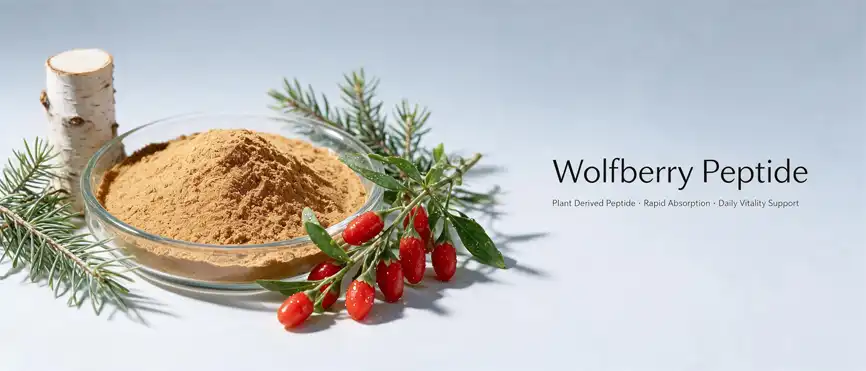
Wolfberry peptide is obtained by plant protein-guided enzymatic hydrolysis of dried mature fruit of Lycium barbarum L., also known as goji berries. This mechanism transforms native wolfberry proteins into tiny molecule peptides (<2000 Da) that are far more bioavailable than full proteins. The end product is a fine powder, ranging in color from orange-red to light brown, bearing the unique flavor of goji berries and naturally containing a variety of bioactives.
Key Bioactive Components
Goji berry peptides are not like a typical plant extract; they include the whole nutritious matrix of the fruit. The enzymatic hydrolysis procedure preserves the zeaxanthin dipalmitate, wolfberry polysaccharides, betaine, and carotenoids together with the essential peptide portion. This multi-compound profile provides advantages that a single isolated substance cannot provide — including antioxidant protection, retinal support, immunological modulation, and liver care.
Functional Benefits Across B2B Applications
Research supports the role of Lycium barbarum bioactive substances in retinal pigment density, immune cell activation, and hepatic fat metabolism. These characteristics make wolfberry peptide a good candidate for eye care supplements, immune support formulations, sports recovery products, anti-aging drinks, and liver health formulations. It has a larger phytonutrient profile than collagen peptide and, relative to a typical goji berry extract, bioavailability is much better owing to its small-molecule composition.
Core Specifications to Evaluate When Purchasing Wolfberry Peptide
Purity, Potency, and Testing Method
The most significant technical requirement is peptide purity. The quality-grade wolfberry peptide should be not less than 80% pure, determined by High-Performance Liquid Chromatography (HPLC). HPLC is the gold standard testing technique for peptide quantification because it accurately separates and quantifies the individual molecular fractions. Suppliers should be treated with care if they are not able to give HPLC-based certificates of analysis. A responsible procurement team should demand 80% batch-to-batch consistency (HPLC) as standard.
Physical Form, Solubility, and Stability
Physical qualities do matter during the formulation stage. The normal commercial form is a fine powder, orange-red to light brown in color, with a pure goji berry scent suggestive of little deterioration via processing. The solubility of the goji berry peptides in water is high, and in ethanol is marginally soluble. The ingredient’s water solubility characteristic makes it ideal for functional drinks, quick sachets, capsules, and water-based topical treatments. If it is poorly soluble or clumps, it has been exposed to moisture or has deteriorated in storage.
Certifications That Protect Your Supply Chain
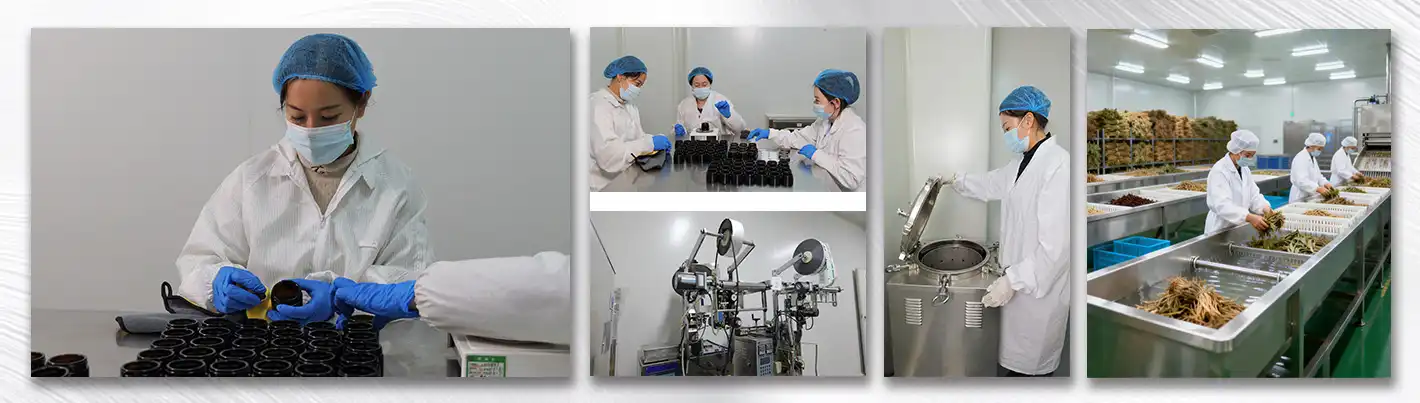
For B2B buyers in regulated marketplaces, certifications are not optional. A reliable supplier for wolfberry peptide should have at least ISO9001 for quality management, GMP for manufacturing standards, and FDA compliance for the U.S. market, as well as Kosher and Halal for wider consumer market access. These certifications ensure that the production plant is operating under audited standards and that the product fulfills international food safety and quality criteria. Always ask for actual certificates, and check the validity date before ordering.
Comparing Suppliers and Products in the Market
Evaluating Supplier Credibility
Before selecting a wolfberry peptide provider, procurement managers need to consider more than pricing. Check for certificates, manufacturing capacity, and customer references that can be proven and verified. A supplier that can do OEM/ODM with an MOQ as low as 1kg is showing flexibility and trust in their process, and is a good sign of maturity in manufacturing. Packaging criteria (e.g. 25kg/drum) and supported trade terms (FOB, CIF, CFR, EXW, DAP, DDP) reflect expertise in logistics with foreign customers.
Pricing and Volume Strategy
Goji berry peptides price depends on purity grade, order amount, and certification scope. Bulk orders normally begin at 25 kg (one standard drum), although reputable providers will be happy to handle trial orders from 1 kilogram so that quality may be verified before scaling. During negotiations, ask for a tiered price scheme, ask about lead times, and see whether T/T (bank transfer) is the preferred payment option. Locking in volume contracts while raw material costs are steady is a good way to control costs.
Wolfberry Peptide vs. Related Ingredients
Here is a clear distinction between commonly confused ingredients in this category:
- Wolfberry peptide (80% HPLC): Small-molecule peptide fraction with preserved polysaccharides and carotenoids. Best for bioavailability-focused formulations — eye care, immune support, anti-fatigue.
- Goji berry extract: Standardized for polysaccharide content only. Lacks the peptide fraction and has lower cellular absorption speed.
- Collagen peptide: Marine- or bovine-sourced. Strong for skin structural support but contains no plant-based carotenoids or polysaccharides.
These distinctions help procurement teams select the right raw material for their specific product category rather than defaulting to the most recognized name.
Dosage, Usage, and Regulatory Guidelines for Procurement Managers
Recommended Application Levels
Typical inclusion levels of wolfberry peptide in dietary supplements are in the 200 mg to 1,000 mg/serving range depending on the target claim, such as vision support, immunological modulation, or sports recovery. In functional beverage applications, smaller dosages (100–500 mg per serving) are often used to balance taste effect with functional value. Always make dosage recommendations in line with the advice of your regulatory consultant for the target market, since thresholds for permitted claims range from one country to another.
FDA and International Compliance
Wolfberry peptide in dietary supplements sold in the U.S. market is required to meet FDA’s dietary supplement standards under 21 CFR Part 111. The ingredient is now FDA registered and GMP certified, making it suitable for use in compliant U.S. supplement formulations. Further documentation on new food status and safety data may be needed for markets regulated by EFSA (Europe) or FSANZ (Australia/New Zealand). When entering new markets, ask your provider for entire regulatory dossiers.
Packaging and Shelf Life Considerations
Standard commercial packaging is 25kg per barrel with moisture-resistant inner liner protection. Peptides have a stability of 24 months under proper storage conditions (Cool, Dry & Dark). Desiccant sachets and UV-resistant containers should be included in downstream packaging for e-commerce or completed product logistics to avoid oxidative deterioration. We provide rapid shipping (DHL/FedEx/UPS for samples), air freight (5-10 days), and sea freight for substantial commercial orders. We have enough stock for quick delivery.
Evaluation Framework: Making the Right Buying Decision for Wolfberry Peptide
Define Your Criteria Before Contacting Suppliers
Before contacting any wolfberry peptide producer, internal stakeholders should come to an agreement on five non-negotiable criteria: purity grade, certificates necessary, intended application, desired order volume, and acceptable delivery timeframe. This clarity avoids wasteful sample cycles and speeds up the approval process.
Checklist for Procurement Teams
Strong procurement choices in this area need a mix of technical rigor and openness from suppliers. Here are the key milestones for every buyer to check off:
- Certificate of Analysis demonstrating 80% peptide purity by HPLC from each manufacturing batch
- Valid ISO9001, GMP, FDA, Kosher, and Halal certifications with the current expiry dates
- Proof of country of origin (preferably source of Lycium barbarum in Ningxia, China
- OEM/ODM capabilities confirmed for private label or specific formulation needs
- Transparent pricing structure: Minimum order quantity 1 kilogram; standard drum quantity 25 kg
- Choose your shipping method: express, air, or sea freight to suit your delivery date
These checkpoints significantly decrease procurement risk and offer quality assurance teams a clear audit trail.
Building a Long-Term Supply Relationship
One-off spot buys generate supply volatility. If you have a long-term arrangement with one certified wolfberry peptide supplier, you will get priority batch allocation, consistent quality documentation, and better prices on repeat purchases. Suppliers that provide OEM and ODM customisation may also expand with your product line – creating new delivery methods or boosting potency variations as your brand evolves. The quality of the substance is just as crucial as the stability of supply.
Conclusion
When buying wolfberry peptide, it pays to pay attention to the necessary specifications: 80% purity (by HPLC), comprehensive certification coverage, validated physical qualities, and a source with established export expertise. The goji berry peptide has a wide functional profile that few plant compounds can match, whether it’s eye-care solutions or sports recovery beverages. These assessment criteria will help you source with confidence and produce items that your consumers can trust.
FAQ
1. What is the standard purity level for wolfberry peptide?
The accepted commercial standard is 80% purity, verified by HPLC testing. This ensures consistent peptide concentration across batches and meets the threshold for most supplement formulations in regulated markets.
2. What certifications should a wolfberry peptide supplier hold?
Look for ISO9001, GMP, FDA compliance, Kosher, and Halal certifications. These cover quality management, production hygiene, and consumer market access across North America, Europe, and the Middle East.
3. What is the minimum order quantity?
The MOQ is 1 kg, which allows buyers to test product quality before committing to full commercial orders. Standard commercial packaging is 25 kg per drum.
4. How is wolfberry peptide different from goji berry extract?
Goji berry extract is typically standardized for polysaccharide content only. Wolfberry peptide contains both the small-molecule peptide fraction and preserved carotenoids and polysaccharides, offering higher bioavailability and broader functional scope.
5. What shipping options are available?
Options include international express delivery (DHL, FedEx, UPS), air freight (5–10 business days), and ocean freight for bulk orders. Multiple trade terms are supported: FOB, CIF, CFR, EXW, DAP, and DDP.
Partner with BioSpark for Quality Wolfberry Peptide Supply
BioSpark (Xi'an) Biotechnology Co., Ltd. is a trusted wolfberry peptide supplier with ISO9001, GMP, FDA, Kosher, and Halal certifications, flexible MOQ starting at 1 kg, and full OEM/ODM support. Our 80% HPLC-grade goji berry peptides ship globally via express, air, and sea freight with sufficient stock on hand. Contact us today at leao@biosparkcn.com to request samples, pricing, or a custom formulation consultation.
References
1. Amagase, H., & Farnsworth, N. R. (2011). A review of botanical characteristics, phytochemistry, clinical relevance in efficacy and safety of Lycium barbarum fruit. Food Research International.
2. Bucheli, P., et al. (2011). Goji berry effects on macular characteristics and plasma antioxidant levels. Optometry and Vision Science.
3. Li, X., et al. (2015). Protective effects of wolfberry polysaccharides on liver injury and metabolic function. Journal of Ethnopharmacology.
4. Cheng, J., et al. (2015). Anti-fatigue activity of Lycium barbarum polysaccharides in mice. Molecules.
5. Zhang, Q., et al. (2014). Characterization and bioactivity of peptides derived from Lycium barbarum protein hydrolysates. Food Chemistry.
6. U.S. Food and Drug Administration. (2007). Current Good Manufacturing Practice in Manufacturing, Packaging, Labeling, or Holding Operations for Dietary Supplements. 21 CFR Part 111. FDA.

Send Inquiry
You may like
Related Industry Knowledge
- Spinach Juice Powder for Vegan and Organic Food Products
- Need Water-Soluble Bitter Melon Extract Powder for Drinks?
- How Do Indian Herbal Extracts Support Natural Detoxification?
- How Is Kacip Fatimah Extract Made and Standardized?
- Gotu Kola Extract Powder: Benefits for Stress and Anxiety?
- Best Tongkat Ali Extract Powder: What to Look For?
- Is Coconut Milk Extract Powder a Healthy Dairy Alternative?
- Is Radix Rehmanniae Extract Good for Metabolic Health?
- High-Purity Apple Peel Extract Powder for Supplements
- Konjac Flour Extract for High iber Functional Foods
