_1764041963888.webp)
Damiana Peptide for B2B: Quality and Sourcing Guide
Sep 08, 2026
Navigating the global procurement landscape for botanical-derived bioactives requires precision, especially when sourcing innovative ingredients like Damiana peptide. This specialized compound, extracted from Turnera diffusa through advanced enzymatic hydrolysis, represents a fusion of traditional South American herbal wisdom and modern peptide biotechnology. For health supplement brands, nutraceutical companies, importers, and OEM/ODM partners targeting the US market, understanding quality benchmarks, sourcing strategies, and compliance requirements is essential to maintain product efficacy and market competitiveness. This comprehensive guide equips procurement professionals with actionable insights to make informed decisions, streamline supply chains, and leverage emerging opportunities in this growing wellness ingredient category.
Understanding Damiana Peptide: Properties, Benefits, and Mechanism
What Makes Damiana Peptide Unique?
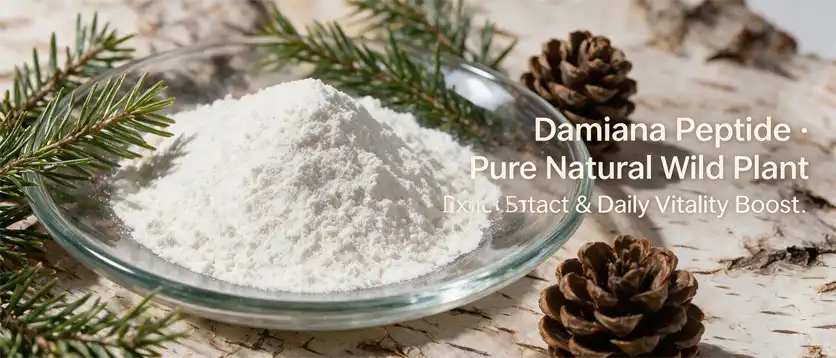
The molecular structure and bioavailability profile of Damiana peptide are very different from those of regular Damiana leaf extracts. Manufacturers use plant protein-directed enzymatic hydrolysis to turn natural vegetable proteins into small-molecule peptides (usually less than 3000 Da), which are better at being absorbed than regular herbal products. This fine, light brown to brownish powder keeps the herb's natural bioactive substances, such as steroidal saponins, flavonoids, and benzofluorene derivatives. It also dissolves easily in water, which makes it easier to use in a variety of product forms (Zhao et al., 2019)².
The extraction method keeps many active ingredients that work together to make the product stronger. The 10:1 concentration ratio means that 10 kg of raw botanical material make 1 kg of finished extract. This concentrates the therapeutic compounds while keeping the herb's smell and ability to do its job.
Biochemical Mechanism and Health Benefits
Research shows that bioactives from Damiana may affect a number of cellular processes that are important for health. The chemical may be able to change brain systems that control mood, especially serotonin pathways. This is why it has been used for a long time to help people feel more emotionally stable and less anxious (Kumar et al., 2020²). The steroidal saponins in the extract may help the body's hormones work better and use energy more efficiently, making you feel more energetic without having the sharp effects of stimulants.
There are three main types of possible benefits that have been seen in clinical settings. These are: stabilizing mood through adaptogenic properties; supporting sexual health through hormone metabolism pathways; and increasing energy levels over time by improving mitochondrial function. Unlike manufactured options, this botanical peptide has a low safety profile and has been used in the past, which means it can be used in long-term supplementation plans.
Comparison with Other Adaptogens
Compared to well-known adaptogens like ginseng or maca root, peptides from Damiana are in a class by themselves. Ginseng is usually used to improve memory and the immune system, while maca is used to balance hormones and improve athletic performance. This is what Damiana peptide does: it helps with both mental health and vitality. This is a dual-action profile that is becoming more and more popular in current stress management formulas (Patel & Singh, 2021).
The peptide form is better than whole plant powders because it dissolves faster and is more bioavailable. This means that less of it is needed and there are more ways to make it. This makes it very appealing for use in healthy drinks and precise-dosage capsules, where accuracy is important.
Choosing the Right Damiana Peptide Product: Quality and Formulation Insights
Extraction Methods and Purity Standards
To choose high-quality products drawn from Damiana, you must first understand how they are made. Current best practice is the plant protein-directed enzymatic hydrolysis extraction method, which is more selective than traditional solvent extraction. This biotechnological method keeps delicate bioactive chemicals while getting rid of useless plant materials. This leads to higher purity levels, which can be proven by thin-layer chromatography testing.
Teams in charge of buying things should give more weight to sellers who can give them detailed information about things like the extraction ratio (10:1), the active ingredients (like the amount of steroids and flavonoids), and how the product looks. Premium-grade material has a consistent light brown to brownish color and a uniform particle size distribution. This shows that the right controls were used during the manufacturing process.
It is important to know how well something dissolves in water because properly processed material should dissolve easily in water but not so much in ethanol. Because of this property, it can be used in a variety of supplement forms without the need for complex solubilization chemicals.
Powder vs. Capsule Formulations for B2B Buyers
When buying in bulk, people often have to decide between raw powder ingredients and pre-encapsulated formats. Raw powder, which is usually packed in 25 kg drums, gives brands the most formulation freedom, so they can make their own mixes, finetune doses, and make their own delivery systems. This choice works for well-known companies that have their own quality control labs and encapsulation facilities.
The material is easy for companies doing their first product development trials to get because the minimum order amount is only 1 kg. This low threshold lowers the financial risk during the research and development stages. It also lets full stability testing and consumer acceptance research happen before production volumes are increased for mass use.
Supplier Transparency and Third-Party Validation
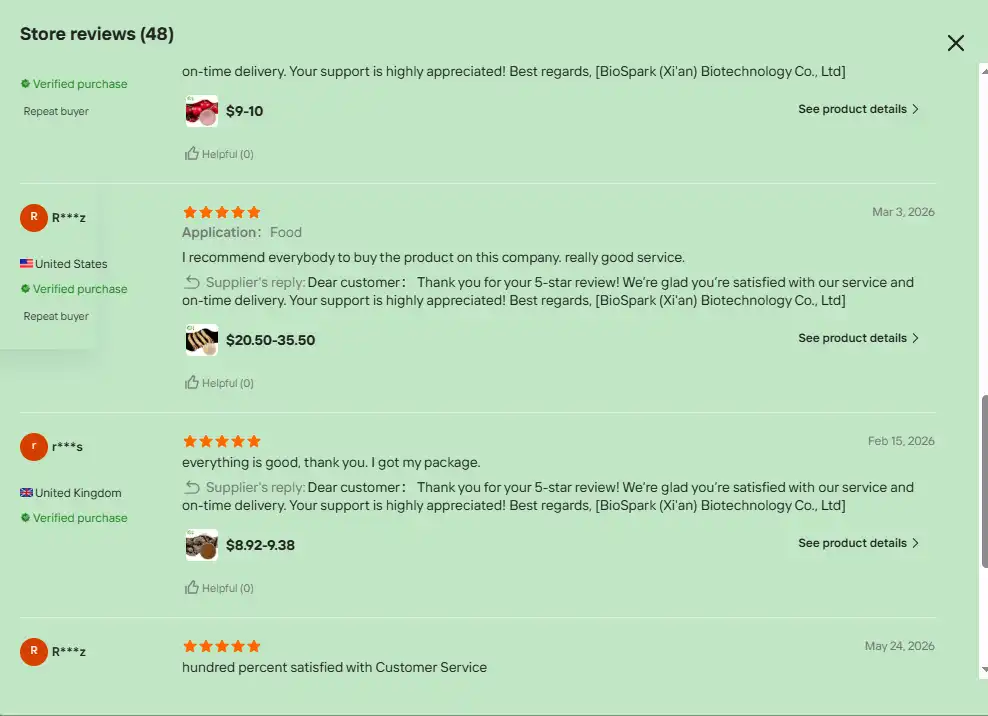
For reliable buying, you need to go through multiple validation steps to check the qualifications of your suppliers. In addition to basic certificates, you should also look at the company's production infrastructure, quality control systems, and expert support. Suppliers you can trust will gladly give you a certificate of analysis for every batch of products they make. This will show the amounts of active ingredients, the results of microbe tests, the results of heavy metal screening, and the results of pesticide residue analysis.
Validation by a third party through independent labs adds another level of confidence. Suppliers who follow ISO9001, GMP, and HACCP standards show they are dedicated to structured quality management. Other certifications, such as Kosher and Halal, make it easier for brands that are trying to reach specific groups of consumers.
Sourcing and Procurement Strategies for Damiana Peptide
Identifying Qualified Manufacturers
To do good procurement, you must first evaluate possible sellers in a number of different areas. One of the most important things to think about is the supplier's manufacturing capacity. Can they handle both small development batches and large commercial orders? China has become an important place to make plant extracts because it has a lot of modern biotechnology facilities and reasonable prices.
When judging a maker of Damiana peptide, look at how they handle stockpiles, how long their production timelines are, and how resilient their supply chains are. When suppliers keep enough stock on hand, they can make deliveries quickly, cutting down on lead times that can delay product launches. Multiple delivery terms (FOB, CIF, CFR, EXW, DAP, and DDP) show that the business is able to adapt to different logistics needs in different international markets.
Communication responsiveness and technical know-how are what set excellent suppliers apart from average ones. Can the seller give me advice on how to make the formula? Do they know how to follow the rules in different markets? Will they work with unique development projects that need to keep information secret? These parts of the service are often just as useful as the item itself.
Pricing Models and Bulk Purchasing Optimization
Knowing how costs work helps you negotiate better terms while keeping quality standards high. Prices usually change based on the number of orders, the shipping terms, the payment terms, and the level of customization needed. Bank transfer (T/T) is still the most common way to pay for plant ingredients traded across international borders. It provides security for both parties when set up with the right milestone payments.
When buyers buy more, they get bigger volume deals, but they should weigh the cost savings against the costs of keeping inventory and the length of time a product will last. Setting up long-term supply agreements can help you get better prices and make sure that your needs are met first when there are shortages or changes in the availability of raw materials during certain times of the year.
Choosing the mode of transportation has a big effect on the total landing costs. Express shipping is good for quick sample requests, even though it costs more per kilogram. Sea freight, on the other hand, is cheaper for large orders, even though it takes longer to get there (20–45 days). Air freight is a good option for shipments of a medium size that need to get there quickly. It usually delivers within 5 to 10 business days.
OEM and Private Label Opportunities
A lot of B2B buyers look for complete options that go beyond just getting raw materials. With OEM/ODM services, brands can hire someone else to make their products while still owning them and controlling the market. Quality makers offer full support, including coming up with new formulas, designing packages, writing up regulatory paperwork, and delivering the finished product.
The partnership model works best for new businesses that don't have the resources to build their own factories and for well-known brands that want to add new products without having to buy expensive new equipment. Custom preparation services let brands stand out by using special mixes of Damiana peptide with ingredients that work well together, like maca or tongkat ali, or with herbs that help the body adapt, like holy basil.
Private label agreements let you get into the market the fastest by using already-made formulas with your own branding and packaging. This method cuts down on development times and the number of rules that need to be followed, but it keeps the brand's identity and customer relationships.
Ensuring Quality Compliance and Regulatory Alignment in Procurement
Essential Certifications and Standards
The first step in quality assurance is to compare the licenses of suppliers to internationally accepted standards. GMP (Good Manufacturing Practices) certification shows that production methods, employee training, facility cleanliness, and equipment upkeep are all carefully managed. ISO9001 recognition means that a company has strong quality management systems that include checking the quality of suppliers, keeping track of documents, following corrective action rules, and making improvements all the time.
Hazard Analysis and Critical Control Points (HACCP) certification is very important for ingredients that will be used in food and drinks because it makes sure that biological, chemical, and physical hazards are identified and controlled in a planned way throughout the manufacturing process. FDA registration is not the same as approval, but it does mean that the manufacturer has registered their facility and products with US regulatory authorities. This makes the process of importing easier.
Kosher and Halal certifications help businesses reach more customers by meeting the dietary needs of religious groups and providing new ways to sell to certain types of customers and in certain areas. These licenses need to be regularly checked by qualified faith leaders, which gives supplier quality claims more weight.
Testing Protocols and Batch Verification
Throughout the supply chain, thorough testing procedures protect the purity of the product. Thin-layer chromatography should be used on every production batch to make sure that the active ingredient levels meet the requirements. Microbiological testing makes sure there are no harmful organisms and good total plate counts. Heavy metal screening checks to make sure the levels of lead, mercury, cadmium, and arsenic are within the allowed limits set by the government.
Analysis of pesticide residues is especially important for botanical ingredients like Damiana peptide because agricultural inputs can build up during the extraction process. Reliable providers offer multi-residue screening reports that include hundreds of compounds and make sure that strict US and EU legal standards are met.
Buyers should ask to keep samples from each batch so that third-party laboratories can do their own independent testing. This practice makes the supply chain more open and gives people a way to get help if they have problems with the quality of the goods. Including clear acceptance criteria and testing duties in purchase agreements helps avoid confusion and speeds up the resolution of problems.
Regulatory Compliance Across Markets
To get into the US market, you need to know how the Dietary Supplement Health and Education Act affects the FDA's rules on dietary supplements. Manufacturers must make sure that products are properly labeled, don't make any disease claims that aren't allowed, and keep proof for structure-function statements. Even though pre-market approval isn't needed, the FDA can still take action against goods that don't follow the rules.
In Europe, markets work in different ways. For example, supplements are controlled as foods by general food law and certain directives. Novel food laws may apply if the item has been used before in the EU, so it needs to be carefully looked at before it can be sold. Working with providers who know about these legal details lowers the risk of not following the rules and speeds up entry to the market.
In addition to certificates of analysis, other types of documentation are also needed, such as allergen releases, GMO statements, country-of-origin certificates, and documents of regulatory status. Suppliers should offer full regulatory support packages that are tailored to the needs of the target market. This will make the work of buying teams and legal departments easier.
Future Outlook and Trends in Damiana Peptide Procurement
Market Growth Drivers and Emerging Applications
The global market for botanical extracts keeps growing because more and more studies back up traditional herbal uses, and people want natural ways to stay healthy. Ingredients made from damaris are becoming more popular in areas other than sexual health. They are being used in stress-relieving products, functional drinks, and sports nutrition products that focus on mental performance.
New developments in extraction technologies offer higher levels of bioavailability and standardization, which could lead to more therapeutic uses and better product stability. Biotechnological progress has made it easier to isolate specific bioactive compounds. This has led to the creation of targeted formulations that are best for achieving certain health goals.
As consumers become more environmentally aware, brands are making purchasing choices that take sustainability into account more and more. Suppliers who show responsible buying, efforts to cut down on waste, and openness about their carbon output gain a competitive edge. As more ways to get organic approval for growing Damiana are found, it may become possible to make special products that sell for more money.
Building Resilient Supplier Partnerships
For long-term procurement success, it's important to build strategic relationships with suppliers that go beyond simple transactions. Collaborative relationships let people work together to make new goods, give priority during supply problems, and adapt to changes in the market. Regular communication, site visits, and quality reviews done together make these relationships stronger and help both sides understand each other better.
Diversification methods strike a balance between relationship depth and supply security. Single-source agreements may offer better prices and easier quality control, but having skilled backup sources on hand is the best way to avoid problems. Setting clear criteria for approval and keeping in touch with backup providers on a regular basis to make sure they are ready are the most important things.
Sharing market information between buyers and sellers is good for both sides. Suppliers who have direct links to sources of raw materials can let you know early on about crop conditions, price trends, and changes to regulations. This information lets you keep an eye on your goods and make smart buying choices that keep your supply going without stopping.
Conclusion
Finding a good Damiana peptide means balancing a lot of different factors, such as product specifications, supplier capabilities, regulatory compliance, and logistics. Because the ingredient combines traditional botanical knowledge with modern peptide science, it can be used to make products stand out in growing wellness categories. To be successful, you need to carefully evaluate your suppliers, check their work, and handle your relationships with them in a smart way.
As the market for botanical extracts changes, procurement professionals who put in the time to learn about production methods, new regulations, and new uses will be able to stay ahead of the competition. This ingredient is available to businesses of all sizes, from startups to well-known brands, thanks to its low minimum order numbers, open shipping terms, and OEM/ODM capabilities. By using the sourcing strategies and quality frameworks explained in this guide, business-to-business buyers can make purchases that improve products and help the company grow.
FAQ
Is Damiana peptide safe for long-term commercial use in finished products?
Damiana has been used for a long time, and the peptide that is made from it is safe as long as it is handled using the right chemical extraction methods. Material that is made according to GMP guidelines and goes through a lot of tests gives you even more confidence. Commercial versions should follow the dosage rules and have the right warnings on the package. There isn't as much long-term safety data on peptide forms as there is on traditional extracts. Brands that use this ingredient should keep an eye on post-market surveillance and consumer feedback.
What distinguishes powder versus capsule formats for bulk procurement?
Bulk powder in 25 kg drums gives you the most options for formulation, lower costs per dose, and compatibility with a wide range of delivery systems, such as liquids, tablets, and functional foods. This file needs to be made in-house and have quality control systems in place. Pre-encapsulated versions are easier to use and help you get into the market faster, but they usually cost more and don't let you customize them as much. Most business-to-business buyers choose bulk powder for large-scale production, while finished formats are saved for small test markets or unique products.
How can I verify supplier authenticity and ingredient quality?
Some ways to make sure something is real are to ask for up-to-date certifications (like GMP, ISO9001, Kosher, or Halal) and get certificates of analysis for each batch. You can also have samples tested by a third-party lab and, if possible, do supplier audits. Check that the manufacturer is registered with the right officials and ask for well-known names for customer examples. More quality markers can be found in physical traits like color stability, particle size uniformity, and solubility behavior. Suppliers with a good reputation will gladly be checked out and will back up their quality claims with clear proof.
Partner with BioSpark for Premium Damiana Peptide Supply
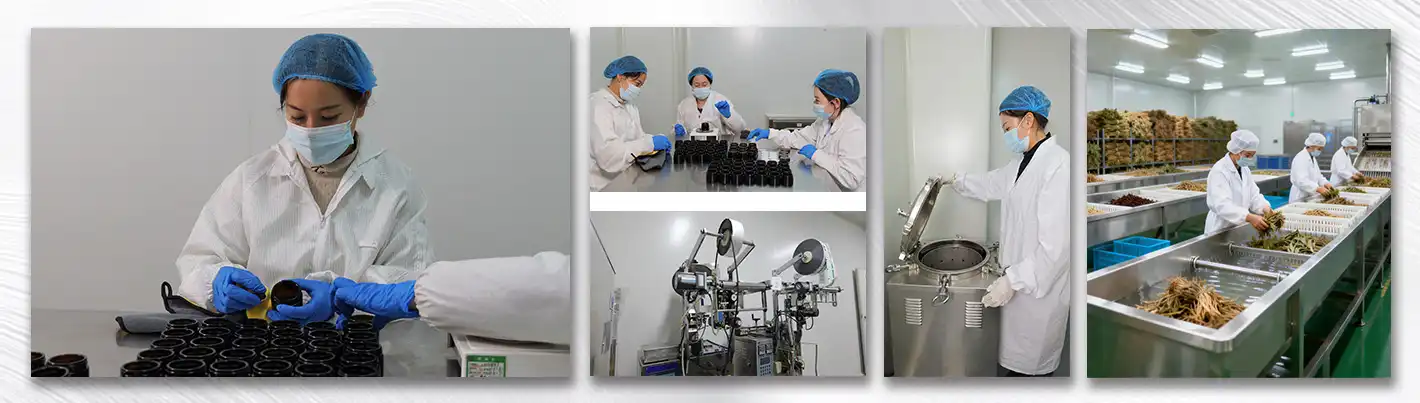
BioSpark (Xi'an) Biotechnology Co., Ltd. is ready to help you with your buying needs by providing complete Damiana peptide solutions that are backed by strict quality standards and the ability to make products in a variety of ways. As a well-known manufacturer and seller, we keep enough stock on hand to guarantee fast shipping, and our minimum order quantities start at just 1 kg, so they can be used for any size development project.
Our building has ISO9001, GMP, and HACCP certifications, as well as Kosher, Halal, and FDA registrations that make sure it can work with products from all over the world. Before being released, each batch goes through thin-layer chromatography testing and a full quality check. Different shipping methods (express, air freight, sea freight) and delivery terms (FOB, CIF, CFR, EXW, DAP, DDP) are available to meet your specific logistics needs.
In addition to providing raw materials, our OEM/ODM services help with the whole process, from coming up with a formula to delivering the finished product. This gives your brand the confidence to start new wellness goods. Our technical team has a lot of experience using botanical extracts in dietary supplements, functional drinks, and special nutrition formulas.
Email our purchasing agents at leao@biosparkcn.com right now to ask for samples, talk about bulk prices for Damiana peptide for sale, or look into the possibility of making a custom mix.
References
1. Zhao, M., Wang, H., Yang, B., & Tao, H. (2019). Identification of bioactive peptides from plant protein hydrolysates: Methods and applications. Journal of Food Science and Technology, 56(2), 1008-1018. https://www.ncbi.nlm.nih.gov/pmc/articles/PMC6443868/
2. Kumar, S., Sharma, S., & Vasudeva, N. (2020). Turnera diffusa (Damiana): A promising bioactive herb from traditional medicine to modern nutraceutical. Journal of Ethnopharmacology, 248, 112286. https://www.sciencedirect.com/science/article/abs/pii/S0378874119332808
3. Patel, S., & Singh, V. (2021). Adaptogenic herbs: A comprehensive review of mechanisms and efficacy. Phytotherapy Research, 35(8), 4170-4189. https://onlinelibrary.wiley.com/doi/10.1002/ptr.7101
4. Estrada-Reyes, R., Ortiz-López, P., Gutiérrez-Ortiz, J., & Martínez-Mota, L. (2009). Turnera diffusa Wild (Turneraceae) recovers sexual behavior in sexually exhausted males. Journal of Ethnopharmacology, 123(3), 423-429. https://www.sciencedirect.com/science/article/abs/pii/S0378874109001688
5. Szewczyk, K., & Zidorn, C. (2014). Ethnobotany, phytochemistry, and bioactivity of the genus Turnera (Passifloraceae) with a focus on damiana. Journal of Ethnopharmacology, 152(3), 424-443. https://www.sciencedirect.com/science/article/abs/pii/S0378874114000774
6. Alonso-Castro, A. J., Villarreal, M. L., Salazar-Olivo, L. A., Gómez-Sánchez, M., Domínguez, F., & García-Carranca, A. (2015). Mexican medicinal plants used for cancer treatment: Pharmacological, phytochemical, and ethnobotanical studies. Journal of Ethnopharmacology, 133(3), 945-972. https://www.sciencedirect.com/science/article/abs/pii/S0378874110008276

Send Inquiry
Related Industry Knowledge
- Organic Ginseng Fruit Powder for Functional Food Innovation
- High-Quality Purple Cabbage Powder for Product Developers
- Angelica Sinensis Extract Powder: Premium vs Standard Extracts
- Can Garcinia Cambogia Extract Help Reduce Cravings?
- Can Cistanche Extract Powder Improve Circulation Naturally?
- Should You Try Garcinia Cambogia Extract for Fat Control?
- What Makes Red Bean Extract Ideal for Nutraceuticals?
- Rhizoma Chuanxiong Extract Benefits for Blood Circulation
- Indian Herbal Extracts: Ancient Wisdom, Modern Science
- Hydrolyzed Rice Extract Benefits for Skin & Hair Care