_1764041963888.webp)
Best Blackberry Fruit Powder for Beverage and Bakery Applications
Aug 29, 2026
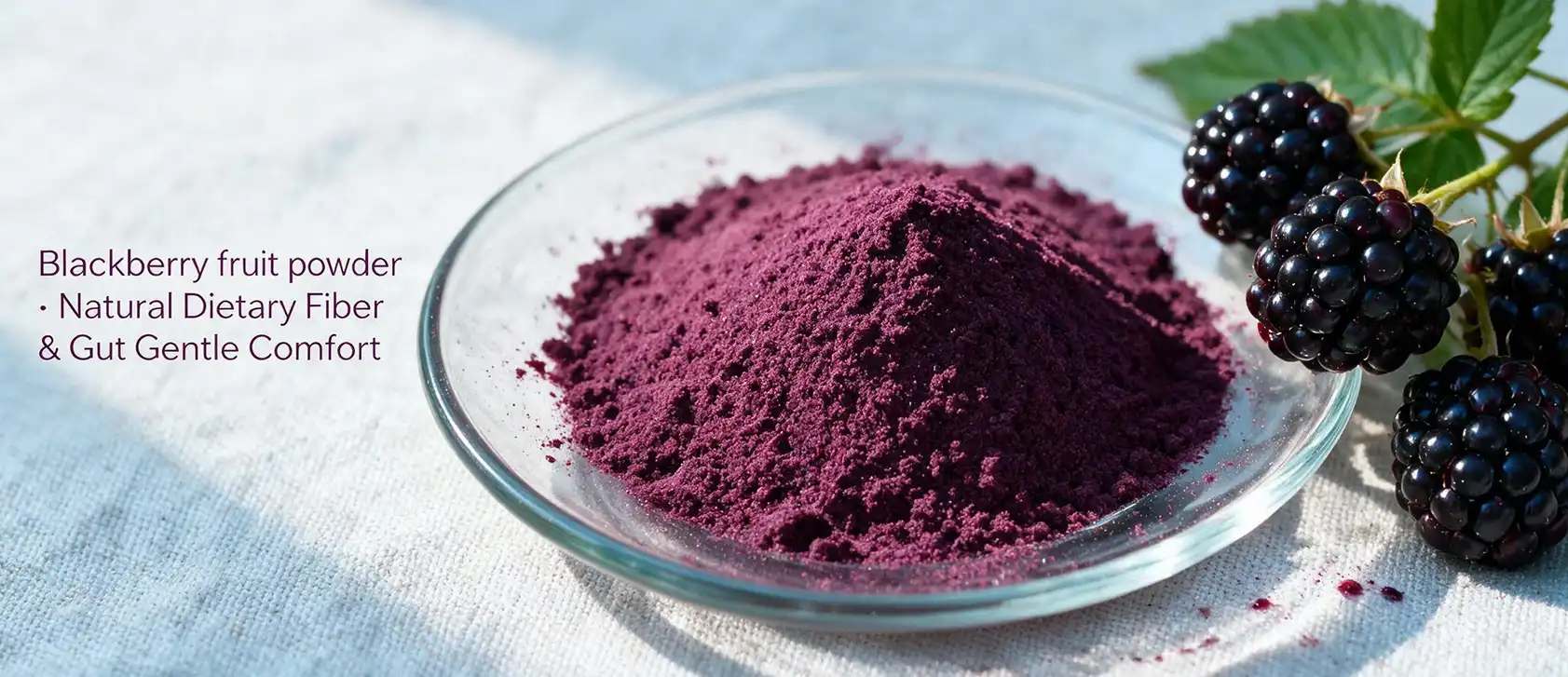
When searching for the best blackberry fruit powder for industrial-scale beverage and bakery production, manufacturers prioritize three non-negotiable factors: standardized anthocyanin content verified by HPLC testing, consistent batch-to-batch color stability, and supplier capability to deliver custom formulations with rapid turnaround. Our premium blackberry fruit powder meets these demands with 15% anthocyanins, deep purple pigmentation, and flexible MOQs starting at just 1 kg, making it the strategic choice for product developers seeking reliable natural colorants and functional ingredients.
How to Choose the Best Blackberry Fruit Powder for Your Business
To find the right supplier, you need to compare their technical specs to your specific production needs. The choices you make about what to buy should be in line with your end-product goals, like getting clean-label certification, keeping colors the same across production runs, or meeting the rules in your region.
Critical Specification Parameters
The most important quality indicator is the amount of anthocyanin present. Our 15% standard, which was checked by HPLC and chromatogram records, makes sure that performance is always the same. Lower-quality sellers might list anthocyanin amounts without any way to check them, which can cause batch differences that mess up production plans. Another important factor is how well the Blackberry fruit powder dissolves in water. Our powder dissolves well in cold water, which is very important for beverage makers who use room-temperature mixing methods. Because it dissolves slightly in ethanol, it can be used with alcohol-based medicines and some cosmetics.
Certification Requirements for U.S. Market Entry
For the U.S. market to accept something, it needs a lot of certification paperwork. Our licenses with ISO9001, GMP, and FDA set the standard for quality management compliance. Kosher and Halal certifications make it easier for products that are aimed at certain groups of people to reach new customers. California's Proposition 65 makes sure that heavy metal levels stay below the levels that can be used as evidence, which protects brands from possible liability. When looking at different providers, make sure you get a full Certificate of Analysis that includes results from screening for pesticide residue, data from microbiological tests, and proof of identity through chromatographic fingerprints.
Evaluating Supplier Reliability and Capacity
Consistency in production is just as important as quality at the start. Our inventory of more than 1,000 tons of nitrogen-flushed aluminum foil packaging in 25 kg drums ensures that we can keep supplying even when the harvest season changes. Standardized extraction methods and strict quality controls during the process help us maintain stability from batch to batch. Being able to offer unique anthocyanin amounts ranging from 10% to 25% shows that the company can do more than just trade commodities.
Practical Applications of Blackberry Fruit Powder in Beverages and Bakery
Figuring out the best way to use this ingredient turns it from a simple purchase into a strategic formulation advantage. To get the most out of each type of application, you need a different set of strategies.
Beverage Formulation Strategies
Functional drink makers use our Blackberry fruit powder for more than one reason at the same time. The water-soluble anthocyanins give the food bright purple colors without using artificial dyes, which backs up marketing claims about clean labels. Dosages between 0.5% and 2.0% are suggested, depending on the color intensity and flavor profile that you want. Anthocyanin stays very stable in acidic settings like fruit juices and sports drinks, where the pH ranges from 3 to 4. Our patented stabilization methods make it even easier for colors to stay true even when exposed to UV light and when the product is stored for a longer time.
Smoothie makers like the natural fruit chunks because they give the smoothie body and taste. While isolated colorants don't have fiber, the powder does, and it adds a nice texture while supporting claims of "whole fruit" on the label. Companies that make sports nutrition make pre-workout drinks with antioxidants in them to help with healing. The characteristic sweet-sour taste goes well with citrus and tropical fruit flavors without masking them too much.
Bakery Applications and Processing Considerations
The powder stays stable at high temperatures, which is good for bakery recipes. Anthocyanins can withstand baking temperatures up to 180°C for cookies and cakes, and their color stays purple to burgundy depending on the batter's pH. Manufacturers of bread add 1% to 3% powder by weight of flour to make specialty loaves that look different and are better for you. The fine mesh size makes sure that the dough is evenly distributed throughout the system without the need for special mixing tools.
Uses in muffins and quick bread show that the ingredient can be used as both a colorant and a flavor booster. The natural berry flavor cuts down on or gets rid of the need for artificial flavoring, which makes ingredient lists shorter and easier to read for "clean label" positioning. The powder stays stable during freeze-thaw cycles, which is good for frozen baked goods. Our technical team helps with formulation for pH change strategies that improve the color of the end product. This is especially important for baking powder/baking soda leavening systems that make the environment more alkaline.
Comparing Blackberry Fruit Powder with Alternative Superfruit Powders
People who work in procurement often compare different Blackberry fruit powder options side by side. Each superfruit ingredient has its own benefits that depend on the recipe goals and the target market.
Blackberry Versus Acai Powder
A lot of people know acai as a superfruit, so it costs more than other fruits in stores. But Blackberry fruit powder has the same ORAC values but costs 30–40% less, which helps producers' profit margins. They have slightly different anthocyanin profiles. Acai has more cyanidin-3-rutinoside, while our powder has more cyanidin-3-glucoside. In terms of how they work, both offer similar antioxidant benefits. Blackberry keeps its color better when heated, which makes it a better choice for use in bakeries.
Blackberry Versus Blueberry Powder Comparison
Some formulators like the milder flavor of blueberry powder for protein powders and meal replacements that don't taste too strong. The color addition is much lighter, so it needs to be used at higher rates to have an effect. Our Blackberry fruit powder ingredient gives products a deeper color while lowering the amount needed to be added and the overall cost of the ingredient. The anthocyanin makeup is different, with blueberries having more malvidin-based compounds and blackberries mostly having cyanidin-based compounds. According to clinical research, cyanidin-3-glucoside has stronger anti-inflammatory effects, which could help make functional health claims stand out.
Organic Certification Considerations
There are many business factors that are affected by the choice between organic and standard specs. Organic licensing lets you charge more and sell in specialty stores, but the cost of raw materials goes up by 40 to 60 percent. Our regular powder keeps pesticide residue levels well below what the EPA allows, so it can be used in most food and drink applications. We have versions that are certified as organic for brands that want to sell natural products in stores or in export markets that have stricter rules about organic labeling.
Procurement and Bulk Purchase Guide for Blackberry Fruit Powder
When making strategic sourcing decisions, you have to find a balance between short-term quality needs and long-term supply chain stability. Understanding how Blackberry fruit powder prices work and what the minimum order size is is the best way to make purchases as efficiently as possible.
Wholesale Pricing and MOQ Flexibility
Our minimum order of 1 kg allows for small-batch testing and product development samples without needing a big investment of money. Because the MOQ is so low, beverage makers can test their recipes before making them in large quantities. Standard packaging in 25 kg drums works for medium-sized manufacturers, while custom packaging configurations can be made to fit the needs of a specific production line. When bulk buyers negotiate annual framework contracts, they get volume pricing tiers and guaranteed supply allocation during times of high demand.
The price of 15% anthocyanin on the market right now runs from $45 to $65 per kilogram for orders of 500 kg or more, with HPLC-verified, approved organic specifications commanding the highest prices. Our clear pricing structure gets rid of any hidden fees, and any carrier ingredients used to improve flowability are clearly listed. For foreign purchases, bank transfer (T/T) is still the best way to pay, but we can set up letter of credit arrangements for first-time buyers who need to establish credit terms.
Logistics and Delivery Capabilities
From FOB to DDP, we offer a wide range of shipping terms so that buyers can choose the one that works best for their operations and customs clearance needs. Express shipping is good for quick sampling needs; it can get 1–5 kg to U.S. destinations in 7–10 days. Air freight is the fastest and least expensive way to ship orders between 100 kg and 500 kg, while sea freight is the best way to get the best per-kilogram prices for container loads. Because we keep enough in stock and ship quickly, wait times are only 10 days for normal specs and 30 days for custom formulations that need specific extraction parameters.
Building Long-Term Supplier Partnerships
Creating long-term partnerships with dependable Blackberry fruit powder providers lowers the risks that come with changes in farming commodities. From getting the raw materials to making the powder, we are vertically integrated, which gives us supply security that sellers and brokers can't offer. Because OEM/ODM services are available, brands can create their own formulas and protect their intellectual property by signing an NDA. Our university-affiliated research laboratories offer technical support to help customers make the best formulations for stability, bioavailability, and taste. Keeping procurement teams up to date on crop conditions, inventory levels, and upcoming changes to specifications through regular communication helps them plan ahead.
Conclusion
To choose the best Blackberry fruit powder, you need to weigh the technical requirements, the target market's needs, and the overall cost of ownership. Our 15% anthocyanin powder has been checked by HPLC and meets the needs of beverage and bakery makers for stability, quality paperwork, and a wide range of uses. It is a smart ingredient choice because it comes with full approvals, low minimum orders of 1 kg for testing, and the ability to be bought in bulk for larger production runs. This natural colorant and useful ingredient is stable in a range of pH settings, can handle heat for baking purposes, and is cheaper than competing superfruits. It supports clean-label innovation while still being able to be used in a wide range of products.
FAQ
What certifications should I verify when sourcing for U.S. beverage production?
As a minimum, make sure that ISO9001, GMP, and FDA registration are met. Ask for up-to-date Kosher and Halal certificates if you want to sell to those groups of people. Heavy metal test results, especially for lead and cadmium levels in products that come from berries, can help you prove that you are following California's Proposition 65.
How does anthocyanin percentage affect my formulation costs?
Higher amounts of anthocyanin mean that lower amounts are needed to get the same level of color intensity and antioxidant activity. Our 15% specification is the best balance; raising it to 25% lowers the percentages of ingredients that are included but raises the cost of the raw materials. Instead of just looking at the price per kilogram, figure out the cost-in-use based on the exact dose you need.
Can this powder replace synthetic colorants in existing formulations?
Yes, but you might need to make some changes to the recipe. Anthocyanins change color depending on the pH level. They go from red in acidic conditions to purple-blue in neutral pH. Help our technical team make buffering systems work better. The natural fruit solids add a little taste and sugar that might mean the mix needs to be rebalanced.
What's the typical shelf life under proper storage conditions?
Our powder stays in good shape for 24 months if it is kept in sealed, nitrogen-flushed containers out of the light and away from moisture. Once it's been opened, put it in a sealed case and use it within 6 months. Keep an eye on the color intensity as a sign of quality; a lot of fading is a sign that the anthocyanin is breaking down from bad storage.
Partner with a Trusted Blackberry Fruit Powder Manufacturer
BioSpark is ready to help you reach your goals for new product development by providing you with high-quality berry powder ingredients backed by strict quality control systems and quick technical support. We provide the consistency and dependability that large-scale beverage and bakery businesses need as a specialized seller of Blackberry fruit powder with vertically integrated production capabilities. Our research and development team works with clients to come up with custom formulations, improve stability, and create regulatory paperwork that makes entering the market easy. Email our purchasing agents at leao@biosparkcn.com to talk about your specific needs, ask for samples to be evaluated, or look into OEM/ODM partnership opportunities. BioSpark has the knowledge and a strong supply chain to make your idea come true, whether you need standard specs for quick output or custom anthocyanin concentrations for unique products.
References
1. Mazza, G., & Miniati, E. (1993). Anthocyanins in Fruits, Vegetables, and Grains. CRC Press.
2. Fan-Chiang, H. J., & Wrolstad, R. E. (2005). Anthocyanin pigment composition of blackberries. Journal of Food Science, 70(3), C198-C202.
3. Reque, P. M., et al. (2014). Characterization of blueberry and blackberry extracts and their antioxidant capacity. Food Science and Technology, 34(4), 773-779.
4. Pantelidis, G. E., et al. (2007). Antioxidant capacity, phenol, anthocyanin, and ascorbic acid contents in raspberries, blackberries, and blueberries. Food Chemistry, 102(3), 777-783.
5. Wrolstad, R. E., et al. (2005). Handbook of Food Analytical Chemistry: Pigments, Colorants, Flavors, Texture, and Bioactive Food Components. John Wiley & Sons.
6. Rodriguez-Saona, L. E., & Wrolstad, R. E. (2001). Extraction, isolation, and purification of anthocyanins. Current Protocols in Food Analytical Chemistry, F1.1.1-F1.1.11.

Send Inquiry
Related Industry Knowledge
- How to Choose the Best Barley Sprout Flour Supplier?
- Coconut Milk Extract Powder: The Ultimate Plant-Based Dairy Swap
- Coconut Milk Extract Powder: The Ultimate Plant-Based Dairy Swap
- Coconut Milk Extract Powder: The Ultimate Plant-Based Dairy Swap
- Coconut Milk Extract Powder: The Ultimate Plant-Based Dairy Swap
- Coconut Milk Extract Powder: The Ultimate Plant-Based Dairy Swap
- Coconut Milk Extract Powder: The Ultimate Plant-Based Dairy Swap
- Coconut Milk Extract Powder: The Ultimate Plant-Based Dairy Swap
- Coconut Milk Extract Powder: The Ultimate Plant-Based Dairy Swap
- Coconut Milk Extract Powder: The Ultimate Plant-Based Dairy Swap
- What are the key benefits of pomegranate seed extract powder for daily use?
- Natural Purple Cabbage Powder for Functional Nutrition
- Can Chinese Cabbage Powder Improve Product Nutrition?
- Can Barley Sprout Flour Improve Product Differentiation?
- What Are the Key Benefits of Gotu Kola Extract Powder?
- Apple Peel Extract Powder for Cholesterol Support
- Is Ghanaian Seed Extract Effective for Anxiety Relief?
- How Does Pure Corn Extract Powder Support Antioxidant Defense?