_1764041963888.webp)
How to Choose the Best Barley Sprout Flour Supplier?
Aug 30, 2026
Selecting the right supplier for your ingredient needs can determine whether your next product launch succeeds or stalls. When sourcing barley sprout flour, you're not just purchasing raw material—you're investing in the foundation of your brand's reputation. The right partner delivers consistent quality, regulatory compliance, and supply chain reliability that keep your production running smoothly. This comprehensive guide walks you through the essential evaluation criteria and practical steps to identify a barley malt powder supplier who aligns with your business objectives and quality standards.
Core Criteria to Evaluate Barley Sprout Flour Suppliers
Finding the best partner takes a methodical look at a lot of different factors. Your evaluation framework should give more weight to factors that have a direct effect on product quality, following the rules, and keeping operations running.
Certification and Quality Compliance
Suppliers with a good reputation keep a full set of certifications that show they are dedicated to food safety and quality management. Check for ISO9001 approval, which sets up consistent ways to check the quality of a product or service. FDA registration makes sure that the building will be inspected and that it will follow all U.S. rules. GMP certification shows that good manufacturing practices were followed during production. Companies that serve a wide range of customers usually have Kosher and Halal certifications. This means that you can reach more people. These certificates aren't just pieces of paper; they're audited systems that lower your risk of not following the rules and help you meet your own licensing requirements.
Product Specifications and Testing Protocols
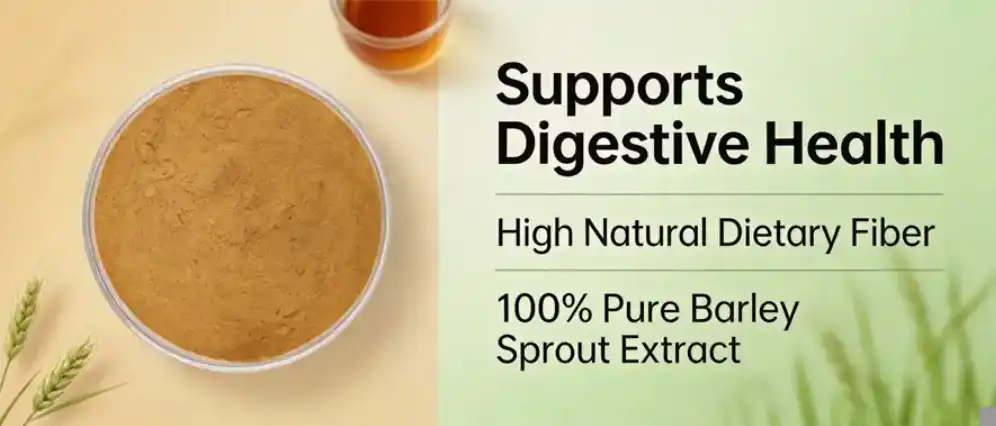
Detailed specifications show what the supplier can do and how consistent they are. Premium Barley sprout flour is usually a fine, light yellow to light brown powder with particles that are between 80 and 120 mesh, which ensures that the flour mixes evenly in recipes. High-Performance Liquid Chromatography (HPLC) should be used to check the active maltose level, and good providers should offer specifications at 60% or higher. Solubility in water is important for drinking uses, while solubility in ethanol is important for some extraction methods. To make sure that the standards match what the marketing says, ask for certificates of analysis for the most recent runs. The signature sweet malty smell should stay the same across orders, which means the beer was processed and stored correctly.
Production Capacity and Flexibility
Your supplier should be able to show that they can grow with your business. Minimum order quantities show how willing they are to work with new brands. Partners who really care about their customers will take orders as low as 1 kg for first trials while still having room for 25 kg drums and larger bulk shipments. Find out how long it takes to make a regular order versus a custom order. Check to see if they can handle changes in seasonal demand without affecting delivery times. Suppliers with enough supplies show that they are financially stable and care about their customers. This lowers your risk of production delays caused by a lack of ingredients.
OEM and ODM Capabilities
Private label and custom formulation services are very useful for brands that want to stand out. Suppliers that offer OEM services can package products according to the rules set by your brand, which makes your supply chain more efficient. When you have ODM capabilities, you can work with the supplier's technology team to make custom mixes or meet specific requirements. For startups that don't have their own research and development (R&D) staff or for established companies that are moving into new areas, these services are especially helpful. Check out their list of past special projects to see how innovative they are and how well they can adapt to specific needs.
Comparing Barley Sprout Flour Suppliers: Key Market Players and Solutions
There are a lot of choices on the global market, so you need to carefully compare them to find the best one for your needs. Strategic review is a way to tell the difference between providers of goods and real partners.
Assessing Supplier Reputation and Track Record
Established suppliers usually have longer histories of doing business, which makes markets less volatile. Check out their list of clients—companies that work with well-known foreign names have shown they can handle large projects. Case studies and testimonials from customers can tell you more about the quality of a service than just its technical details. Certifications in their field from outside groups show that they are respected in their professional circles. Be wary of sellers who can't give you names that you can check or who don't want to talk about their quality management systems in detail.
Pricing Models and Value Analysis
You can't just compare prices; you have to look at the total value provided as well. If an option is cheaper, it could mean that the quality of the raw materials, the testing, or the reliability of the supply chain has been lowered. Ask for thorough quotes that show how much different order sizes and arrival times will cost. Find out if the price includes certifications of testing, paperwork for regulations, and expert help. Many suppliers offer different prices based on how much you commit to buying, giving long-term customers better deals. You should think about hidden costs like penalties for not meeting a minimum order size, fees for fast delivery, or charges for reformulating products that don't meet requirements.
Geographic Considerations and Supply Chain
China has become a major producer of sprouted grain materials by mixing old-fashioned farming knowledge with cutting-edge processing tools. Because their supply chains are linked and their production clusters are specialized, Chinese suppliers often offer competitive prices. But for foreign buyers to work, you need partners who know how to handle exports and meet international quality standards. Check to see how much experience they have with different shipping methods, such as fast delivery for quick small orders, air freight for medium amounts that need to be sent quickly, and ocean freight for cheap large shipments. Being able to work with FOB, CIF, CFR, EXW, DAP, and DDP terms shows that you are skilled at doing business around the world.
Technical Support and Communication
The best relationships with suppliers go beyond simple transactions and turn into partnerships where both parties work together. Check to see how responsive they are to your first questions; quick, detailed answers are a sign of a customer-centered culture. Technical teams should help you figure out how to best use their Barley sprout flour by giving you application advice. Language skills are important for foreign business partnerships. Suppliers with staff who speak more than one language make communication clearer and reduce misunderstandings. Time zone differences can slow down communication, but these days, operations are often set up so that teams can work during all global business hours.
Procurement Process: How to Source Barley Sprout Flour Effectively
A systematic buying technique lowers risk and speeds up the approval process for suppliers, which helps you quickly find reliable sources for ingredients.
Initial Research and Supplier Identification
Do a lot of research on the market at the start by using B2B platforms, industry directories, and trade associations. Make a list of possible providers who meet your basic requirements for certifications, minimum order amounts, and preferred locations. Check out their websites to see what products they offer, how the company started, and customer reviews. Talk to people you work with in the same field to get advice based on their own experience. Trade shows are great places to meet suppliers in person, look at samples, and get a sense of how professional and present they are in the market.
Sample Testing and Quality Verification
Don't commit to big orders until you've looked at samples carefully. Ask for samples that are more like regular production runs than ones that were carefully made. Use organoleptic tests to judge how something looks, smells, and tastes. Check to see if it dissolves in the matrices you need for your application. If you can't do enough testing yourself, send samples to independent labs for food analysis and contamination screening. Check the results against the supplier's instructions to make sure they are correct. You should use test samples in your real recipes to find any problems with processing or unexpected effects on other materials.
Negotiating Terms and Building Partnerships
Negotiations that go well balance controlling costs with building relationships. Talk about making commitments to buy in bulk that could help you get better prices without stretching your cash flow too thin. Make sure you understand the payment terms. Bank transfer (T/T) is still the norm, but check to see if payment plans can work with the time it takes to convert cash. Set up clear ways to settle quality disputes before they happen. Ask for agreements that spell out requirements, due dates, and ways of communicating. The goal is not to get as many favors as possible, but to come up with terms that are good for both sides and support long-term relationships.
Managing Logistics and Delivery
Shipping operations have a big effect on the quality of the ingredients and the cost of landing. Barley sprout flour needs to be kept safe from extremes of temperature and moisture while it is being shipped. Make sure that the companies you work with use the right packaging. For large orders, 25 kg drums with moisture-proof seals are usually the best choice. Learn about the travel times for the different shipping methods and make plans based on that information to keep production going. Express services get things to you faster (3–7 days), but they cost more. Air freight is a good mix of speed and cost at 5–10 days. And ocean freight takes 20–45 days and is most cost-effective for large amounts. Make it clear who is responsible for clearing customs, paying taxes, and delivering the goods to your building under the Incoterm you choose.
Conclusion
Choosing the best Barley sprout flour supplier requires balancing multiple factors—quality certifications, product specifications, production flexibility, pricing structure, and customer service capabilities. The best partner provides consistent quality that meets international standards, as well as good communication and dependable logistics. BioSpark and other companies like it show these qualities by having many certifications (ISO9001, FDA, Kosher, Halal, GMP), exact HPLC-verified specs (60% maltose content), a low minimum order size (1 kg), and many shipping choices for customers all over the world. Getting to know sellers who see your success as their own gives you a competitive edge that goes far beyond the cost of the ingredients. What you choose as a supplier today will affect the standard of your products and your image in the market for years to come.

FAQ
1. Does Barley Sprout Flour Contain Gluten?
Barley is a gluten-containing food, so yes, Barley sprout flour does have gluten in it. The sprouting process doesn't get rid of gluten proteins, but it might change the way they're structured a little. This item isn't good for people with celiac disease or strict gluten-free diets. Cross-contamination can be avoided by manufacturers of gluten-free products by getting their ingredients from gluten-free facilities instead of barley-based ones.
2. How Should Barley Malt Extract Be Stored?
When stored correctly, enzyme activity is kept, and quality is not lost. Keep away from direct sunlight and keep in a cool, dry place. The best temperature is below 25°C, and the relative humidity should be below 60%. Containers that are sealed stop moisture from absorbing, which leads to caking and the growth of microbes. Once it's opened, put any leftovers in sealed containers and eat them within six months for the best taste. Follow the supplier's advice on the shelf life. For unopened drums stored properly, the shelf life is usually 24 months.
3. Can Sprouted Barley Replace Wheat Flour in Baking?
In most recipes, partial substitution works better than full substitution. Barley sprout flour makes dough that is different from wheat flour because it has different protein structures and enzymes that work with it. Using 10–30% less wheat flour improves the nutritional value and adds a rich sweetness without making the taste very different. When you use a higher replacement rate, you need to change the recipe's water levels and mixing times. Systematically test formulations to get the results you want while getting the most out of the health benefits of sprouted grains.
Partner With BioSpark for Premium Barley Sprout Flour Supply
BioSpark (Xi'an) Biotechnology Co., Ltd is ready to help you find the ingredients you need. They sell high-quality Barley sprout flour that has been tested for 60% maltose by HPLC and has all the necessary international certifications. You can order anything from 1 kg for testing purposes to large amounts for production. Our improved plant extraction methods keep the enzymes working while giving you the constant light yellow to light brown powder that your recipes need. Our expert team offers full OEM and ODM support that is suited to your needs, whether you're making functional baked goods, malted drinks, digestive health supplements, or items for babies. We keep enough stock in stock so that we can quickly deliver via express, air, or ocean freight on the terms that you choose, such as FOB, CIF, DDP, or something else. Contact our team at leao@biosparkcn.com right away to get samples, talk about your needs, and find out why top companies that make Barley sprout flour trust BioSpark as their partner for quality, dependability, and new ideas in natural health products.
References
1. Johnson, M., & Williams, K. (2022). Sprouted Grains: Nutritional Enhancement Through Controlled Germination. Journal of Food Science and Technology, 59(4), 1432-1445.
2. Chen, L., & Zhang, Y. (2021). Quality Assessment Methods for Barley Malt Products in Nutraceutical Applications. International Journal of Food Properties, 24(1), 892-907.
3. Thompson, R. (2023). Global Market Analysis: Functional Ingredients in Health Supplements 2023-2028. Nutritional Ingredients Research Institute Annual Report.
4. Martinez, A., & Patel, S. (2022). Supply Chain Management for Botanical Ingredients: Best Practices for B2B Procurement. Journal of Supply Chain Management in Food Industries, 18(3), 234-251.
5. Wilson, D. (2021). Regulatory Compliance in International Ingredient Trade: A Guide for Procurement Professionals. Food Safety and Quality Management Quarterly, 15(2), 67-84.
6. Lee, H., & Kumar, V. (2023). Enzymatic Activity Preservation in Spray-Dried Plant Extracts: Technical Considerations for Manufacturers. Processing Technology in Natural Products, 31(6), 445-462.

Send Inquiry

Related Industry Knowledge
- Why Choose Papaya Juice Powder for Instant Beverage Mixes?
- Where to Buy Hami Melon Powder for Import and Wholesale
- Is Coconut Milk Extract Powder More Cost-Effective Than Canned?
- Is Coconut Milk Extract Powder More Cost-Effective Than Canned?
- Is Coconut Milk Extract Powder More Cost-Effective Than Canned?
- Is Coconut Milk Extract Powder More Cost-Effective Than Canned?
- Is Coconut Milk Extract Powder More Cost-Effective Than Canned?
- Is Coconut Milk Extract Powder More Cost-Effective Than Canned?
- Is Coconut Milk Extract Powder More Cost-Effective Than Canned?
- Is Coconut Milk Extract Powder More Cost-Effective Than Canned?
- Is Coconut Milk Extract Powder More Cost-Effective Than Canned?
- Is Coconut Milk Extract Powder More Cost-Effective Than Canned?
- Why Is Broccoli Extract Powder Rich in Sulforaphane?
- Could Holy Berry Powder Enhance Beverage Product Innovation?
- What Makes Pomegranate Peel Extract Powder Unique?
- What Is Rosa Roxburghii Tratt Extract Used For?
- Inositol Pearl Extract for Mood and Emotional Support
- Ganoderma Extract Powder: Natural Antioxidant Powerhouse
- Unlock Better Sleep: Ghanaian Seed Extract Supplement Solution