_1764041963888.webp)
Why Is Wolfberry Peptide Gaining Market Demand?
Sep 26, 2026
Wolfberry peptide is moving from niche botanical ingredient to mainstream B2B demand driver — and the shift is happening fast. Sourced from premium Ningxia Lycium barbarum L. fruits and produced through plant protein-directed enzymatic hydrolysis, this goji berry peptide concentrate delivers small-molecule bioactives under 2,000 Da for rapid absorption. As health supplement brands, nutraceutical companies, and OEM partners search for traceable, multi-functional plant ingredients, wolfberry peptide stands out as a scientifically validated, clean-label solution that addresses eye health, immune function, antioxidation, and anti-aging in a single ingredient.
Understanding Wolfberry Peptide — What It Is and Why It Matters
What Exactly Is Wolfberry Peptide?
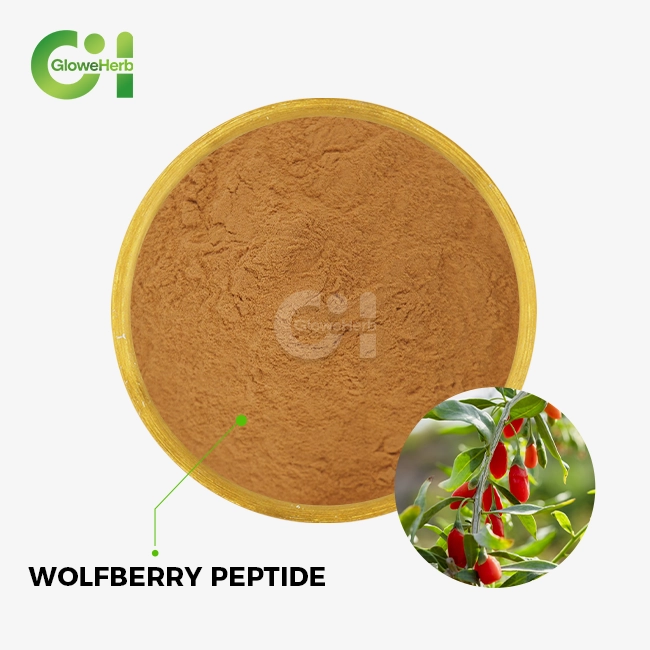
Wolfberry peptide is a highly refined bioactive created by using a combination of biological enzymes to break down dried, ripe wolfberries. It keeps all of the fruit's healthy parts, like the wolfberry polysaccharides, zeaxanthin dipalmitate, betaine, and pigments, but breaks down the proteins inside into small, accessible peptides. Fine, light orange-red to light brown powder that smells like goji berries and is simple to dissolve in water is what you're left with.
How Is It Extracted?
Plant protein-directed enzymatic hydrolysis is what BioSpark's wolfberry peptide does to break apart specific protein bonds and release functional peptides that are still whole and not damaged. This is done without using harsh chemicals. Simple hot-water extracts don't keep the "whole-fruit synergistic" profile as this method does. High-Performance Liquid Chromatography (HPLC) tests show that wolfberry peptides, the thing that makes the supplement work, are 80% pure. This makes sure that the stability that formulation scientists and regulatory teams need from one lot to the next.
Why Does Molecular Size Matter?
It is easier for wolfberry peptides less than 2,000 Da to get into the bloodstream than longer protein chains. This is because they can get past the usual stomach barriers. This better absorption directly leads to faster product usefulness, which is a strong selling point for customers today who are driven by facts and the brands that serve them. This means that for B2B buyers, the dose that works needs to be lower and the label needs to show more clinical differentiation.

Market Drivers Fueling Demand for Wolfberry Peptide
Clean-Label and Plant-Based Trends
Because people in North America want ingredients that come from plants and are treated as little as possible, their goals for making vitamins have changed. In 2023, the Council for Responsible Nutrition published a study that showed 76% of people in the U.S. use food supplements, and more and more of them want ingredients that are pure and can be tracked. Wolfberry peptide is great for this because it is clean label, doesn't have any artificial chemicals, and is approved by ISO9001, FDA, GMP, Kosher, and Halal standards. This is also in line with the clean label trend.
Eye Health as a Growth Category
A lot of people who use computers and other digital devices are getting tired of them and having trouble seeing because of blue light. Malar color is sent straight to the eye by zeaxanthin, which is found naturally in wolfberry peptide. This helps protect against the harm that oxidative stress does to blue light. With this app, wolfberry peptide can be used as the main ingredient in eye-care pills, capsules that help with vision, and functional drinks for digital professionals, e-sports players, and people who work from home.
Scientific Validation Driving B2B Confidence
When people buy commercial formulas, they need evidence that meets regulatory standards. Polysaccharides and peptides in wolfberries have been studied to see how they can activate macrophages, T cells, and B cells. This can help the immune system in general and with certain infections. This scientific backing makes buying less risky, supports what the label says, and backs up the idea of asking more. When health supplement brands choose an OEM ingredient provider, these are the things they look at.
Procurement Considerations for B2B Buyers
Certifications and Quality Assurance
It is important to know the level of approval when getting a lot of wolfberry peptide. BioSpark's product is ISO9001 certified, FDA registered, GMP certified, Kosher certified, and Halal certified. This means it can be brought into North America, Europe, and the Middle East. HPLC tests are done on each batch to make sure it meets the 80% active norm. People who want to buy something should ask for a Certificate of Analysis (CoA) that proves the product is pure and checks for heavy metals, microbes, and wetness.
Minimum Order Quantities and Packaging
It's possible to buy as little as 1 kg, so both new and old names can use it for product tests and research and development samples. For business packing, 25 kg per drum is the norm. A lot of stock is kept on hand so that businesses that are ready to grow can ship quickly. As for delivery terms, you can pick FOB, CIF, CFR, EXW, DAP, or DDP. If you need to ship something quickly or cheaply, you can choose between fast service, air freight, and sea freight.
OEM and ODM Flexibility
BioSpark can make goods from wolfberry peptides and offer full OEM and ODM services. People can ask the production team to make private-label wolfberry peptide powder, finished capsule recipes, or custom functional drink mixes based on their dose goals, branding needs, and the type of capsules they want the products to come in. Customizations can be made in small batches or on a large scale. This makes it easier for new brands to get started and meets the needs of established wholesalers who need a lot of products.
How Wolfberry Peptide Compares to Other Popular Supplements
Versus Collagen Peptides
People buy collagen peptides more than any other type of supplement for sports or beauty. But they come from animals and only help strengthen bone cells most of the time. Wolfberry peptide can absorb small molecules just like collagen, but it also has antioxidant polysaccharides and carotenoid compounds. This makes it a plant-based alternative that can be used for more things, especially to protect the eyes and liver, where collagen hasn't been shown to be helpful.
Versus Synthetic Antioxidants
Cheap antioxidants made in a lab, like BHA or ascorbyl palmitate, are getting more attention from regulators and people who want products with clean labels. Wolfberry peptide naturally contains zeaxanthin, betaine, and peptide fractions, all of which contribute to its high ORAC (Oxygen Radical Absorbance Capacity) value. Because they are natural, these brands stand out from fake ones that want to be seen as high-end in the anti-aging or healthy food markets.
Versus Standard Berry Extracts
Berries like blueberry, bilberry, and acerola have antioxidants that are good for you, but they don't have the peptide part that helps cells take them in quickly. Wolfberry peptide has the polyphenol profile of a berry mixture, but it can also be absorbed better because it is a peptide. This two-in-one feature can cut down on the number of items needed by OEM users who are making recipes that claim to help with more than one health goal.
Future Outlook and Trends in Wolfberry Peptide Market
Expanding Applications in Functional Foods and Beverages
Wolfberry peptide is now sold in more than just capsules. It is also in ready-to-drink drinks, protein bars, and powder stick packs. It can be used in drinks without any flavor masking because it dissolves in water and has a neutral flavor profile (a light, sweet goji smell). As the functional food market in the U.S. speeds up its new products, companies that start using wolfberry peptides early get a leg up in areas like drinks that are good for the liver and items that help you recover from screen fatigue.
Cross-Border E-Commerce and Cultural Positioning
A big part of Chinese culture is wolfberry peptide, which is used in medicine-food homology, a method that combines diet and health care. People in foreign markets are interested in ingredients that have both old and new clinical proof. This story works well there. Brands that sell or buy from China can use this cultural layer to tell real stories about their products that make them stand out on digital shelves.
Regulatory and Sustainability Alignment
As the U.S. Food and Drug Administration (FDA) and other foreign agencies make it harder to get plant materials without more paperwork, being able to track them from the beginning to the end product becomes more important when buying. Wolfberry peptide from Ningxia, which is known as the natural home of high-quality Lycium barbarum, can be traced to its source, which is useful for checks and compliance teams. When you add third-party HPLC proof and GMP-certified processing, you meet the level of paperwork that most serious buyers now expect.
Conclusion
Wolfberry peptide has emerged as one of the most intriguing functional ingredients on the market today. Its exact enzyme hydrolysis, ability to keep the fruit's nutritional value, and wide range of uses, such as for eye health, immunity, anti-aging, liver support, and sports recovery, make it very appealing to a lot of different groups. Wolfberry peptide is a good choice for procurement workers because it is of guaranteed quality, has low minimum orders, and has a well-documented track record of effectiveness. The rise of the ingredient is due to changes in customer tastes, new product categories, and scientific research. The business world will need these things for a long time.

FAQ
1. What is the extraction method used for wolfberry peptide?
BioSpark's wolfberry peptide is made with enzymes that break down plant proteins. Using this method, wolfberry proteins are broken down into small molecules called peptides. Other active ingredients, such as betaine, carbohydrates, and zeaxanthin dipalmitate, are kept. The process doesn't use any harsh chemicals.
2. What purity level does the product meet?
Before each batch is made, High-Performance Liquid Chromatography (HPLC) is used to make sure that the wolfberry peptides, which are the active ingredient, are at least 80% pure. If you ask for one, you can get a Certificate of Analysis.
3. What certifications does the product carry?
The item has approval from ISO9001, FDA, GMP, Kosher, and Halal, which means it can be officially brought into North America, Europe, and the Middle East.
4. What is the minimum order quantity?
You can order as little as 1 kg, which is enough for testing, sampling, and making small batches of new products. Industrial packs often have a weight of 25 kg per drum.
5. Is OEM or ODM service available?
There are many types of products that BioSpark can make and offer, including powder, capsules, and ready-to-drink mixes. They also offer private labeling and unique formulas. It can be used for both small and large production runs.
6. How is the product shipped?
You can send things by express (DHL, FedEx, UPS), air freight, or sea freight. It's okay to use trade terms like FOB, CIF, CFR, EXW, DAP, and DDP. A bank transfer (T/T) can be used to send money.
Partner with BioSpark for Premium Wolfberry Peptide Supply
If you want to buy or sell wolfberry peptides, you can trust BioSpark (Xi'an) Biotechnology Co., Ltd. Their work has been approved, and HPLC has been used to check the quality. They can do both OEM and ODM work. We have a lot of wolfberry peptide powder in stock and ship it all over the world. Our trade terms are also very nice. Please email our team at leao@biosparkcn.com to get samples and prices if your company wants to find a unique plant peptide ingredient that is backed by science.
References
1. Council for Responsible Nutrition. CRN Consumer Survey on Dietary Supplements. 2023.
2. Amagase, H., & Farnsworth, N. R. A review of botanical characteristics, phytochemistry, clinical relevance in efficacy and safety of Lycium barbarum fruit (Goji). Food Research International, 2011.
3. Tang, W. H., et al. Antioxidant activity and chemical components of Lycium barbarum polysaccharides. Journal of Agricultural and Food Chemistry, 2012.
4. Li, X., et al. Zeaxanthin and lutein in eye health: Evidence from clinical studies. Nutrients, 2020.
5. He, M., et al. Bioactive peptides from wolfberry: Extraction, identification, and health-promoting effects. Food Chemistry, 2021.
6. Grand View Research. Dietary Supplements Market Size, Share & Trends Analysis Report. 2023.

Send Inquiry
Related Industry Knowledge
- What Certifications Matter for Bovine Bone Collagen Peptide?
- Damiana Peptide for B2B: Quality and Sourcing Guide
- How Does Kidney Bean Flour Support Gluten-Free Nutrition?
- How Much Maqui Berry Powder per Day for Visible Anti-Aging Results?
- How to use the best Tongkat Ali extract powder for maximum results?
- Oyster Shell Extract Powder for Osteoporosis Support: Does It Work?
- Pure Corn Extract Powder Benefits: Is It a Natural Nutrient Source?
- What is the shelf life of snow lotus powder supplements?
- What are the benefits of freeze-dried longan powder?
- Ghanaian Seed Extract Benefits: Natural 5-HTP for Mood & Wellness
