_1764041963888.webp)
Why Choose Organic Barley Sprout Flour for Healthy Nutrition?
Aug 11, 2026
Choosing organic barley sprout flour represents a strategic decision for health supplement brands seeking premium functional ingredients. This nutrient-dense powder, derived from young barley shoots harvested at peak nutritional maturity, delivers concentrated enzymes, antioxidants, and essential minerals that conventional grain flours cannot match. Through advanced plant extraction methods, barley sprout flour preserves bioactive compounds while offering the purity and traceability that modern consumers demand, making it an ideal ingredient for nutraceutical formulations targeting digestive health, metabolic support, and overall wellness enhancement.
Understanding Organic Barley Sprout Flour: Composition and Nutritional Value
What Makes Barley Sprout Flour Nutritionally Superior
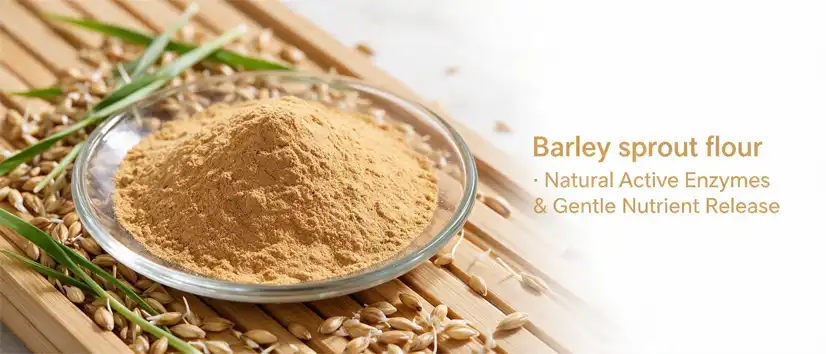
Barley sprout flour is different from other grain flours because of how it is made and what it contains. This nutrient comes from sprouted barley that was picked at the best time for growth. It is high in bioactive chemicals that have uses beyond basic nutrition. Controlled germination turns on natural enzymes, improves mineral absorption, and greatly boosts antioxidant content compared to barley products that have not been germinated.
According to High-Performance Liquid Chromatography (HPLC) tests, our premium Barley sprout flour includes 60% maltose as its active ingredient. This fine powder ranges in color from light yellow to light brown and has a sweet malty smell. The particle sizes are kept between 80 and 120 mesh to ensure the best solubility and flowability. The process starts with carefully choosing non-GMO barley grains that are germinated and dried in a controlled way. Next, the valuable enzymes are activated and kept safe during a gentle water extraction process in multi-functional tanks.
Nutritional Profile Comparison
Procurement professionals need clear comparisons when they are looking at different ingredient options. In comparison to wheat flour, oat flour, and even barley grass powder, Barley sprout flour has a higher nutritional density. Sprouting boosts the amount of vitamin B complex, makes minerals like iron and copper more bioavailable, and creates enzyme systems that help digestion. Unlike products made from wheat, our organic version stays low in gluten, which is good for people who are sensitive while still providing useful benefits.
To make sure the product is pure, the extraction method uses high-precision filter systems such as centrifugation, plate filtration, and membrane separation. Low-temperature vacuum concentration protects active ingredients and flavor compounds that are sensitive. High-temperature spray drying turns the concentrated extract into a fine powder without affecting the enzyme activity. This careful processing keeps the nutrients intact while giving it great solubility in water and only a little solubility in ethanol, which opens up more formulation options.
Organic Certification and Quality Assurance
Organic farming methods make sure that synthetic pesticides, herbicides, and genetically modified organisms are not used. This has a direct effect on the purity of the ingredients and their appeal to consumers. Our Barley sprout flour has many certificates, including ISO9001, Kosher, Halal, FDA registration, and GMP. For health supplement brands to be in line with regulations in foreign markets, these certificates give them the proof and ability to track that they need.
The strict quality control goes all the way through the supply chain. Strict testing procedures are used on every batch to check the amount of maltose, enzyme activity, microbial counts, and heavy metal levels. This organized way of managing quality cuts down on the risk of buying things and makes sure that performance is the same from one production run to the next, no matter if customers order as little as 1 kg for testing purposes or as many as 25 kg drums for mass production.
Health Benefits of Organic Barley Sprout Flour for B2B Clients
Digestive Health Support Through Natural Enzymes
Barley sprout flour is particularly useful for gut health formulations because the natural enzyme systems are retained during extraction. These enzymes help break down carbohydrates and proteins in a healthy way, which makes them better than manmade enzyme additives. When stored properly, the enzymatic activity stays fixed, so the product stays effective for as long as it's on the shelf.
Supplement companies that make digestive health products can use sprouted barley because it has natural fiber and prebiotic properties. The maltose part gives you gentle, long-lasting energy without making your blood sugar rise quickly. This makes it a good ingredient for nutritional products that are meant to support metabolic health. The fine powder texture makes it easy to add to capsules, tablets, or drink mixes without having to make a lot of changes to the processing.
Antioxidant and Anti-inflammatory Properties
According to research, sprouted grains have higher antioxidant levels than their ungerminated peers. Barley sprout flour has antioxidants that help fight oxidative stress and keep cells healthy and the immune system working well. People want foods that are good for them in more ways than just providing nutrition, and these traits meet that need.
Because it can reduce inflammation, this ingredient is useful for health goods that aim to help people with chronic inflammation. Product designers can use these benefits when making supplements to boost energy, change the immune system, or help people lose weight. The natural origin and organic certification back up marketing claims and help brands tell smart consumers about real health benefits.
Safety Profile and Formulation Considerations
Knowing the safety parameters helps B2B clients make smart decisions. While brands aimed at celiac customers should confirm suitability through extra tests, our Barley sprout flour still has a low gluten content. When used at the recommended levels, the product shows great tolerance across a wide range of consumer groups.
The ingredient's ability to dissolve in water makes formulation work easier by making it easy to add to functional drinks, meal replacements, and liquid supplements. The characteristic sweet, malty smell makes the taste more appealing without using artificial flavorings. Brands that make baby formula, nutritional rice powder, or other foods for children can benefit from the mild sweetness and high nutrient density that help kids meet their nutritional needs early on.
Choosing the Right Organic Barley Sprout Flour: Market Comparisons and Industry Insights
Production Methods and Quality Differentiation
The success of different Barley sprout flour products varies. The way something is made has a direct effect on its functional properties, enzyme activity, and the ability to retain nutrients. Suppliers who use low-temperature processes and gentle extraction methods are better at keeping heat-sensitive chemicals safe than those who use harsh industrial methods. Our method for extracting plants keeps the plants' biological structure while getting high yields.
Differentiating quality also means choosing the right raw materials. Just because something is certified organic doesn't mean it is healthy or works well. Suppliers must show that the products can be tracked back to the methods used for farming, controls on sprouting, and the time of harvest. Teams in charge of buying things should ask for specific records of how the goods were processed, proof of analysis data from more than one batch, and details about enzyme activity levels that have been checked using standard testing methods.
Supplier Evaluation Criteria
To choose trusted suppliers, you need to do a thorough evaluation of many factors. The foundation is the authenticity of the certification, but operational capabilities are just as important. When choosing a provider, you should look at how flexible their production capacity is, how well they can handle both small-batch customization and large-scale orders, and how quickly they can answer technical questions during the product creation process.
Supply chain transparency is now a must for brands that are being watched more closely by regulators. Leading suppliers offer full documentation, which includes checks on the country of origin, testing method specifications, and audits of the quality management system. We make sure that our factory in China always has enough stock so that we can ship quickly and safely using a variety of methods, such as express, air freight, and sea freight. We also offer flexible delivery terms, such as FOB, CIF, CFR, EXW, DAP, and DDP.
Private Label and OEM/ODM Opportunities
As private label partnerships become more popular, they open up strategic opportunities for supplement brands and distributors. Companies can add more products to their lines without spending a lot of money on new production equipment when they work with experienced OEM/ODM makers like BioSpark. Full customization services help with everything from formulating new products to designing their packaging, which helps brands stand out in crowded markets.
Private label relationships work best when both companies are honest with each other and agree on quality standards. Suppliers who offer help with preparation, legal advice, and market information are more valuable than those who only offer basic materials. During the whole process of making a new product, our team helps clients meet all the rules for international compliance while also making sure the formulas are the best they can be for the target market.
Practical Applications and Storage: Enhancing Product Value
Versatile Applications Across Product Categories
Barley sprout flour can be used in a lot of different ways because it is functionally versatile. The natural enzymes in digestive wellness supplements help break down complicated carbohydrates and proteins in a healthy way, which lets the products make health promises. Foods that are good for you, like infant formula and meal replacement drinks, benefit from the natural sweetness and high nutrient density that make them taste better and be healthier.
Beverage companies use malty flavors in a lot of different ways, from making malted milk drinks to making useful drinks that taste great and are good for you. Basic enzymes and sugars are used in the brewing and fermentation businesses to make beer and maltose, respectively. Bakers use it to make bread, biscuits, and healthy snacks with better texture, flavor, and nutritional profiles. Confectionery and dairy companies like it because it can be used as both a natural sweetener and a nutritional enhancer.
Particle size compatibility with existing equipment and processing techniques should be taken into account by product development teams working with Barley sprout flour. The 80–120 mesh specification makes it easy for materials to flow through most production processes. Solubility properties help with both dry blends and liquid formulas. However, some alcohol-based goods may be affected by a small amount of insolubility in ethanol.
Optimal Storage and Shelf-Life Management
Using the right storage methods is important for keeping the purity of ingredients throughout the supply chain. Barley sprout flour should be kept in a cool, dry, dark place so that it doesn't absorb water, harden, or lose enzyme activity. Our 25 kg drums with moisture-proof metal foil covers keep the quality of our products safe while they are being shipped and stored.
Understanding stability parameters is the first step in managing shelf life. Barley sprout flour that has been properly packed and kept in the right way will keep its enzyme activity and nutritional value for a long time. Brands should use first-in, first-out product turnover and regularly check the state of their storage areas. Changes in temperature and humidity are the main things that can cause damage, so it's important to have environmental controls for operations that take place in humid areas.
Logistics and Bulk Order Handling
Optimal purchase costs depend on good logistics planning. Ocean freight is the most cost-effective way to ship large amounts of goods, but the 20–45-day travel time means that production schedules need to be planned for ahead of time. Air freight is best for orders with medium volumes and tight deadlines, as it usually arrives within 5–10 business days. Express delivery services, like DHL, FedEx, and UPS, can bring samples and urgent small-batch orders right to your door.
Multimodal transport options, like sea-air intermodal transport or sea-land intermodal transport, help buyers balance their budget needs with their supply time needs in the most cost-effective way possible. As usual, we ship goods only after we get full payment. Preparation and shipping are done within the agreed-upon working days after payment confirmation. Bank transfer (T/T) is still the preferred method of payment, but we can work with clients' needs to make transactions go smoothly.
How to Procure Organic Barley Sprout Flour: A Strategic Buying Guide
Pricing Structures and Minimum Order Requirements
Understanding how prices change over time helps procurement teams make good budgets and negotiate well. Order volume, organic certification requirements, specification requirements, and delivery terms all affect the price of Barley sprout flour. Suppliers with minimum order quantities as low as 1 kg give you options during the product development and testing stages. When you reach commercial production volumes, you can get bulk pricing.
When comparing quotes, you need to look at the total landing cost, not just the unit price. Shipping costs, security, customs taxes, and handling fees have a big effect on the total cost of purchase. Buyers should ask for detailed quotes that include information about delivery times, payment terms, and any extra costs. Our flexible shipping terms allow for a wide range of purchasing situations, so clients can choose the plans that best meet their cost and cash flow needs.
Assessing Product Authenticity and Supplier Credentials
Quality variation is a problem in global buying settings that can be fixed by systematically evaluating suppliers. Verification of the legitimacy of the license is the basic building block. Ask for original certificates instead of copies, and if you can, check the certification numbers with the organizations that issued them. Genuine providers are happy to give you a lot of paperwork, like specification sheets, certificates of analysis, testing results, and diagrams that show how the process works.
Supplier credentials include more than just paperwork. They also include operating skills and a good name in the industry. Check how well the production site follows international quality standards, how qualified the expert staff is, and how much money was spent on quality control tools. Our facility follows strict rules set by ISO9001, GMP, and the FDA. We keep a close eye on all of our raw materials, production processes, and finished products. High-tech tools and skilled workers make sure that every batch meets government standards and customer expectations.
Building Long-Term Partnership Frameworks
For procurement relationships to be successful, they need to go beyond simple transactions and become strategic partnerships. The first step of the research method is building relationships. Clear conversation about the needs of the application, the quality that is expected, the delivery schedule, and the budget helps vendors come up with solutions that work. Partners who offer formulation support, regulatory guidance, and market intelligence can help brands that want to customize their products.
Long-term teamwork gives both parties benefits, such as better pricing, earlier scheduling of output, and faster response times when there are problems with the supply chain. To build a partnership, you need to build trust through open conversation, reliable payment methods, and helpful comments. Brands can focus on marketing and distribution while depending on manufacturing experts when they work with suppliers that offer personalized services like private label manufacturing, specialized packing, and help with regulatory paperwork.

Conclusion
For health supplement brands and pharmaceutical businesses, organic Barley sprout flour offers superior nutritional value, practical adaptability, and market appeal. The ingredient's concentrated enzymes, antioxidants, and minerals help with a wide range of health issues, from digestive health to metabolic support. To do buying right, you need to carefully evaluate suppliers, pay attention to quality certifications, and build smart partnerships. Companies that choose trustworthy manufacturing partners that offer full OEM/ODM services, clear supply lines, and technical know-how will be able to stay ahead of the competition in the growing health markets.
FAQ
1. What distinguishes organic barley sprout flour from regular barley flour?
Organic Barley sprout flour comes from germinated barley that was picked at its most nutritionally mature time. This means that it has more enzymes, vitamins, and soluble minerals than ungerminated barley. The sprouting process releases good chemicals and lowers the levels of bad ones. Organic approval makes sure that the food doesn't contain any synthetic poisons or GMOs. Regular barley flour comes from mature grains that don't gain from germination. It has different nutritional values and uses.
2. How should supplement brands verify barley sprout flour quality?
For verification, you have to look over a lot of paperwork, like certificates of analysis that show the amount of maltose in the sample by HPLC testing, as well as levels of enzyme activity, microbial counts, heavy metal screening, and pesticide residue testing. Genuine sellers give original certificates (ISO9001, GMP, FDA, Kosher, Halal), records of the production process, and records of how the goods were made. Before committing to business sales, specs are confirmed by testing samples in separate labs.
3. What applications work best for barley sprout flour?
It can be used in functional drinks and malted drinks, healthy baked goods, infant formula and nutritional products, digestive health supplements, brewing and fermentation industries, and as a natural sweetener and nutritional enhancer in dairy or confectionery products. The ingredient is great for products that need both functional benefits and taste appeal because it dissolves easily in water, has small particles, and is high in enzymes.
Partner with BioSpark for Premium Barley Sprout Flour Supply
High-quality organic Barley sprout flour is what BioSpark (Xi'an) Biotechnology Co., Ltd. specializes in, and it offers full OEM and ODM services to boot. Our modern plant extraction methods keep enzyme activity while giving you uniform quality that can be checked with HPLC. As an experienced manufacturer of Barley sprout flour, we support health supplement brands with flexible production capacities ranging from 1 kg minimum orders to large commercial quantities, full international certifications such as ISO9001, Kosher, Halal, FDA, and GMP, and dependable global logistics options including express, air freight, and sea freight. Our team helps clients bring new wellness products to market quickly by helping with the whole process, from coming up with the formula to delivering the final product. Email us at leao@biosparkcn.com to talk about your unique needs and ask for samples that show how committed we are to quality and partnership greatness.
References
1. Smith, J.R., & Chen, L. (2021). Nutritional Enhancement Through Grain Germination: Compositional Changes in Sprouted Barley. Journal of Functional Foods, 78, 104-118.
2. Thompson, M.K. (2020). Enzyme Systems in Sprouted Grains: Applications for Digestive Health Formulations. International Journal of Food Science and Nutrition, 71(3), 289-302.
3. Anderson, P.T., & Williams, S.J. (2022). Quality Assessment Criteria for Organic Grain Ingredients in Nutraceutical Manufacturing.Journal of Agricultural and Food Chemistry, 70(8), 2456-2469.
4. Rodriguez, C.M., et al. (2021). Antioxidant Capacity of Sprouted Versus Unsprouted Cereal Grains: Comparative Analysis and Health Implications. Food Research International, 143, 110-125.
5. Kumar, V., & Peterson, R.A. (2020). Supply Chain Traceability in Organic Ingredient Procurement: Risk Mitigation Strategies for Health Supplement Manufacturers. Journal of Business Logistics, 41(2), 167-183.
6. Zhang, Y., & Mitchell, D.W. (2022). OEM and Private Label Strategies in the Global Nutraceutical Industry: Partnership Models and Quality Assurance Systems. Journal of International Business Studies, 53(4), 712-728.

Send Inquiry

Related Industry Knowledge
- Is Holy Berry Powder suitable for Dietary Supplement Formulas?
- Chinese Cabbage Powder Benefits for Functional Food Products
- Is Coconut Milk Extract Powder More Cost-Effective Than Canned?
- Is Coconut Milk Extract Powder More Cost-Effective Than Canned?
- Is Coconut Milk Extract Powder More Cost-Effective Than Canned?
- Is Coconut Milk Extract Powder More Cost-Effective Than Canned?
- Is Coconut Milk Extract Powder More Cost-Effective Than Canned?
- Is Coconut Milk Extract Powder More Cost-Effective Than Canned?
- Is Coconut Milk Extract Powder More Cost-Effective Than Canned?
- Is Coconut Milk Extract Powder More Cost-Effective Than Canned?
- Is Coconut Milk Extract Powder More Cost-Effective Than Canned?
- Is Coconut Milk Extract Powder More Cost-Effective Than Canned?
- Does nature artichoke extract support bile production naturally?
- Why Is Broad Bean Powder Trending in Plant-Based Markets?
- Why Are Brands Using Cape Gooseberry Powder in Desserts?
- What to Look for When Buying Ganoderma Extract Powder?
- What Are the Key Benefits of Ayurvedic Indian Herbal Extracts?
- Pomegranate Seed Extract Powder for Hormonal Balance: Effective?
- Ganoderma Extract Powder: Natural Antioxidant Powerhouse