_1764041963888.webp)
Is Holy Berry Powder suitable for Dietary Supplement Formulas?
Aug 04, 2026
Holy berry powder, scientifically known as chasteberry or Vitex agnus-castus extract, is exceptionally suitable for dietary supplement formulas targeting women's wellness and hormonal balance. This botanical ingredient contains concentrated iridoid compounds, flavonoids such as vitexin, diterpenes, and phytosterols that work synergistically to support pituitary function and regulate endocrine activity. Unlike synthetic hormones, chasteberry powder operates through a gentle regulatory mechanism, making it ideal for supplement brands developing clean-label products. With 99% purity verified through Thin-Layer Chromatography (TLC), manufacturers can confidently incorporate this premium extract into capsules, tablets, blended powders, and functional beverages. Its excellent solubility profile in ethanol and compatibility with various excipients ensure seamless integration into diverse formulation matrices.
Understanding Holy Berry Powder and Its Core Benefits
What Is Holy Berry Powder and How Is It Produced?
A complex botanical extract called Holy berry powder is made from the ripe, dried fruits of the Vitex agnus-castus plant using modern methods for plant extraction. To get both water-soluble and lipid-soluble bioactive compounds, the production process uses both mechanical pressing and gentle secondary extraction. Manufacturers use low-temperature vacuum concentration and spray-drying technology with natural maltodextrin carriers to get concentrated juice. By using two different methods of extraction, the natural flavour and active ingredients of the plant are kept, while a fine powder with particle sizes between 80 and 120 mesh is made. The dark brown to brownish fine powder that is made has even molecule distribution, great flowability, and fast dispersion, all of which are important for making supplements efficiently.
Nutritional Profile and Active Compounds
The unique phytochemical makeup of Holy berry powder extract gives it its bioactive power. Along with flavonoids like vitexin, casticin, and orientin, iridoid compounds are the main active ingredients. Diterpenes and phytosterols give plants extra health benefits. Modern pharmacological studies show that these parts work on the anterior pituitary gland to control the release of luteinizing hormone (LH) and help stop the release of too much prolactin (PRL). This indirect mechanism helps keep the balance of progesterone in the body without adding any outside hormones. The 99% specification makes sure that all production runs have the same amount of potency. This is very important for supplement brands that need to know how the supplement will work. This level of standardisation is higher than that of many common herbal extracts. It gives formulators solid material standards for following the rules and getting good results in clinical trials.
Health Benefits Aligned with Market Trends
Holy berry powder has a lot of healing uses in a lot of different areas of health that Americans are becoming more interested in. Clinical evidence shows that it helps with premenstrual syndrome (PMS) symptoms like mood swings, breast tenderness, and bloating. Researchers who used standardised vitex extracts saw big changes in the regularity of their periods and fertility markers. The research was reported in phytotherapy journals. New studies show that regulating hormones may be good for more than just reproductive health. It may also be good for skin health, which indirectly addresses acne problems in adults caused by androgen sensitivity. The plant's flavonoid content gives it protective qualities that make anti-aging formulas more useful. Because it can be used in so many different ways, Holy berry powder is a useful ingredient for companies that are making complete lines of products for women's health or products that specifically balance hormones.
Comparing Holy Berry Powder to Other Berry Powders in Supplement Formulation
Nutritional and Phytochemical Differentiation
When purchasing, teams look at berry powders; it's important to tell Holy berry powder's functional profile apart from that of superfruits like acai berry bulk powder or goji berry powder. Unlike antioxidant-focused berry extracts that are mostly appreciated for their polyphenol content, Holy berry powder's iridoid and diterpene components have unique effects on hormones. Acai berry bulk powder usually has a lot of anthocyanins, which are good for your heart and brain. Goji berry powder has zeaxanthin, which is good for your eyes, and Lycium barbarum polysaccharides, which are good for your immune system. Holy berry powder is a unique medicine that helps with hormonal balance and sexual health. Formulators can make synergistic blends by combining Holy berry powder's hormonal support with acai's antioxidant protection, or they can add it to women's multivitamin complexes that already contain other botanicals that work well together.
Processing Methods and Stability Considerations
The spray-drying method used to make premium Holy berry powders is more stable than the simple grinding methods used to make some berry powders. Spray-dried extracts keep less water in them (usually less than 5 percent), which makes them less likely to become contaminated by microbes or break down by enzymes while they are stored. When Holy berry powder is properly handled, the Hausner ratio stays below 1.25. This makes sure that the powder flows easily during the packaging and tableting processes. On the other hand, freeze-dried berry powders often have hygroscopic traits that need special packaging in order to keep all of their nutrients. Holy berry powder is slightly soluble in water but easily soluble in ethanol, which means it can be used in both water-based and lipid-based delivery systems. This adaptability helps a lot of different ways of making medicines, from the old-fashioned pills to new liposomal preparations and sublingual liquids.
Certification and Compliance Standards
Reliable Holy berry powder providers give full approvals that cover international rules and regulations. The product being talked about has ISO9001 quality management certification, is Kosher and Halal, is registered with the FDA, and has GMP (Good Manufacturing Practice) paperwork. These qualifications make it much less likely that supplement brands will have problems with the FDA when they come to the U.S. market, where strict quality controls are required by the Dietary Supplement Health and Education Act (DSHEA). Organic approval isn't always necessary, but it helps brands that care about the environment stand out in the market. The TLC testing method meets USP (United States Pharmacopoeia) botanical identity standards and is scientifically proven to be effective. Procurement teams should give more weight to suppliers who offer full tracking paperwork, which includes heavy metal screening, microbial testing, and pesticide residue analysis. These are all standard quality assurance procedures that big stores and online stores are asking for more and more.
Practical Considerations for Incorporating Holy Berry Powder in Dietary Supplements
Dosage Guidelines and Delivery Format Selection
Based on clinical studies, the recommended daily dose of Holy berry powder is between 20 and 40 mg of standardised extract, which is about 200 to 400 mg of the raw leaf. The high-potency 99% standard lets formulators make effective doses with very little material, which helps with clean label goals and saving money. Encapsulation is still the most common way to deliver medicine, and vegetarian capsules can handle the powder's herbal smell while still ensuring accurate dosing. To make up for the fact that powder doesn't easily compress, tablet formulations need the right fillers. Microcrystalline cellulose and calcium phosphate work well as flow agents and binders. If you want to use blended powders in functional drinks, you need to deal with the ingredients' low water solubility by emulsifying them or mixing them with solubility boosters like lecithin. Sublingual formulations that use ethanol's ability to dissolve offer fast absorption paths, but the amount of alcohol in these formulations needs to be carefully thought out so that consumers will accept them.
Safety Profile and Contraindications
According to clinical literature, Holy berry powder is generally safe, with side effects being mild and not happening very often. Some of the known side effects are stomach pain, headaches, and mild skin responses in sensitive people. Important reasons not to use this product are during pregnancy, breastfeeding (because it lowers prolactin levels), and at the same time with medicines that affect dopamine. To make sure they are following FDA labelling rules under 21 CFR Part 101, supplement brands must put clear warnings on their labels and talk to regulatory lawyers. Because of concerns about product risk, it is important to keep detailed records of any possible drug-herb interactions, especially when it comes to hormonal replacement treatments and oral contraceptives. Safety data sheets (SDS) and allergen statements from good manufacturers back up the labelling on finished products. Pure Holy berry powder extract doesn't contain any major allergens, which makes managing allergens easier. However, the risks of cross-contamination from shared manufacturing equipment need to be looked at.
Successful Formulation Case Studies
Leading women's health and fitness brands have successfully added Holy berry powder to products with other ingredients that help with menstrual health. One well-known example mixes Holy berry powder with magnesium glycinate, vitamin B6, and dong quai to make a formula that helps with PMS. This formula has a lot of support in the market, as shown by customer reviews and repeat purchases. Another useful combination of Holy berry powder, evening primrose oil, and calcium D-glucarate is used to help women who are close to menopause keep their hormones in balance. These mixtures show that the plant works well with herbs and nutrients that work well together. Contract manufacturers' stability testing shows that Holy berry powder stays effective for 24 to 36 months when stored properly (in a cool, dry place with moisture barriers), which is in line with standard supplement shelf-life expectations. Bioavailability improvement tactics, such as combining with piperine (black pepper extract) or making liposomal preparations, are new ways for brands to come up with new products that set them apart from the competition.
Procurement Strategies and Supplier Evaluation for Holy Berry Powder
Essential Supplier Qualification Criteria
Business-to-business buyers who need to find Holy berry powder must use strict supplier screening procedures that look at many factors. Verification of certificates is the first step. Real ISO9001, GMP, and religion certificates should be received directly from the organisations that issue them, not just copies given by suppliers. Traceability paperwork, like phytosanitary certificates and country-of-origin declarations, should show a clear chain of custody from where the plants come from to how they are processed. China makes most of the Holy berry powder extract because it has a well-established infrastructure for handling botanicals and offers competitive prices. However, European sources are closer for brands that want to emphasise regional sourcing stories. A production capacity review makes sure that suppliers can grow with the brand. To do this, ask about the yearly output volumes, wait times for normal orders versus rush production, and the flexibility of the minimum order. The provider we talked about has incredibly low MOQs, starting at just 1 kg. This means that they can work with new brands that are testing new formulas and still keep enough stock (25 kg standard packaging) for established names.
Cost Analysis and Shipping Logistics
The prices of high-quality Holy berry powder extract are usually based on how pure it is, what kinds of certifications it has, and how much you order. When compared to lower-potency options, the 99% TLC-verified specification commands a higher price, but cost-per-dose calculations often favour concentrated extracts because they require less material per serving. Buyers can get the best shipping prices based on their current freight partnerships and the types of delivery terms they choose (FOB, CIF, CFR, EXW, DAP, DDP). Shipping by sea is the cheapest way to send large amounts of goods (more than 500 kg), and it takes a while to get from Chinese ports to U.S. ports. West Coast sites take an average of 18 to 25 days. Lead times are cut down to 5–7 days with air freight, but the cost of shipping goes up by 300–500%. This makes it a good option for immediate restocking or high-value formulation trials. Sample requests and small orders under 50 kg can be sent quickly. Bank transfer (T/T) is usually the best way to pay, with 30% down and the rest due against the bill of lading. This is how most new supplier relationships work.
OEM and Private Label Opportunities
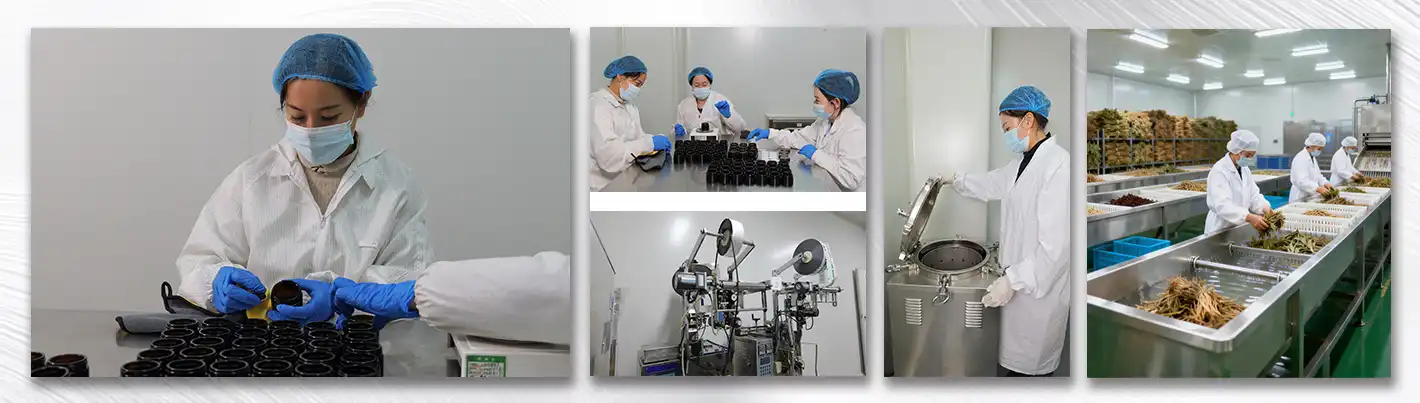
When OEM (Original Equipment Manufacturer) and ODM (Original Design Manufacturer) services are available, providers of raw materials become partners in strategic growth. OEM agreements let brands use a supplier's manufacturing infrastructure for finished goods like labelling bottles, filling capsules, and secondary packing. This means that brands don't have to spend as much money on building their own production facilities. ODM services include formulation development, where skilled technical teams suggest the best combinations of ingredients, dosage schedules, and delivery formats based on what the target market wants. This collaborative approach speeds up product launches and lowers the risk of formulation problems. It's especially helpful for startups that don't have their own R&D departments. Private label programs offer complete packages that come with stock formulas that are ready to be customised for each brand through label design and marketing placement. Established suppliers keep libraries of tried-and-true formulas for common health issues. This lets new companies get into the market quickly by using manufacturing processes and stability data that have already been checked.
Making the Decision – Is Holy Berry Powder the Right Choice for Your Supplement Line?
Alignment with Product Objectives and Target Demographics
To figure out if Holy berry powder fits into your product line, you need to look at your target market and how it fits into the healing niche. The ingredient works great in products for women ages 25 to 45 who have problems with their periods, PMS symptoms, or fertility. This is a big business opportunity for the more than $50 billion U.S. food supplement industry. Brands that focus on natural hormone balance without using manmade chemicals find Holy berry powder's way of working especially appealing for marketing stories that stress body-friendly methods. The plant's history in traditional European medicine gives the story real elements that appeal to people who want tried-and-true remedies. However, Holy berry powder doesn't add much to formulations that are meant to improve the health of men, children, or people in general. As a strategic way to expand a product line, Holy berry powder could be the star ingredient in a main hormonal balance recipe and also be used as a supporting botanical in full women's multivitamins or fertility support complexes.
Cost-Benefit Analysis and ROI Projections
When you do financial modelling, you should look at both direct and indirect value drivers. When compared to more specialised ingredients like CoQ10 or resveratrol, high-purity Holy berry powder extract has a modest cost component at wholesale prices, adding between $0.1 and $0.35 per serving based on dose and source agreements. This cost structure helps keep retail prices competitive while keeping margins healthy. The ingredient has a lot of good clinical proof, which lowers the cost of marketing education. People are becoming more aware of Holy berry powder's health benefits by seeing it in other brands and reading health information. Third-party testing and quality certifications lower the costs of following regulations and the chance of having to recall products, which protects the brand's reputation. In the crowded women's health market, where formulary innovation and evidence-based ingredient selection set premium names apart from generic rivals, market differentiation value is very important. To figure out the expected return on investment (ROI), reasonable market penetration scenarios should be used. These should be based on average order values, estimated repeat purchase rates (30–45% for hormone-related products showing usefulness), and the cost of acquiring a new customer ($25–50 for digital platforms).
Emerging Trends and Future Market Positioning
Personalisation, sustainability, and scientific proof are some of the ways that dietary supplements are changing, which is good news for Holy berry powder inclusion. As people become more educated, they want botanicals that are better understood from a mechanistic point of view instead of generalised "superfood" marketing. This is in line with Holy berry powder's well-known effects on hormones. Sustainability badges and stories about ethical buying are becoming more popular, which helps sellers who use traceability systems and fair trade practices. The provider that was talked about has a wide range of certifications that meet these new standards. Regulatory environments are looking more closely at botanical identity and contaminant levels. This means that relationships with suppliers who test their products thoroughly are more like strategic assets than just transactions for goods. Personalised nutrition platforms with hormone tests and personalised supplementation methods are high-growth channels where Holy Berry powder's targeted features can help make algorithmic formula suggestions. Brands that put money into Holy berry powder formulations now will be better prepared for how distribution channels and customer expectations will change in the future.
Conclusion
Because it is scientifically proven to work, is processed to the highest standards, and has a lot of quality approvals, Holy berry powder is a great ingredient for food supplements that support women's hormonal health. The plant's special endocrine-modulating properties—achieved through natural pituitary control instead of hormone supplements—fit perfectly with the trend toward clean labels and people's desire for solutions that are safe for their bodies. Advantages in procurement, such as flexible MOQs, a wide range of delivery choices, and OEM/ODM capabilities, make it easier for new companies to enter the market and support growth plans that can be scaled up. An in-depth supplier evaluation that looks at things like certification authenticity, traceability documentation, and production capacity makes sure that the company works with manufacturers that can help the brand succeed in the long term. Holy berry powder is a forward-thinking ingredient that can help with both instant formulation value and strategic market differentiation because it is well-positioned to compete in new markets that are moving toward personalisation and evidence-based formulation.
FAQ
1. What Distinguishes High-Quality Chasteberry Powder from Standard Extracts?
There are a few things that make premium Holy berry powder stand out that sourcing experts should pay attention to. The 99% purity requirement, which is checked using TLC, guarantees a concentrated bioactive content that is much higher than that of alternatives like crude powder. Particles with the same size (between 80 and 120 mesh) will always run smoothly during production, which will cut down on wasted time and different doses. Certifications like ISO9001, GMP, Kosher, Halal, and FDA registration show that the company is dedicated to meeting foreign quality standards and following the rules. Low moisture level (below 5%) stops microbes from growing and keeps food stable for longer.
2. How Does Chasteberry Powder Integrate into Various Supplement Formats?
Because of its physical and chemical qualities, the botanical can be used in a variety of delivery methods, as long as the right formulations are used. Encapsulation is the easiest way to combine ingredients because it needs the fewest additives and protects the powder's stability by creating a shield against wetness. Tablet recipes need binding agents like microcrystalline cellulose to make up for the fact that they can't be compressed easily on their own. This is done by making the tablets hard enough for coating and packing. Because the ingredient doesn't dissolve well in water, co-processing it with solubility enhancers helps blended powder formats that are meant to be used in shake mixes or drinks.
Partner with BioSpark for Premium Chasteberry Extract Solutions
BioSpark (Xi'an) Biotechnology Co., Ltd. is ready to help you with your Holy berry powder formulation projects because they can make a wide range of products and are dedicated to quality. Our high-quality Holy berry powder is 99% pure, as shown by strict TLC testing. It also has ISO9001, GMP, Kosher, Halal, and FDA certifications, which show that regulators around the world trust it. We know the unique problems that supplement brands, distributors, and importers face, such as meeting MOQ requirements while formulating new products and increasing production for big launches. Our approach is flexible enough to handle orders as small as 1 kg for tests, and we keep enough stock on hand to meet large-scale fulfilment needs as well.
As a provider and producer of Holy berry powder with a lot of experience, we offer full-process support that includes formulation advice, custom packaging solutions, and full OEM/ODM services that are made to fit the needs of your brand. Our effective transportation network offers a range of delivery terms and shipping methods, including FOB, CIF, CFR, EXW, DAP, and DDP, as well as Express, Air Freight, and Sea Freight, to make sure that your goods get to you safely and on time. We get rid of supply chain uncertainties that throw off production plans by keeping a lot of stock on hand and handling orders quickly.
Get in touch with our technical team right away at leao@biosparkcn.com to talk about your Holy berry powder needs, ask for samples, or look into the possibility of a custom formulation. Let BioSpark turn your idea for a women's fitness product into vitamins that are ready to go on the market and offer real health benefits while setting you apart from the competition.
References
1. Wuttke, W., Jarry, H., Christoffel, V., Spengler, B., & Seidlová-Wuttke, D. (2003). Chaste tree (Vitex agnus-castus)—pharmacology and clinical indications. Phytomedicine, 10(4), 348-357.
2. Schellenberg, R. (2001). Treatment for the premenstrual syndrome with agnus castus fruit extract: prospective, randomised, placebo-controlled study. BMJ, 322(7279), 134-137.
3. Daniele, C., Thompson Coon, J., Pittler, M. H., & Ernst, E. (2005). Vitex agnus castus: a systematic review of adverse events. Drug Safety, 28(4), 319-332.
4. Arentz, S., Smith, C. A., Abbott, J., Fahey, P., Cheema, B. S., & Bensoussan, A. (2017). Combined lifestyle and herbal medicine in overweight women with polycystic ovary syndrome (PCOS): A randomized controlled trial. Phytotherapy Research, 31(9), 1330-1340.
5. Webster, D. E., Lu, J., Chen, S. N., Farnsworth, N. R., & Wang, Z. J. (2006). Activation of the mu-opiate receptor by Vitex agnus-castus methanol extracts: implication for its use in PMS. Journal of Ethnopharmacology, 106(2), 216-221.
6. Mills, S., & Bone, K. (2005). The Essential Guide to Herbal Safety. St. Louis: Elsevier Churchill Livingstone, 347-352.

Send Inquiry
Related Industry Knowledge
- Where to Buy High-Quality Chinese cabbage powder Wholesale?
- Cape gooseberry powder for Smoothies, Desserts, and Supplements
- Is Coconut Milk Extract Powder More Cost-Effective Than Canned?
- Is Coconut Milk Extract Powder More Cost-Effective Than Canned?
- Is Coconut Milk Extract Powder More Cost-Effective Than Canned?
- Is Coconut Milk Extract Powder More Cost-Effective Than Canned?
- Is Coconut Milk Extract Powder More Cost-Effective Than Canned?
- Is Coconut Milk Extract Powder More Cost-Effective Than Canned?
- Is Coconut Milk Extract Powder More Cost-Effective Than Canned?
- Is Coconut Milk Extract Powder More Cost-Effective Than Canned?
- Is Coconut Milk Extract Powder More Cost-Effective Than Canned?
- Is Coconut Milk Extract Powder More Cost-Effective Than Canned?
- Can white willow bark extract powder support arthritis discomfort relief?
- Can Chinese Cabbage Powder Improve Product Nutrition?
- Is Mimosa Root Bark Extract a Sustainable Ingredient?
- What Do Studies Really Say About Cistanche Extract Powder?
- Konjac Flour Extract: Premium Ingredient for Low-Calorie Foods
- Are Spirulina Extract Tablets Good for Detoxification?
- Unlock Better Sleep: Ghanaian Seed Extract Supplement Solution