_1764041963888.webp)
Why Choose Coconut Milk Extract Powder for Food Formulation?
Apr 20, 2026
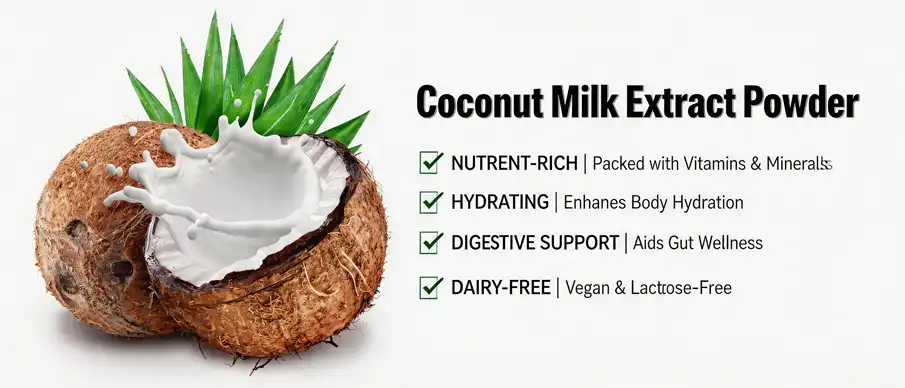
Food makers who want uniform quality, longer shelf life, and true tropical flavour profiles will find that coconut milk extract powder is a practical and cost-effective choice. This spray-dried item keeps its nutritional value for 18 to 24 months, while fresh coconut milk has a very short shelf life and requires refrigeration. It also cuts transportation costs by over 80%. This plant-based powder helps address common formulation challenges in drinks, baked goods, and dairy replacements with its typical coconut solids content, which includes medium-chain fatty acids and lauric acid. The fine, off-white to light yellow powder disperses quickly into smooth emulsions, giving modern health supplement and nutrition businesses the functional performance they need for clean-label product development.
Understanding Coconut Milk Extract Powder and Its Unique Benefits
Coconut milk extract powder is a smart move for product makers trying to make it in the tough health market of today. This ingredient comes from pressing fresh coconut meat to make a natural emulsion. This emulsion then goes through controlled spray-drying technology, which keeps heat-sensitive nutrients safe while getting rid of the problems that come with liquid forms going bad.
What Sets This Ingredient Apart from Liquid Alternatives
In order to turn liquid into powder, the oil phase has to be encased in protective carriers. This makes a shelf-stable ingredient that still has the smell and health benefits of coconut milk. This process greatly lowers the activity of water, which stops the breakdown of enzymes that turn liquid goods sour within 24 hours of opening. This stability means that manufacturers who work with global supply chains can be sure of the quality of each batch of production and make managing their inventory easier. The particle size specification of 100–120 mesh ensures that the material flows easily through automated dosing systems, which is very important for large-scale manufacturing operations. This level of technical accuracy keeps your ingredients from sticking together and makes sure they are evenly distributed throughout your recipes, whether you're making ready-to-drink drinks or dry-mix vitamins.
Nutritional Profile That Meets Consumer Expectations
Modern customers look more closely at chemical labels than ever before. Between 60 and 70% of the powder is pure coconut oil, mostly made up of medium-chain triglycerides like capric acid, caprylic acid, and especially lauric acid. These MCTs provide readily available energy and offer a plant-based fatty acid profile. When you combine vegetable proteins with important minerals like potassium and magnesium, you get strong nutritional claims that appeal to health-conscious buyers. Lauric acid in particular has gotten a lot of attention for its natural nutritional profile, which offers functional benefits beyond basic nutrition. The fact that it is lactose-free and cholesterol-free makes it suitable for vegan, lactose-free, and plant-based dietary preferences
Functional Performance in Real Manufacturing Conditions
Dispersibility characteristics define how useful something is in a business setting. This powder dissolves easily in water but not so much in ethanol, so it can be used in a wide range of formulations, from drinks made with water to sweets made with fat. The reconstitution qualities make it possible for ingredients to dissolve quickly into smooth emulsions without high-shear mechanical mixing, which could add air that isn't needed or break down the ingredients. Thermal stability is another important benefit. The powder keeps the consistency of the emulsion during pasteurisation and hot-fill uses. It can handle temperatures above 80°C without "oiling off" or splitting. This resilience makes the manufacturing process easier while keeping the look and feel of the product the same for the whole shelf life.
Why Coconut Milk Extract Powder Excels Compared to Other Coconut Derivatives
Procurement decisions become clearer when understanding how this ingredient compares to alternative coconut-based materials available in the marketplace. Each derivative serves specific purposes, but coconut milk extract powder occupies a unique functional space that addresses multiple formulation needs simultaneously.
Comparing Fat Content and Texture Contributions
Coconut cream powder usually has higher fat percentages, sometimes more than 75%. This makes recipes fuller but heavier. Even though this high-fat content is fine for sweet treats, it may overpower delicate flavour profiles or add too many calories. On the other hand, coconut flour has very little fat but a lot of fibre, which absorbs a lot of water and changes the texture in unpredictable ways and can make the mouthfeel gritty. Coconut milk extract powder, on the other hand, has a balanced composition that gives it a creamy texture without being heavy like cream powder or dry like flour. This adaptability lets formulators make changes to a wide range of products, from light drinks that need mild coconut notes to baked goods that need to keep their wetness and have a soft crumb structure. With 60–70% of the coconut oil remaining, the managed fat profile gives the recipe enough flavour while keeping it flexible.
Organic Versus Conventional Sourcing Considerations
The level of certification has a big effect on how the market is positioned and how much things cost. Organic versions cost more, but they can reach customers who care about farming sustainably and without using pesticides. The certification process requires verified traceability from the plantation to the processing, which makes supply chain management more difficult but could help your finished products stand out in crowded markets. Conventional options are cheaper for brands that want to appeal to mainstream consumers who care about price. No matter if the food is organic or not, it has to meet strict quality standards for cleanliness, germ safety, and nutrition retention. Instead of assuming differences in quality based only on approval marks, your choice should be based on how the brand is positioned and what the target group wants.
Evaluating Supplier Reliability and Cost-Effectiveness
When you buy from other businesses around the world, you have to balance more than just unit prices. Supplier stability affects how often products are made, how much it costs to keep supplies, and how different the end products are in quality. Established makers with ISO certification and FDA compliance paperwork have invested in quality systems that lower the risks of batch-to-batch differences and supply interruptions. Minimum order amounts affect how much working capital is needed and how much store space is used. Suppliers with flexible MOQs can work with both new businesses testing the market and established businesses dealing with changes in seasonal demand. Another important thing to think about when sending things internationally is the integrity of the packaging. For example, nitrogen-filled aluminium foil bags inside 25 kg drums keep wetness out and stop oxidative degradation during long travel times.
How to Use Coconut Milk Extract Powder in Food Formulation
Technical application knowledge transforms ingredient potential into market-ready products. Understanding proper incorporation methods, dosage parameters, and compatibility considerations enables R&D teams to optimise formulations efficiently while avoiding costly reformulation cycles.
Beverage Applications and Hydration Protocols
Ready-to-drink drinks need to dissolve completely, with minimal sedimentation and good stability during storage. The hydration method has a big effect on the quality of the result. Gradually mixing powder into room-temperature water while gently stirring it around stops it from clumping. This lets each particle fully hydrate before the temperature is raised, if needed for flavour development or pasteurisation. The dosage usually ranges from 3 to 8 per cent, depending on how strong a coconut flavour you want and how much fat you want in the final product. Higher percentages may be used in ketogenic coffee mixes to provide high MCT content, while lower percentages may be used in fruit-forward drink bases to add mild tropical notes that don't overpower the main flavours. The powder dissolves somewhat instantly, which makes it suitable for cold processing. This saves energy and keeps heat-sensitive nutrients in raw or cold-pressed juices.
Bakery and Confectionery Integration Strategies
The powder's great flowability and storage security are used in dry-mix applications. The ingredient adds fat granules to bread fillings and cake premixes without adding free water, which would activate gluten too soon or make storage risky for microbes. This helps make the crumb structure soft and keeps the food fresh for longer without having to be refrigerated. The regularity of particle size makes sure that the flavour and texture are spread out evenly throughout mixes and doughs, stopping areas with too much flavour or uneven texture. When making goods that are sensitive to moisture, the low moisture content (less than 3.0% of quality powder) keeps it from adding to water activity levels that could ruin the crisp texture or let mould grow. The powder is meant to be thermally stable, so it doesn't lose its effectiveness when it's exposed to heat during baking.
Dairy Alternative Development Considerations
This ingredient works really well in plant-based milk options, which are a fast-growing market segment. The powder has a creamy texture and naturally creamy mouthfeel and good dispersibility that make it taste like cheese without the need for complex stabiliser systems. This helps with clean-label positioning by reducing the need for additives while still giving customers the sensory experiences they want. It's important to pay attention to compatibility with protein sources—the neutral pH value of 6.0–7.0 ensures stability when mixed with pea protein, rice protein, or other plant-based proteins that might react badly with acidic ingredients. The powder's packaging matrix keeps the delicate MCT oils from going bad during long-term storage. This keeps the fresh, sweet smell that tells people when they open packaged goods months after they were made.
Storage and Shelf Life Management Practices
To keep the quality of the coconut milk extract powder during production stages, the air needs to be properly controlled. Keeping things stored in cool, dry places away from direct light stops them from absorbing water and breaking down due to oxidation. Once the packaging is opened, moving the contents to airtight containers with desiccant packets keeps the low moisture content that is needed to stop microbial bloom for a longer time. In manufacturing facilities, dust control measures should be built into bulk handling systems because fine powder particles can become airborne during transfer operations. Maintaining specs throughout inventory movement cycles is made possible by regularly checking quality through moisture content analysis and sensory evaluation. When stored correctly, things stay fully functioning for 18 to 24 months. This helps with inventory management and cuts down on waste from old raw materials.
Procurement Insights: Sourcing High-Quality Coconut Milk Extract Powder
Strategic sourcing decisions impact product success beyond initial ingredient costs. Comprehensive evaluation of supplier capabilities, certification compliance, and logistical reliability protects brand reputation while optimising total cost of ownership.
Certification Standards and Quality Verification
Reliable providers keep up with multiple levels of approval, which shows they are committed to quality and following the rules. ISO 9001 approval means that quality management systems have been in place for a while and have clear processes and regular checks. For products going to North American markets, getting registered with the FDA and meeting Generally Recognised as Safe (GRAS) standards ensures that the regulations will be followed and makes it easier to import. To get organic certification from the USDA or an equivalent international body, the supply chain must be traced and inspected every year. This approval lets suppliers put expensive products on the market, but it also requires them to spend in infrastructure, which changes how prices are set. Before agreeing to big buy orders, you can check specs like fat content, moisture levels, bacteria testing results, and heavy metal screening by asking for certificate of analysis papers for sample production runs.
Bulk Purchasing Strategies for North American Markets
The best way to combine inventory investment, unit cost savings, and supply consistency is to find the best buy amounts. Knowing the normal MOQ ranges helps organise buying plans. For example, some suppliers allow 1 kg minimum orders for testing new products, and for large-scale production, container-load pricing greatly lowers the cost per kilogram. Talking about payment terms that fit order sizes protects cash flow while building relationships with suppliers. Letters of credit are a way to protect foreign deals that involve new supply ties. Setting up blanket purchase orders with planned delivery drops lets you meet changing production needs without needing enough stock space for yearly ingredient numbers. Transportation logistics have a big impact on total landing costs. Figuring out Incoterms and choosing the right delivery terms makes it clear who is responsible for paying for shipping, insurance, and clearing customs. Shipping containers from countries of origin takes 4 to 6 weeks, so inventory planning is needed to keep production going and keep costs down for stock that doesn't move quickly.
OEM and Private Label Customisation Opportunities
Branded product lines can get into the market faster when they work with experienced makers that offer OEM services. Through these partnerships, companies can get access to well-known recipes, legal knowledge, and production capacity without having to spend a lot of money on building new factories. Private labelling lets brands stand out by using custom packaging and taking advantage of the knowledge and economies of scale of suppliers about how to make the products. Customisation options go beyond simple label changes and include formula changes that reflect specific market tastes or dietary trends. Suppliers who have their own research and development departments can change the amount of fat, the size of the particles, or both to suit different product levels. Intellectual property rights, like non-disclosure agreements, keep secret formulas safe while letting people work together on development. Quality stability across production runs is very important when your brand's image depends on how well your suppliers do their jobs. Setting up quality agreements with clear requirements, testing schedules, and steps for fixing problems sets up systems of responsibility that protect both sides' interests over the course of long-term relationships.
Real-World Success Stories and Industry Applications
Market evidence demonstrates the ingredient's versatility across product categories and its contribution to commercial success for brands prioritising innovation and quality.
Plant-Based Beverage Innovation Case Studies
many well-known plant-based beverage brands have added spray-dried coconut milk extract powder to make it creamier without using extra oils that separate when the milk is stored. The naturally creamy mouthfeel and good dispersibility make the texture more stable and add light tropical notes that go well with the mild flavour of oats. Consumer acceptance testing showed that formulations using the powder had better mouthfeel ratings than formulations using isolated fats. This directly affected the number of repeat purchases. Functional coffee creamer brands aimed at ketogenic and paleo diet followers use the powder as the main ingredient, providing 5 to 8 grams of MCTs per serving and having a clean label appeal. Instant dissolving in hot drinks without the need for stirring tools meets customer standards for ease of use, which is a key factor in getting people to start using morning routines. A good way to place an item in the market is to use its natural origin story to connect the benefits of the product to trends in whole-food health.
Bakery Product Development Achievements
Artisanal granola makers have switched from using liquid coconut oil to measuring out the right amount of powder. This makes sure that the clusters form consistently, gets rid of the mess, and makes the production process easier. The powder soaks in while the food is baking, holding the nuts and oats together and adding coconut flavour to the whole thing instead of just the top. The shelf life was extended because the amount of free oil that went bad during atmospheric storage was reduced. The powder's ability to retain wetness helps gluten-free muffin recipes, which often have a dry, crumbly appearance when baking without wheat. The medium-chain fatty acids give the bread structure a soft feel, and the protein in the powder helps the structure grow without making a gluten network. Feedback from customers showed that they thought the quality was better, on par with or better than traditional wheat-based comparison goods.
Testimonials from Industry Professionals
After initial quality approval, procurement managers use seller stability as their main selection factor. One North American supplement brand said that its established supplier had no batch rejections in 24 consecutive shipments. They credited detailed quality agreements and proactive communication for addressing occasional problems sourcing raw materials. R&D directors value being able to get technical support when formulating problems. Access to application scientists who knew how ingredients would react in different working conditions greatly sped up the time it took to make new products. With this consultative relationship method, providers go from being transactional to being strategic partners who care about the success of their customers.
Future Market Trends and Adoption Projections
According to a study of the industry, plant-based food groups will continue to grow. Ingredients derived from coconut are in a good situation because consumers are already familiar with them, and they are linked to good health. Sustainability factors are becoming more important when deciding what to buy. Growing coconuts usually requires fewer agricultural inputs than other oil crops and helps rural economies in tropical regions. Clean-label trends favour ingredients like this powder that do more than one thing with natural ingredients instead of using synthetic emulsifiers, stabilisers, and flavour systems. Regulatory environments in developed markets are making it harder to use artificial additives. This means that naturally functional ingredients can be used in new recipes to meet compliance requirements and gain marketing benefits. People who care about health, the environment, and trying new foods are all driving sustained demand growth across all application categories. As market possibilities grow, manufacturers who build solid relationships with suppliers and learn how to make new products will be able to compete.
Conclusion
When you use coconut milk extract powder in your food recipes, it meets important production needs like stability, usefulness, and clean label placement. The balanced nutritional makeup of the ingredient, which includes MCTs and lauric acid, is good for your health, and the spray-dried form makes it easier to ship than liquid options. To do good buying, you need to look at the licenses of suppliers, negotiate the right amount to buy, and make quality deals that protect your long-term interests. Real-life uses in drinks, baked goods, and dairy replacements show that the market is open to it and that the technology is flexible. As plant-based trends continue to spread around the world, smart relationships with experienced suppliers make it possible to quickly come up with new products that meet changing market needs.
FAQ
How does coconut milk extract powder compare in cost to liquid coconut milk?
Initial per-unit costs appear higher for powder compared to canned liquid, but total cost analysis reveals advantages. Eliminating refrigeration requirements, reducing shipping weight by over 80%, and extending shelf life from days to months significantly lowers the total cost of ownership. Reduced waste from spoilage and simplified inventory management further improve economic performance.
Can this ingredient work in acid-based formulations?
The neutral pH of 6.0-7.0 provides stability in mildly acidic environments, though extreme pH levels below 4.0 may affect emulsion stability. Testing within your specific formulation matrix determines compatibility, particularly when combining with citrus juices or vinegar-based applications. Adjusting processing sequences or incorporating buffering ingredients often resolves challenges.
What certifications should I prioritise when selecting suppliers?
ISO 9001 demonstrates quality system maturity, while organic certification enables premium product positioning if aligned with brand strategy. FDA registration remains essential for U.S. market access. Halal and Kosher certifications expand addressable markets when relevant to target demographics. Request current documentation verifying active status before finalising supplier selection.
Partner with BioSpark for Reliable Coconut Milk Extract Powder Supply
BioSpark (Xi'an) Biotechnology Co., Ltd delivers comprehensive OEM and ODM solutions for health supplement brands requiring consistent quality and flexible production capacity. Our advanced spray-drying technology produces premium coconut milk extract powder meeting international standards with typical coconut solids content and excellent dispersibility. We maintain rigorous quality control throughout procurement, processing, and packaging stages, ensuring traceability and safety compliance. Whether you need small-batch customisation for product development or large-scale production for established markets, our experienced team provides full-process support from formulation consultation through final delivery. Our strategic location enables efficient export logistics to North America, Europe, and global markets with competitive pricing structures. Contact our technical team at sales@biosparkcn.com to discuss your specific requirements and discover how partnering with a reliable coconut milk extract powder supplier can accelerate your product development timeline while ensuring consistent quality that builds consumer trust.

References
1. Tangsuphoom, N., & Coupland, J. N. (2009). Effect of thermal treatments on the properties of coconut milk emulsions prepared with surface-active stabilisers. Food Hydrocolloids, 23(7), 1801-1809.
2. Seow, C. C., & Gwee, C. N. (1997). Coconut milk: chemistry and technology. International Journal of Food Science & Technology, 32(3), 189-201.
3. Peamprasart, T., & Chiewchan, N. (2006). Effect of fat content and preheat treatment on the apparent viscosity of coconut milk after homogenization. Journal of Food Engineering, 77(3), 653-658.
4. Jirapeangtong, K., Siriwatanayothin, S., & Chiewchan, N. (2008). Effects of coconut sugar and stabilising agents on stability and apparent viscosity of high-fat coconut milk. Journal of Food Engineering, 87(3), 422-427.
5. Mahawan, P., Watanabe, F., Miyashita, K., & Kadota, M. (2016). Effect of spray drying on the physicochemical properties of coconut milk powder. Food Science and Technology Research, 22(4), 539-546.
6. Khuenpet, K., Jittanit, W., & Sirisansaneeyakul, S. (2016). Spray drying of coconut milk: Effect of inlet temperature on powder properties. International Food Research Journal, 23(4), 1576-1585.

Send Inquiry

Related Industry Knowledge
- Can Konjac Flour Extract Replace Cornstarch in Cooking?
- What Are the Main Health Benefits of Ginseng Plant Extract?
- Does Ganoderma Extract Powder Help with Stress and Sleep?
- Garcinia Cambogia Extract Before and After: Real Results?
- Marigold Extract Powder: Market Trends & Insights
- Coconut Milk Extract Powder: Key Nutritional Benefits
- Does Pomegranate Peel Extract Powder Reduce Inflammation?
- Radix Rehmanniae Extract in Traditional Herbal Medicine
- What Makes Red Bean Extract Ideal for Nutraceuticals?
- Does Mimosa Root Bark Extract Support Wound Healing?