Where to Buy Bulk Ashwagandha Leaf Extract for Manufacturing
Oct 31, 2026
If you’re looking to get bulk ashwagandha leaf extract for manufacturing, it’s best to start by dealing directly with certified botanical extract producers or established B2B suppliers. India continues to dominate the manufacturing of Withania somnifera ingredients, but internationally known firms like BioSpark (Xi’an) Biotechnology Co., Ltd. produce standardized ashwagandha leaf extract at scale. When analyzing the sources, look for vendors with HPLC-verified withanolide standardization, GMP certification, and traceable raw ingredients. If you’re looking for small batches or large-volume orders, working with a supplier that provides all the paperwork and adjustable MOQs will preserve your product quality and production schedule.
Understanding Ashwagandha Leaf Extract for Manufacturing
Botanical Origin and Composition
Withania somnifera is a plant native to India, North Africa, and the Mediterranean region. It belongs to the Solanaceae family. The Ashwagandha leaf extract is taken from the leaves of the plant. The leaf fraction exhibits a distinct withanolide profile from that of preparations derived from roots. It is also rich in withaferin A. HPLC testing standardized on leaf material shows that it may contain anything from 5% to 35% total withanolides, whereas typical root powders have just 2.5% to 5%. These compounds are so concentrated you may create therapeutic dosages with much less in each serving.
Physical and Chemical Properties
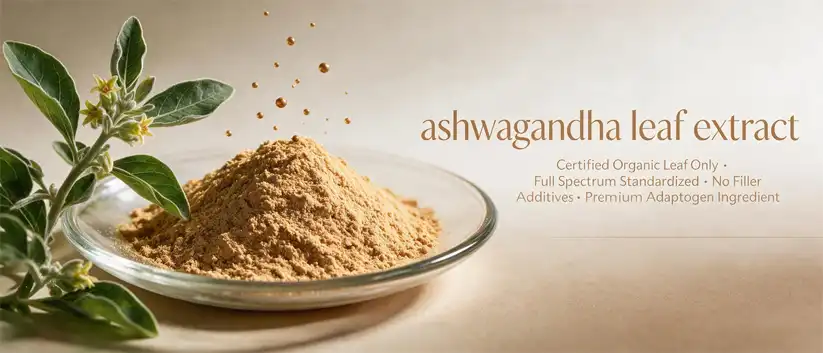
High-grade ashwagandha leaf extract is a fine powder that floats in water and is light brown to olive green in hue. What makes it so special is that it dissolves easily in water—more than 90% in cold water, usually. That makes it a lot simpler to deal with than root powder in lines making beverages and other liquids. It can also retain its bioactivity at temperatures as high as 80°C for a brief period of time, which is advantageous for companies using spray-drying or granulation processes. That’s one of those physical features that gives formulators the freedom that root extract simply can’t accomplish.
Applications Across Industries
Ashwagandha leaf extract works with three main types of production. And because it dissolves in water, it’s simple to add to RTD beverages and fast packs that help reduce tension without ruining flavor. It has a high withanolide content, allowing for microcapsule formulations where other high-potency nootropics have less space. Its antioxidant properties, notably those in withaferin A, make it a beneficial element in skin barrier creams and serums that assist with stress. With multiple applications, leaf extract has become more attractive to supplement firms in the US and Europe to purchase.
Core Procurement Considerations for Bulk Ashwagandha Leaf Extract
Quality Standards and Certifications
Before placing any bulk order, verify that your supplier's ashwagandha extract powder meets relevant quality benchmarks. Key certifications to request include GMP (Good Manufacturing Practice), ISO 9001, USDA Organic (if applicable), and AHPA microbial compliance. Ask for a Certificate of Analysis (CoA) confirming withanolide percentage by HPLC-DAD, heavy metal results by ICP-MS (Lead, Cadmium, Mercury, and Arsenic well below California Prop 65 limits), and pesticide residue screening across 400+ compounds via GC-MS/MS. These documents are non-negotiable for any supplement brand selling in the U.S. market.
Extract Form: Powder vs. Liquid
The form of the extract directly affects your manufacturing workflow. Dry powder ashwagandha leaf extract integrates smoothly into capsules, tablets, and sachets, with a standard shelf life of 24–36 months in airtight, cool, dry storage. Liquid or standardized aqueous extracts suit beverage applications but carry shorter stability windows and require cold-chain logistics. Most B2B buyers in the dietary supplement space favor the powder form because it is easier to weigh, blend, and quality-check at each production stage.
Pricing, MOQ, and Lead Times
Pricing for bulk withanolide-standardized leaf extract varies by standardization level, certification tier, and order volume. Entry-level MOQs from established manufacturers typically start at 1 kg for sample evaluation, scaling to 25 kg or 100 kg for commercial batches. Request tiered pricing sheets and lock in a formal supply agreement before your first production run. Factor in 15–30 day lead times for standard orders and 45–60 days for certified organic grades. Aligning these timelines with your production schedule prevents costly delays.
Where to Buy Bulk Ashwagandha Leaf Extract: Trusted Global Suppliers
Direct Manufacturers vs. Wholesale Platforms
). It's also cheaper and easier to get in touch with them. There are many suppliers on wholesale markets like Alibaba and Global Sources, but it's harder to tell the difference between the real manufacturers and the people who just sell the goods. Long-term, the best thing for buying teams to do is to go straight to a company that can do its own testing and extraction.
Here are the main things that buying teams should do to check out a seller:
- Request documented third-party lab reports — HPLC fingerprint, heavy metal panel, and solvent residue results dated within the last 12 months should be standard.
- Place a sample order before committing — A 100g–500g sample order lets your internal QC team validate the extract's withanolide content, solubility, and organoleptic profile before any commercial order is signed.
- Review supply chain transparency — A credible ashwagandha leaf extract supplier should be able to disclose the origin of raw plant material, extraction method (aqueous, ethanolic, or supercritical), and batch traceability records.
Place a sample order before you decide to buy. To make sure the extract is stable and has the right amount of withanolide, your internal quality control team can order a 100g–500g sample.
Review the openness of the supply chain. A reputable ashwagandha leaf extract seller should be able to show where the raw materials came from, what method was used to get the oil out (aqueous, ethanolic, or supercritical), and a history of each batch.
BioSpark as a Verified Manufacturing Partner
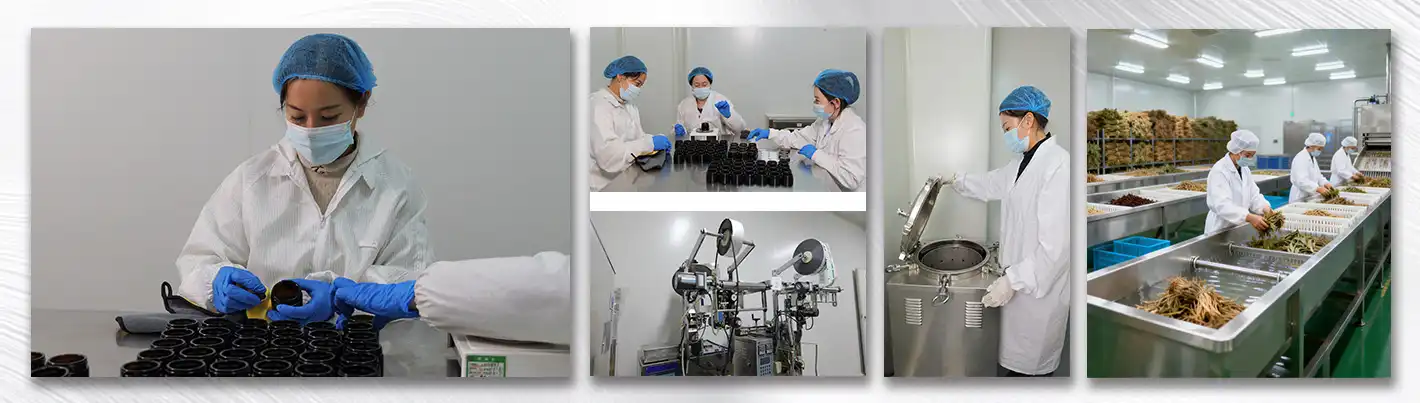
BioSpark (Xi'an) Biotechnology Co., Ltd. follows strict international quality standards when making standardized ashwagandha extract powder. Their own lab for testing and extraction has heavy metal screening with ICP-MS, HPLC-verified withanolide standards, and full batch tracking. BioSpark can handle both small-batch custom orders and large-scale commercial runs for food supplements, useful ingredients, and nutraceutical formulas. They offer OEM and ODM services. They send their goods to the Middle East, Southeast Asia, North America, and Europe. Their track record shows that they always deliver on time and make sure the quality is high.
Optimizing Your Bulk Ashwagandha Leaf Extract Purchase for Manufacturing Needs
Matching Specifications to Formulation Requirements
Various types of commodities need various grades of extracts. A 300mg tablet that decreases cortisol. The ashwagandha leaf extract may need to be tested to make sure it includes 10% withanolides. In contrast, for a functional beverage containing 125 mg of active ingredient, a 25%–35% standardized grade may be required to retain low volume. Make sure the withanolide levels, particle size (typically 80-100 mesh for powder), and flow properties all fit with the technology you’ll be utilizing to create the product before you nail down the precise requirements.
Storage, Packaging, and Shelf Life
The bioactivity of the extract does not change throughout the supply chain if the correct packaging is utilized. Powder grades should not be kept above 25°C or below 60% relative humidity. Get double-layer HDPE bags with desiccant inserts and store them someplace cold and dry. If you keep standardized ashwagandha leaf extract in this manner, it will be effective for 24 to 36 months. Each batch should have a batch number, date of manufacture, and a copy of the certificate of analysis (CoA) attached. So you know what’s going on from the warehouse to the floor in production.
Regulatory Compliance for U.S. and EU Markets
For ashwagandha leaf extract-based foods to be marketed in the United States, they must comply with FDA 21 CFR Part 111 (cGMP for dietary supplements). If you want to market an extract in the EU, you may require a Novel Food license and documentation from EFSA. It is contingent upon the extract and what you want to do with it. Ensure your supplier is able to provide you with a comprehensive regulatory dossier for your country, including safety data sheets, allergy declarations, and import documentation. This will assist with the customs procedure.
Future Trends in Ashwagandha Leaf Extract Supply
Growing Demand for Organic and Sustainable Grades
The U.S. market for organic supplements was valued at over $8 billion. At the same time, ever more individuals demand certified organic plant items. With the client demand for clean label products, purchasing teams are increasingly demanding ashwagandha leaf extract to be USDA Organic and EU Organic certified. Suppliers that invest in farming without pesticides and who can be traced get more business than those who cannot demonstrate comprehensive chain-of-custody paperwork.
Advances in Extraction Technology
Now it is simpler to extract more withanolides from ashwagandha leaves with less solvent waste. These methods include supercritical CO2 extraction and enzyme-assisted aqueous extraction. These technologies also enhance the bitter taste of withanolides. This allows the use of leaf materials in consumer items without covering too many tastes. Less money is spent on the formulation, and more people purchase the goods. For producers, this means…
Expanding Application Sectors
Ashwagandha leaf extract is no longer a supplement only. It is currently utilized in cosmetic lines and stress management programs as powerful as medications. More clinical research is being done, and information is being collected on how much to use and how well things function on various leaves. Individuals will trust the source experts more, and when they need to add more things to their lists, they will be able to reach more individuals.
Conclusion
If you're searching for a lot of ashwagandha leaf extract for your production, you need to be very attentive to standardization, supplier approval, and obeying the law right from the start. The material that comes from leaves is particularly useful for formulation since it has higher potency per gram, dissolves better in water, and works with more things. All this makes it a wonderful option for cosmetics, supplement companies, and nutraceutical enterprises. With a renowned and experienced supplier like BioSpark you are at less risk of purchasing anything, and your brand can obtain quality that is consistent and well documented at the level of production you need.
FAQ
1. How does ashwagandha leaf extract differ from root extract in dosage?
This is because leaf extract generally has more withanolides than root extract, so 125 mg can have the same benefits as 300–600 mg of root extract. This is important for businesses that need to make very small doses or capsules.
2. Is ashwagandha leaf extract safe for long-term product formulations?
It has been shown to be safe to use standardized leaf preparations for a long time in clinical trials, as long as the levels of withaferin A stay within therapeutic windows. Always compare the safety data to the source's COA.
3. What is the standard shelf life for bulk powder?
There is a way to keep ashwagandha leaf extract powder for 24 to 36 months in a cool, dry, sealed area that doesn't get direct sunlight.
4. Is it non-GMO and vegan-compatible?
Professional-grade stuff is made from non-GMO plant parts and can be extracted with either water or alcohol. It also meets all vegan and clean-label requirements.
5. How do I verify supplier authenticity?
Make sure you have HPLC-DAD withanolide fingerprinting records, ICP-MS heavy metal results, and pesticide residue screening data before you place a business order.
Partner with BioSpark for Premium Ashwagandha Leaf Extract
The company BIOSpark (Xi'an) Biotechnology Co., Ltd. is a good one that makes and sells ashwagandha leaf extract. They sell materials for making food supplements and nutraceuticals that have been GMP-certified and HPLC-verified. We can ship anywhere in the world, accept a variety of order sizes, and offer full OEM/ODM customization. Get in touch with our team right away to get a sample of the product, a certificate of authenticity (CoA), or a unique price. First, please send us an email at leao@biosparkcn.com.
References
1. Bhattacharya, S. K., & Muruganandam, A. V. (2003). Indian Journal of Experimental Biology — Adaptogenic activity of Withania somnifera leaf extract.
2. Mishra, L. C., Singh, B. B., & Dagenais, S. (2000). Alternative Medicine Review — Scientific basis for the therapeutic use of Withania somnifera.
3. Choudhary, D., Bhattacharyya, S., & Bose, S. (2017). Journal of the International Society of Sports Nutrition — Efficacy and safety of ashwagandha root extract in improving cardiorespiratory endurance.
4. American Herbal Products Association. (2021). AHPA Botanical Safety Handbook, 3rd Edition — Safety and quality standards for botanical extract ingredients.
5. Grand View Research. (2023). Ashwagandha Market Size, Share & Trends Analysis Report — Global demand outlook for Withania somnifera extracts through 2030.
6. United States Pharmacopeia. (2022). USP–NF Botanical Extracts Monographs — Quality and standardization guidelines for plant-based dietary supplement ingredients.

Send Inquiry
Related Industry Knowledge
- Liposomal Vitamin B9 Dosage, Quality, and Labeling Guide
- Can Fish Collagen Peptides Support Skin Health?
- Natural Blueberry Extract Powder for Gummies, Capsules & Softgels
- Loquat Powder Applications Across Food and Nutrition Industries
- Is Snow Lotus Powder Suitable for Dietary Supplement Products?
- Can White Kidney Bean Extract Powder Support Healthy Weight Loss?
- Maqui Berry Powder for Eye Health: Dry Eye & Retinal Protection
- Maqui Berry Powder for Eye Health: Dry Eye & Retinal Protection
- Maqui Berry Powder for Eye Health: Dry Eye & Retinal Protection
- Maqui Berry Powder for Eye Health: Dry Eye & Retinal Protection
- Maqui Berry Powder for Eye Health: Dry Eye & Retinal Protection
- Maqui Berry Powder for Eye Health: Dry Eye & Retinal Protection
- Maqui Berry Powder for Eye Health: Dry Eye & Retinal Protection
- Maqui Berry Powder for Eye Health: Dry Eye & Retinal Protection
- Maqui Berry Powder for Eye Health: Dry Eye & Retinal Protection
- Maqui Berry Powder for Eye Health: Dry Eye & Retinal Protection
- What are the active compounds in longan powder?
- Why Are Manufacturers Choosing Ginseng Fruit Powder Today?
- What Makes Pomegranate Peel Extract Powder Unique?