_1764041963888.webp)
Can Fish Collagen Peptides Support Skin Health?
Sep 05, 2026
Fish collagen peptides have emerged as a scientifically validated ingredient for supporting skin health through their unique bioavailability and targeted action on dermal structures. The low-molecular-weight peptides (usually between 1,000 and 2,000 Daltons) come from sea sources and easily pass through the gut barrier. They send amino acids straight to fibroblast cells, which make collagen. A 2015 study in the Journal of Cosmetic Dermatology found that regular use of marine collagen peptides makes skin much more hydrated and elastic, and it also slows down the ageing process [1]. Fish collagen peptides should be a main ingredient in high-tech cosmetics because of this proof.
Understanding Fish Collagen Peptides and Their Role in Skin Health
The Science Behind Marine Collagen Bioavailability
Marine collagen peptides, such as Fish collagen peptides, are mostly made up of Type I collagen that is taken from the skin and scales of deep-sea fish by using controlled enzyme hydrolysis. Native collagen molecules are broken down into smaller peptide chains with molecular weights well below 2,000 Daltons. This makes sure that the molecules are quickly absorbed through the intestinal wall without needing a lot of metabolic processing. The amino acid makeup of marine-sourced collagen is very similar to that of human skin collagen. It has high amounts of glycine, proline, and hydroxyproline, which are building blocks that are needed to keep the dermal structure intact[2].
Mechanisms of Action in Skin Rejuvenation
When these bioactive peptides are eaten, they increase the activity of fibroblasts in the dermal layer. This causes the body to make collagen naturally through signaling pathways between cells. Clinical studies published in Skin Pharmacology and Physiology (2014) show that taking supplements can improve skin hydration, flexibility, and the depth of fine lines and wrinkles after 8 to 12 weeks of regular use[3]. In order to work, the peptides provide building blocks for new collagen matrix formation while also keeping old collagen from being broken down by matrix metalloproteinases.
Comparative Advantages Over Alternative Collagen Sources
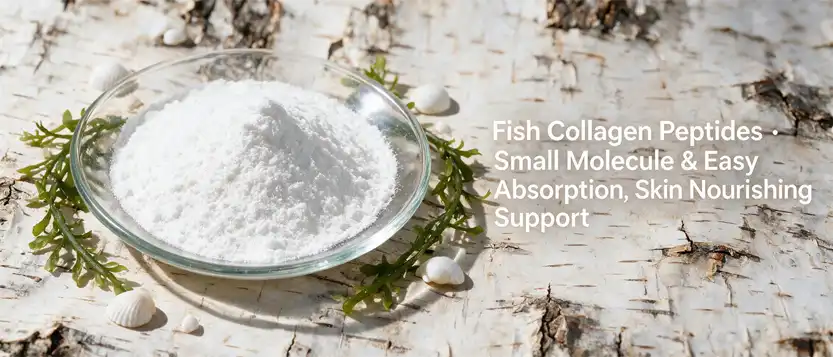
Marine collagen is more bioavailable than collagen from cattle or pigs because it has a lower molecular weight and is structurally similar to human collagen. When you separate peptides from the ocean, you get healthier profiles that are free of diseases that can infect land animals, like bovine spongiform encephalopathy (BSE). This makes global distribution safer. Marine sources meet the dietary needs of both Kosher and Halal people, which makes the market bigger for brands that want to appeal to a wide range of people. The extraction process creates a fine, white to off-white powder that mixes easily with water and disappears totally in cold water, leaving no residue. This is an important property for making clear functional drinks and ready-to-drink cosmetics.
Dosage, Usage, and Safety Considerations for Optimal Results
Recommended Intake Protocols for Maximum Efficacy
There is clinical proof that consuming between 2.5 and 10 grams of marine collagen peptides every day can improve skin health. When taken with vitamin C on an empty stomach, absorption rates are at their highest. Vitamin C is needed for hydroxylation processes that are necessary for stable collagen formation. When supplement brands are making protocols, they should think about split dosing plans that keep amino acids available all day, especially for formulas that are meant to help with intensive skin repair or recovery after surgery.
The requirement for 90% purity, which is checked by High-Performance Liquid Chromatography (HPLC), makes sure that products give consistent doses and results across production batches. As regulatory bodies become more interested in ingredient standards and bioactive content proof, brands that make structure-function claims will need to do this analytical testing more and more. Teams in charge of buying things should give more weight to sellers who can give full certificates of analysis that show the peptide content, molecular weight distribution, and amino acid makeup for each production lot.
Quality Certifications and Safety Compliance
For B2B use, products must have the right licenses, such as ISO9001 for quality management systems, GMP (Good Manufacturing Practices) for production standards for pharmaceuticals, and FDA approval to be able to sell in the U.S. Kosher and Halal certifications make it easier to sell products and meet the needs of people with certain dietary needs. These qualifications show that a provider is dedicated to following strict rules for quality control, environmental monitoring, and preventing contamination during the whole production process.
Full allergen testing, heavy metal screening (especially for mercury, lead, and cadmium because they come from marine sources), and microbiological pollution analysis should all be part of safety reviews for Fish collagen peptides. Certified manufacturers use a method called directed enzymatic hydrolysis extraction to get rid of as few chemicals as possible while still keeping the integrity of the peptides. This makes the ingredients safe for use in medical-grade wound-healing formulations and clinical nutrition products for recovery after surgery.
Market Comparison: Selecting the Right Fish Collagen Peptides for Business Needs
Product Format Considerations for Different Applications
Marine collagen peptides come in a variety of forms, such as fine powders, granules, and liquid concentrates. Each is best for a different type of application. Supplement companies that make tablets, capsules, soft gels, beauty drinks, and functional food ingredients can use powder in a lot of different ways. The characteristic slightly fishy smell stays low in higher-quality grades, but odorless specialty variants are available for clear beverage formulations and uses that don't want to affect the flavor.
When procurement professionals are looking at different format choices, they should think about how the end product will be delivered and how it can be made. Powder forms work perfectly with dry-blend processes for making sachets, compressing tablets, and encasing them. Because it dissolves easily in water, it can be made using a cold process, which saves energy and keeps heat-sensitive ingredients like vitamins, plant extracts, and probiotics that are often found in complete beauty supplement formulas.
Supplier Evaluation Criteria for B2B Procurement
To choose the right marine collagen provider, you need to carefully look at a lot of different factors. Quality certifications are a good start, but buying teams should also look into things like output capacity, methods for tracking batches, and the stability of the supply chain. Leading suppliers keep a lot of records that connect finished goods to specific lots of fish, dates of processing, and results of quality control tests. This is necessary for answering questions from regulators and handling product recalls if problems happen.
When it comes to bulk orders, competitive price models usually take into account promises of volume, payment terms, and shipping plans. Knowing the difference between FOB (Free On Board), CIF (Cost, Insurance, and Freight), and DDP (Delivered Duty Paid) terms can change how much something costs to land and how much operating capital you need. Suppliers with variable minimum order amounts starting at 1 kg let product development teams test formulations before placing large-scale orders. This lowers the financial risk during the innovation phase.
Emerging Trends Influencing Procurement Decisions
As the need for sustainable ingredients grows, especially those that come from by-products of seafood processing instead of dedicated fishing, the marine collagen market continues to change. Traceability paperwork that shows responsible sourcing practices improves brand image in markets where customers look closely at the ethics of the supply chain. These trends should be taken into account in procurement strategies by giving more weight to sellers who are open about where their materials come from and who join marine stewardship certification programs.

Procurement Guide: How to Source High-Quality Fish Collagen Peptides
Critical Certifications and Compliance Standards
To get pharmaceutical-grade marine collagen, you have to go through a lot of certification steps. ISO9001 certification shows that quality management is done in a planned way, and GMP compliance makes sure that the places where drugs are made meet strict rules for making medicines, such as controlled entry, tracking of the environment, and proven cleaning methods. Independent labs that test products on behalf of a third party provide extra confirmation of product specifications. This is especially important for markets with strict governmental oversight, like the United States and the European Union.
Manufacturers who use directed enzymatic hydrolysis extraction get better peptide profiles than those who use acid or alkaline hydrolysis, which can damage amino acid structures and add unwanted residues. Enzymatic processes work at controlled temperatures and pH levels, keeping the bioactive properties of collagen peptides while reaching the desired molecular weight ranges. It should be clear in the procurement specs that enzymatic extraction is needed, and during seller qualification, process flow evidence should be asked for.
Negotiating Bulk Orders and Private Label Arrangements
To build long-term relationships with suppliers of Fish collagen peptides, you have to negotiate terms that balance saving money with making sure you have a steady flow of goods. Most of the time, volume commitment deals open tiered pricing systems. At 500 kg, 1,000 kg, and 5,000 kg, prices drop by a lot. As is usual in the business, payment terms like bank transfer (T/T) are preferred. However, letters of credit may be possible for first orders or markets with higher risk.
Private label and OEM/ODM agreements let brands make their own formulas while using the manufacturer's knowledge of how to mix ingredients, encapsulate them, and come up with package solutions. Full OEM services should include formulation advice, stability testing, help with regulatory paperwork, and help with designing packaging. These services shorten the time it takes to get a product to market and let brands focus their resources on marketing and sales instead of building up their manufacturing infrastructure.
Managing Logistics and Supply Chain Stability
Express shipping is good for small samples, air freight is good for urgent orders, and sea freight is a cheap way to ship large amounts of goods. Knowing about your delivery options can help you manage your inventory and cash flow better. Suppliers who keep enough stock on hand and can serve quickly have a competitive edge in markets that are always changing and where new products or advertising campaigns need ingredients to be available quickly.
Packaging ingredients in 25 kg drums is the standard way to distribute them in the industry. This makes handling easier while also saving space. Teams in charge of buying things should make sure that the materials used for packing are safe for food and can keep items from getting wet or rusty while they're traveling across foreign borders. The fact that custom packaging sizes are available for different production needs shows that the supplier is flexible and focused on customer service.
Real-World Applications and Case Studies: Fish Collagen Peptides in Skin Health Products
Nutricosmetic Formulation Strategies
The fastest-growing part of the nutricosmetics market is beauty-from-within products. Marine collagen peptides are used as the main ingredient in oral beauty supplements. Collagen peptides work best when mixed with other ingredients that work well together, like vitamin C to help the body make more collagen, hyaluronic acid to keep water in the skin, and antioxidants like resveratrol or astaxanthin to protect cells. These multi-ingredient routines aim for overall skin health by focusing on water, collagen production, and oxidative stress all at the same time[4].
Brands that make ready-to-drink beauty shots benefit from the high clarity and heat stability of good marine collagen peptides. These peptides don't form clouds or precipitate in acidic environments (pH 3.0-4.0). Because of this, ultrahigh temperature (UHT) processing can be used to make shelf-stable products that don't need to be refrigerated. This means that more products can be sold in convenience stores and online, where cold-chain logistics can be difficult.
Clinical and Medical Nutrition Applications
Healthcare facilities use marine collagen peptides in their clinical diet plans to help older patients with sarcopenia and to speed up the healing of wounds. These ingredients are useful for post-surgery healing formulas where protein synthesis needs are higher than usual dietary intake because they retain a lot of nitrogen and move peptides quickly. Hospital-grade goods have to meet very high standards of purity and come with a lot of safety information. Because of this, certified GMP makers are the best choice for this niche market area.
Marine collagen is added by sports nutrition makers to recovery blends for after a run to help keep joints healthy and fix ligaments. The specific mix of amino acids helps connective tissue grow back, which works with the building of muscle proteins that whey or plant-based proteins promote. Quality collagen peptides have a neutral pH and stable binding properties, which means they don't cause negative cross-linking reactions even when heated. This is helpful for complex formulations that include vitamins, minerals, and multiple protein sources.
Innovation Directions and Product Differentiation
Advanced extraction methods now make it possible to make ultra-low molecular weight peptides with better solubility profiles. This means that expensive products can be positioned in the market. Sustainable sourcing approvals and tracking paperwork set you apart in markets where ethically aware customers look closely at supply chain ethics. When brands use these new ideas, they put themselves at the head of how nutricosmetics is changing. They can charge higher prices and build long-term customer loyalty by showing that their products work and by being good business citizens.
Conclusion
Marine collagen peptides, such as Fish collagen peptides, are a scientifically proven and widely viable ingredient for companies making advanced skin health goods in a variety of categories, such as functional drinks, dietary supplements, and clinical nutrition formulations. These marine-derived peptides meet strict regulatory requirements while also meeting important market needs thanks to their high bioavailability, low risk of side effects, and wide range of dietary compatibility. Professionals in procurement who know a lot about production methods, quality certifications, and application strategies can easily find high-quality ingredients that help products work well and protect the brand's image. In the fast-paced global health and wellness market, building partnerships with certified manufacturers who offer flexible production options, thorough quality documentation, and reliable supply chain management gives you a competitive edge.

FAQ
Are marine collagen peptides suitable for all skin types?
Marine collagen peptides work on a general level instead of just on the skin, so they can be used by anyone with any skin type. The peptides help individuals with dry, oily, sensitive, or combination skin by providing the building blocks for collagen synthesis in the dermal layer. Brands can confidently market their products to a wide range of age groups and genders.
What forefrontifications should B2B buyers prioritize when selecting suppliers?
Some important certificates are ISO9001 for quality management systems, GMP for making medicines, and third-party testing proof. Extra qualifications like Kosher, Halal, and FDA registration open up more markets and show a strong commitment to quality across the board. When suppliers give you all the paperwork, like certificates of analysis, heavy metal testing, and microbiological screening reports, that means they have good quality control.
Can fish collagen peptides be combined with other active ingredients?
Marine collagen peptides work very well with other nutrients that support them, like vitamin C, hyaluronic acid, ceramides, and plant products. Because it has a neutral pH and stable chemical properties, it doesn't react badly with other ingredients in complicated formulations. This lets makers make complete multi-ingredient routines that treat many parts of skin health at once.
Partner with BioSpark: Your Trusted Fish Collagen Peptides Supplier
BioSpark (Xi'an) Biotechnology Co., Ltd. is ready to help you reach your product development goals by providing you with high-quality marine collagen peptides that are made in strict accordance with quality standards. Our directed enzyme hydrolysis extraction method gives us peptides that are 90% pure, which has been checked by HPLC. This makes sure that every production batch has the same bioavailability and effectiveness. We give your brand the quality assurance it needs to compete in global markets by holding a wide range of certifications, such as ISO9001, GMP, Kosher, Halal, and FDA registration.
We know the problems that health supplement brands, nutraceutical companies, and distributors who are looking for trusted ingredient providers face. Our production is flexible enough to handle orders ranging from 1 kg for formulation tests to multiple tons for commercial production. We offer reasonable pricing and a range of shipping options, including FOB, CIF, CFR, EXW, DAP, and DDP. Email our team at leao@biosparkcn.com to talk about your specific needs, ask for certificates of analysis, or set up shipping of samples. Visit https://www.biosparkcn.com/ to look through our full range of ingredients and learn how our OEM/ODM services can help you get your product to market faster.
References
1. Proksch, E., Segger, D., Degwert, J., Schunck, M., Zague, V., & Oesser, S. (2015). Oral supplementation of specific collagen peptides has beneficial effects on human skin physiology: a double-blind, placebo-controlled study. Journal of Cosmetic Dermatology, 14(4), 291-301. https://onlinelibrary.wiley.com/doi/10.1111/jocd.12174
2. Kim, D. U., Chung, H. C., Choi, J., Sakai, Y., & Lee, B. Y. (2018). Oral intake of low-molecular-weight collagen peptide improves hydration, elasticity, and wrinkling in human skin: a randomized, double-blind, placebo-controlled study. Nutrienhave 10(7), 826. https://www.mdpi.com/2072-6643/10/7/826
3. Proksch, E., Schunck, M., Zague, V., Segger, D., Degwert, J., & Oesser, S. (2014). Oral intake of specific bioactive collagen peptides reduces skin wrinkles and increases dermal matrix synthesis. Skin Pharmacology and Physiology, 27(3), 113-119. https://karger.com/spp/article/27/3/113/276434
4. Bolke, L., Schlippe, G., Gerß, J., & Voss, W. (2019). A collagen supplement improves skin hydration, elasticity, roughness, and density: results of a randomized, placebo-controlled, blind study. Nutrients, 11(10), 2494. https://www.mdpi.com/2072-6643/11/10/2494
5. Asserin, J., Lati, E., Shioya, T., & Prawitt, J. (2015). The effect of oral collagen peptide supplementation on skin moisture and the dermal collagen network: evidence from an ex vivo model and randomized, placebo-controlled clinical trials. Journal of Cosmetic Dermatology, 14(4), 291-301. https://onlinelibrary.wiley.com/doi/10.1111/jocd.12174
6. Hexsel, D., Zague, V., Schunck, M., Siega, C., Camozzato, F. O., & Oesser, S. (2017). Oral supplementation with specific bioactive collagen peptides improves nail growth and reduces symptoms of brittle nails. Journal of Cosmetic Dermatology, 16(4), 520-526. https://onlinelibrary.wiley.com/doi/10.1111/jocd.12393

Send Inquiry


Related Industry Knowledge
- How Can Ginseng Fruit Powder Enhance Functional Beverages?
- Why Is Ghanaian Seed Extract Gaining Global Attention?
- Where Can You Buy Premium Yellow Peach Powder in Bulk?
- How does gardenia fruit powder work as a natural sedative?
- Can Hydrolyzed Rice Extract Reduce Skin Dullness Effectively?
- What Are the Key Benefits of Ayurvedic Indian Herbal Extracts?
- Tribulus Terrestris Extract Powder: Real Results or Hype?
- Why Chamomile Extract Is a Top Natural Antioxidant?
- Can Ginseng Plant Extract Enhance Energy Naturally?
- Baicalin Extract for Skin: Anti-Aging & Protective Boost