What Makes Wolfberry Polysaccharide a Premium Wellness Ingredient?
Oct 14, 2026
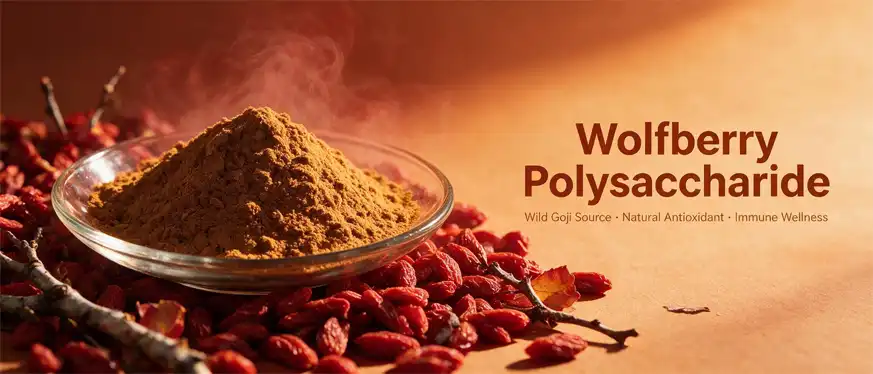
The wolfberry polysaccharide, formerly known as Lycium barbarum polysaccharide, is one of the most investigated bioactive substances in the functional ingredient industry. The water-soluble glycoconjugate complex was isolated from the dried fruit of Lycium barbarum L. and had molecular weights ranging from 10 to 2,300 kDa. Wolfberry polysaccharide is a staple raw material for supplement companies, nutraceutical producers, and OEM/ODM formulators serving the U.S. wellness industry with proven ability to modify immune response, decrease oxidative stress, and boost neuroprotection.
Understanding Wolfberry Polysaccharide: Composition and Health Benefits
What Is Wolfberry Polysaccharide Made Of?
Wolfberry polysaccharide is a complex, highly branched acidic heteropolysaccharide and protein. It is made up of three simple sugars: arabinose, galactose, and rhamnose. These are linked in such a manner as to make it physiologically active. Unlike other fruit powders, LBP concentrates the pharmacologically active portions of the wolfberry fruit such that each batch has the same level of bioactivity. Standardized wolfberry polysaccharide extract is unique in structure and hence differs from other plant powders on the market.
Antioxidant and Immune-Modulating Properties
Several studies examined by specialists concur that wolfberry polysaccharide activates macrophages, stimulates T-lymphocyte development, and increases antioxidant enzyme activity. LBP significantly increased quantities of superoxide dismutase (SOD) in animal models, according to a review paper in the journal Food Chemistry. Wolfberry polysaccharide extract is good for boosting the immune system and eliminating free radicals. Contains a key ingredient for anti-aging, immunological support, and eye health supplement lines.
How It Compares to Other Berry Polysaccharides
Wolfberry polysaccharide has more complicated mechanisms than elderberry or acai polysaccharides, including protecting neurons, regulating the immune system, and decreasing blood sugar. It has more clinical data to back it up. This implies that in competitive categories, stronger label claims, more credible marketing materials, and better consumer trust ratings are all advantages for B2B buyers establishing science-based product lines.
Extraction Methods and Quality Parameters That Define Premium WPS
Modern vs. Traditional Extraction
Hot-water extraction is still the standard way to make polysaccharides from wolfberries. But more exact methods, like ultrasonic-assisted extraction and enzyme-assisted extraction, have made the quantity and purity of polysaccharides. These methods cut down on processing time while keeping the integrity of the molecular weight. For industrial buyers, the biological activity and consistency of the finished ingredient from batch to batch are directly linked to the extraction method used.
Key Technical Quality Parameters
This is what high-quality wolfberry polysaccharide for business-to-business uses should have:
- Polysaccharide content: 30%–50%, measured by the phenol-sulfuric acid UV-Vis method
- Particle size: ≥95% passing 80 mesh for smooth formulation integration
- Loss on drying: ≤5.0% to ensure shelf stability
- Ash content: ≤5.0% for purity assurance
- Molecular weight distribution: Authenticated to prevent adulteration with starch or maltodextrin
Before making large orders, buying teams should make sure that all Certificates of Analysis meet these quality standards.
Meeting these standards makes sure that the wolfberry polysaccharide ingredient works as expected in tablet, capsule, liquid, and topical forms. This cuts down on formulation failures and the need for expensive production rework.
Sourcing and Certification Standards
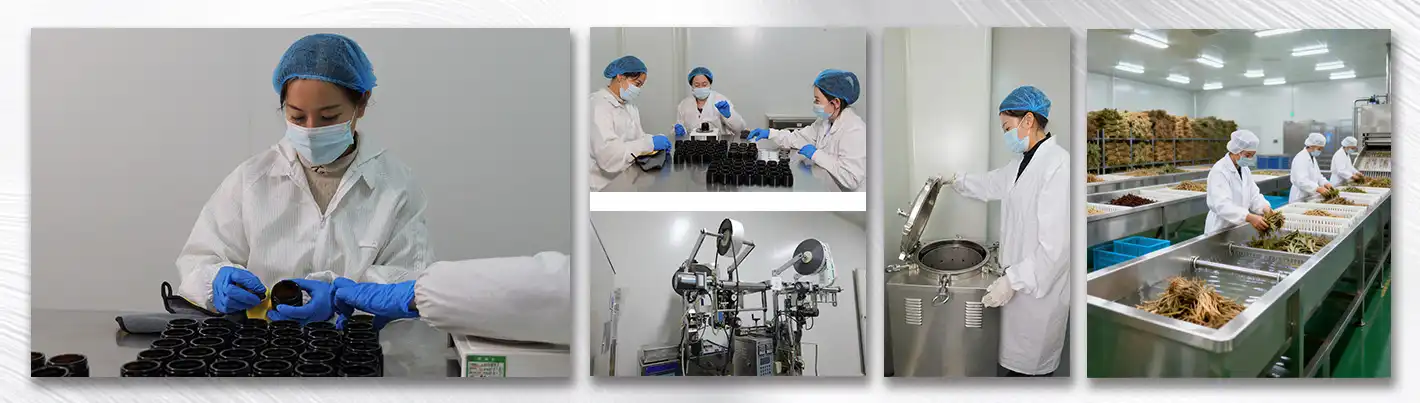
Using certified wolfberry cultivation zones in Ningxia, China, along with GMP, ISO, and organic certifications, makes a big difference in how well a product is accepted by U.S. regulators. As a norm, buyers should make sure that the wolfberry polysaccharide provider keeps records of third-party lab tests and pesticide residues.
Comparing Wolfberry Polysaccharide Products: Choosing the Best for Your Business
Powder vs. Encapsulated Forms
For the majority of B2B applications, wolfberry polysaccharide powder is used. Because it dissolves easily in water, it can be used in functional drinks, liquid supplements, and ready-to-drink mixes at pH levels between 3.5 and 4.5 without settling. The hygroscopicity problem that leads to tablet capping during high-speed production can be fixed with granulated forms. While encapsulated formats are useful for direct-to-consumer products, they are more expensive and limit the formulation options for contract manufacturers.
What to Look for in a Wolfberry Polysaccharide Supplier
You can't only compare costs to choose a wolfberry polysaccharide manufacturer. A reliable supplier will have paperwork available that clearly outlines the supply chain, consistent records of the COA across batches, and services to support formulation. Here are the most crucial things that knowledgeable purchasing managers prioritize first:
- Verified GMP and ISO Certified Production Facilities
- Flexible MOQ for both small batch and big volume orders
- Traceable agricultural sources for stable raw material supply
- Fast turnaround of sample requests and technical questions
These criteria allow clients to reduce the risk of sourcing and maintaining the quality of their goods between new releases and updates to current items.
Why Premium WPS Justifies the Investment
Higher-purity wolfberry polysaccharide that is standardized at 40% to 50% costs more per kilogram than regular botanical powders, but each dose has bioactivity that can be measured. Lycium barbarum polysaccharides have clinical proof that supports higher retail prices, better product differentiation, and lower customer return rates for brands that are making premium wellness lines.
Procurement Insights: How to Buy High-Quality Wolfberry Polysaccharide in Bulk
Evaluating Suppliers Before You Commit
Before you bulk purchase wolfberry polysaccharide, make sure you have evidence of the extraction process, the polysaccharide content %, the heavy metal limitations, the microbiological tests, and the pesticide residue reports. “Do plant audits if you can, or ask a third party for inspection records.” Suppliers with well-defined quality systems would be pleased to comply with these expectations. Those that hesitate should be scrutinized more thoroughly.
MOQ, Pricing, and Lead Time Considerations
The price of wolfberry polysaccharide will vary based on the purity grade, order quantity, and the availability of raw materials in the season. Typical minimum order quantities (MOQs) of contract manufacturers start at 5-25 kg for modest orders. Prices typically reflect the quantity of polysaccharides in the product. Products with 30% grade are less per kilo, and 50% standardized extracts are higher. The single certified wolfberry polysaccharide supplier with annual supply contracts may lead to more stable costs and better timing in manufacturing.
Regulatory Compliance for the U.S. Market
Wolfberry polysaccharide is allowed to be used in the United States as an ingredient in dietary supplements under the DSHEA standards. Buyers need to ensure that the seller has a comprehensive ingredient list sheet, allergy declaration, and evidence of origin of the products. Having GMP accreditation makes it simpler for the buyer to meet FDA regulations and easier for FDA inspectors to discover documents when they audit a factory.
Future Prospects and Industry Trends Driving Wolfberry Polysaccharide Demand
Growth in Functional Foods and Nutraceuticals
The worldwide lycium barbarum extract market is predicted to continue increasing till 2030. This is because more people want things to boost their immune system, prolong their lives, and protect their eyes. Wolfberry polysaccharide is being added to more and more products, including functional beverages, skin care serums, nootropic formulas, and senior nutrition products. This larger variety of applications opens up new product development opportunities for business-to-business customers.
Technology Advances Improving Bioavailability
The wolfberry polysaccharide is being administered in nanoencapsulated and liposomal forms to increase its oral bioavailability. These novel delivery forms allow supplement businesses to design more effective products at lower dosages, helping them generate more money and giving the user greater results.
Sustainability and Responsible Sourcing
The demand for foods that are sourced without harming the environment is rising in the U.S. market. Suppliers of wolfberry polysaccharide who can offer evidence of fair sourcing arrangements, carbon footprint statistics, and sustainable farming techniques will be at a major advantage in business-to-business conversations, particularly with retailers that sell natural goods and companies with a purpose.
Conclusion
Wolfberry polysaccharide is a premium ingredient due to its good clinical evidence, complicated structure, large variety of formulation choices, and traceable source. LBP offers one of the strongest value packages in plant ingredient procurement right now for supplement brands, nutraceutical firms, and OEM/ODM partners who operate in the U.S. market. In purchasing wolfberry polysaccharide, the most essential thing is to choose a trusted supplier that has thorough documentation, flexible minimum purchase quantities, and consistent standards. Any product range, including immunological, ocular, or anti-aging products.
FAQ
1. What polysaccharide content percentage should I look for in a premium grade?
Premium wolfberry polysaccharide for B2B applications typically runs 30%–50% polysaccharide content, confirmed by the phenol-sulfuric acid method. For high-efficacy supplement lines, 40%–50% standardization is standard.
2. Is wolfberry polysaccharide safe for long-term use in dietary supplements?
Yes. LBP has an extensive safety record in both traditional use and modern clinical studies. It is non-toxic at recommended doses and has GRAS-equivalent acceptance in most global markets when sourced from certified manufacturers.
3. How do I verify that a wolfberry polysaccharide product is authentic?
Request monosaccharide composition profiling (arabinose, galactose, rhamnose ratios) and molecular weight distribution data. These tests distinguish genuine LBP from adulterated products spiked with starch or maltodextrin.
4. What forms does wolfberry polysaccharide come in for manufacturing?
It is available as a fine powder (most common for B2B), granulated form for tablet manufacturing, and water-soluble grades optimized for liquid beverage formulations.
5. What certifications should a wolfberry polysaccharide supplier hold?
Look for GMP, ISO 9001, organic certification, and third-party heavy metal and pesticide residue testing as a minimum standard for any reputable wolfberry polysaccharide manufacturer.
Partner with BioSpark for Trusted Wolfberry Polysaccharide Supply
BioSpark (Xi'an) Biotechnology Co., Ltd. is a professional company that supplies wolfberry polysaccharides and makes OEM/ODM products. They offer standardized LBP extracts with 30% to 50% polysaccharide content. We can handle orders of any size, from small samples to large-scale production, and our products are fully compliant with GMP standards. You can also track your raw materials and get export paperwork for the U.S. market. You can email our team at leao@biosparkcn.com to ask for examples and talk about your product needs.
References
1. Gan, L., Zhang, S.H., Yang, X.L., & Xu, H.B. (2004). Immunomodulation and antitumor activity by a polysaccharide-protein complex from Lycium barbarum. European Journal of Pharmacology, 471(3), 217–222.
2. Li, X.M., Ma, Y.L., & Liu, X.J. (2007). Effect of the Lycium barbarum polysaccharides on age-related oxidative stress in aged mice. Journal of Ethnopharmacology, 111(3), 504–511.
3. Tang, L., Zhang, Y., & Jiang, Y. (2012). Dietary wolfberry polysaccharides and their bioactivities: A review. Food Research International, 46(2), 472–480.
4. Cheng, J., Zhou, Z.W., Sheng, H.P., He, L.J., Fan, X.W., & He, Z.X. (2015). An evidence-based update on the pharmacological activities and possible molecular targets of Lycium barbarum polysaccharides. Drug Design, Development and Therapy, 9, 33–78.
5. Zhao, R., Li, Q., & Xiao, B. (2014). Effect of Lycium barbarum polysaccharide on the improvement of antioxidant ability and DNA damage in NIDDM rats. Yakugaku Zasshi: Journal of the Pharmaceutical Society of Japan, 125(6), 491–496.
6. Ming, M., Guanhua, L., Zhanhai, Y., Guang, C., & Xuan, Z. (2009). Effect of Lycium barbarum polysaccharide administration on blood lipid metabolism and oxidative stress of mice fed a high-fat diet. Journal of Ethnopharmacology, 126(3), 471–475.

Send Inquiry

Related Industry Knowledge
- What Specifications Matter When Buying Wolfberry Peptide?
- Maqui Berry Powder for Eye Health: Dry Eye & Retinal Protection
- Maqui Berry Powder for Eye Health: Dry Eye & Retinal Protection
- Maqui Berry Powder for Eye Health: Dry Eye & Retinal Protection
- Maqui Berry Powder for Eye Health: Dry Eye & Retinal Protection
- Maqui Berry Powder for Eye Health: Dry Eye & Retinal Protection
- Maqui Berry Powder for Eye Health: Dry Eye & Retinal Protection
- Maqui Berry Powder for Eye Health: Dry Eye & Retinal Protection
- Maqui Berry Powder for Eye Health: Dry Eye & Retinal Protection
- Maqui Berry Powder for Eye Health: Dry Eye & Retinal Protection
- Maqui Berry Powder for Eye Health: Dry Eye & Retinal Protection
- What Is the Market Outlook for Tanshinone Danshen Extract Powder?
- Purple Cabbage Powder for Bakery and Dessert Innovation
- Why Choose Premium Egg Yolk Fruit Powder for Beverages?
- What Should You Check Before Buying Ginseng Fruit Powder?
- Is Echinacea Extract Powder the Best Immune Herbal Extract?
- Why Miltiorrhiza Root Extract Powder Enhances Circulation?
- Can Miltiorrhiza Root Extract Powder Improve Blood Flow?
- Can Baicalin Extract Improve Skin Texture & Elasticity?