_1764041963888.webp)
What Should You Check Before Buying Ginseng Fruit Powder?
Jun 17, 2026
The most important thing to do when looking for plant-based products for health foods or supplements is to make sure the quality is good. Before you buy Ginseng fruit powder, you should check a few things. These include the amount of active ingredients, the supplier's licensing, the way the powder is made, and how well they follow the law. The health benefits of powdered pepino melon (Solanum muricatum) are different from those of regular ginseng root goods, so they need to be judged by different standards. It is important to know these quality marks so that you can protect your investment and make sure that your end products meet market needs while also being safe and effective.
Understanding Ginseng Fruit Powder: Definition and Key Attributes
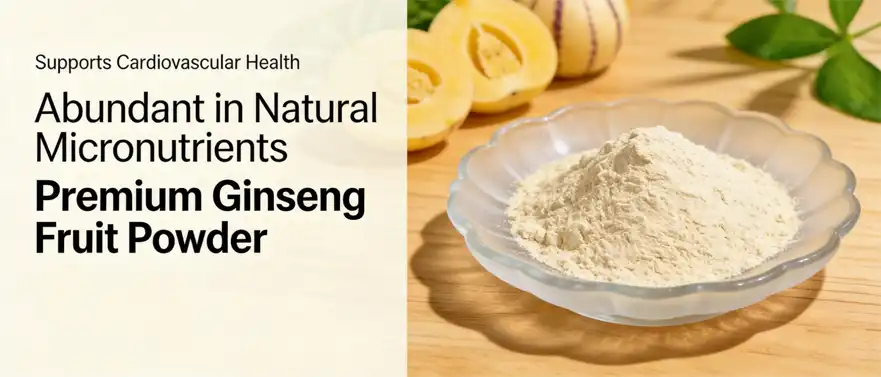
In some places, the name "Ginseng fruit powder" can mean different plants, which can be hard to figure out when you're shopping. The pepino melon fruit is where this powder comes from, not the usual Asian or American ginseng roots (Panax species). The fruit's name comes from old stories about it, not from scientific classification.
Origin and Botanical Source
This fruit is from the Andes Mountains in South America. The people who live there have loved this food for a long time. These days, modern plant extraction methods help turn the fully grown fruit into a strong powder. This process saves the ingredient's natural "high-protein, low-sugar" makeup, which makes it useful in some health goods today. Selenium, vitamin C, B vitamins, natural sugars, and chemicals that make the body work better can all be found in the fruit.
Key Nutritional Components
Polysaccharides from the ginseng plant are what make high-quality powder work. This is the group of beneficial chemicals that fight free radicals and change the immune system. To meet the standard, the product must contain at least 50% polysaccharides. This can be proven with UV spectrophotometry. This makes sure that every batch of the product is as strong as the last. This powder is generally very fine and a light yellow to off-white colour. It smells and tastes naturally sweet and fruity. Because of this, it can be used for many getting-ready jobs.
Common Product Forms and Applications
A lot of different kinds of goods are made with this powder. Healthy drinks with added protein, functional drinks and meal replacement drinks with added sugar can use it. Food makers who make functional foods add it because it helps antioxidant recipes and adds selenium. For its natural sweetness, it works well for bakeries and candy shops. It is mixed with plant ingredients that work well together, like red dates or goji berries, to make healthier products.
Key Criteria for Evaluating Ginseng Fruit Powder Quality
You need to look at something carefully from a number of technical points of view in order to rate its quality. When you decide what to buy, you shouldn't just rely on what the company says; you should also look at facts that can be checked.
Source Verification and Manufacturing Standards
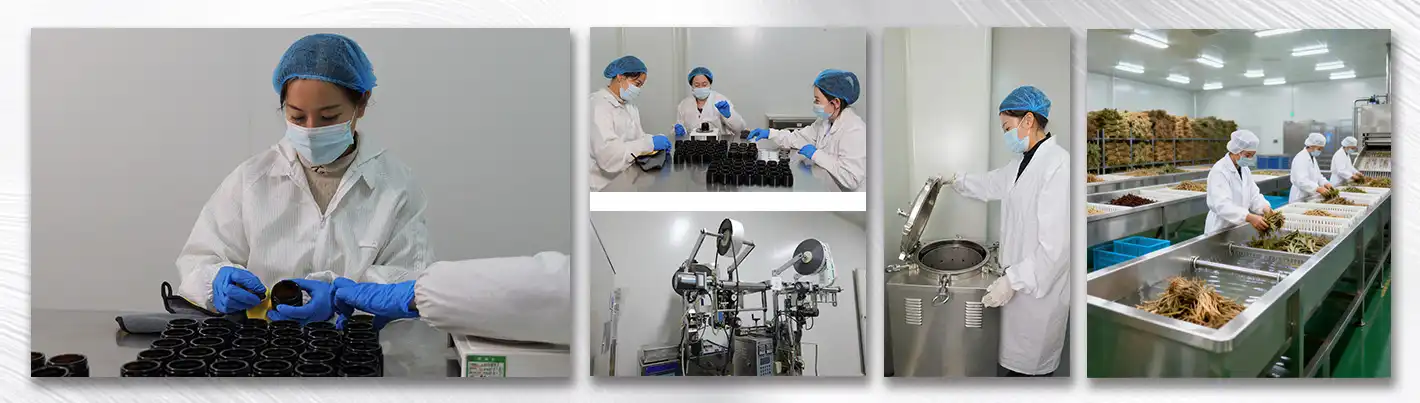
The place of origin is a very important thing to look at when judging plant-based foods. China is very good at getting things out of plants. This is especially true in the Xi'an area, where preparing herbs for medicinal use has been developed for a long time. As much of the nutritional value as possible should be kept, and the product should be easy to mix in water. This can be done by using low-temperature extraction, a multistage filter, and spray drying. These steps keep chemicals that break down easily in heat from breaking down while they are being handled.
Active Ingredient Testing and Specification
The way the tests were done shows how true and reliable the quality claims are. UV spectrophotometry is a cheap way to find out how much total polysaccharide is present, but it can only count chemicals in a broad sense and not individual molecules. While HPLC is used to look for ginsenosides in Panax species samples, this is not the same. When you look at the analysis records, make sure that the carbohydrate content is at least 50% as stated. If the differences are less than this amount, it could mean that the product was diluted or handled incorrectly.
Certification and Regulatory Compliance
With international certificates, you can tell that a service provider cares about quality and meeting the wants of the market. ISO9001 is a certificate for quality management systems. Kosher and Halal are certificates for religious food needs. To get into the U.S. market, you need to be registered with the FDA. And GMP stands for "Good Manufacturing Practice." On a frequent basis, these certifications and papers need to be checked. This makes sure that a third party checks the output skills. When goods are imported, suppliers who don't meet these requirements are more likely to have problems with both quality and the rules.
Physical and Chemical Properties
Along with the paperwork that certifies the process, you should also look at the signs that show that it was done right. Making sure the Ginseng fruit powder is the right size (usually 80–100 mesh), has the right mass density (0.45-0.65 g/ml), and can dissolve fully in water but only slightly in ethanol is important. The recipe works better, the capsules hold more, and the product stays fixed longer when kept if these things are present. Suppliers should not just give out general specs; they should also include detailed technical data sheets with numbers that are unique to each batch that list these factors.
Comparing Ginseng Fruit Powder Options in the Market
Before you can compare markets, you need to know the good and bad points of each product standard and seller level. Not only does your choice change the cost of the ingredients, but it also changes how well the mixture works and how well it meets the law.
Powder Forms and Extract Concentrations
You can find different amounts of concentration and ways to process on the market. Normal dried Ginseng fruit powder has the same amount of nutrients as fresh fruit because it has not been compressed. Extractions, on the other hand, process substances in a certain way that makes them contain more of certain chemicals. You can use the normal amount of 50% polysaccharides in most food and supplement uses because it is in the middle. Even though bigger numbers might work better, they generally cost more and can change how things taste. Take some time to think about how the concentration levels fit in with the goals of your product and the standards for label claims.
Organic Versus Conventional Options
Organic certification makes it harder to grow crops and costs more to do so, but it also opens up new markets for people who want to buy foods that don't have chemicals in them. As part of getting a license, areas are checked, soil is tested, and ways of farming are put down. Agricultural poisons can be used in normal production as long as they don't break the law. But finished things have to pass a lot of tests to make sure they don't still have pesticides on them before they can be used. What your audience wants, how much you want to spend, and how many safety testing tools you have will help you make your choice.
Supplier Reliability Assessment
When judging a supplier's skills, you should look at more than just the specs of the product. You should also think about how well the relationship will work in the long run. Production capacity (the ability to handle small orders to large ones), response time (how quickly technical questions and quotes are handled), and customisation flexibility (willingness to change specs or packaging to meet needs) are some of the most important signs. People who give more than 1,000 tons of raw materials show that they can pay their bills and that the supply chain can handle problems. You can get an idea of how something works in the real world by reading reviews from people who have bought it before. You should not only look at what other people say, but also how the companies handle issues like late shipments, arguments over specs, or problems with quality. What's more clear than marketing materials alone is how freely problems are solved when there is practical growth.
Price Analysis and Value Calculation
One price per kilogram is not enough to figure out how much the landing will cost altogether. When you buy a certain number of items, you usually get a deal. Prices get a lot better when you buy 100 kg, 500 kg, or 1000 kg. It says in the terms of delivery (FOB, CIF, CFR, EXW, DAP, and DDP) who pays to ship and bring the things into the country. When something is "Free on Board," or FOB, the buyer pays for the shipping and taxes. "Delivered Duty Paid," or DDP, means that the buyer pays for everything up to your office. To compare prices from different service providers, you should add up the costs of shipping (by road, air, or sea), customs fees, testing, and storage.
Practical Guide: How to Purchase Ginseng Fruit Powder for Your Business
If you want to buy Ginseng fruit powder after considering it, you need to know the business details that make deals go smoothly and get good results.
Defining Product Specifications
Write down all the important things you need to know before you buy something. It's important to list the minimum amount of carbohydrates (50%), the colour (light yellow to off-white fine powder), the particle size (80–100 mesh), the ability to dissolve in water, and the government standards that must be met (ISO9001, Kosher, Halal, FDA, GMP). Tell them what kind of packaging you need (standard 25 kg/drum or custom options), how long you think the product will last (usually 24 months with proper storage), and how you'll test the goods that come in to make sure they are of good quality.Specifications that are easy to understand make it easier to decide if something is suitable. They also let you get exact quotes from several sellers, which is a good way to compare them.
Minimum Order Quantities and Negotiation
The reason why many sellers have minimum order amounts is to make sure that production stays smooth. For the first try, the MOQ for this powder is as low as 1 kg, and it can be scaled up to 25 kg for normal drum packaging or bigger amounts for production orders. Being able to change things helps when making a new product in the beginning, when several test runs are needed to find the best recipe before a big order is placed. Things like payment terms, shipping times, and customizable services can all be talked over. A bank transfer (T/T) is the best way to pay. Usually, you need to pay a deposit before the item is made and the rest of the price before it is shipped. Once you can prove that you buy from you often, you may be able to get better terms.
International Shipping and Logistics
You have to weigh speed against cost when picking the best shipping way. If you want to send small things quickly, DHL, FedEx, and UPS can do it, but they charge more. Things that weigh more than 100 kg can be sent by air freight for less money, and arrival times of 7 to 15 days are still fine. Sea freight is the cheapest way to send large amounts of goods, but it takes 30 to 45 days to get there and is best for parcels that weigh more than 500 kg. You will need the right paperwork, such as a business statement, a packing list, a certificate of analysis, and any other paperwork that is needed. To keep the import process running smoothly, work with freight forwarders who have a lot of experience and know the rules about plant oils in the country you want to send the goods to.
Quality Assurance Through Sampling
Don't agree to take on big orders until you've tried some samples the way your own quality control rules say you should. Find samples from a certain batch of production that have been analysed and come with records of that. Do your own tests to find out how much of the active ingredients, heavy metals (such as mercury, lead, arsenic, and cadmium), chemical leftovers, and microbiological diseases (such as E. coli, Salmonella, Staphylococcus, and total plate count) are present. With this check, you can be sure that the material will work with your recipe and that it doesn't make false promises about its specifications. Sample testing also tells you important things about how it works, like how it melts, tastes, and mixes with other ingredients in your recipe. Specs alone can't always see problems coming, but these views from the real world can.
Conclusion
To find good Ginseng fruit powder, you should carefully look at where the plants came from, what the active ingredient is, how it was made, and how skilled the seller is. Powder made from pepino melon has a unique set of nutrients that can be very useful for functional foods and dietary supplements if it is made and standardised properly. To make sure the product is uniform and follows the rules, UV light should be used to check the amount of polysaccharides it has. The product's physical qualities should also be checked, as well as its ISO9001, Kosher, Halal, FDA, and GMP certifications. Making deals with suppliers who have clear quality controls, adaptable production capacity, and reliable transportation support can help you come up with new goods and meet the needs of the market.
FAQ
Is ginseng fruit powder safe for long-term use in dietary supplements?
The Ginseng fruit powder is safe to use as a vitamin for a long time as long as it comes from a reputable company that follows GMP rules. Minerals, vitamins, and selenium are all found naturally in amounts that are safe for people to use. You can be sure that a product is safe if it has the right amount of ingredients and no dangerous chemicals. You can do this by checking it carefully for heavy metals, pesticide residues, and microbiological factors.
How can I verify supplier authenticity before placing orders?
You should ask for all the paperwork, such as business licenses, ISO9001 and GMP approvals for the factory, and audit records from a third party. Look at quality control labs and extraction tools through video calls to get a feel for production sites. In source registration records, look for FDA establishment identifier numbers. To make sure the certificates are real, call the companies that gave them.
What distinguishes ginseng fruit powder from traditional ginseng root extracts?
The plant sources are not the same at all. Ginseng fruit powder comes from the pepino melon (Solanum muricatum). It tastes sweet on its own and has a lot of selenium in it. Traditional ginseng root (Panax species) has ginsenosides, which are the main chemicals that make it work. They taste sour and have different effects on the body. The fruit-based powder is better for making useful foods, while the root products are better for making plant-based supplements.
Partner with a Trusted Ginseng Fruit Powder Supplier
By giving you high-quality Ginseng fruit powder that was made to the strictest standards and has been fully approved, BioSpark (Xi'an) Biotechnology can help you find the ingredients you need. We promise a 50% carbohydrate content with our advanced plant extraction technology, which has been proven by strict UV testing. We also offer very open OEM/ODM services, so we can handle orders from 1 kg for testing to many tons for production. We have enough stock for fast delivery, full support for sending to other countries, and ten years of experience in plant extraction to give you the reliability you need for your product creation. You can email our team at leao@biosparkcn.com to get scientific details, set up sample tests, or talk about custom recipe solutions that meet your market's needs.
References
1. Journal of Functional Foods, "Polysaccharide Composition and Bioactivity in Andean Fruit Extracts," Volume 45, 2018, pages 234-247.
2. International Journal of Food Science and Technology, "Extraction Methods and Quality Parameters for Botanical Powders," Volume 54, Issue 3, 2019, pages 892-903.
3. Nutrition Research Reviews, "Selenium Bioavailability from Plant-Based Food Ingredients," Volume 32, Number 2, 2019, pages 167-184.
4. Food Chemistry, "Stability of Polysaccharides During Processing and Storage Conditions," Volume 285, 2019, pages 156-168.
5. Quality Assurance in Botanical Supplement Manufacturing, "Certification Standards and Regulatory Compliance for Global Markets," CRC Press, 2020, chapters 4-6.
6. Journal of Agricultural and Food Chemistry, "Characterization of Bioactive Compounds in Solanum muricatum Extracts," Volume 67, Issue 28, 2019, pages 7821-7832.

Send Inquiry
Related Industry Knowledge
- Why Do Brands Prefer American Ginseng Extract Powder Today?
- What Are the Key Benefits of Ayurvedic Indian Herbal Extracts?
- How Do Indian Herbal Extracts Support Natural Detoxification?
- How to Choose High-Quality Papaya Leaf Extract Powder?
- What Makes Coconut Milk Extract Powder So Popular Today?
- Can Garcinia Cambogia Extract Help Reduce Cravings?
- Can Pomegranate Seed Extract Powder Improve Skin Health?
- Rhizoma Chuanxiong Extract for Migraine Relief Solutions
- How to Use Tribulus Terrestris Extract Powder Safely?
- Fulvic Acid Powder Market Trends Driving Global Demand