What Is Ashwagandha Leaf Extract? A B2B Buyer’s Guide
Oct 27, 2026
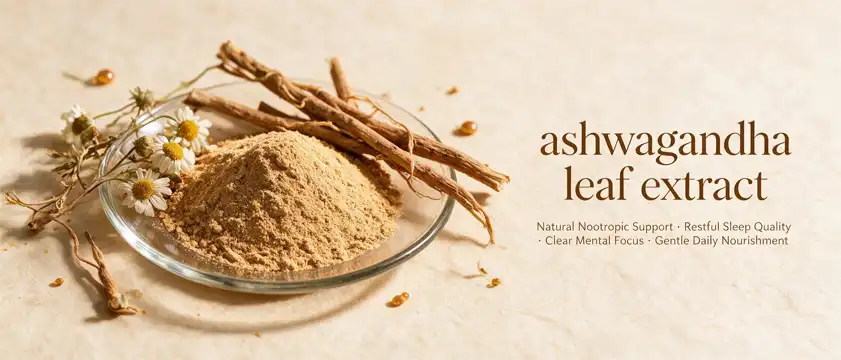
Ashwagandha leaf extract is a high-concentration botanical concentrate made from the leaves of Withania somnifera, a plant that has been used for thousands of years in Ayurvedic medicine. Unlike the typical root preparations, the leaf fraction has a unique withanolide profile, notably in terms of withaferin A concentration, which is very suitable for current nutraceutical formulations. Ashwagandha leaf extract is a cost-effective, traceable, and science-backed ingredient for B2B buyers in the supplement, functional food, and wellness industries that meets rising consumer demand for stress management and antioxidant protection.
Understanding Ashwagandha Leaf Extract: Composition and Benefits
Botanical Origin and Chemical Profile
Withania somnifera is a shrub of the nightshade family that grows in India, North Africa, and the Mediterranean region. The leaves are used to create ashwagandha leaf extract. The excellent withanolide glycosides may be extracted from the leaves with water or alcohol. An HPLC-UV test often reveals that a good ashwagandha leaf extract contains 5-35% total withanolides. This isn't the same dose of withaferin A you'd get in most root-only extracts.
Key Health Benefits Supported by Research
Standardized withanolide levels have been associated with greater antioxidant activity, reduced cortisol levels in the blood, and improved stress regulation. According to the journal Medicine, a 2019 study revealed that patients who took ashwagandha tablets for 60 days had significantly lower levels of stress and cortisol in their systems. The corporation may then immediately convert this data into stress-relieving medications, brain health stacks, and antibiotics when they purchase in quantity.
Leaf Extract vs. Root Extract: What Buyers Should Know
The root extract is still the most often utilized form in therapeutic practice. Others believe that ashwagandha leaf extract is equally as effective as ashwagandha root extract. And you need just around 125 milligrams of leaf extract to have the same benefits. It is stronger per gram; hence the cost of raw material per completed unit is less. This allows for tiny format delivery options like micro-capsules and single-serving sachets that are popular with busy individuals today.
How to Use and Dosage Guidelines for Ashwagandha Leaf Extract
Recommended Dosage Ranges for Industrial Formulation
Health supplements commonly include 125–300 mg of standardized ashwagandha extract powder. Functional drinks include smaller quantities of caffeine – 50-150 mg per serving – since they are highly soluble in water (over 90% in cold water), it doesn’t settle or affect the flavor.
Form Factors and Their Manufacturing Advantages
Here are 3 ways B2B organizations purchase ashwagandha root powder. Each one impacts how processing works in distinct ways:
- This fine powder contains about 5-35% withanolides. It is the perfect powder for pills, tablets, and mixing with other powders. It undergoes very little change up to 80°C and hence may be utilized with most spray-dry and grinding processes.
- This powder is already screened so that all the particles are the same size. This makes the line go faster while plenty of capsules are being manufactured, and stops the fill weights from bouncing about too much.- Liquid extract or liquid concentrate: This is the ideal approach to combine cosmetics and beverages that are already created and just need to be dispersed in water.
- Fine powder (standardized 5% - 35% withanolides) - best for encapsulation, tablet pressing, and combining into powdered mixtures. It is thermally stable up to 80 °C, suitable for most spray-dry and granulation procedures.
- Capsule-fill grade powder. Pre-sieved to a consistent particle size to minimize fill-weight fluctuation and improve line speed in high-volume capsule-manufacturing operations.
- Liquid extract / tincture concentrate: Preferred for RTD beverage applications and cosmeceutical formulations requiring uniform dispersion in aqueous solutions.
This way, procurement teams can easily match the specifications of an item to the demands of the manufacturing line, so they don’t have to wait for the recipe to be altered.
Organic vs. Conventional Sourcing and Compliance
Organic products have to fulfill certain requirements defined by the EU and the USDA NOP. Organic ashwagandha leaf extract does qualify for those norms. This is what the clean-label market needs. The product must comply with FDA 21 CFR Part 111 (GMP for dietary supplements) and Certificates of Analysis with heavy metals, pesticide residues, and microbiological limitations. This is true regardless of the kind of permission it obtains.
Comparing Ashwagandha Leaf Extract with Other Extracts and Adaptogens
Leaf vs. Root: Potency, Cost, and Use Case Mapping
Root extract of ashwagandha is not as good as leaf extract if you want to learn more about withanolide quantity and amount efficiency. Root extract tablets work well in places where people know what "root" means and buy it. If you don't have much time to make something (like nootropic mixes) or if price per active milligram is the most important thing to you, leaf extract is better.
Positioning Against Other Adaptogens
Rhodiola rosea, Panax ginseng, and Bacopa monnieri are the best adaptogens out there. Like ginseng, which wakes you up with ginsenosides, and Rhodiola, which fights tiredness with its profile, this one is not the same. Since 2021, the market for stress-plus-cognition has grown quickly. People who are interested in it like products that combine ashwagandha extract powder with L-theanine or phosphatidylserine.
Ethical Sourcing and Sustainability Considerations
Because the whole plant is more likely to be used, you don't have to gather the roots as often when only the leaves are being used. This means that less trash is made per kilogram of active output. If someone wants to buy something, they should make sure that the materials can be tracked from the farm to the plant where they are extracted. People who are buying things should also try to find ones that are certified by the Fair Trade or Rainforest Alliance.
Procurement Guide: Sourcing High-Quality Ashwagandha Leaf Extract
Supplier Evaluation Criteria and Certifications
If someone wants to sell you Ashwagandha leaf extract, make sure they have ISO 9001 quality management certification, GMP compliance (FDA or EU GMP is preferable), and third-party testing documents. For the market of plant extracts, it is crucial that the withanolide is authentic. This HPLC-DAD fingerprint report protects it against adulteration with man-made withanolide analogs, which is known to occur.
Every prudent purchaser should examine these items to see if the quality is good:
- Quantification of Withaferin A in defined safety criteria for target consumer population
- ICP-MS heavy metal screening confirms lead, cadmium, mercury, and arsenic levels below the limits of the EU and California Prop 65
- GC-MS/MS pesticide residue screening of 400+ chemicals to support organic or clean-label claims
- Residual solvent testing per USP <467> to ensure extraction solvents are within approved pharmaceutical limits.
- The quantity of withaferin A was less than the safe limits for the target audience. The levels of lead, cadmium, mercury, and arsenic were below the limits established by California Prop 65 and the EU. This was shown by the screening of heavy metals by ICP-MS. Testing for pesticide residues to fulfill organic or clean-label criteria is performed using GC-MS/MS of more than 400 compounds. The quantity of the extraction fluid should be smaller than the quantity permitted for medical use in USP 467.
Pricing Factors and Volume Negotiation
The price of ashwagandha leaf extract depends on how controlled and authorized it is and how many orders there are. Although it costs more per unit, the better-performing withanolide usually justifies the increased cost in the long run. People usually obtain better prices per kg when they purchase above 100 kg. They may also put in contract stock strategies so they are ready if the supply chain goes down.
Packaging and Customization Options
Standard packaging is in 25-kilogram fiber drums and foil-sealed 1 kg packets. If a customer is an OEM and requires private label capsules or branded powder mixes, then they should look for a provider with a permitted secondary manufacturing facility that can produce both final dosage forms and bulk materials. In this way, the customer is certain that the supply is reliable.
Usage Tips and Innovative Applications for Ashwagandha Leaf Extract
Formulation Ideas Across Product Categories
Ashwagandha leaf extract works well in RTD beverages, morning health powder sticks, sleep aid capsules, and nootropic blends. Water helps it taste less bitter, so you don't have to mask as much of the flavor as you would if it were root powder. It is less costly and less time-consuming.
Combination Strategies with Complementary Botanicals
How to take magnesium glycinate and ashwagandha leaf extract combined to sleep better. It is helpful for those who care about their brain health to take it with lion's mane mushroom extract. Because they have verification at the ingredient level, these blends allow marketers to convey their own narrative about their goods.
Storage, Handling, and Shelf Life
If packaged correctly, ashwagandha leaf extract is good for 24 to 36 months. It should be kept in sealed containers, out of moisture, in a cool, dry area below 25° C. Stores should ensure that hygroscopic powder grades do not clump when the relative humidity is below 60%.
Conclusion
Once a bizarre addition to Ayurvedic medicine, the ashwagandha leaf extract has become a reliable, science-backed component that today makes its way into a multitude of nutraceuticals throughout the globe. There are a few methods to make it; it contains more withanolides, which is why it’s a wonderful option for businesses that want to aid with stress reduction, brain health, and vitamin support. The purchasing teams must evaluate the standardization levels, review the third-party testing documentation, and choose suppliers that can demonstrate the ability to trace items and meet GMP requirements. If you do these things correctly from the beginning, you will safeguard the quality of the product, reduce the chances of legal difficulties, and, over time, people will trust your brand more in the tight health market.
FAQ
1. How does leaf extract differ from root extract in dose efficiency?
Leaf extract typically requires only 125 mg to match adaptogenic effects delivered by 300–600 mg of root extract, owing to its higher total withanolide concentration—a direct cost and formulation advantage for manufacturers.
2. Is ashwagandha leaf extract safe for long-term use in finished products?
Yes. Clinical trials on standardized leaf extracts confirm safety for extended use when withaferin A levels remain within recognized therapeutic windows. Buyers should request long-term safety data from their ashwagandha leaf extract supplier before label claims are finalized.
3. How do I verify purity and guard against adulteration?
Request HPLC-DAD withanolide fingerprint reports, third-party heavy metal results via ICP-MS, and pesticide screens covering 400+ residues. These documents form the core of a defensible quality dossier.
4. What certifications matter most for the U.S. market?
FDA GMP compliance (21 CFR Part 111), NSF or USP verification, and GRAS status documentation are the primary markers U.S. importers should prioritize. Non-GMO and vegan certifications are increasingly requested by retail-channel buyers.
5. What is the standard shelf life?
Standardized ashwagandha leaf extract carries a shelf life of 24 to 36 months under proper storage conditions (cool, dry, sealed containers away from direct sunlight).
Partner with BioSpark for Premium Ashwagandha Leaf Extract Supply
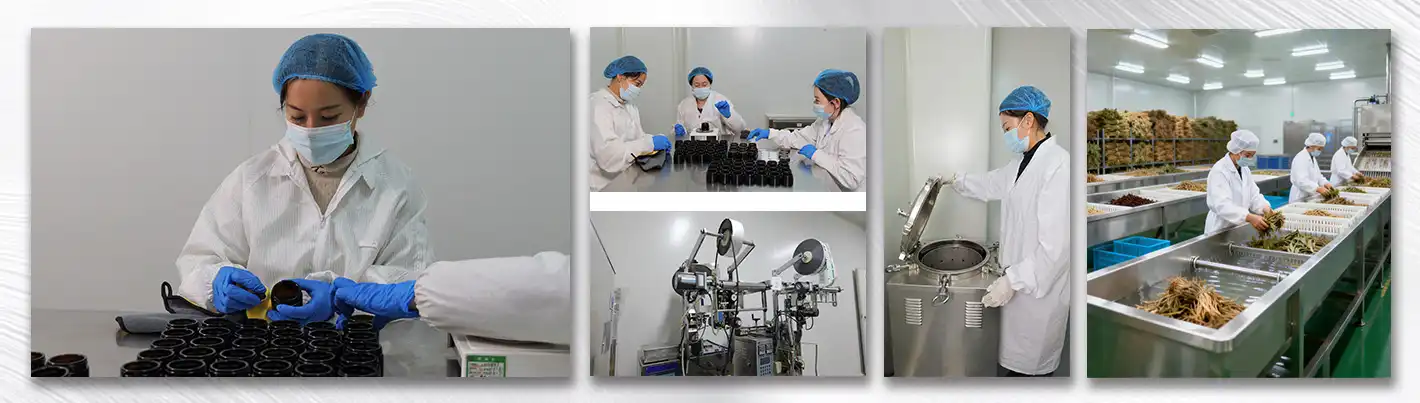
BioSpark (Xi'an) Biotechnology Co., Ltd. is a reliable company that makes ashwagandha leaf extract and works with health brands, distributors, and original equipment manufacturers (OEMs) in North America and other places. HPLC lets us make batches of any size and make products that are all the same. It also helps with the whole OEM/ODM process. It doesn't matter if you need a lot of ashwagandha leaf extract or something that is already made from it. Our team can help you find it. You can get samples and prices right now by emailing leao@biosparkcn.com.
References
1. Chandrasekhar, K., Kapoor, J., & Anishetty, S. (2012). A prospective, randomized double-blind, placebo-controlled study of safety and efficacy of a high-concentration full-spectrum extract of ashwagandha root. Indian Journal of Psychological Medicine.
2. Pratte, M. A., Nanavati, K. B., Young, V., & Morley, C. P. (2014). An alternative treatment for anxiety: A systematic review of human trial results reported for the Ayurvedic herb ashwagandha. Journal of Alternative and Complementary Medicine.
3. Devi, P. U., Sharada, A. C., & Solomon, F. E. (1993). Antitumor and radiosensitizing effects of withaferin A on mouse Ehrlich ascites carcinoma in vivo. Acta Oncologica.
4. Auddy, B., Hazra, J., Mitra, A., Abedon, B., & Ghosal, S. (2008). A standardized Withania somnifera extract significantly reduces stress-related parameters in chronically stressed humans. Journal of the American Nutraceutical Association.
5. Choudhary, D., Bhattacharyya, S., & Joshi, K. (2017). Body weight management in adults under chronic stress through treatment with ashwagandha root extract. Journal of Evidence-Based Complementary & Alternative Medicine.
6. Lopresti, A. L., Smith, S. J., Malvi, H., & Kodgule, R. (2019). An investigation into the stress-relieving and pharmacological actions of an ashwagandha extract. Medicine.

Send Inquiry
Related Industry Knowledge
- Why Is Dracorhodin Important in Dragon’s Blood Research?
- How Can Damiana Peptide Enhance Your Product Portfolio?
- Pure Corn Extract Powder Benefits: Is It a Natural Nutrient Source?
- Kidney Bean Flour vs Wheat Flour: Which Performs Better?
- What Are the Key Advantages of Barley Sprout Flour?
- Searching for High-Purity Holy Berry Powder in Stock?
- Why Is Logwood Extract Still Relevant in Modern Applications?
- Does Pomegranate Peel Extract Powder Reduce Inflammation?
- Is Apple Peel Extract Powder Good for Skin Whitening?
- Yacon Root Extract Benefits: Prebiotic Gut & Digestive Support